So it is still PVC, not a different plastic, just made from a different source of raw material, not using up a fossil resource. It will therefore still produce carcinogenic dioxins if burnt/incinerated at too low a temperature, and still is not readily biodegradeable
Plasticisers are needed to make PVC flexible, as with clingfilm. Surely records ars made from unplasticised PVC (uPVC), similar to that commonly used for things like window frames?
Plain pvc is pretty rigid. They may add some plasticiser to LP vinyl. But i dont know.
No, that is impossible. PET contains no chlorine, and dioxins are chlorine containing substances. I believe some studies have implicated PET in dioxin prodiction through burning: I have no idea of the validity of such claims, but it could only happen if in admixture with chlorine-containing substances.
1 Like
Interesting. My reference was the problem of dioxin formation on reclaimed land in Japan built using landfill heavy with plastics - particularly PET bottles. I suspect that since it is not possible it is a common example of studies that (constantly it seems) conflate correlation with cause.
Still, PET doesn’t seem particularly hard wearing. Older bottles are cloudy with microscratches like err. a turntable lid  . So I’m not sure dragging a needle on them would help.
I’m not sure how PET and PVC compare in terms of hardness/scratch resistance: For some uses, normally including vinyl for records, the plastic has added fillers (other substances mixed into the PVC), which will affect hardness and scratch resistance, so even where data even where equivalent data is available for the pure material, it might not translate to specific products. I imagine that if PET were to be used for records it, too, would have added fillers to modify its characteristics.
I have always wondered in fact, whether these “virgin vinyl” transparent discs that cost more and are supposed the better are in fact less durable and worse.
1 Like
There is more than one company looking at producing bio vinyl for different purposes one British company has a version of bio vinyl call Evo vinyl which is Bio degradable. This has been used for record pressings. However I am not sure everyone will be keen to have LPs that biodegrade.
Evo-vinyl is not PVC the manufacturers claim it is non-toxic.
Not at all, conventional vinyl is transparent every other colour including black vinyl has a dye added to the original clear vinyl.
1 Like
Not just dye (which in the case of conventional black vinyl is probably carbon). This information from makingvinyl.com:
The thermoplastic resin that is used to produce vinyl albums (and singles) comprises mostly of the copolymers of vinyl chloride (PVC) and vinyl acetate (PVA) in an approximate ratio of two parts PVA copolymer to one part PVC monopolymer. This mixture makes up between 75%-96% of the weight of the album, with the remaining 4%-25% being the additives, most of which are all critical to the pressing and playback process and the album’s longevity.
PVC is an ideal base material being flexible and 10-20% crystalline making it quite strong. It is low cost, not too brittle, supports a smooth and, therefore, quiet playback surface, can be pressed into the microgrooves, and allows a stylus to ride within the grooves with minimal damage. However, PVC and PVA alone do not create an ideal material for pressing and playback. That is where all the additives come into play.
These additives include:
- Heat stabilizers
- Lubricants
- Fillers
- Plasticizers
- Conditioners
- Colorants
However I assumed tge term “virgin vinyl* to mean not recycled so with complete control over content, and not meaning no additives. Clear colourless vinyl would be limited in terms of the fillers/additives it would contain.
Colour chemistry wise black tends to be very dark blue
Virgin vinyl should be 100% virgim material, zero rewirked material. The rework burns and carbonises easier.
In fabrics blck is indeed rarely true black, but slightly blue or slightly brown (you get both). But carbon black “lamp black” of old is, I think, a true black.
As you wish but I was talking about vinyl being clear and colourless but yes it has all sorts of things that make up a vinyl puck for pressing. I was also just talking about the colourisation of this base vinyl to make it black so the other things are incidental to that and not exclusive to black vinyl but all vinyl. You need everything in your list no matter what the colour you end up with and other than colour you need all the other things to make a clear vinyl record.
The companies (only a handful of them exist) that make vinyl pellets that the pucks are made from are very secrative about what they put into them and no two companies produce the same.
Some varients have been marketed though like Quiex II which was a black vinyl produced by adding dye (among other more secret changes) rather than carbon black granules. This was done to produce a quieter pressing and many collectors seek out Quiex II pressings. If you hold up a Quiex II pressing to a strong light it is translucent rather than opaque.
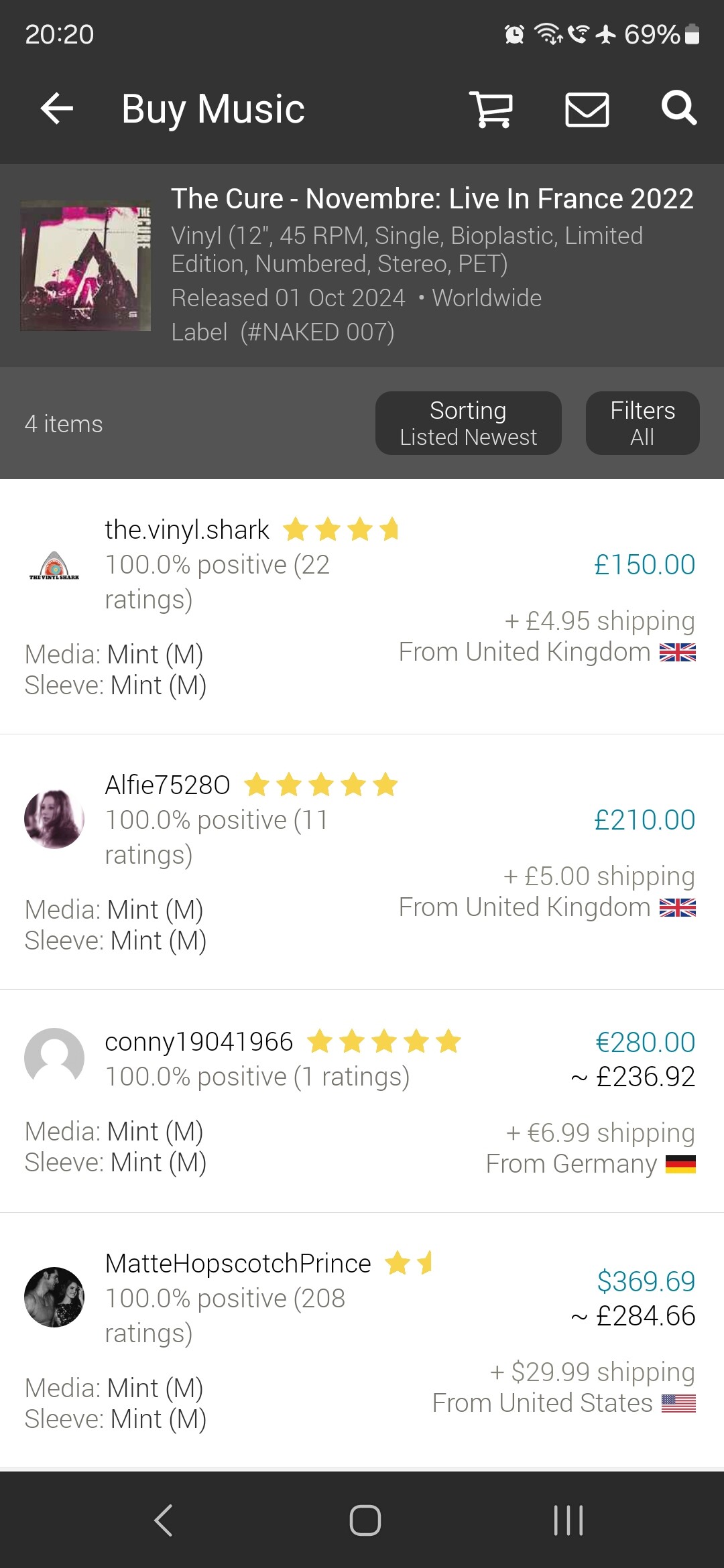
The record arrived today. It is a very nice pressing with very little surface noise and no pops or clicks. Sound quality is better than I expected. The vinyl itself seems a bit stiffer than regular vinyl and it is odd to see it black but semi transparent. I bought my copy for £22 via the official The Cure website but as it is limited to 5000 copies worldwide the scalpers are taking the mickey
1 Like
This topic was automatically closed 60 days after the last reply. New replies are no longer allowed.