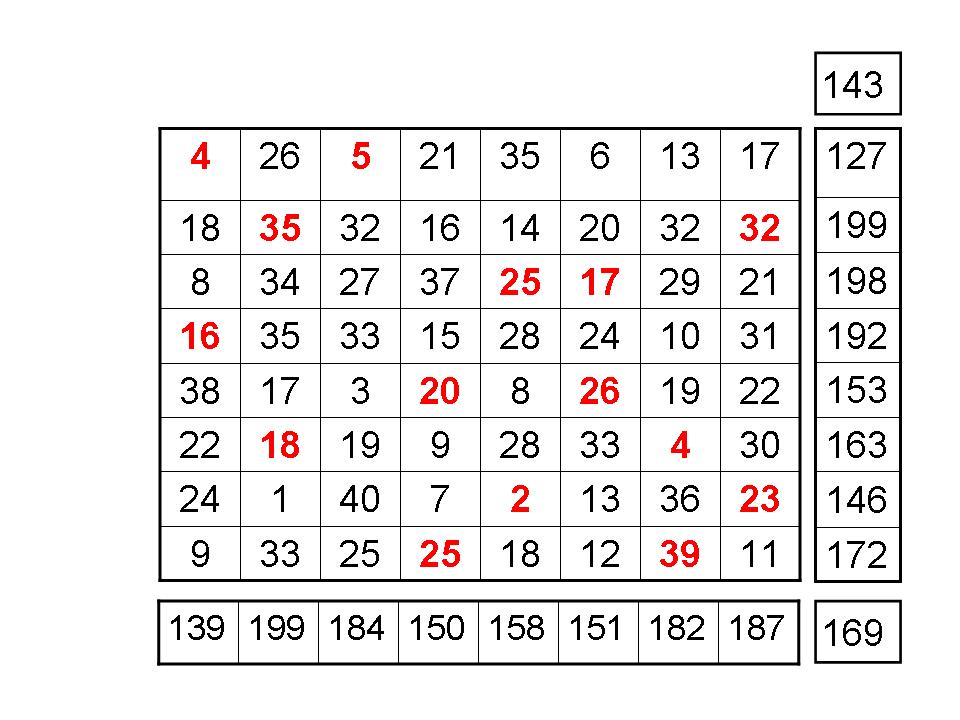
I started by inserting “5” in the blank space at the top of the third column.
I’ll post my solution later.
I started by inserting “5” in the blank space at the top of the third column.
I’ll post my solution later.
…followed by a 4 at the top of the left column and 16 at the beginning of the fourth row. I had to check my solution in Excel after three mistakes.
Well done Mulberry. That’s also how I started. And I drafted in Excel to deal with the arithmetic 
I found it relaxing. Straightforward and obvious. Just took a bit of time and patience !
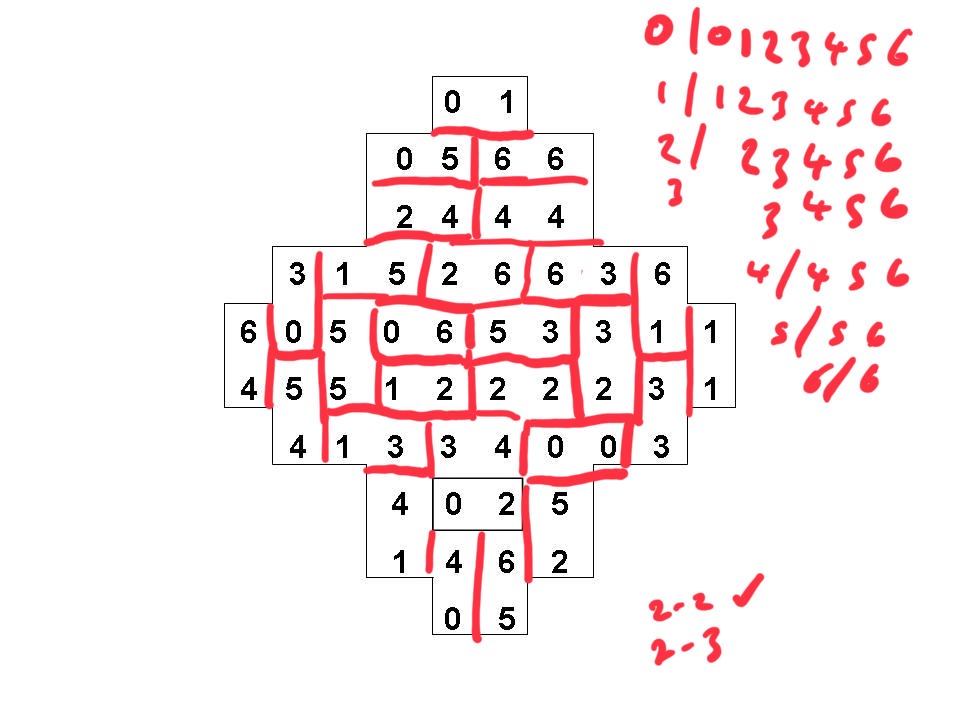
Here’s my solution for anyone who would like to give it a go.
I note that the puzzle was a 15 dimensional set of simultaneous equations!
With 18 equations, it should have theoretically been possible to solve it with a further three numbers missing. Maybe that would have been a bit hard though.
We used to solve seven simultaneous equations doing error distribution in surveying. Using six figure logs for trig functions and those Facit mechanical adding machines. Which went “ding” when dividing. Clockwise handle for multiplying (successive adding) and anti-clockwise for dividing (successive subtraction) with the “ding” to say “one too many subtractions so go back one turn” etc.
Happy days !
Then along came the KDF9 computer (I think it was a KDF9) with punch cards, followed by punched tape, for inputting programs and data. And Algol as the language.
For some crazy reason I tried doing the puzzle in my head. I was on the train to Manchester without pen, paper or calculator, though I had plenty of time to kill.
I correctly got as far as 25, which was the eighth out of the 15 missing numbers.
Well done.
I cheated. I put the numbers into Excel which did all the adding and subtracting. All I had to do was “identify the next line with a single missing number; type in the row/column difference as displayed by Excel; repeat”
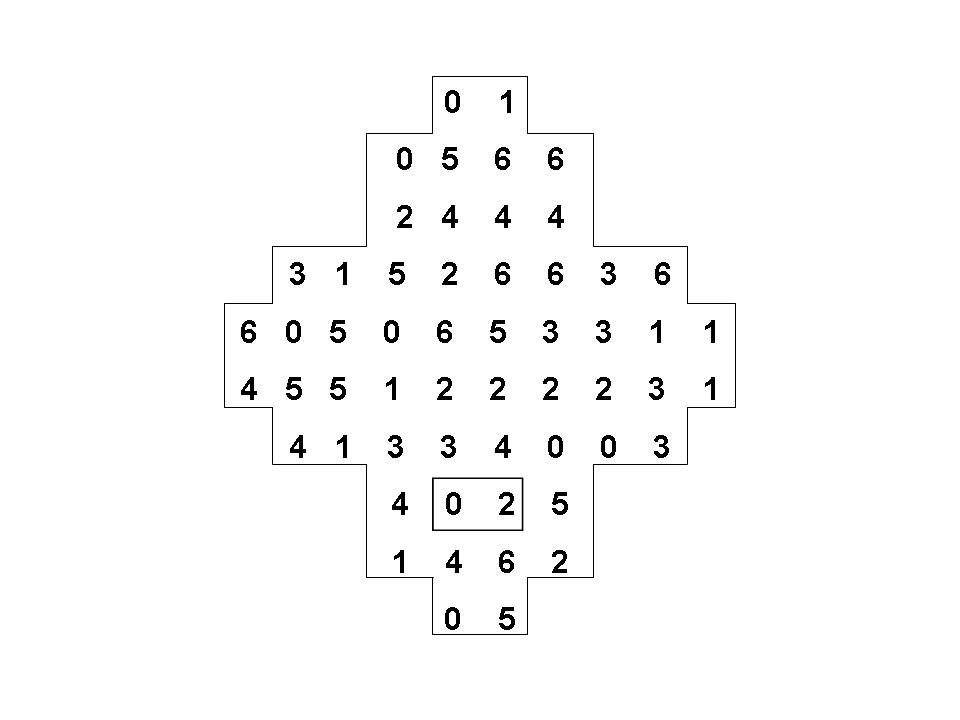
Dominoes (Mike’s favourite)
A standard set of dominoes has been laid out as shown in the diagram below. Can you draw in the edges of them all ? One domino has already been drawn which should help you quite a bit.
I made the additions in my head, too. After wrongly getting a 25 instead of 35 in the top left to bottom right diagonal twice, I started checking via Excel.
The guy that makes it doesn’t want it
The guy that buys it doesn’t need it
The guy that uses it doesn’t know it
What is it ?
Three guys go out for dinner…
The bill comes to 25 quid.
They put in a ten pound note each and give the waiter 30 quid.
When the waiter returns with 5 pound coins
They give him a 2 pound tip and take a pound back each.
Each gets a pound back so now they’ve only paid £9
9x3 is 27
Waiter gets 2
Where did the other pound go?
This is an apples and oranges type test 
The total cost of the meal was £27 (£25 + £2 tip), not £27 plus tip.
They paid £30 of which the £3 change was shared equally.
£25 meal + £2 tip + £3 change = £30.
It’s a grown up version of the maths trick I played on my young sons:
Dad: I have 11 fingers, look!
Child: No, it’s 10
Dad: Let’s check. Closing each finger on one hand. 10, 9, 8, 7, 6. Removes closed hand. Plus 5 makes…
Child: 11. Grabs hand and nearly breaks Dad’s fingers to check what went wrong
Seventeen Camels
This one is from Mrs R.
A father left 17 camels to his three sons and, according to the will, the eldest son should be given a half of all camels, the middle son one-third of all camels and the youngest son one-ninth of the camels.
How did they solve the riddle?
I think they borrowed a camel to make 18.
Divided them up 9; 6 and 2 which makes 17 and thus were able to return the borrowed camel.
Happy days !
Somehow, I think there is a flaw in the logic !
The oldest is given 8, the middle 7 and the youngest 2. The middle one then gifts 1 to the oldest.
I’m on to it soon!
Don’t forget to create a list of all available dominoes 0-0; 0-1; 0-2 … 6-6, and tick them off as you progress ! 
… and 0-2 is the same as 2-0 etc