The most important thing with soldering is to pack all the strands down into the slot, use a powerful iron, and fill the slot but only use enough solder to fill the slot level at most, especially if using the black boxes.
2 Likes
I appreciate the excellent advice.
I think I have enough power  . I use an earlier version of this bad boy:
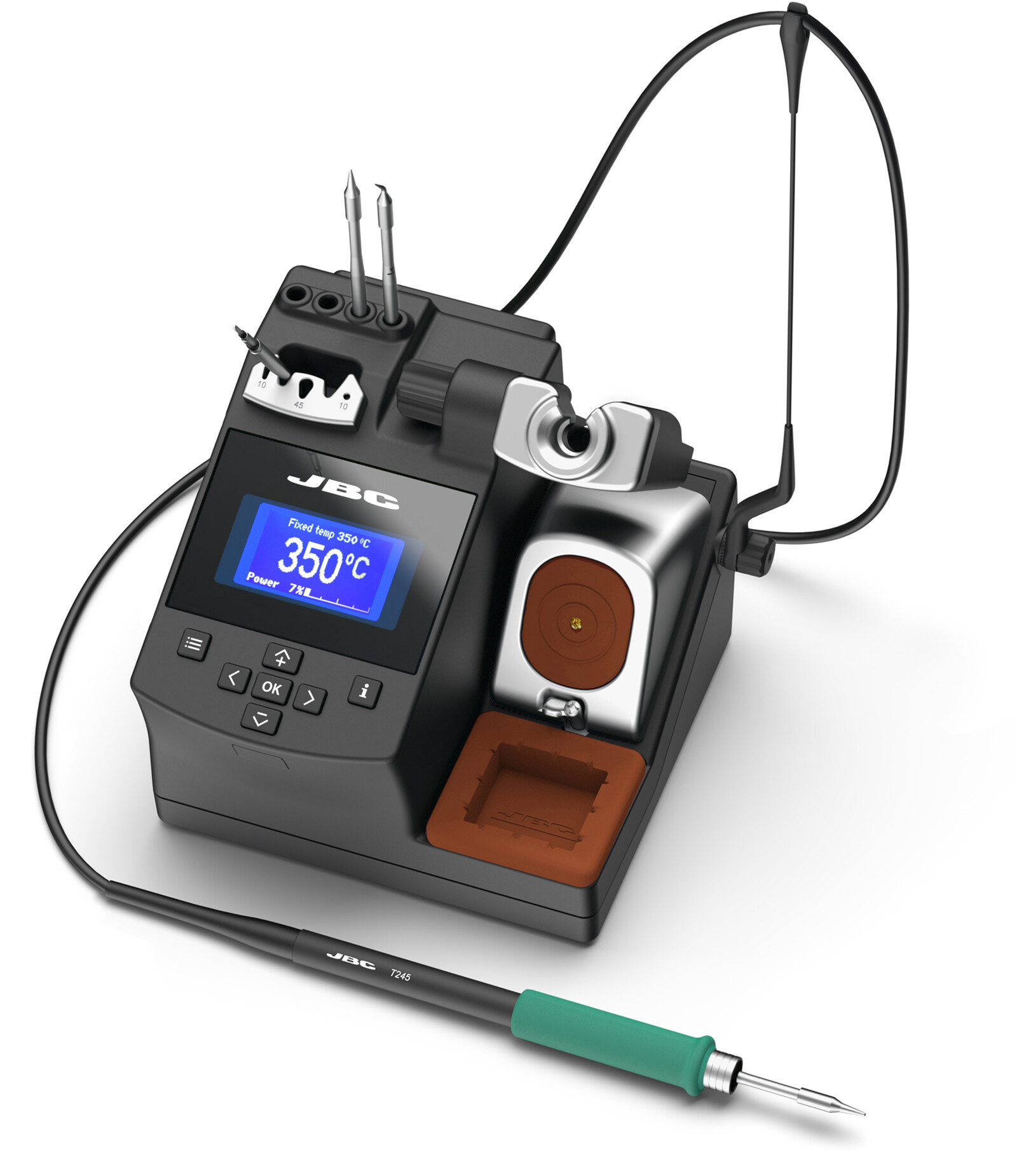
Image attribution: JBC Tools
Plus I have one of their large chisel-head-tip cartridges that I use on NACA5.
Any suggestions on the ideal temperature setting for NACA5? I’ve gone with 400°C in the past.
3 Likes
I use one of these to great effect. I would say an iron with plenty of mass at its tip is what’s required here as you want to do the actual soldering as quick and effectively as possible ( in a few seconds max). This does require some practice, so a good dealer is your friend here.
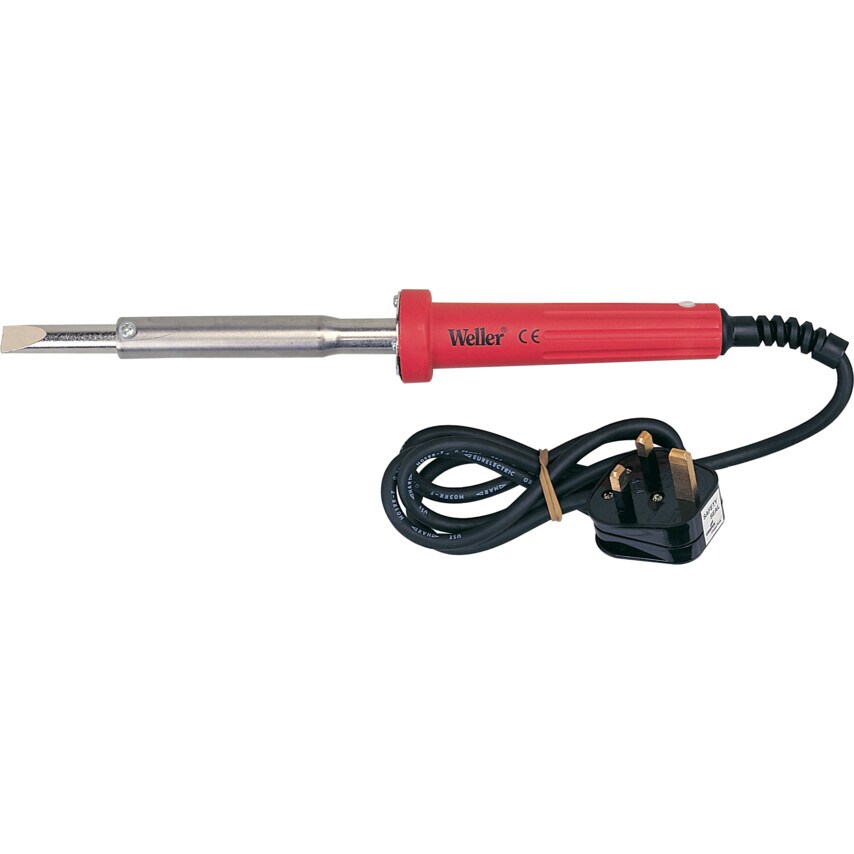
Pic taken from tinternet.
3 Likes
‘Cold welding’/crimping will always be better than solder.
2 Likes
Ah, opinion as fact. Often deployed by those without real experience. Or maybe you really have compared the two options on every possible cable/connector combination, which will run into many millions. If so, I’m impressed. If not, you are talking bollocks.
3 Likes
Something we tried and tested at the factory many moons back. Of course, it couldn’t be exactly like for like, as the crimped connections needed their own suitable plugs, but the soldered SA8s won the day, which is why it’s still the recommendation.
5 Likes
Charming bloke (assumption and apologies if I’m wrong) you are.
No connectors, in an ideal world would likely be best. Admittedly, the difference would likely be marginal at best but seeing how much some here spend on speaker cable minimising unnecessary different metal/conductor interaction after the small signal stages would, in my humble opinion, be for the better. Why would a soldered connection be superior? (Genuine question)
You are introducing mainly tin into a connection. I fail to see how this could possibly improve signals even if the losses are minute …
Tin is a
good electrical conductor, though significantly less so than copper or silver (about 15% of copper’s conductivity), making it ideal for plating electronics for corrosion resistance and solder, but not for primary, long-distance wiring. It’s known for its superconductivity at very low temperatures (below 3.72 K) and its use in solders, where its tin content allows conductivity while providing a low melting point.
Key Conductivity Characteristics
- Relative Conductivity: Tin’s conductivity is about 9.17 x 10^6 S/m, or roughly 15% that of copper (100% IACS).
- Superconductivity: It becomes a superconductor at extremely low temperatures, a property first studied in tin crystals.
- Applications: Its primary use in electrical systems is for plating (like in solders) to prevent corrosion, not as a main conductor due to lower efficiency than copper.
Comparison with Other Metals (Relative to Copper = 100%)
- Silver: 105% (Highest)
- Copper: 100% (Standard)
- Gold: 70%
- Aluminum: 61%
- Tin: ~15%
- Lead: ~7% (Lower than tin)
1 Like
This came up in a discussion during a recent factory visit. The slot in a Naim banana plug is just big enough to allow the wires of NACA5 to be squeezed into it, untinned. This allows plenty of direct electrical contact between the copper strands and the plug, with the solder just acting as a glue to hold the wire in place.
3 Likes
I’m not an expert in the science behind it. I just took part in the listening tests. Naim are very open minded - if something promises to bring improved performance then they want to hear it! It’s why, when certain speaker cable brands were making great claims about their crimping methods, Naim wanted to hear if for themselves.
3 Likes
I get that and recognise it is essential in certain circumstances. Still, I can’t personally see how it could add to conductivity other than negative, however minute it may be.
Anyhow, it’ll likely make little difference in the real world
Agreed. That Weller iron looks perfect for the job.
I use my largest chisel-head tip to solder NACA5. It also has plenty of mass, as you can see in comparison to a Naim SA8 banana plug:
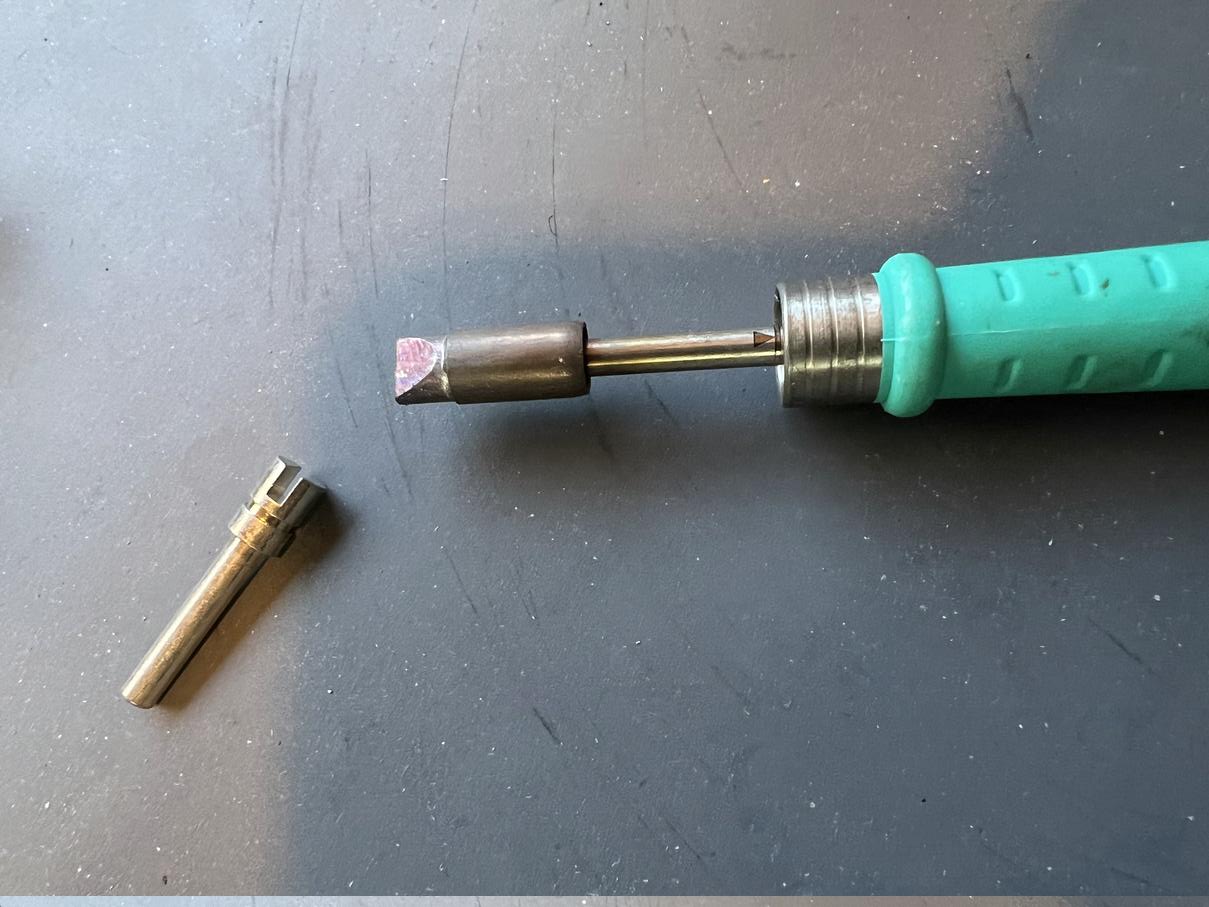
3 Likes
 , something like a QED AT1 Airloc crimp tool cannot be beaten by solder, its physics plain and simple.
2 Likes
Lore?
Possibly but elaborate please
In the listening hall we use 8.5m NACA5. Excess is loosely folded behind the record library shelves. It sounds much more full, open, relaxed, extended than the 3.5m it replaced.
The video hall has only 3.5m, the excess is coiled under the Quadraspire as the Valkyries like to snuggle up on the sofa in front of human reality shows. Even they sound pretty good.
4 Likes
Steve Sells have said something like shorter lengths of NACA5 make the sound more “nervous” and too long make it sleepy. So there is a sweet-spot. Somewhere. My guess based on this forum is somewhere around 8-10m.
6 Likes
This topic was automatically closed 60 days after the last reply. New replies are no longer allowed.