If the 152XS has a direct input it could be worth experimenting as to whether you prefer using the DAC V1 in fixed mode as a source or in variable mode as a source/pre-amp.
Paul Rigby interviewed Steve Sells about the design of the DAC V1 and (if allowed) I have copied the section of the interview that covers the design of the volume control below:
For example, the volume control – a Naim design – that uses expensive parts and is based on the Statement system.”
You might think, “Volume? So what? What’s the fuss about?” On the face of it, you’d be right but not too many people are aware that the ultimate sound quality of a pre-amp and even a DAC like the V1 can be made or broken by the volume control area. It’s actually an essential and sensitive area.
Although the V1’s volume control is ‘based’ on the top-of-the-range Naim Statement system, it is not directly copied from it. This example was tweaked, “We cut out one third of the volume circuit,” said Sells.
Why? Budget reasons, basically but although the volume area is restricted to 64db, Sells tweaked the part so that you get the best bits from the volume control, “We fill that volume circuit in, at the bottom, in the digital domain and so you get that really great thing where digital and analogue are working together to give you value for money.”
Hence, for this quality volume control, all the main listening range, down to tape hiss levels, is all done in the analogue domain which relies on the expensive bit of the volume control. To be able to fade the volume down nicely or have really quiet music then Naim starts using digital attenuation in the quiet bits via a DSP (which performs some quick maths on the audio by using 40bit floating bit precision). Hence, when you get down to -100db, you’re looking at 64db of loud analogue and the rest is quiet digital, “On an engineering level,” said Sells, “it makes absolutely sense: its cheaper, smaller and more efficient with the same result.”
Let’s play devil’s advocate for a moment. If budget is a concern and you’re trying to push out the V1 at a reasonably affordable price, for this class of DAC, why not go for a cheaper volume control, why utilise such a high quality volume control in the first place? “We could have cut quality corners but ‘volume’ is one of those incredibly delicate things. There’s some good chips out there but they don’t quite get the sound that we want. We do use, in fact, a National chip on other products that doesn’t have the specifications of other chips but does have a sweet sound but it’s not up to the level that we wanted for the V1.”
Sells doesn’t believe that, for a box that will sit in a ‘mere’ study or a relatively bustling and slightly non-audiophile space such as an office, that employing such high quality components show that Naim may have gone overboard, “You can get into that trap, sure but, for us, we see it as a pre-amp as well so it can be connected to an amp and speakers in a top flight hi-fi. Also, if you are spending all that money on a DAC then you are probably spending a significant amount on other products to connect to it.”
As for the output stage? This is the same output stage that Naim uses in its big, preamplifiers, like the 252 to the 552, “A current feedback single-ended Class A is used in the V1,” said Sells. “It offers low noise for small signals and, when you crank it up, then it only produces a bit of second order distortion but by then it’s so loud the ear isn’t hearing it. It works really nice. When you plug your headphones in, though, we ramp up the single-ended Class A so there’s enough current to run headphones.”
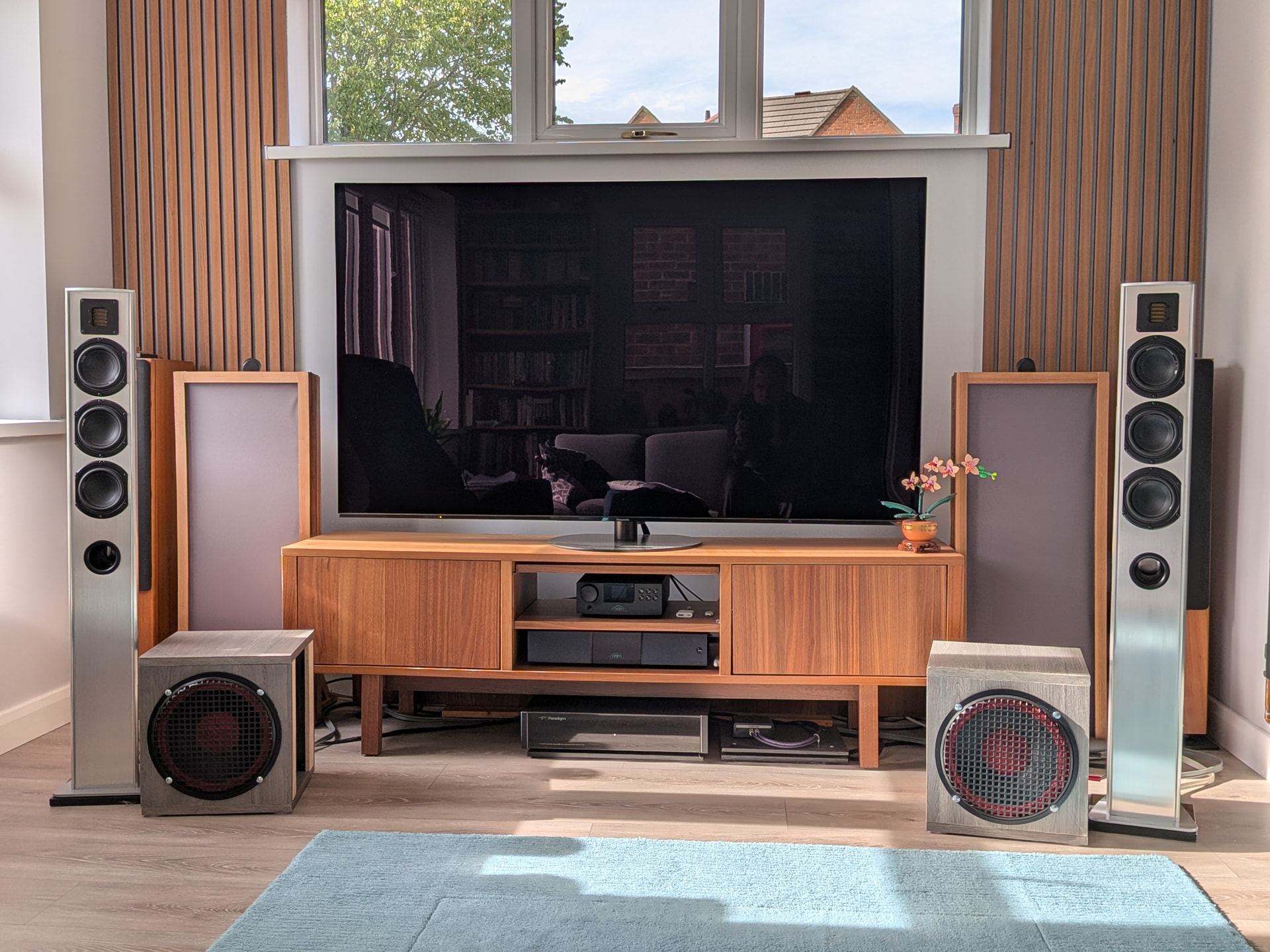
For the record I currently use a DAC V1 as a source/pre-amp into a NAP200/Piega speakers and they work very well together and have not audible noise floor. I have used the DAC in both line and pre-amp mode into an Arcam A28 previously and it worked well in both formats.
Edited: for some reason some parts of the article were duplicated and some parts did not copy across at all. Hopefully the content is now clearer.

 Will order a 4-5 cable as want to keep everything RCA-free

 As I say, I’ve been very pleased with the V1 that I bought last year and it works beautifully with my NAP 200 and the Piegas.