Speaking as an engineer (chemical not electronics) I think the answer lies in the assumption that the equipment measures everything and that all parameters that affect our hearing are fully understood. Engineering is an applied rather than exact science. All disciplines of engineering use models to approximate to reality …… and it can get very close……but it is not reality. The scientific concept of paradigms is something that probably applies here I.e. the paradigm is that everything can be measured, therefore the measurements show everything.
I bought a set of Blue Jeans speaker cables as my main cables which measure extremely well and cost very little. Sound was very good. I thought I’d try a more expensive cable just for fun as my dealer offered me a 90 day trial on some Audioquest cables costing a lot more. I really wanted the Audioquests to be bad and prove the snake oil theory. Unfortunately they sounded so much better TO MY EARS……and I bought them. Were they acting as tone controls?...probably, but I didn’t care. Hate admitting that as an engineer, but clearly the testing model used is not capable of measuring what any particular individual interprets in their hearing. It doesn’t invalidate the measurements but suggests they are incomplete. And that will keep university research departments in business for many years to come.
I’m trying to look at this objectively. The job of a cable is to deliver a signal from A to B as I understand it as a layperson. I imagine there are umpteen ways that this can be measured but what cannot be measured scientifically as far as I know is the sound that comes out of the speakers as a result. So what is going to change the way something “sounds” when it comes to speaker cables? Surely, it can only be the materials used and the shielding? Depending on what each manufacturer uses will determine how those materials “present” or “colour” the music. So that’s one reason for fiddling with cables. Another is aesthetics and some folk change cables simply because something like A5 isn’t flexible enough or not slim enough. The 3rd reason is probably price. If one moves a rack or move house and the result is a longer run of cabling is required, some premium brands are cost-prohibitive as I found when I moved house last year. I had a 4m run of WH Phantom in my last place but needed 2 x 10m in the new one - that’s a big outlay for me which is why I went down the budget route and sold the Phantoms on Fleabay for a little less than they cost me, such is the demand.
There is a freely available article on the “Positive-Feedback” web site, where a reviewer meets with Garth Powell from Audioquest. Garth discusses how the difference that cables make can be measured. Below is an excerpt from the article entitled “AudioQuest Storm Series and Niagara AC Power Products – Draining the Noise” 03-27-2018 By Gautam Raja Issue 96:
“Play a track on a digital system with stock power cables from the wall, and digitally record the output. Then add audiophile power cables or a power conditioner, and record the same track. On a computer, align the recordings perfectly so they start and stop at exactly the same point. Flip the phase on one track and add them together. What you get is a difference file—if the two files are identical, the result would be total silence. If the power cable or conditioner is making a difference (hopefully an improvement), the difference track should be playing all the information that was masked in the stock playback.”
Some sensible ideas are now coming through. Measurements are good but not everything. Music playback is more than just frequency response or slew rate or transient response (though these are often useful to measure).
If measurements alone were everything, Naim (and other manufacturers) wouldn’t listen to their kit as part of R&D, but would just design it, build it, measure it and send it out to consumers.
WELL! That says it all for me.
“Snake Oil” is no longer an excuse for me not buying a Tellurium Q Diamond Black RCA Interconnect to connect my Phono Stage to my NAC 202.
Brilliant! Now I just need £989.11 and I’m sorted
Can’t do it!
Promised myself to give the 202/200 combo at least 24 months before considering alternatives.
This is my first “Toe in the Water” with Naim, so I really need to live with it for a while.
If I do move forward after then, it will probably be an *52 variant I believe. Depending on £’s on hand at the time will decide between 252 or 552
2 years to get to know it fully and decide if you actually want a change makes lots of sense.
I rate my old 52 as slightly better overall than a 252, as long as it has been serviced in the last 10 or 15 years - it feeds my 300DR very well. Jumping straight from 202 to 52 or 252 is a good idea and a big step - if it turns out you want one.
I don’t have Powerlines myself (I’d rather have one star-earthed Hydra than lots of Powerlines). However, I did have an electrician put in a dedicated radial mains supply, with Henly, dedicated CU, hefty cable from my meter box) and hefty sockets - all for about the cost of one Powerline. There are always multiple ways to spend money if and when the time comes…
Starting out on the steep slippery slopes, I took the advice of all the “best of” reviews.
Taking literally the steps up as gospel…
You have the budgets £100 - 500.
Then there’s a massive jump. After £500 all the way up to £50k.
Seems anything over £500 is classed as “High End”
LOL.
As my system is housed in my Cabin at the bottom of the garden and has a dedicated power circuit pretty much all to itself, I think the power is about as clean as its going to get. I recognise that there are all kinds of devices and power cables that could “clean it up further”, but I’m not currently unhappy with the quality of the sound, given that its all just 6 weeks old.
Next spring, when everything will have had 6 months to settle and hopefully my digital source will be in place, I will start looking at what can be done to the existing setup to “smooth out” any perceived deficiencies. I know that replacing the Van Den Hul with the Tellurium Q will be an improvement, as I’ve already heard it.
When the time comes for those kind of upgrades, all the experience in this forum will be called on to advise. I expect some of that advice to be simply unachievable financially, I am retired after all, but all that I have read and participated in on here is being stored up for that inevitable future.
…lots of time in retirement to take care of updates over time. Hopefully you have a good relationship with a dealer and that you can let him know what you are on the look out for… I picked up some great deals on some of gear and speakers being pre-loved or demo gear.
Yes, I have a good relationship with two that is only going to get stronger.
Having been plagued with Cardiac health issues my whole life, I took early retirement @ 55 to enjoy some good years before it will all inevitably go “Pete Tong”.
Music has always been a huge part of my Sanity Lifeline and as such my wife indulges me.
lets see where the Naim road leads us
My post is a little off-piste but along the same lines.
I find these debate’s interesting and annoying! Sometimes I genuinely believe a cable sounds one way, and another cable that. And sometimes I know there is no difference.
My Naim kit was bought new in 2003ish and only recently had I replaced the stock power cords with Lites. Did I / can I hear a difference? Nope. But I like the engineering.
I bought a DIN-DIN HiLine many years ago and always wondered what I had done. There was no difference in the sound. When that cable broke (whilst cleaning and rebuilding the system) it went back to Naim for a free fix. When it came back….. Wow. What a difference. I presume good engineering makes the difference.
The stock (and original from the early 00s) cable from the SuperCap to the NAP250 broke a few years back and I managed to fix it myself. It is the cheapest electrical cord imaginable with the cheapest DIN and XLR plugs. But it does the job perfectly. (Am I tempted by a WH version?? Of course!)
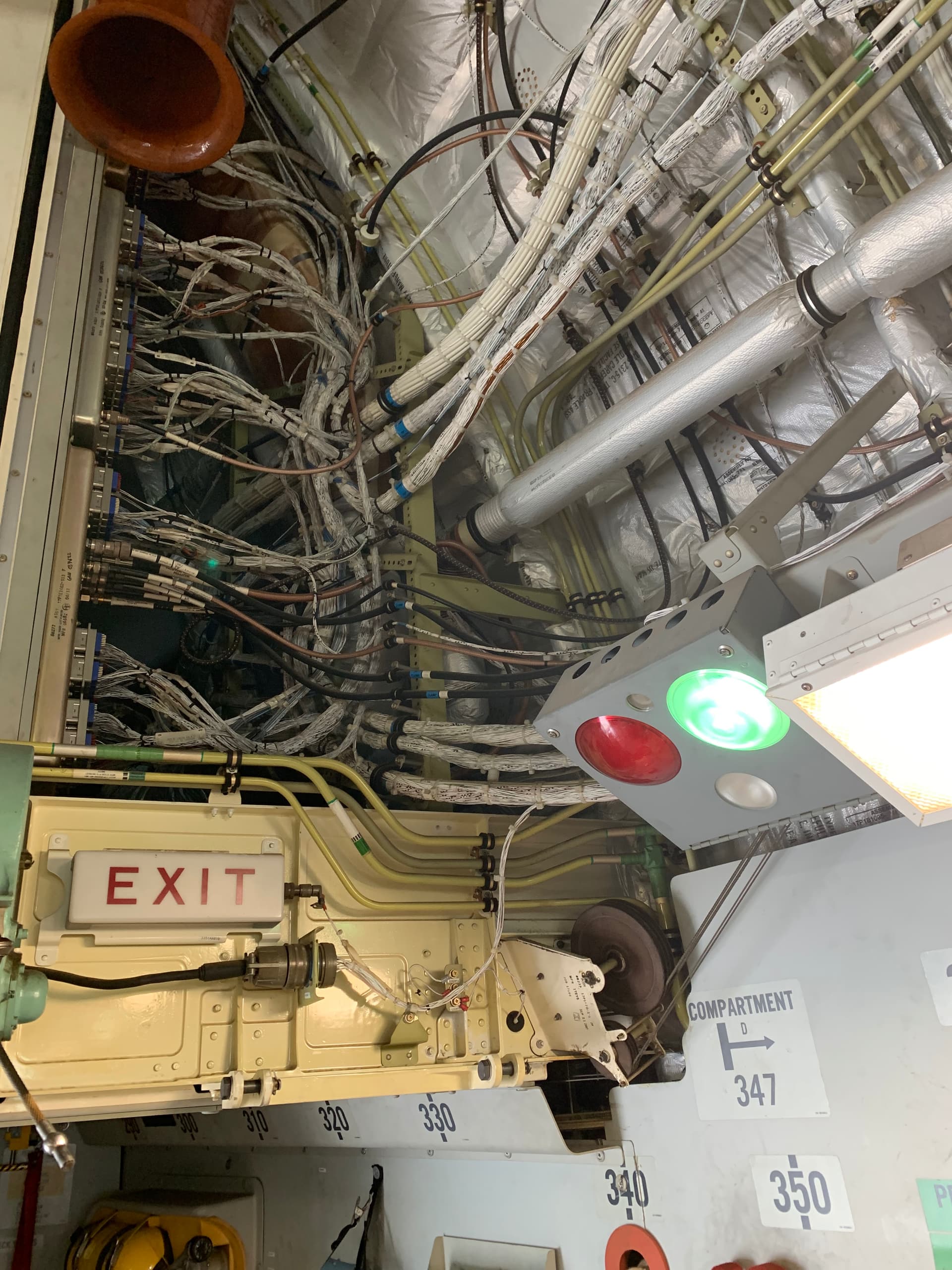
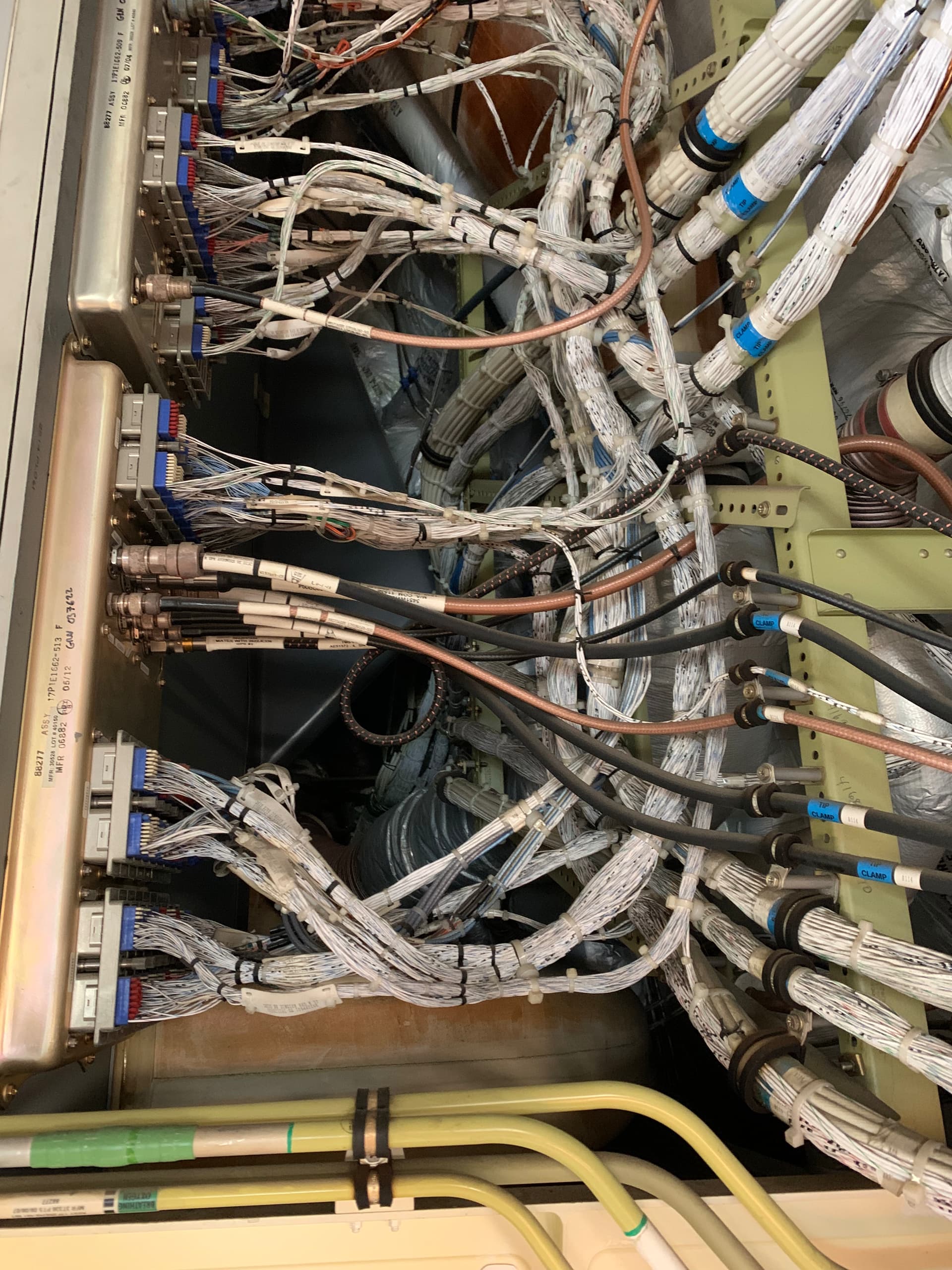
Included are some pics of my “office”.
Whenever I walk around my aircraft I am always amazed at the cabling. I’ve been told by Boeing that there are 10s of thousands of metres on board. All wires are generally coated with a DuPont-trademarked Teflon-like material. Occasionally Kapton is used for thermal shielding. Most of the com cable is ethernet type running digital buses, and lots of coaxial cable for the plethora of antenna. As you can imagine, most systems onboard require accurate signal performance without interruption or failure. Data must get from A-B. Life depends on it. We colloquially call them Wiggly Amps. Basically magic.
I see ‘Aviation’ tech in hifi all the time. Good engineering works. And when a lot of manufacturing effort has gone into a product, why shouldn’t the price be high?
But does it sound better……
I am currently sitting listening to my headphone system with a bespoke cable on the Focal Clear MGs. Search Focal/Hifiman headphone cable on ETSY for a guy in London who makes the most wonderful cables from good quality materials and components for what feels like a steal. Brilliant.
Think makes a lot of sense to enjoy your gear for awhile without worrying about upgrades. Also there’s apparently lots of new gear arriving soon and there might be a better option for you there than the current line up.
Have some nice epic xl cables. The dealer pretty much made me get them he said try yours and try those if u dont like them ill take them back. And so i still have them….