I suggest you ask Vinshine/LHY. I asked and they explained the diff between the EtherREGEN and the AS6 isolation but I am a bit bored by networking so I dont remember  The isolation is not their main selling-point (like it is on the EtherREGEN) but basically they told me the isolation is not as complete as the EtherREGEN and they had some reasons for that. I chose the LHY because I had good experience with their linear power-supplies on switches and I liked the sound (not as aggressive as the EtherREGEN more tight and natural. Like a nice ladder-DAC compared to a Delta-Sigma). For me it is good enough to have kept me from thinking about switches
2 Likes
To be honest I am not that bothered unless someone pays me, if they can’t write it down for objective scrutiny I’d be wary. At trade shows in the past I have asked sales people on stands from various companies how certain things work and what does it do for fun who then have a slight look of panic when I ask certain questions and I challenge responses and look around for the technical sales support guy.. if they have one… and sometimes we might get wry smiles and tacit admissions… when no one else in ear shot.
Unless you specifically configure what you are isolating you are not really isolating otherwise devices wouldn’t work..so I think this is mostly sales marketing stuff really.
Still if it works in your system and sounds fantastic then great.. but really I wouldn’t call it ‘isolation’ because in front of anyone who understand basic TCP/IP such a statement from an actual networking perspective would lose any credibility and as such it could mean anything. It appears some of these companies perhaps rely on technical ignorance and we risk being in the land of snake oil..
4 Likes
And no harm in taking a punt… and in your specific environment certain devices may have more influence than others.
It’s just some of the incredulous techno babble cause and effect assertions we sometimes hear from others I sometimes can’t resist to respond to… but I have learned to mostly ignore a lot of it now on hifi forums, and stay away from certain threads full of myths and legends… non technical people will sometimes believe what ever they want to 
3 Likes
Same for me with PhonenixNet vs 2 x daisychained EtherRegen
I would liked to have tried a PheonixNet, but as stated i use fiber for practical purposes so neede a switch with a sfp port. Shame they don’t offer that option.
These sales people at trade shows can certainly be replaced with AI.
The Etheregen has SFP port.
Etherregen not made anymore.
Didn’t knew. Thanks.
No stock ?
They had the Etheregen 2 on pre production, the last time I read on it.
I had an Etherregen hence having a JS2 power supply. But i sold the ER as it was a pain to orientate in the rack. Plus it got very hot! I can’t say i really missed it when i removed it, but i did use the JS2 on the replacement switch.
1 Like
I had the same complaints. Runned hot, a bit ugly, then connected to a linear ps, it gave too many cables and little boxes.
1 Like
Yeah - continue to have part issues. Looks like one is better off being in China than in the US…
1 Like
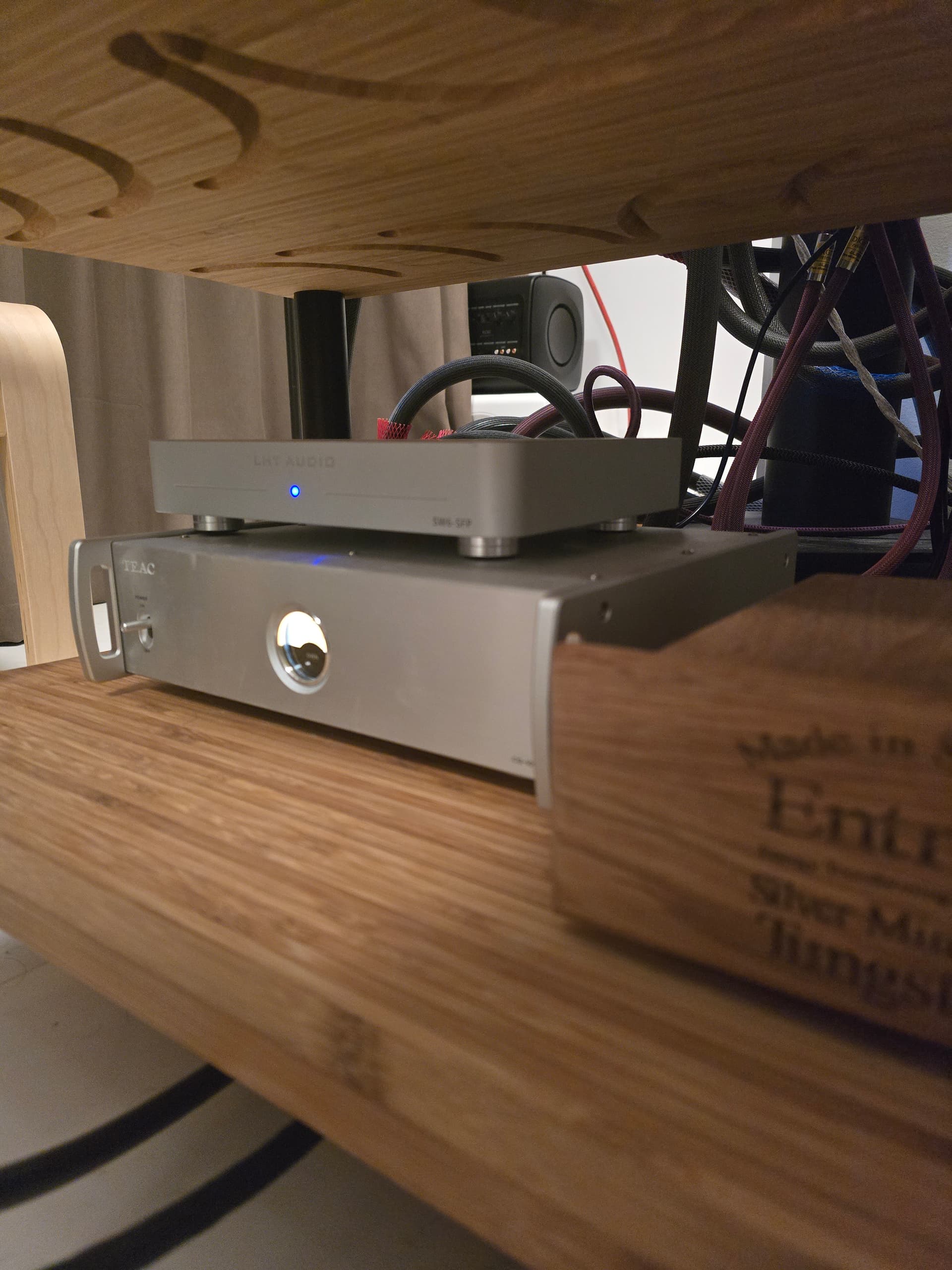
The AS6 and master clock are still part of my desktop setup. Previously, I synced the DAC, DDC, and AS6 to the same master clock. I’ve since replaced the DAC, but the AS6 and clock remain quietly in service at the bottom of the rack.
2 Likes
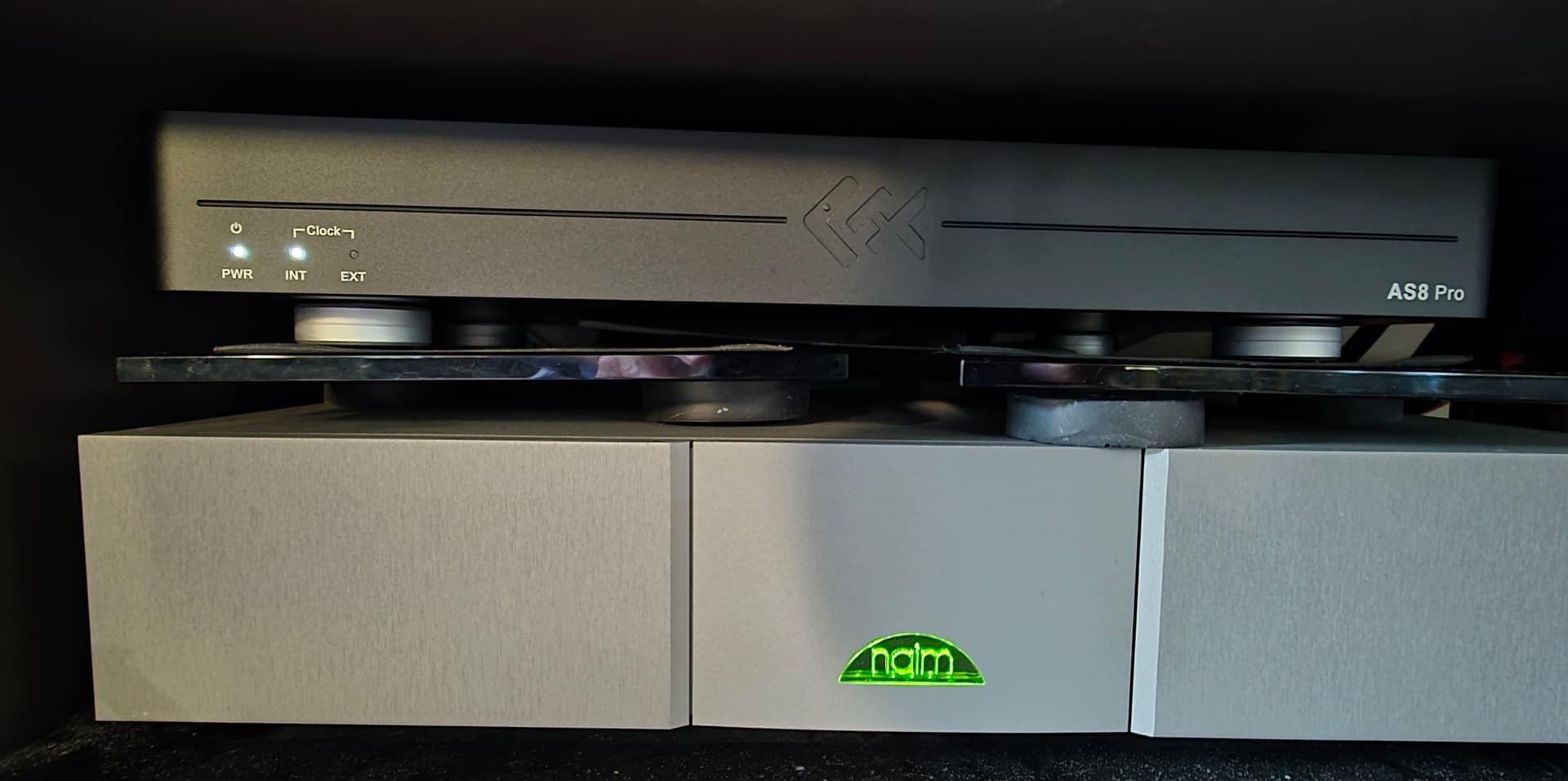
I had a SW6 switch and a SW6 masterclock and replaced both by the new AS8, which supposedly has a better clock inside than the SW6. I had to do this, because i had to free up a plug in my powerdistributor. The sound became more airy, with more depth and less harshness. A modified Buffalo GS2016 switch provides the fibre cable input to the AS8. What surprised me is how huge the AS8 is. And it also gets hot. The Buffalo swtich is super cool (it is the basis of the Melco swtich)
2 Likes
I’ve read good things about the AS8 on another forum, with a few people being very impressed with it.
I also like it. What i do not like about the LHY switches is that you cannot access any settings, for instance to switch of unused ports. I am only using a single lan port and one SFP and the thing gets hot as if it is supplying an entire call center
LHY switches contain basic unmanaged switch boards, so can’t offer that functionality.
The value proposition here is that the case contains four isolated compartments machined from one aluminium block - AC EMI filter (capacitors), transformer, power supply board, network board. So an engineering approach.
But they are really quite simple network devices.
The AS8 builds on the approach with 5 compartments, splitting the “isolated” ports into a separate enclosure. (AC, PSU, ports, isolated ports, Clock) There are also two transformers and multiple PSU boards - one each for the 3 functional enclosures.
The internal pictures are nice, the devices do look very well thought out.
1 Like
So are these multiple switches in a single enclosure, albeit connected together via an ethernet link… however even so ARP or NDP will be bridging across all connected ports.
Otherwise I can’t see how any isolation is achieved other than analogue noise filtering which is not really network switch related per se.
It does make me wonder whether going wifi would be easier and more ‘isolated’ here.. although the streamer needs a good modern wifi implementation, but you would have the best common mode noise rejection
In the AS8, the card with general ports and the card with “isolated” ports are connected via internal SFP.

Thanks so they appear to be addressing analogue electrical noise within the switch itself., by using what appears to be two internal switches connected by a physical fibre ethernet..as opposed to a virtual connection.
Wifi would more effectively in my opinion, but I suppose if you couldn’t use wifi or your streamer WiFi implementation was poor and your exiting switch had quite high common mode noise this might help.
From a network perspective I still find it suprising the only option for low network processing noise mitigation is to use a commercial configurable product (as far as I am aware).
Interested on why they didn’t use LVDS internally which is designed for low noise digital coupling… it’s what is often used in quality digital hifi products for example. Perhaps developing a product using that would have been too expensive for the expected return rather than reusing or adapting existing circuit module patterns using readily available OEM chipsets.
Back to analogue noise consideration Ethernet layer 1 uses different DCvoltages depending on synchronisation protocol negotiated on the port . 10 BaseT is approx +/- 2.5 v, 100 BaseTX approx +/- 1 v and 1000BaseT approx +/- 2v with some high frequency signalling using upto 4 V.
I wonder how that is regulated ?.. perhaps within the OEM chipsets used?
Also I wonder how are the clocks decoupled between the switch boards. That looks a coax connection rather than optical.