Yes, it’s really simple.
1 Like
That’s me told then!
3 Likes
I would say the responses in regards to subs only being used for AV, etc haven’t heard proper subs & aren’t aware of why their potential better. It doesn’t matter the speaker, almost all, even when basically full range can potentially benefit from subs, if their of proper design/quality.
It was mentioned above with a sub sometimes things sounded better & sometimes worse, this is typically the result of the sub not being dialed in properly or just a poor performing sub. I had a Kef T2 that I used with a pair of LSX speakers. I was constantly playing with the setup parameters, get it dialed in great & a few tracks later, would have too much bass or not enough. Basically I was tweaking it for months on end, every time I would play the kit. I swapped this sub for small sealed Totem sub, tweaked the settings for a couple min, & maybe played with them once more after that & the blend was seamless.
Even larger towers still typically have bass drivers that are limited in size compare to the common 10", 12" drivers in most subs. So that alone is an advantage (not to mention the power that is typically behind a good quality sub, which allow it to much better pressurize a room), now add to the fact that you typically have a lot more placement options with a sub vs speakers, which typically what ever speaker placement sounds best for bass isn’t the location that works best for the other musical aspects. Subwoofers when used in multiples are placed to help eliminate room modes, to even out bass response, again something you typically can’t do with a pair of speakers. Obviously the subs need to be of a certain quality & from a brand that makes subs that are specifically designed for 2ch use. Some say, well my speakers play sufficiently low, so subs aren’t required, adding a sub does not only improve bass, it improves all aspects of music when done properly. My speaker play flat well into the 20’s in my room, but they too benefit from a pair of subs.
5 Likes
The sound of an instrument has various harmonics, for example a large organ can give in the bass but its pipes also resonate harmonics in the medium.
A double bass that plays high notes also plays in several registers.
A subwoofer perfectly fused with the rest can’t be understood properly, it adds harmonics that were missing without it.
I have two sub BK with my focal 1028…
4 Likes
Preferably a n-SUB 
It’s a beautifully well crafted and very reliable player, certainly worth investigating.
I am in the pro sub camp having previously been a sceptic. I have a REL Sub S510 rigged to my amp using the hi-line connection with PMC Twenty 26 speakers. It it true that with some recordings this can be too much but I tend to find this more with very recent releases that were mastered way too loud to start with. Much like super tweeters which I also own, the Sub not only adds controlled weight and presence but also opens up the whole frequency range, Mids instantly improved for me. I must confess that it did take some time to properly dial in, the hi-line connection means both speaker and sub are being fed the same signal and this really does make things sound much more integrated, I only have 1 sub but low frequencies are non-directional so no issue with balance of sound. Rel do indeed recommended the next in line sub model but unless you have a larger room I personally feel this would be overkill, my sub is not set to high gain or volume. I found a Nordost test CD worked wonders for me, took a while as I say but I wouldn’t be without now. This REL range is really designed for 2 channel, some subs are specific to AV. I get the whole speaker should do this alone anyway but your room plays a big part in this so Sub really is a way of tweaking within the room you are having to use for playback.
5 Likes
Many subwoofer questions these days!
It doesnt matter what speakers the original poster has, surely it’s about how they interact with the room that’s key here. A subwoofer may or may not be of help in this installation but it certainly can’t be ruled out on those grounds.
An advantage of a SW if set up correctly is you can turn it off or adjust as you see fit. Particularly helpful if you like a fuller sound at lower volumes.
4 Likes
Something that has not had much consideration is available amplifier power. Most (all?) amps put out less power in the lower (<100 Hz) frequencies, which is exactly where more power may be needed to drive those big diameter cones. Consequently if for example, you have a pair of bookshelf speakers driven by an Atom, a big upgrade in sound quality can be found by adding a sub. On the other hand, if you have floor standing speakers that can go low, AND at least a medium power amp of 100 Wpc or more, then adding a sub may still add a significant upgrade, but much less noticeable.
1 Like
I’m a newcomer to the pro-sub camp. Running an ndx2 through a 282 > 300dr into focal kanta 3’s for the last six months has been a treat and not incapable of producing very impactful and musical bass. Though the speakers on paper will reach down to 33hz I couldn’t help but wonder I was missing a layer below that I could both feel and hear.
Id tried to incorporate an old and unremarkable rel sub with my previous sn3 via rca but couldn’t get it sounding complementary rather than announcing its presence in a crude and unruly manner.
Having now connected it with spades at the speaker end and spending a good few hours fiddling with knobs for phase, volume and crossover it’s really delivered.
Sub bass at a lower register is now pleasantly present, bang on time with the main speakers and there’s much more space in the presentation giving all instruments the sensation of separation and articulation.
I’m very sure room characteristics play a big part but it’s worth giving a fair trial to in your own system. I’m so satisfied to what a second hand rel which was basically free to me has done in terms of uplift that I think my next upgrade will be a better rel sub.
I fully acknowledge my life long allegiance to the low end as partially biasing this opinion.
4 Likes
I’ve played around with subwoofers for many year. Single REL, dual REL, stand mounts, floor standers…
My conclusion is that a sub works well for small speakers with limited bass response. But if you have speakers that can dish out proper bass, a subwoofer will make the bass sound muddy and slow.
Just my 2 cents, others will no doubt disagree.
My experience is different. The best performance I got from my N-Sub was with floorstanders, even compared to using them with N-Sats. As long as the low pass filter is set at the right level, so that it adds frequencies below those the speaker can handle, rather than adding more of the bass that the mains put out, I don’t think a sub gets in the way.
What still amazes me about a sub is how it can improve the sound right across the frequencies range. I’m not sure how they do this, but they can certainly do more than just increasing bass extension.
A sub can, on the other hand, destroy the sound in an otherwise great sounding system, and if it makes the bass sound “muddy and slow” that is exactly what you get, in my experience, when it’s not properly dialled in.
4 Likes
A complete sceptic here that has become a convert, with caveats.
I was in they are toys for AV and shouldn’t be in a HiFi setup. Then a run of concerts had me hankering for something that added some of that real presence.
I had (still have) Kef Ls50 metas and then Kef brought out the kc62 sub. Bought one , drove myself insane trying to integrate it, got especially frustrated in why couldn’t Kef just provide some recommendations for the right settings as they make both of them and must know.
Eventually after much reading and research got it matched, positioned and level set. Then got bugged by the ‘but it’s one sub” (this in spite of the kc62 being genuine stereo with independent channels if setup that way.)
So bought another one, repeat same experience, need to change all the settings to accommodate two.
Had it set like this for a while and then split the subs so I had one in my other system. The reason was in the main room one sub properly setup gave 90% of what 2 did. Plus the second sub was sat in a place the dog really liked and I felt mean (honestly).
So I can totally appreciate both extremes of the argument here. I’ve learned a lot through the process and integrating the sub in the second system was way easier, due to experience and also the room.
When they are right they add scale to the whole range, more because there seems to be more texture when there is genuine sub bass, filling out the bottom end so especially vocals have better context, just more real. Soundstage becomes more lifelike, image height etc.
And then when music has done real bottom end, stuff below 50-40hz it doesn’t suffer the drop off that almost all speakers have at some point. Think the kc62 is measured down to 11hz for example.
Subs aren’t just plonk em anywhere and they will deliver and like main speakers quality and capability vary massively.
I could easily understand why I’d guess 50% at least who deploy end up moving them out again. I’d say another 30% leave them but probably have worse sound. Leaving the 20% who are happy with a positive difference. My figures are real finger in the air based on my feelings at various times, the threads I found when setting up and a mate with an entry Rel.
Final point , when setting up best to get a second person so that they can make the adjustments to crossover and gain settings whilst you listen.
3 Likes
It takes time to set them correctly, I spent more than three weeks to settle mine… it’s been two years since I was touched. I sometimes turn them off to hear the difference, I can not do without them! when they are on I don’t feel like I hear them but when I turn them off I feel good that something is missing…
1 Like
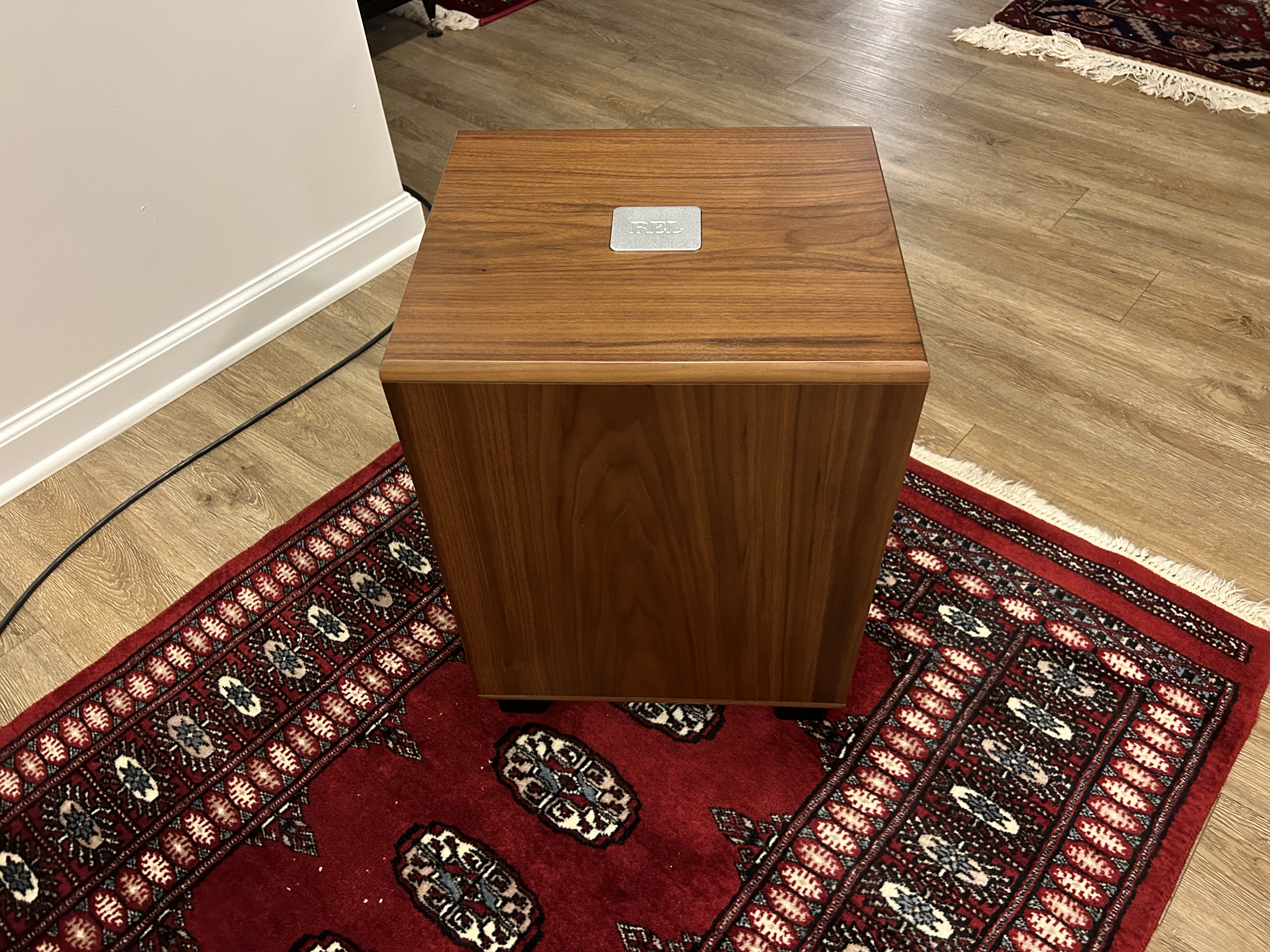
I had a REL S/510 that I sold the other day . It was great in my old house where I had a big room. Now that I’m in a much smaller apartment the S/510 was too much. So I just got one of the new REL Classic 98’s! It’s a beautiful little box finished in walnut, weights about 40 lbs.. down firing 10 driver, 300 watt amp. I’ll get it setup this weekend.
5 Likes
Absolutely right that the set up needs to be done from the listening position . A good sub will have a remote control (the remote for my Velodyne sub has 37 buttons - just counted them!) and a microphone. It can be connected to a tv and generate test tones for real time feedback on the effect of changes. This is useful for getting you close and then you can dial it in precisely by ear of course. A lot of the adjustments I made were counter inuitive so it would be easy to go well astray without real time feedback. There is a world of difference between a good sub and a cheap boom box!
The K62 isn’t a stereo sub. It has two diaphrams and can take a stereo feed but it drives a single signal (merged if taken from stereo). Both diaphrams sit on a single core and it’s very important that they drive as one. A microprocessor syncronises the coils to mitigate interference since they are nested.
The main reason for two diaphrams is to increase the output from such a tiny enclosure.
If you want it stereo, you still need two of them.
Perhaps a few members that have successfully added a sub could list some useful do’s or don’ts, I think that would be really helpful.
Reading this thread it’s clear that it is simply not just a plug and play item.
I heard the top of the range rel sub at Bristol show some years ago from memory it was being used with a pair of very elegant stand mounted Sonia Fabers and I think AR valve pre/power of a very high calibre.
He played a choir performing in a church and when he added the sub the difference was amazing, it impacted all the frequencies, you felt like you were actually in a church (not a hotel bedroom).
It was a very, very expensive system so I always put it down to that but seeing so many people running them in all levels of systems that must be a positive thing.
Try it don’t be put off it might be ideal for you…as is mentioned over and over on here…your ears should be the judge.
1 Like
But remember there is no stereo information (ok almost never ever) below about 80 to 100 Hz… and most modern productions will mono the low very bass to avoid horrible phase issues in replay … kind of 101 music production.
Unless the speakers are designed to be used with subs and the settings are specifically defined such as frequency cut off, filter steepness, and the phase is carefully set for speaker placement… the chances are you will make the audio sound worse. Sure if you want sub sonic… ie feel the bass then they can add an experience, but in the audio band I would be wary… but of course some are going to be entirely happy in their particular setup and get it sounding as they want for their tastes…
I have tried, failed to be completely satisfied, then researched it properly from a music replay and sound engineering perspective, and subsequently been on a few courses on production… I don’t use any sub now…
Remember a sub contrary to some myths does not add any high frequencies or higher harmonics… it simply adds a fundamental, and sub sonic effects… ie you feel the air move. A poorly aligned sub will smear frequencies however and confuse your brain. Some modern subs incorporate DSP and measuring software to optimise them selves for your room layout and speaker placement and performance… if definitely wanting a sub I would look at such products first.
Your brain actually adds the fundamental if missing or severely diminished… if the harmonics are there. But it won’t mimic the physical feel of air movement . Lots of development of this in recent years due to advances in consumer electronics and smaller and smaller playback speakers… good articles and academic / industry papers on it at the AES.
4 Likes
In my experience subs work slightly better with bigger speakers as it’s easier to achieve an “enriching” effect without (or rather less perceptible) of an effect on e.g. tempo and speed. Of course, in a small listening spot in the room where it works best or mostly. With smaller speakers the fiddle can be almost endless and the added bass effect appears to be more pronounced but the compromises otherwise are bigger. More variability between recordings and even songs. You no longer have the same quality speakers essentially.
Thinking about the effort and time a designer takes to make a speaker sound like a whole and superbly coherent, the integration, the ingenuity that sometimes goes into the crossover design … a good quality one can be a mere marvel … and then adding a completely new odd bass box and try make it work and incorporate seamlessly without a compromise? :))
1 Like