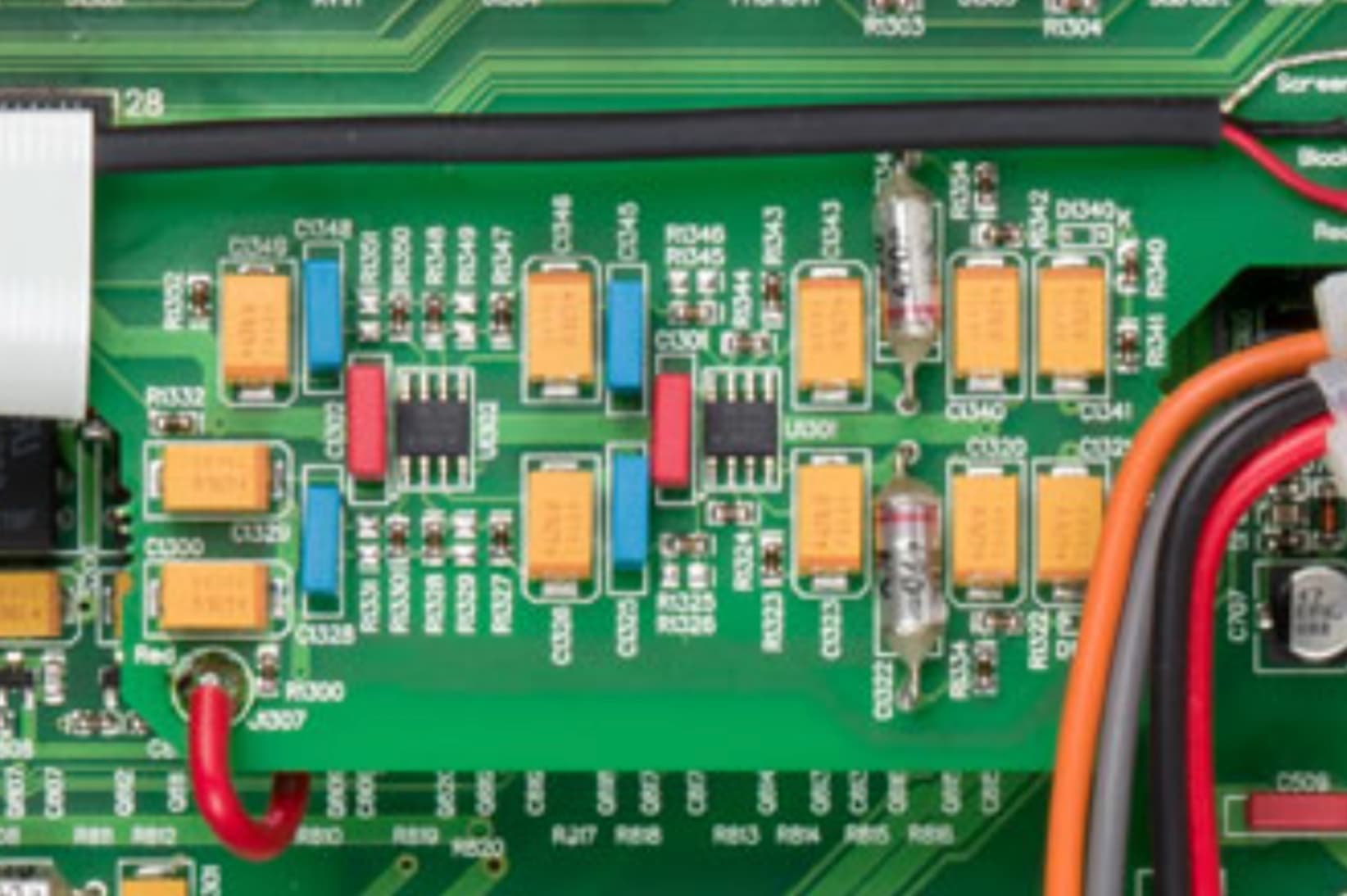
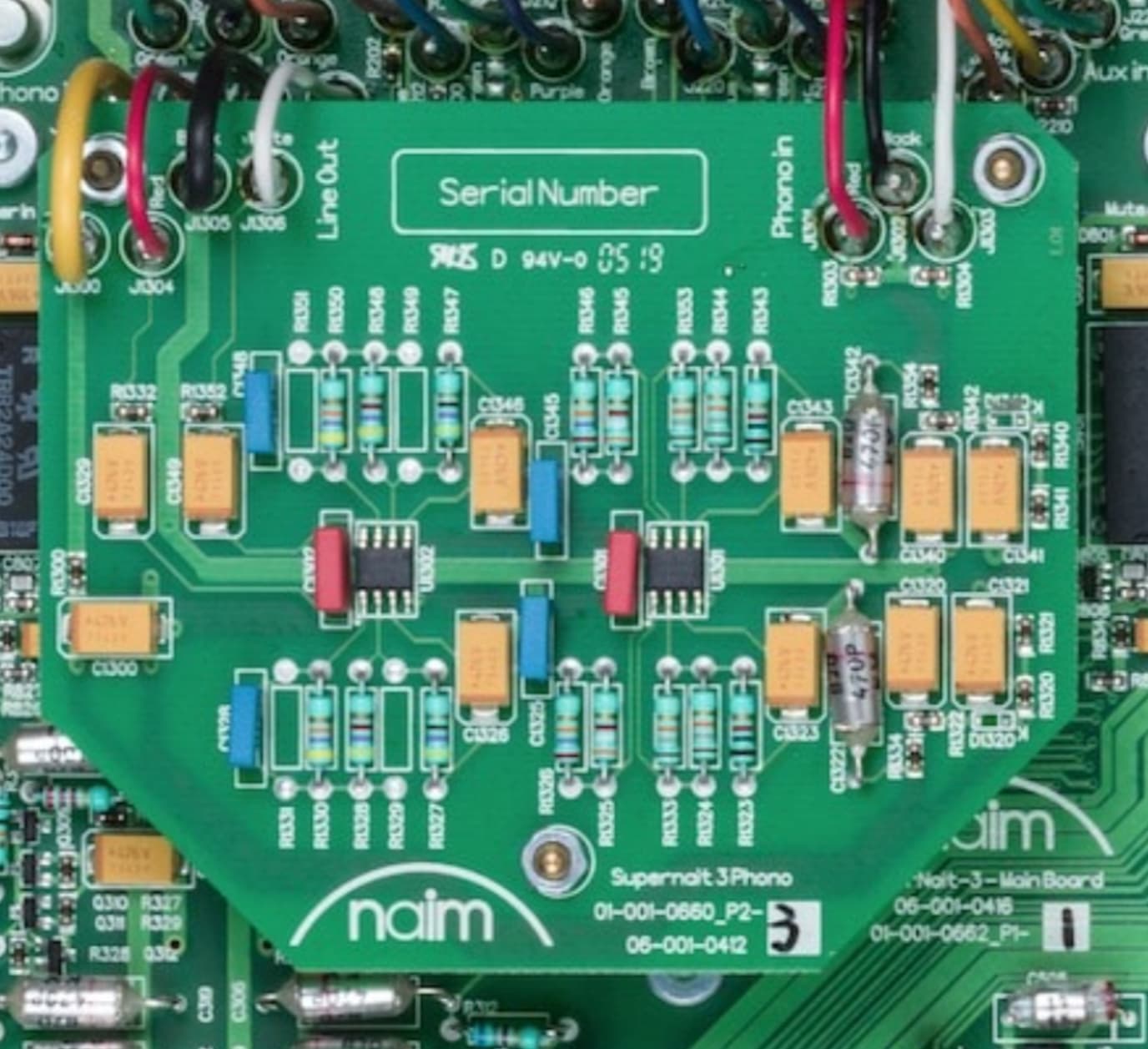
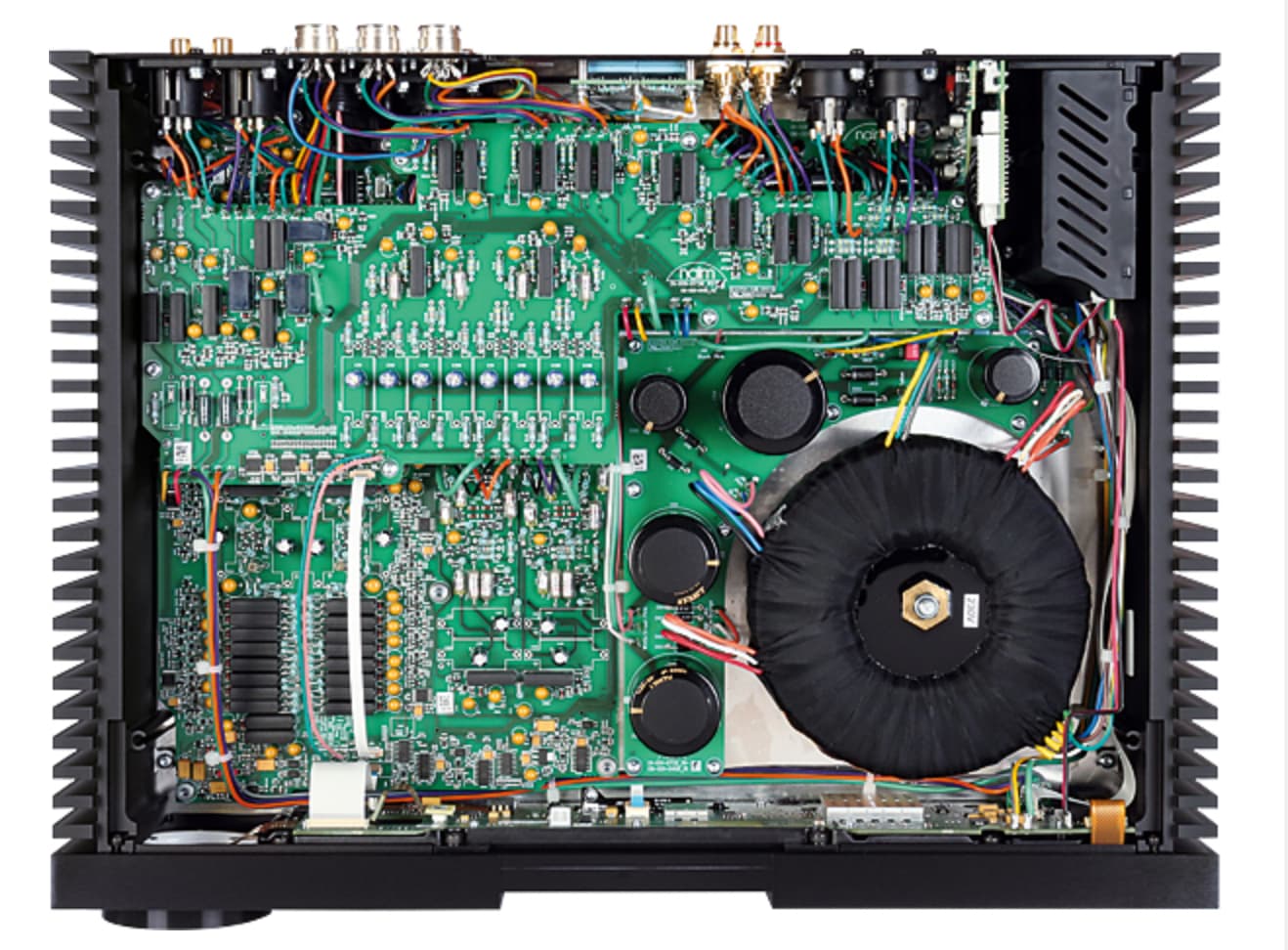
There are definitely some through hole components on the 300 series, based on the internal shots here:
And I think much of my XS3, old classic, used surface mount. In fact I think the main difference between the MM stage in the XS3, and the same stage in the SN3, is that the latter used through hole and the former mostly SM.
I think Naim have been moving to SM for a while, and used through hole for key components in higher end boxes.
From what I saw of earlier pics when released, components that are likely to need replacing or need manual grading and selection are through hole. Components which should last the lifetime of the unit are surface mount. It certainly cuts costs without impacting quality IMO as PCB fabrication plants increasingly also provide component assembly on-board.
To be fair, ceramic SMC caps also have a lifetime but it is closer to 35-50 years. And SMC components can be replaced, albeit it requires more time and is a more expensive skill. Having spent countless hours refurbishing things with copious amounts of SMC on board, I can appreciate the desire for compacting a circuit. Though a denser SMC crammed board has different heat dissipation challenges.
When SMC was relatively new to hifi i the early 90s, there was speculation that adopters like Linn would suffer no end of trouble with dry joints after a certain age because SMC joins were inferior.
For those (that would be me) who have no idea what this ‘Through Hole / Surface Mount’ is or means and what benefits each configuration brings to the sound could you explain a bit more please.
Through hole construction means thst components can be changed individually as in servicing or minimal replacement.
Surface mount means “ virtually” no repair only replacement of complete module or unit.
That may be true as a matter of policy but from a technical perspective is completely false. All surface mount components can be removed and replaced assuming a suitable replacement is available and the service engineer is willing and capable.
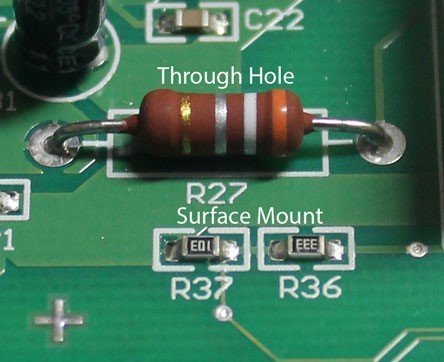
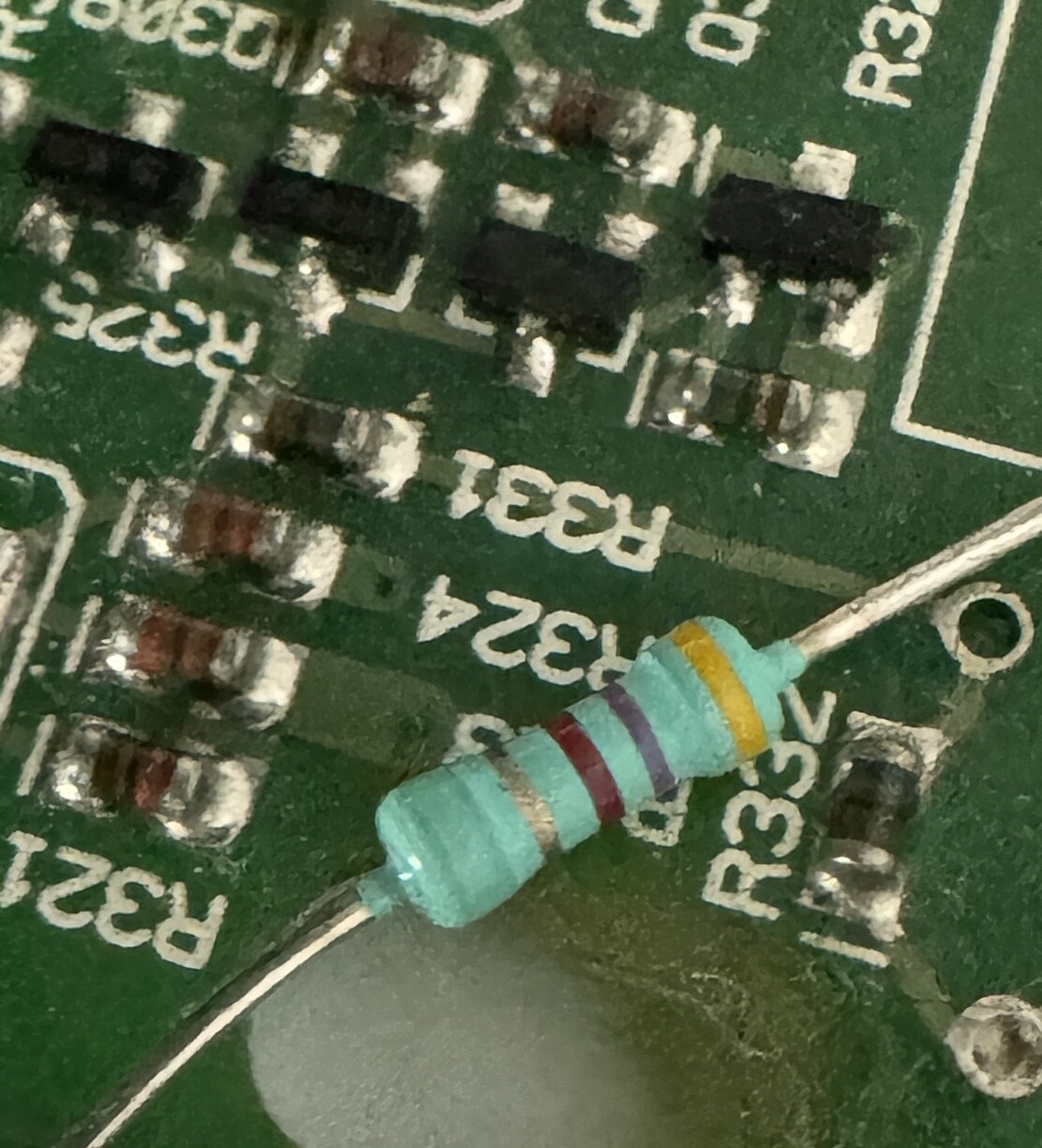
Through hole literally just means that there are holes on the circuit board which wire legs on components poke through and the hole is then filled with solder to bond the leg to the circuit board. The components are generally larger and more easily worked on for removal with less (but not zero) chance of damage to the PCB.
Surface mount components (SMC) are mount on circuit boards with no holes at all. There are conductive pads on the board and the component sits directly on the board with it’s conductive ends straddling the conductive pads with a tiny bit of solder that bonds the conductors to the pads.
Given the time and skill required, most manufacturers will decline to repair SMC components because it takes a very experienced engineer (so their time costs more) more time to do the work. But as the value of the equipment increases so does the cost benefit of actually replacing an SMC component. An engineers time is almost certainly more expansive than just buying a new TV. But certainly less expensive than working on a $50K preamp.
I spend rather a lot of time repairing and working on SMC boards for various collector’s item electronics. The last one I worked on required over 90 solder points. About 70 of which were the swapping out of a couple chips and the other 20, replacement of 10 or so SMC capacitors. It can be done and people do it all the time.
Here’s a close up photo, you can see the two types, but less clearly, on the images of the integrated amplifier phono stages above. Image from codrey dot com
Naim have made a song and dance about through hole in the past, stating the component is off the board, isolation vibration and heat. they also bend the legs into a spring, giving it suspension. There is also matching of these components for tolerance
I think they still hold to that. If you look at interior images of the NAC332 you can see use of through hole continues. I also recall comments from Naim staff that the practice, and benefits arising, are all carried into new classic boxes, at least the 300 series. I think the NSC222 makes less use of through hole than the NAC332.
Nobody is saying “me “ that surface mount can’t be repaired but it is far too costly and time consuming for economical repair so is 99% of the time module replaced I know it was part of my job in a previous life.
If it costs £100 to fix or £25 to replace what are you going to pay and how can’t it be better to make money if better mark ups are available on replacements.
It’s all biz and common sense
Industry doesn’t work like the “ The Repair Shop.”
I think that is what many on this forum forget. Naim is a business and always has been. If Naim can no longer afford to repair, replace or keep kit in their current range then harsh decisions have to be taken. It may not suit me but I understand their decision. I have the choice to go elsewhere or to remain with the new direction, which to be fair may have been forced on Naim. Forced obsolescence rather than planned. Only the Naim number crunchers can decide which path to take for their own survival via making their needed profit margins.
It depends. Luckily the smallest parts are the ones least likely to need replacing. SMC ceramic caps and resistors should last through seval recappings. SMC electrolytic caps are big enough even with my awful eyesight to do unaided. But yes, if working on a chip or the really tiny parts you need a loup light and SMD hot tweezers. It’s only cost effective if it’s your own time or the unit is very expensive.
Honestly the worst part is the small window of time each day when your hands are steady enough. After you’ve properly woken up but before the first coffee. Once the first caffeine hit of the day hits you, it’s game over.
The Core had a very specific, and limited, use case which I don’t doubt it fulfilled extremely well.
When I decided to replace my Uniti-Serve it wasn’t even on the shopping list because I want a server that offers NAS (or near NAS) flexibility and Core (or near Core) sound quality. The Core doesn’t (and wasn’t designed) to do that.
Naim have a portfolio of Roon Ready streamers and had a server product that couldn’t operate as a Roon core. No-one will ever convince me that made any sense. Very definitely a missed opportunity.