My 200 isn’t DR.
1 Like
Thanks, interesting comparison with the Nait 50 by the way. The DR makes quite a difference in my opinion, so I wonder how the Nait 50 would compare to a 200/200DR/HC or FC.
Last year I tested the Nait 50 with the Harbeth Super HL5 Plus XD and the ND5 XS2 / Rega P3. The result was really great, it was very enjoyable even at high volumes.
1 Like
When I get the 200 serviced it would be interesting to hear how it sounds then. Even more so with a Hicap DR added.
2 Likes
Before thinking of a Hicap get yourself a Napsc. It will make things sound a lot more natural. Naim don’t term it ‘upgrade 1’ for nothing.
3 Likes
Forgot to mention i have a Napse connected also.
2 Likes
That’s good, they make for a nice improvement.
1 Like
Keeping my eye out for a Hicap DR at a reasonable price.
7 Likes
That is a bonus! I once had a pair of Rega RX3’s in a limited edition satin white that an in-law stained with red wine…Never again!
That’s quite some load! What sort of sensitivity?
Many thanks - very interesting to hear feedback on both in the same room and system. On the one hand one would assume that a pre-power set would have more in ‘reserve’, on the other hand the 50 appears to perform beyond what its size would suggest it was capable of.
1 Like
I have no idea where the size-limit goes, I googled the theme and found that others have done the same (4TB WD) with success.
I copy and translate more from the original owner about the bass system. ChatGPT to the rescue.
" SLOB is basically an OB (open baffle) design, with all the advantages and disadvantages that come with it. For my part, the exercise was about minimizing the drawbacks inherent to the OB principle.
As we know, for a bass system, the big challenge with OB is the inevitable cancellation that occurs in the lower octaves, since the signal wraps around the construction and effectively short-circuits itself. This, of course, has to do with wavelength. In a reasonably large baffle — for example, about two meters wide and tall with a driver mounted in the center — the cancellation isn’t completely catastrophic, but it’s still there.
So what to do if you want all the benefits of OB, but preferably none of the disadvantages? Time to put on the thinking cap.
Keywords: a large enough baffle, sufficient displacement (one swallow doesn’t make a summer, and a single 15" in OB won’t give you full-size bass…), plus combinations of other bass-enhancing techniques that can be merged.
Thus, the SLOB here is a mishmash of different principles, all intended to extend the effective working range downward in frequency to a level where there’s acceptable deep bass with the desired output and headroom. The current SLOB goes practically dead flat down to 31 Hz measured at the listening position in the room, and is therefore satisfactory in terms of deep bass, with a smooth and well-behaved roll-off below that as well. But the Devil wanted more — and Sluket wants more!! But not at any cost…
Today’s SLOB consists of ten 15" drivers per side, connected in a sort of quasi power-tapering configuration, where the goal is to treat the drivers differently in terms of power and frequency (quasi power tapering because true power tapering is often used temporally to offset driver output, especially in line sources) to help reinforce the lowest octaves.
In short — the drivers receive different parts of the total low-frequency signal from the amplifier. Combined with aggressive slot design (high compression), a genuine line-source layout running floor-to-ceiling, symmetrical division of frequency ranges, proper driver quality, and so on — the result turned out pretty much as expected. This wasn’t by chance, but rather the result of roughly a year’s worth of pondering and research.

The key to improvements often lies in holistic thinking
This, of course, also applies here — in the form of viewing the SLOB and amplifier as one integrated system. For various reasons.
Up until now, the SLOB has been wired according to the aforementioned quasi–power-tapering model, using a mix of series and parallel connections between and within driver groups. The resulting system impedance is currently 4 ohms, which in principle means it can be used with most amplifiers.
Sensitivity is hard to estimate, since I trade some of it for a lower Fs (the slot loading eats up sensitivity). The drivers themselves are rated at 99 dB in a standard Altec 612 cabinet, with 1 W input and measured at 4 feet. I would estimate the system sensitivity to be around 101–102 dB in its current configuration.
I’ve mostly used a Class A amplifier rated at 50 W into 8 ohms — which translates to about 100 W into 4 ohms. These are not exactly wild figures in today’s world of gigantomania, where bass is often powered by kilowatts… but in principle, those 100 W have been sufficient here, with short peaks measured at over 350 W — without the speakers showing any signs of stress.
However, this configuration of the drivers is actually a major waste of resources, since a large number of them only receive a fraction of the total power, while a few get much more. In other words, an unequal distribution of benefits — not unlike what we experience in other areas of society here at home… One might also assume that some power is lost in the inductors, and that there’s a small degradation of sound quality there.  So, what to do?
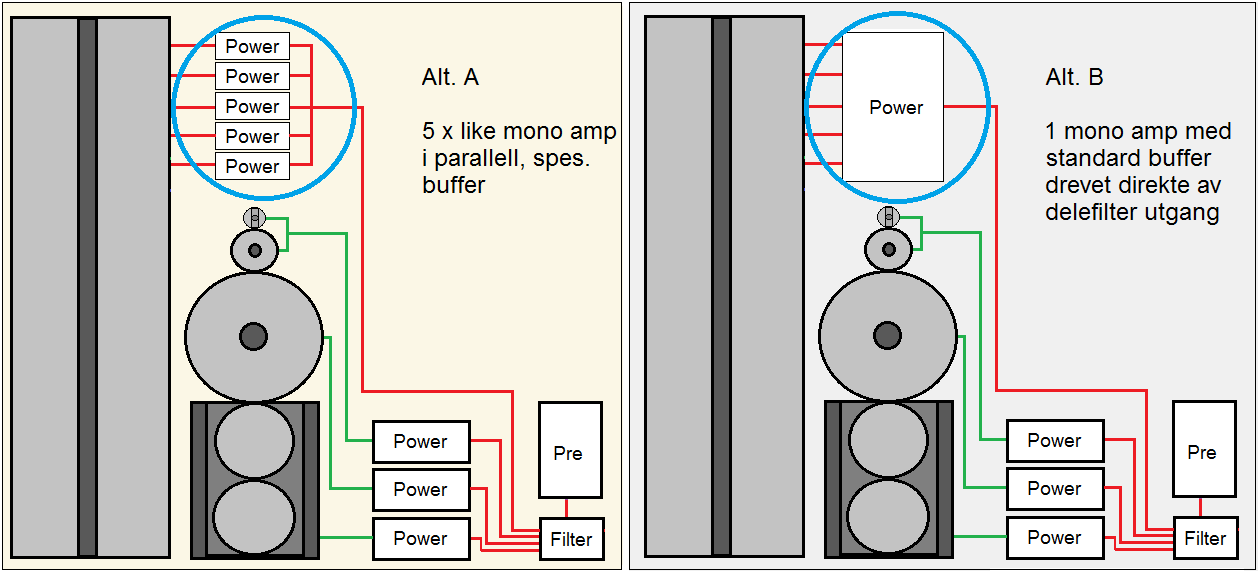
Roughly two years ago, I started toying with the idea of rebuilding the SLOB for full parallel operation of all drivers. That way, power distribution among the drivers would be 100% equal, resulting in a completely different level of power handling, efficiency, headroom, and uniform driver loading — and without the need for any power-tapering remedies.
The only drawback: a final system impedance of 1.6 ohms. Which, of course, places very different demands on the amplifier compared to a 4-ohm system.
Since there are five groups with two drivers in each group, splitting the load between, say, two identical amplifiers wouldn’t be optimal. That idea was therefore scrapped, about the same time as the thought of removing one of the driver pairs (the center one) to allow for two identical amplifiers with a 4-ohm load each.
That left two ideas on the table… either a dedicated amplifier for each driver pair (i.e., 5 per speaker) — or one amplifier capable of handling all the drivers together (1.6 ohms). Action speaks louder than words — that applies to comic strips and graphic representations of ideas as well:
7 Likes
21 Likes
Interesting - I really love my nait 50 as well, but that it sounds better than full 500 is hard to believe (but hifi has its miracles and ear, room, taste concept).
Serviced 200 plus hicap will be up the ladder!
The greatest hifi miracle of all is called confirmation bias.
5 Likes
Sorry, I’ve only just around to giving your reply the attention it deserves. The original concept is certainly a SLOB on a grand scale: 10 x 15 inch drivers per side. Reading the ‘cascading’ nature of the original configuration (presumably to increase the output at the lowest frequencies by feeding some drivers with the lowest frequencies only), did this use a passive filter set-up? When set-up correctly I imagine the system produces bass with a natural effortlessness?
I’m familiar with the LF short circuit from OB designs - I get the best bass response from my OB system when the 15 inch modules are physically ‘coupled’ to the main baffle - significantly increasing effective baffle size. My next project (I have the drivers) is a stereo pair of mono-ripoles which will incorporate a form of slob loading and baffle folding to effectively lower driver FS but at a reduction in driver efficiency. One advantage of a ripole is a relatively small enclosure.
2 Likes
is it sounds well in such small room?
My room is twice the size of yours and I have an LS3/5A. Sometimes I feel like the music is buzzing, so I keep the volume at no more than 65 dB.
I live in an apartment so volume is kept pretty low which is one of the reasons I love the Nait 50. My Nait 2 has channel imbalance and it was frustrating to listen to since I moved last year.
I actually thought the LS3/5a type speakers were designed to work in small spaces, are you saying they need at least a 20’ x20’ large space to sound good?
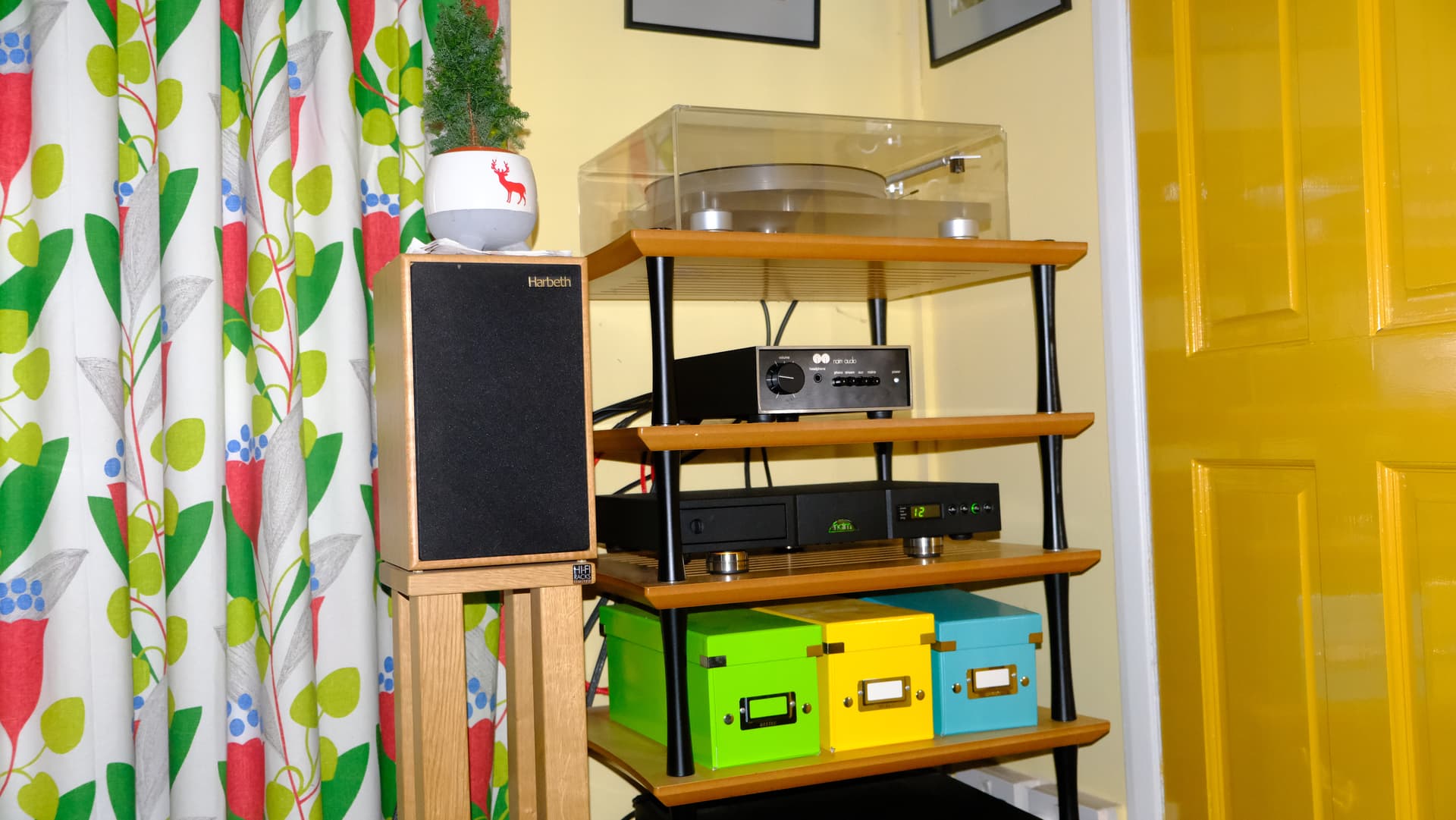
It’s funny because I posted this pic in another group and was told the speakers were too small and that I needed floor standing speakers to get decent sound. Regardless, I’m happy with this setup, might just upgrade the source one day. Cheers!
2 Likes
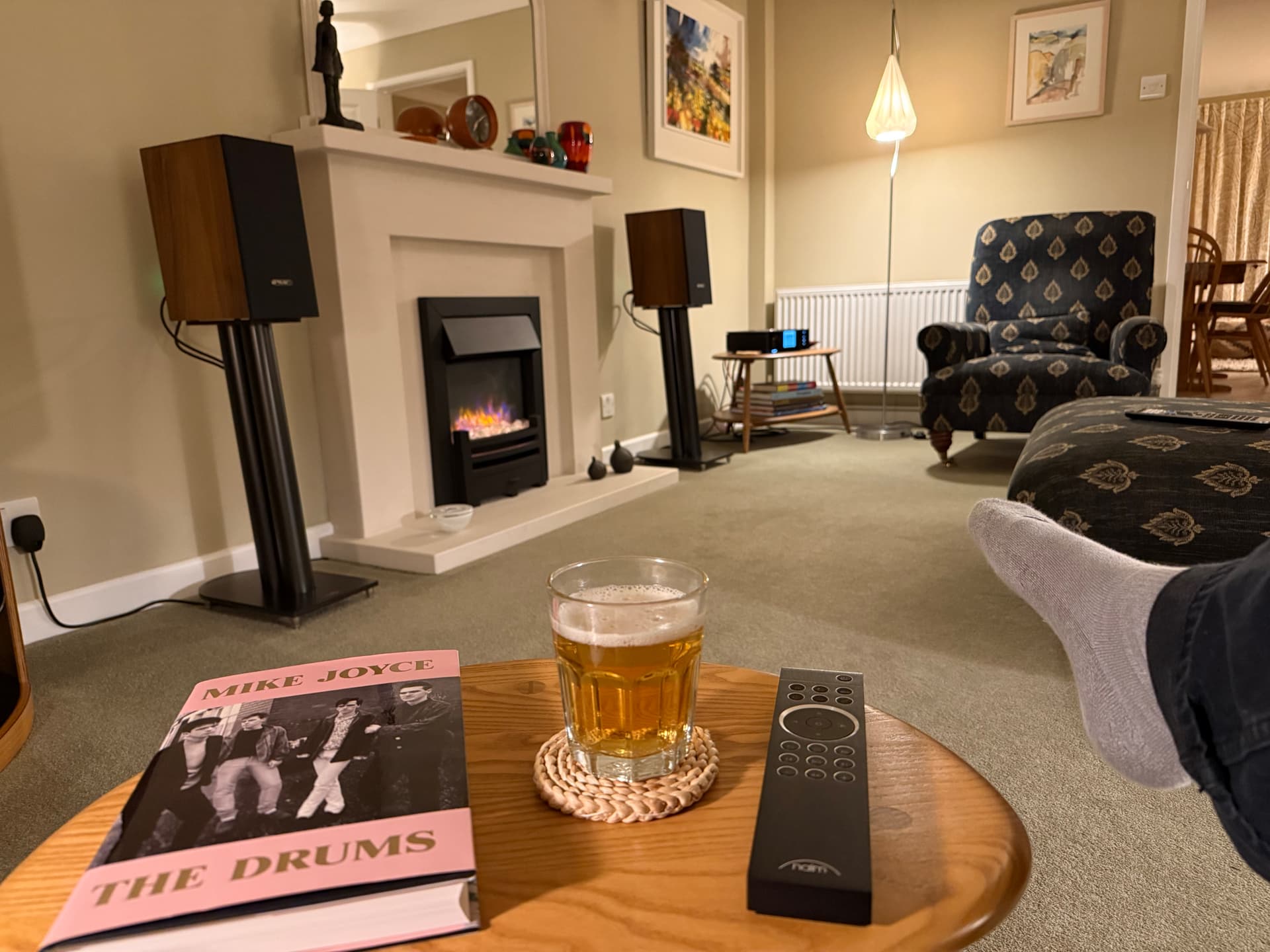
Sit in the sweet spot?
8 Likes