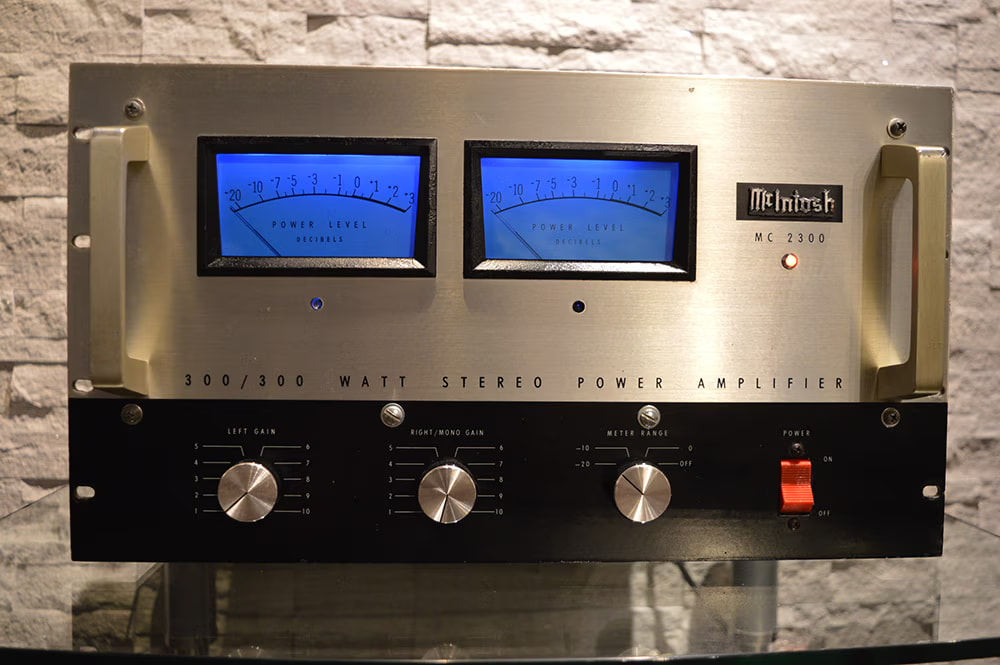
I’ve got boxes of valves that I purchased over the years that are now worth many multiples of what I remember paying. Best appreciating have mostly been Bendix, GEC/Marconi and Western Electric. I have a pair of rare as hens teeth xxx silver plate tubed I purchased from Hungary for £15 the pair, I I’ve only ever seen a couple of other pairs in the last 20 years and they were around £1000 a pair they sound amazing but definitely not for everyday use birthdays and special occasions only and always a treat.
Funny thing I had been saving my pennies for a pair of new issue Western Electric 300B circa £1500 but spent the money on my first Naim amp a Naim Nait 50 instead
I would love to buy my first car, an Autobianchi A112. Total production reached more than 1.3 million units, yet you can only find dozens in good shape in 2026. This is why the price is so high now. In the world of HiFi, almost all old equipment can still work well by changing only a few inexpensive components. I think this is why prices are not so high in that sector. Also, all CD players look like other CD players.
To my mind which I may be completely wrong, vintage hifi predominantly appeals to people who have had some experience with the kit or have witnessed the emergence of it in the same era. It will not appeal too much to the younger generation or kids who will grow up to be adults in the near future. When the older generation are gone, vintage hifi would be less appreciated and I foresee most of it ending up in landfills. I may be wrong but that’s the way I see it.
Well I think vintage hifi does appeal to younger people too but the use case is different.
Older people are more likely to restore and use it. Younger people may be more likely to view it as an ornament. I often joke about “hipster accessories”, but actually this has always been the case. Like having an unused two handset wooden rotary phone in an alcove or similar. Not quite antique yet, but decorative vintage.
Mark my words, when a Nait2 is 100 years old, it still won’t be antique yet but as vintage, it will be worth a lot of money if in good condition.
there are many hifi items that have gone up in value. especially some 70s amplifiers but like all those things you mention it’s only a very few that do in any field. for every baseball card with a value of 10$ or more there 10s of thousand with none at all. same for cars, comic books, records or anything.
I recall around 1980 when I was 20 I auditioned some LS3/5a’s against Kans and Heybrook HB2’s to use with my LP12 / A&R A60. I went for the Kans. It has often struck me how much the LS3/5a’s now retail for. There was absolutely no way I could have afforded the equivalent of these prices back then. At the time they would have been a stretch for me to afford but not all that far beyond budget priced speakers. Now they are way into mid-price and nowhere even close to budget speakers.
I am not sure how much a pair of LS3/5a’s were in 1980, AI mentions around £180 (?). Using that with the inflation calculator it should be around £800 these days. You probably can get a clapped out example at that price but new ones … .
£180 sounds about right from memory. A the time typical budget speakers which I’d had up until the Kans were anything up to about £120 or so tops. So the LS3/5a’s weren’t that much more, but enough to make it a stretch for me to get them. Anyway I opted for the Kans which even with my A60 were far more engaging. I think I paid £200 for them which really was a big stretch for me but I just had to have them.
I can appreciate the superbly uncoloured and open midrange of the LS3/5a, which makes all other speakers I’ve ever heard (bar Quad ESL 57’s) sound broken here. But their lack of speed and dynamics makes them totally unengaging and boring for me.
I recall a reference to the (identically sized) LS3/5a in a review of the Kans back then which described them as a “gentlemanly loudspeaker from a bygone age”. I thought that was a very apt description. If someone could combine the strengths of the LS3/5a and Kans in one small speaker it would be a real winner.
…I auditioned Kans at the time (1982) with the LS3/5a, and chose the LS3/5a…
About this time I was rich enough with a good job (pity it did not last!) I had a LP12 with Ittok for a time, moved it on, and went for alternative turntable, better to me at least, which I kept for decades…
Of course it should be remembered the LS3/5a were a BBC design for a very particular purpose to monitor the sound of outside broadcasts in the control vans, and speech clarity and no coloration were the requirements. (The notion of the ‘speed’ of a loudspeaker was not thought of, and seems to be something to come out of reviewers looking for copy).
The requirement of monitoring loudspeakers for BBC broadcast sound is well documented, and led to additional LS series, and grades of performance, which had been licensed to various selected manufacturers.
The Kans were more suited to a pop or rock program, maybe where the ‘speed’ became a characteristic, and the LS5/3a suited to speech, or choir music, or chamber music, (or folk music - my preference I suppose).
I suppose that’s a fair comment, but I also listened to some orchestral music and it sounded great - if you could accept the very obvious colourations. A lot of the critcisms of Kans stem I’m sure from people who use them in inappropriate systems or poorly set up. They are extremely sensitive to this. Used unsympathetically they sound pretty horrible, no question. Lots of people didn’t seem to quite understand this and wrote them off as rubbish. A well set up pair of Kans in the right system, which is an LP12 with Naim amplification - nothing else will do - is simply magical and does things which I haven’t heard from any other speaker.
As for “speed”, this is a real phenomenon and not something made up by reviewers. It refers to a speakers ability to respond quickly to signal changes. Something that the Kans are brilliant at and the LS3/5a’s woefully inadequate at. I would say it is equally important in all music and is one of the most important characteristics that separates live music from all hi-fi systems.
But each to their own. The LS3/5a’s have qualities that the Kans could never emulate in a million years. I’ve tried several times to like them over the years, because in some ways they are definitely very special, but they just aren’t for me.
Over the past couple of months I’ve sold a load of gear as I needed the money. All that remains is the LP12, the Oppo, the Nak Dragon and the Dynaudio speakers. The Olive 72/HiCap/250 went for a total of £2100 and I also sold all my cables, the Bluesound streamer, the Beyerdynamic headphone amp and my Chord Qutest for another couple of grand.
I wasn’t particularly worried that I’d made a loss on all that because a) everything was in storage and wasn’t being used; b) I needed the money pretty urgently; and c) a lot of the gear was old (the 72 and Hi I’d had for 25 years) so I had got plenty of use out of them.
Initially I thought I’d be gutted but in the end it’s just stuff, and if it’s not being used then move it on.
Once I get back on my feet again I will probably buy a Luxman integrated to reduce the box count and probably won’t bother with streaming - at least for a while…
Just a question. Electronic components tend to deteriorate over time. Unless you can restore it, is old HiFi gear really worth risking?
I tried to trade in my old Quad 303 power amp. No dealer wanted it. It is pretty much the same with camera gear. I had an old Olympus rangefinder I bought in a moment of stupidity in the Eighties. I tried to trade it in some years ago with my Nikon analogue gear. The dealer was not interested. I traded it in to the same dealer last year for a surprising amount. It is good to have a gear clear-out now and again. I traded in a bunch of lenses and a couple of obsolete cameras, and came home with a shiny Nikon Z8 for €500. My Naim amp was bought in much the same way. The dealer sniffed at the Hegel Pre amp that I bought cheaply, but which is costly new, but gave me much more than I reckoned for an Italian power amp which now seems to have a cult following here, but which I bought cheaply back in the day.
The value of “vintage” gear is almost impossible to predict. It depends on the fashion of the moment. I was told much the same thing about some artworks my wife inherited by quoted artists.