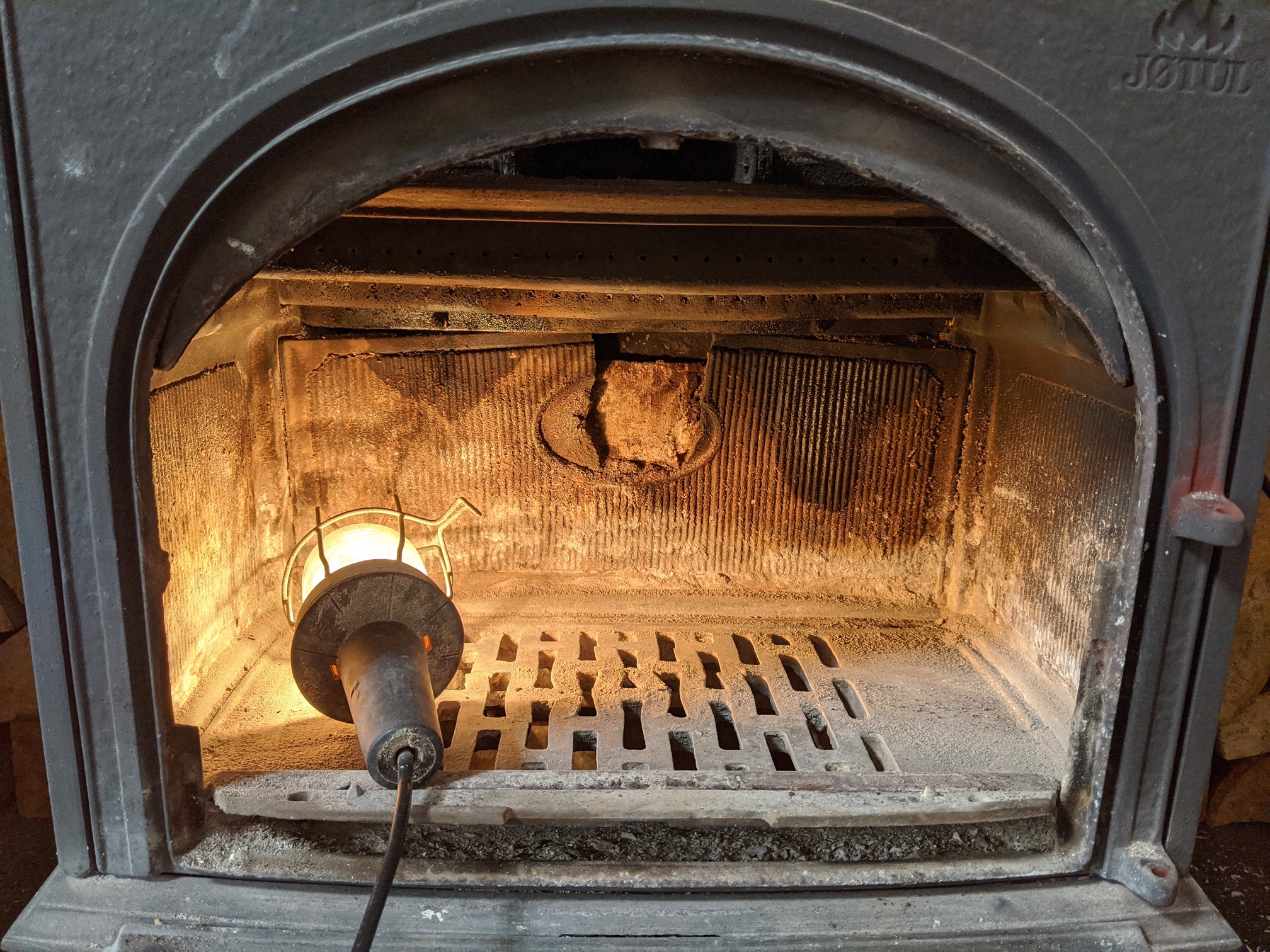
I had the impression cast iron stoves should basically last a lifetime. They are heavy to install and heat more slowly, but they hold heat well and also evenly.
I was advised that steel stoves are often more cheaply made (not always for sure) and may have a much shorter lifespan
There is a recent health warning report about open coal fires possibly being another cause of dementia. It stressed the points about commonly habituating the same room as the open fire for around 7 hours everyday during the colder months, and repeating this for many years. It’s an interesting report that may have some of truth about it, although i would think it would depend upon the efficiency of each open coal fire and chimney in question.
My open coal fire is seldom lit now, and i’ve fallen out of love for it. Very nice it is when it’s going but a dirty thing to clean, i notice the ash dust in the room, and sometimes when the fire is not lid the room can smell sooty. The draught on my chimney is okay, it improved enormously after a tall pot was installed on the stack, and a cowl fitted.
Anyway, i am still trying to decide upon whether to convert the open fireplace to a wood burning stove complete with lining the chimney and all fitted professionally, or saving a truck full of money by simply fitting a opti-myst electric fire (?) …the central heating copes easy with keeping the house warm, and electricity power-cuts don’t seem to be a concern these days…
Open fires are extremely inefficient. Before we got the mini-stove in the front room we had a specially designed to be more efficient open fire - but from very vague memory it was only something like 40% efficient rather than regular open fore’s 20% (the percentages aren’t very reliable but inefficiency is the word!)
Cast iron can also be suceptible to cracking from heat cycles.
Which is probably why its advised to run our Rayburn continuously to avoid stressing the large cast iron top plate for cooking on.
Steel plate is perfectly good enough for wood burners, our villager has been very good, the doors are cast, easily changed if they did crack.
If you browse the tinterwebs there is a video to show how to identify cast iron from cast steel.
Yes i use a craftily positioned piece of cardboard that effectively blocks the draught well but allows some ventilation.
The efficiency of my open fire place is a complete non-issue now, due my consideration of either converting to a wood burn stove or fitting an opti-myst electric stove or insert. Haven’t decided yet.
I still have 4 x 25kg bags of trebles in the shed, may as well burn them off in a final blaze of glory beforehand
My burner is steel had it 4 years and only had to replace the side bricks once got a second set as back up next year
To say it only cost £350 new I think it’s doing very well and is very well made
Is it ordinary house coal you use on the open fire?
May or may not be advisable but just picked up some Colombian coal to try on the multi-fuel stove.
Clearview suggest anthracite of Welsh steam coal - I’ve tried both and they seemed to leave a lot of clinker, maybe I never got the stove hot enough for a good burn, but every type of fuel needs some kind of experimentation to get it right I’ve found.
What’s odd for multi-fuel stoves is conflicting claims and advice.
I read earlier that smokeless fuels are very bad for flue liners, previously I thought it was house coal with high sulphur content, and smokeless fuel was generally considered better or at least touted as such.
It’s becoming increasingly clear that letting stoves ‘stay in’ overnight for background warmth is not ideal due to the upper flue cooling and potentially harmful chemicals depositing along with moisture.
How much of all this is scaremongering?
When I had my stoves installed I don’t recall being advised about the different grades of flue liners and now I look back I think I had the lesser 316 grade put in not the more durable 904 grade.
While I could consider a flue liner as a consumable, I guess there is a risk that a badly corroded one might be difficult to remove and replace.
Funnily enough many years ago I did the same thing.
When we moved in there was some awful stone cladding on the walls that had housed the hearths in two rooms.
In one room I took the cladding off and once we got to an old fireplace inset a load of rubbish came down the chimney so I stuck a pillow up there.
In the other room the hearth was sort of open but cladded. After several years a brick came down the chimney one night as the dividing internal bricks had started to collapse
Yes, i have been using the premium trebles that burn well to leave mainly ash and just the slightest of little clinker. I find clinker only happens badly when the ash pan becomes too full which stops the draught though the grate and the coal stops burning due to lack of air. It’s only a small size fire place which can only go for 7 hours tops, then it’s best to let cool down and clean out the ash pan following day.
Below is the coal menu from my local fuel supplier:
<> <> <>
House Coal for Open Fires
Premium Trebles - High quality, high volatile, high heat, low ash, 3 - 6 inch lumps Premium Doubles - High quality, high volatile, high heat, low ash, 2 - 3 inch lumps
Smokeless Fuels
Maxibrite - Suitable for multi-fuel stoves and room heaters Anthracite - Suitable for multi-fuel stoves and room heaters Premium Smokeless - Suitable for multi-fuel stoves, room heaters and open fires Union Brickettes - Economy smokeless for multi-fuel stoves, room heaters and open fires
Thanks, my grandparents had a coal fire in their living/dining area, the only heat in the house for many years, outside loo etc .
I can remember them getting up early to light the fire which was always fantastic, but cannot recall helping clean it out, so have little feel for how much clinker there should be with ordinary house coal, steam coal, anthracite etc - my stove manufacturer suggests steam coal or anthracite but I’ve never managed to get it to burn well, though I’ve not tried often. The Colombian coal I tried last night was very hot, theer is some clinker but unsure if I smothered the cooling coals with a log that went out. Time to fire up again.
The most embarrassing thing with the stone cladding on the walls was me knocking on the previous neighbour’s door and apologising in advance for a lot of noise - I said I had some truly awful stone cladding that really needed to come off.
A few months later I went into their house and they had the same stuff on their walls in several rooms - must have been installed by the same ‘decorator’ or one of the previous residents! I think the previous neighbour was quite wily with council grants and he often told me how he’d arranged for new roofs for several adjoining properties - apparently the work cost far less than they’d been ‘granted’ and red tape meant there was no way to repay so he held a street party with the money!