Thanks, I shall watch the video. 
Has anyone here on Octopus had to change their Octopus login password and API key due to a security issue?
Axle Energy appears to be only for bigger systems and mine isn’t included.
Total generation for September 2026 was 615.4kWh. In September 2025 it was 615.3kWh. How strange that the two are virtually identical.
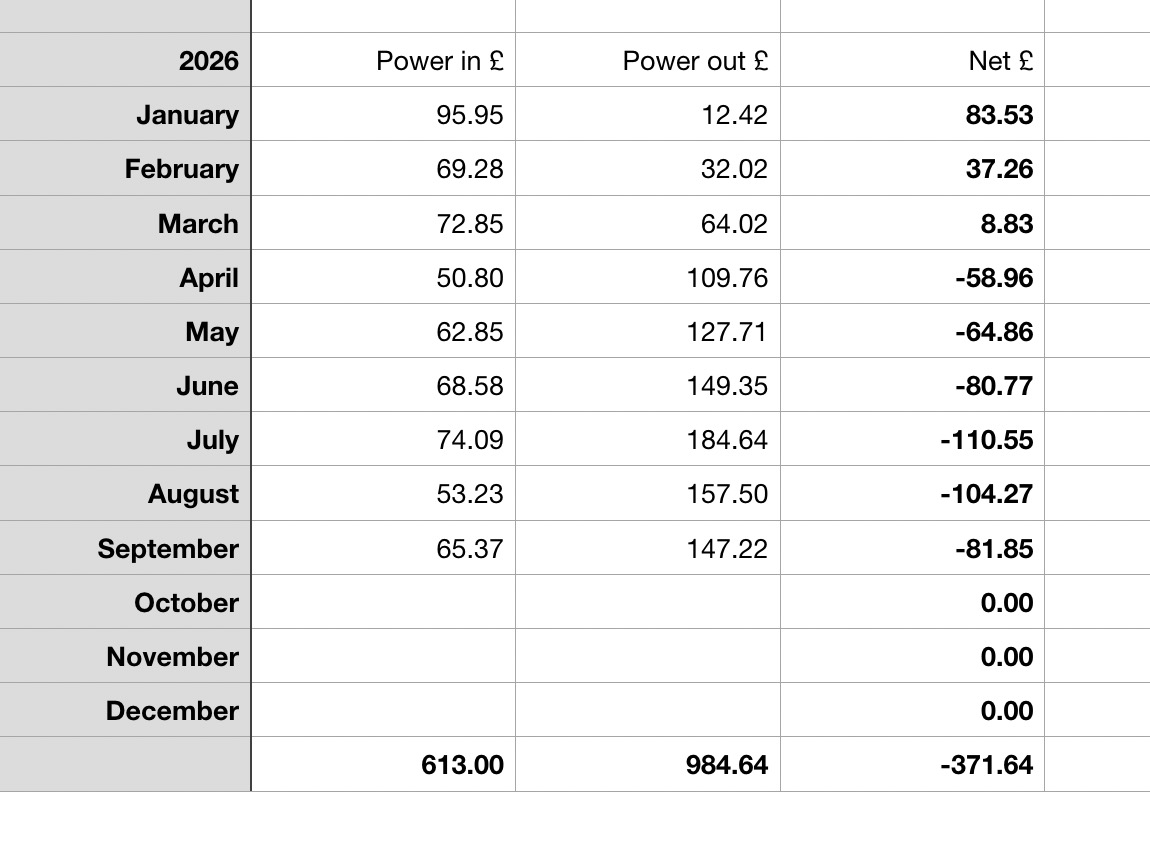
Financially, costs so far this year are looking like this. Costs include everything in the house, heating, lighting etc, and charging of our car when not on holiday.
1 Like
Yes I had to. Octopus logged me out of the app and when I tried to log in again, they said either the username or password were wrong. So I used “forgotten password” to set a new password. Then I had to use the new password to login to the app again.
Then this morning Net Zero told me that they needed me to enter a new API code so they could continue to work with IOG. It was a bit of a faff remembering how to do that, but only for a couple of minutes.
Subsequently Octopus emailed me to tell me the reason for making me set a new password was that my old one had appeared in a password leak. So that was the basic cause of the whole inconvenience.
1 Like
Exactly the same here. No details on the security breach though.
There’s a lot of discussion about it in the Octopus Smart Energy forum. Basically not much is coming from OE about what happened, but our particular experience is obviously what happened to some but not at all OE customers.
1 Like
Octopus have offered me as a loyal IOG customer a 12 month fix at slightly less than my current unchanged rate of 6.57p off peak plus VAT as relevant. Supposedly a £100 saving over the year.
Guess it’s the best deal.
Phil
Or maybe check competitors such as EDF?
I’m happy with Octopus. The only question is whether prices will drop by spring. But I guess I’m not locked in and the peak rates are going up even on the standard variable IOG.
Prices expected to jump by another 16% in January, though I haven’t read anything about next April onwards. Too many imponderables associated with global conflicts, I guess.
Best regards, BF
1 Like
I doubt they will drop until much later next year or 2028. Much of the increase in wholesale prices has yet to feed through into tariffs.
2 Likes
From what I am reading currently.. that rise appears gas related, not necessarily electricity related. Though there is a loose correlation as we know.
There appears growing internal government pressure on how electricity wholesale consumer prices are calculated and what non energy wholesale related costs appear in our bills…. guess we will have to watch this space.. but having some of the most expensive electricity prices in the whole world is focussing the minds in some quarters.
2 Likes
I suspect we will see a small reduction by Q1 2027/28 for electricity.
2 Likes
Me too ( Octopus Intelligent Go Loyal )
Slightly cheaper for off peak 6.6p, but massively more expensive during peak , ( 36p v 28p per kWh )
So I guess check your use case carefully. I have battery so have been avoiding peak charges but as winter aproaches not sure if that can be maintained
1 Like
I’ve added a third battery (all 9.7kW useable) since last winter when the worse peak usage was 11.25kWh/day and the average from November till end of March was 1.227kWh. We have an ASHP and Aircon so electricity is essential. So far we haven’t started heating the house. I hope to export more. I guess it’s worth locking in in case they decide the overnight electric price needs to increase.
Phil
PS
The actual day rate is 34.56p/kWh which is lower than the 34.956 it was rising to from 16 October on IOG variable.
1 Like
Hi Filipe
IOG is an odd tariff, it seems to vary depending where you are in the UK ( I’m in London but apparently listed as “Eastern England” ) so my numbers are slightly different
I will probably go for the fixed offer for the same reasons as you and keep my fingers crossed its the right decision.
I believe all tariffs are regional due to differences in DNO charges to electricity suppliers.
1 Like
According to Ofgem, that national grid/DNO costs amount to 20% to 25% of your tariff
The wholesale electricity amount (the actual electricity) is 35 to 45% of your actual electricity tariff.
So the cost of raw electricity is a minority amount on your electricity tariff
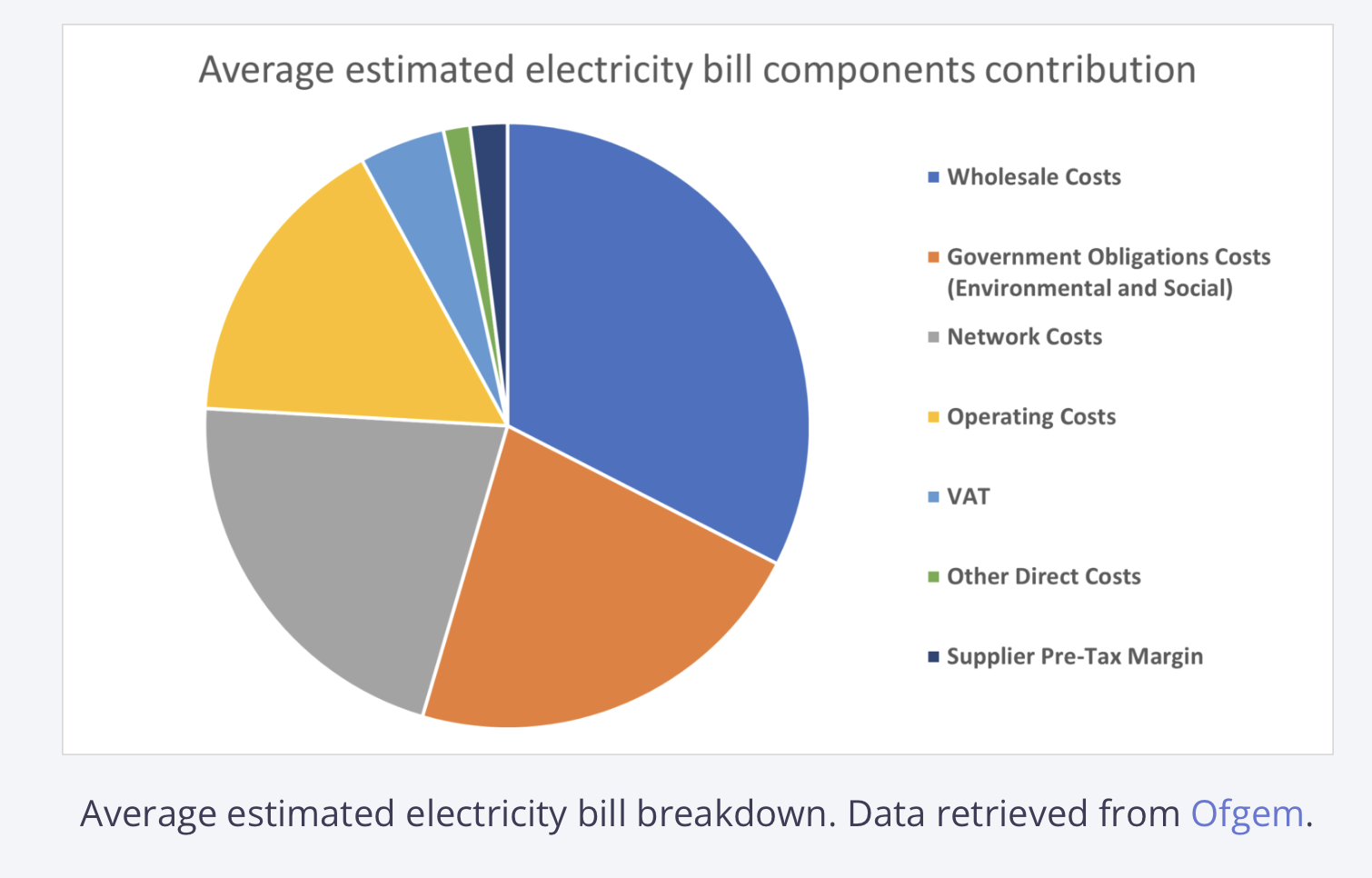
Obviously this was prior to the VAT change
2 Likes
Income from generators (power stations) was based on how far they were from where the product (electricity) was needed. Hunterston on the west coast of Scotland would often generate 7 TWh P.A., but the price per unit was low due to location. Whereas, Dungeness in southeast England generated less, often a lot less, but due to location, its unit price was much higher; the best performer did not always make the most money.