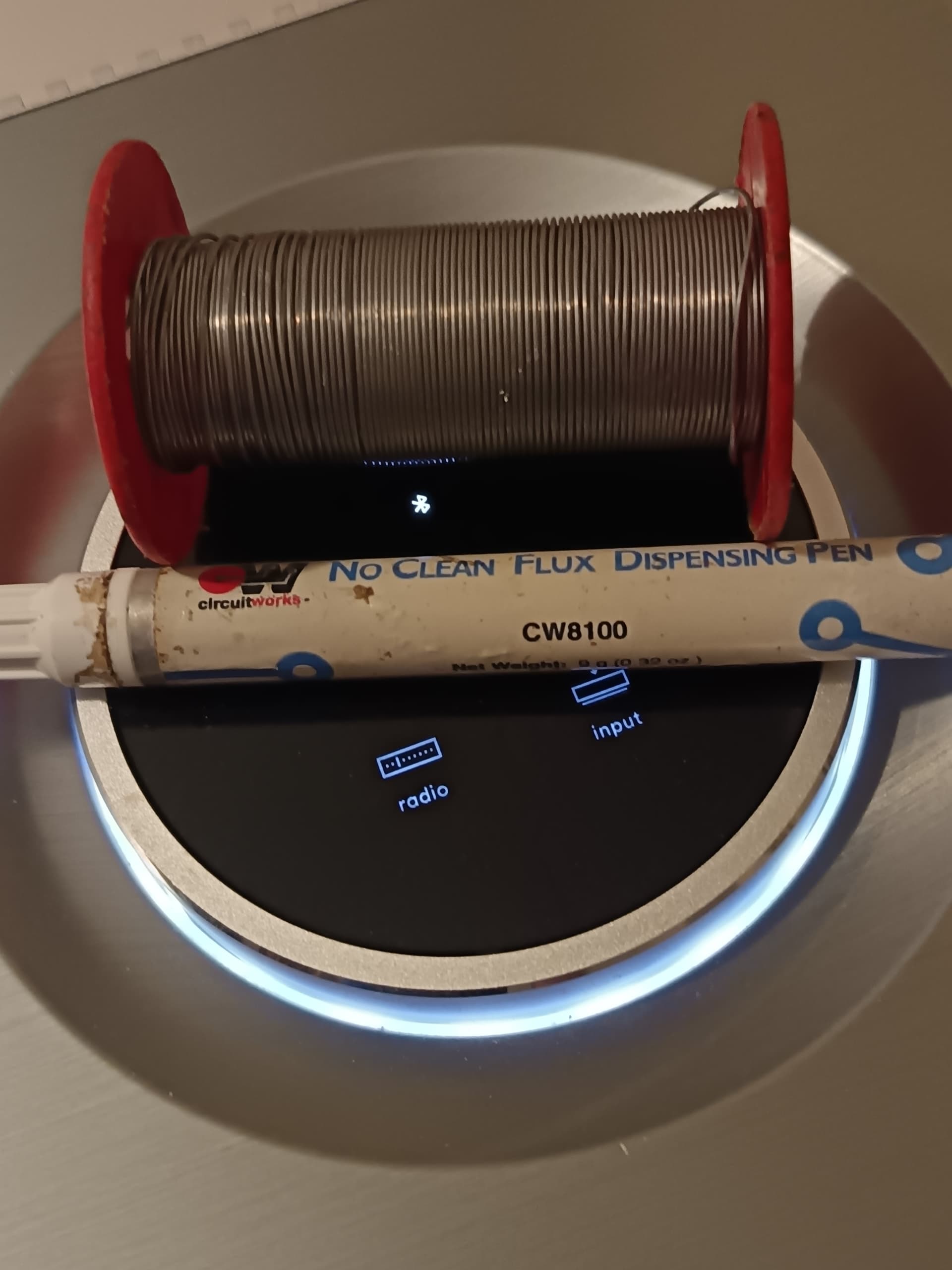
FYI, I did not want to overwork the Naim community with all the necessary additional questions in my original posting so I chose not specifically ask about fluxes suitable for creating ‘audio grade’ joints on cable plug terminations. Nevertheless I am very pleased that you raised the topic.
Furthermore, I hope that I made the correct choice - perhaps? .
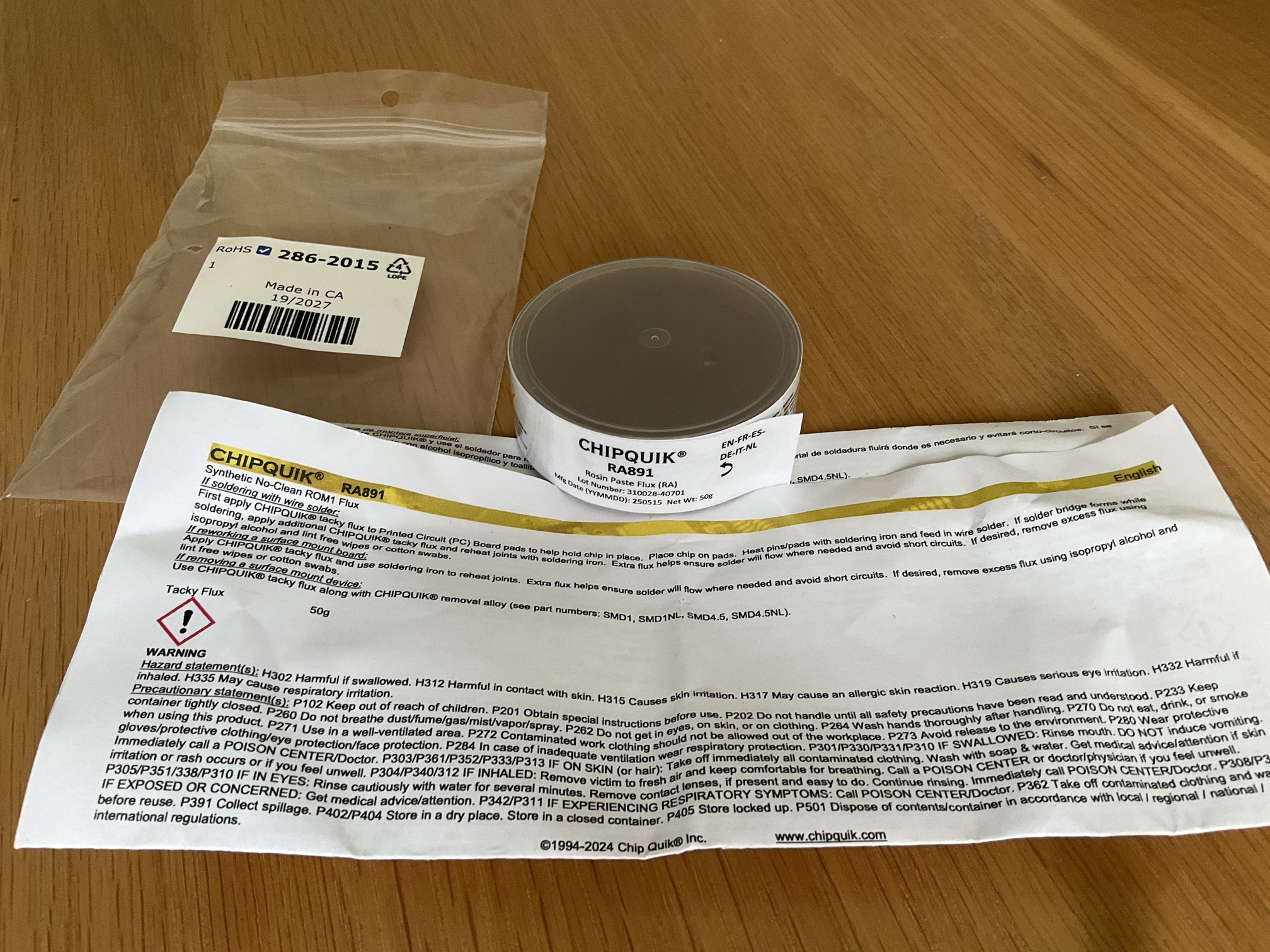
Here is the additional flux I ordered with everything else I needed.
Hi Opus, Thanks again for mentioning that non-soldering methods can be considered to be superior to soldering methods for cable terminating joins.
However, I have one question……why does one need gold plating on the crimping tool? When surely, once the joint(s) are made, the tool goes back in storage and is not involved in any way with the flow of the signal in the cable or HiFi system?
Hi Edmund. Because WBT is vain.. LOL maybe pride of ownership? The only people that actually buy these are Dealers who terminate a lot of cables and crazy audiophiles I also think to impress customers?
In my experience, solder does make a noticeable difference to the sound. I’ve tried Audio Note, Cardas, and Mundorf 9.5. AN comes across warm and refined, while Cardas is thicker and richer – I liked both. Mundorf I don’t remember as clearly sonically, but I do remember it being really hard to work with. By contrast, both AN and Cardas are easy to handle.”
Good stuff, let us know how you get on. It certainly makes soldering more reliable and easier.
I have used Chipquik flux for VLSI surface mount repair work (chip removal and replacement).
Although still recommended to remove excess flux - Chipquick is only mildly corrosive… but in the hifi world one normally wants to remove as much risk of signal changing corrosion as possible.
High quality rosin core solders specifically for audio use like Cardas quad eutectic solder are designed for the rosin core to melt and act as a flux the rosin is formulated to be far less corrosive and messy in use than a traditional flux and to allow easy after use clean up.
Indeed, but flux core solder is standard for electronic components, for larger jobs like speaker cables and some interconnects additional flux will provide a typically better and more robust and consistent solder joint… and be far easier to solder with reducing the risk of heat damage or dry joints.
lol, that is not the issue, it’s the heat drain from the metals being soldered which will affect the oxidisation removal and flow during wetting and tinning.
I do a fair amount of this on thicker cables and I use low temperature solder, but for optimum wetting, conduction and joints I use added flux with larger conductors.. learned the hard way
It was people who do this professionally showed me how to prepare with added flux.. and boy! It makes a world of difference.
You can of course ignore the advice, but that is why we have specialist flux products to use with low temp and regular resin core solders across a range of alloy ratios when using larger higher heat sinking conductors or very fine conducting pads such as with manual surface mount… to allow the best wetting, bonding and conduction between larger surfaces or tiny surfaces with minimal heat… with good resistance to oxidisation and brittleness over time
Have you tried specialist solders without and with added flux on cables? I certainly have, hence my and other people’s comments here, but for small jobs and regular components in hifi and elsewhere, resin cored solder usually provides ample flux release from the melting solder for what ever your favourite alloy mix and ratio is… though best use emery cloth to remove oxidation if the conductors have been exposed to the environment for any length of time.
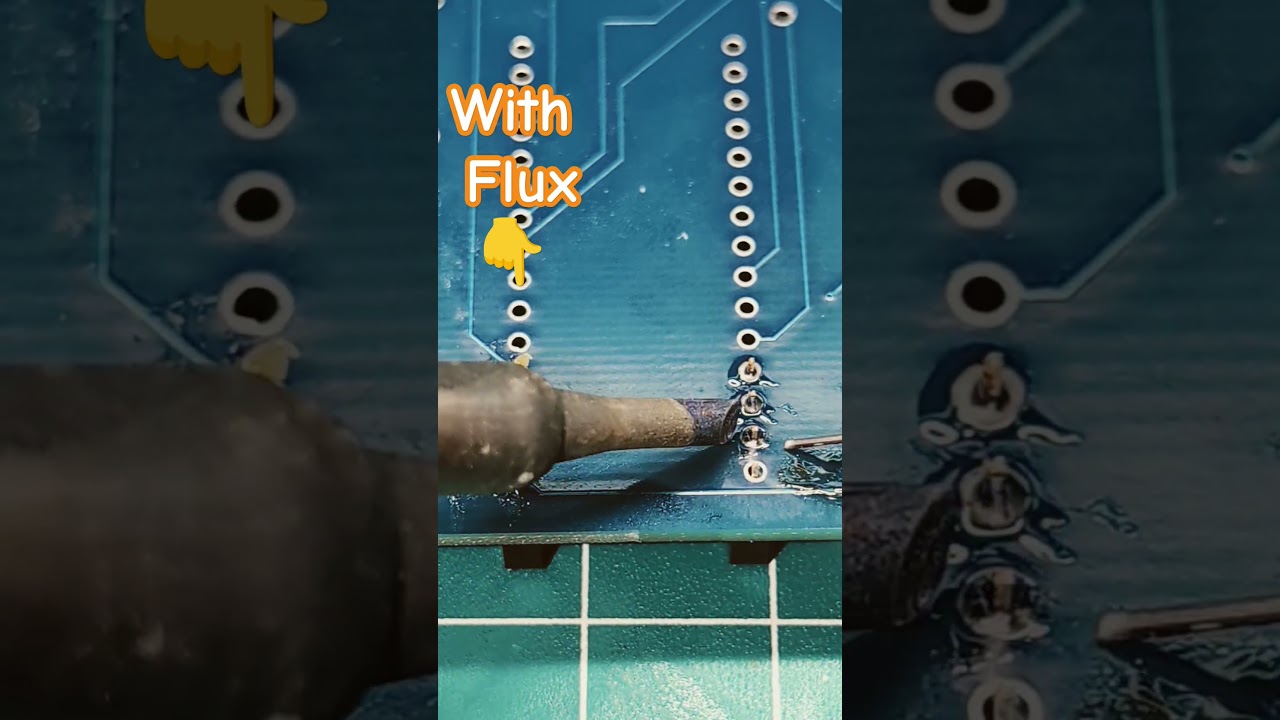
An illustrative example for standard PCB mounted electronic components…. With difference in wetting.
Hi Jamie, Thanks for this posting. My own personal soldering experience dates mainly from the years 1980 to 1986 and professionally ‘on the bench’ up to 1996. During the early comparable time period (for experimental digital circuits) I was using ‘wire wrap’ technology.
Owing to the nearly 40 year gap, I have been using a lot of YouTube video resources to refamiliarize myself with the techniques for making good high current capable solder joints. There are quite a few informative and amusing videos on the Cardas Audio website - have you seen those?
It seems Cardas Audio recommend using separate flux and mini solder baths for pre-tinning the exposed cable ends before attaching and soldering the plug to the exposed and tinned cable.
I have not bought the solder bath, as I recalled a method I learned at college and have used that method to make the first group of test DIY cables.
Hi Desmond, Thanks for providing this perspective on the potential and perceived impact on the sound of the various ‘audio grade’ solders. I am have yet to form a personal view on this. But since I have discovered I still have old lead based solder and also the new higher temperature solder I have bought, I could potentially conduct a robust ‘masked randomised’ trial of identical cable types made up with the only difference being the solder types. That experiment was not in my original plan - but it may be in the future. Depending on the outcome of the more imminent tests and results of the DIY vs expensive HiFi cables.
PS: The Mundorf 9.5 would clearly be more difficult to work with (see melting point in tables above), but I have bought an appropriate wattage soldering device that would easily work with those solders too.
This thread is proving a lot more informative than I initially imagined! Thank you for your contribution. However, I am not worried about the melting point so much as I have purchased an appropriate wattage rated soldering device.
Cardas Audio is amusing though. Here is the text extract from their website describing their solder…
" Description: A proprietary blend of copper, silver, tin, and lead. - Proprietary as in “please don’t ask for the recipe because we’re not telling, and we don’t want it to get weird.” "
Even though many other types and grades of solder are used extensively in the electronics manufacture perfectly well over many years of reliability…and also avoid exposing assemblers of equipment to potential lead poisoning.
Interesting I just checked and I have used Cardas Quad Eutectic low temp solder, I think from Hifi Collective … but I use another manufacturers’ flux with it… but interestingly, as you would expect Cardas follow best industry practice, and when terminating their audio cables, Cardas state they use their Cardas Rosin Flux Solder paste, along with their Quad Eutectic solder to, I quote ‘ aids in the transfer of heat to help solder flow between conductor and connector.’ Cardas
My post of 8 hours ago was meant to be humorous. But as I’ve found far too often, some people think every post on this forum is deadly serious. Why wouldn’t it be? What’s the point of doing anything else?
You’re obviously enjoying going through the process and your findings will be interesting.
Whatever you do, don’t post any photos of you solder joints. There will be countless other photos posted showing what a good solder joint should look like. Including the image of the most perfect example of a nac5 Naim plug soldered joint.
 so I chose not specifically ask about fluxes suitable for creating ‘audio grade’ joints on cable plug terminations. Nevertheless I am very pleased that you raised the topic.
 .
.
 I also think to impress customers?