I’ve become a little obsessed with the house electric supply the last few months. It’s mainly in anticipation of a solar and battery install that will take place in the late summer.
Not with standing the common belief that home inverters can have a negative impact on sensitive electronics (a whole other discussion I’m sure), I’m looking forward to having a near zero energy bill, and hopefully making a hefty profit from selling back to the grid.
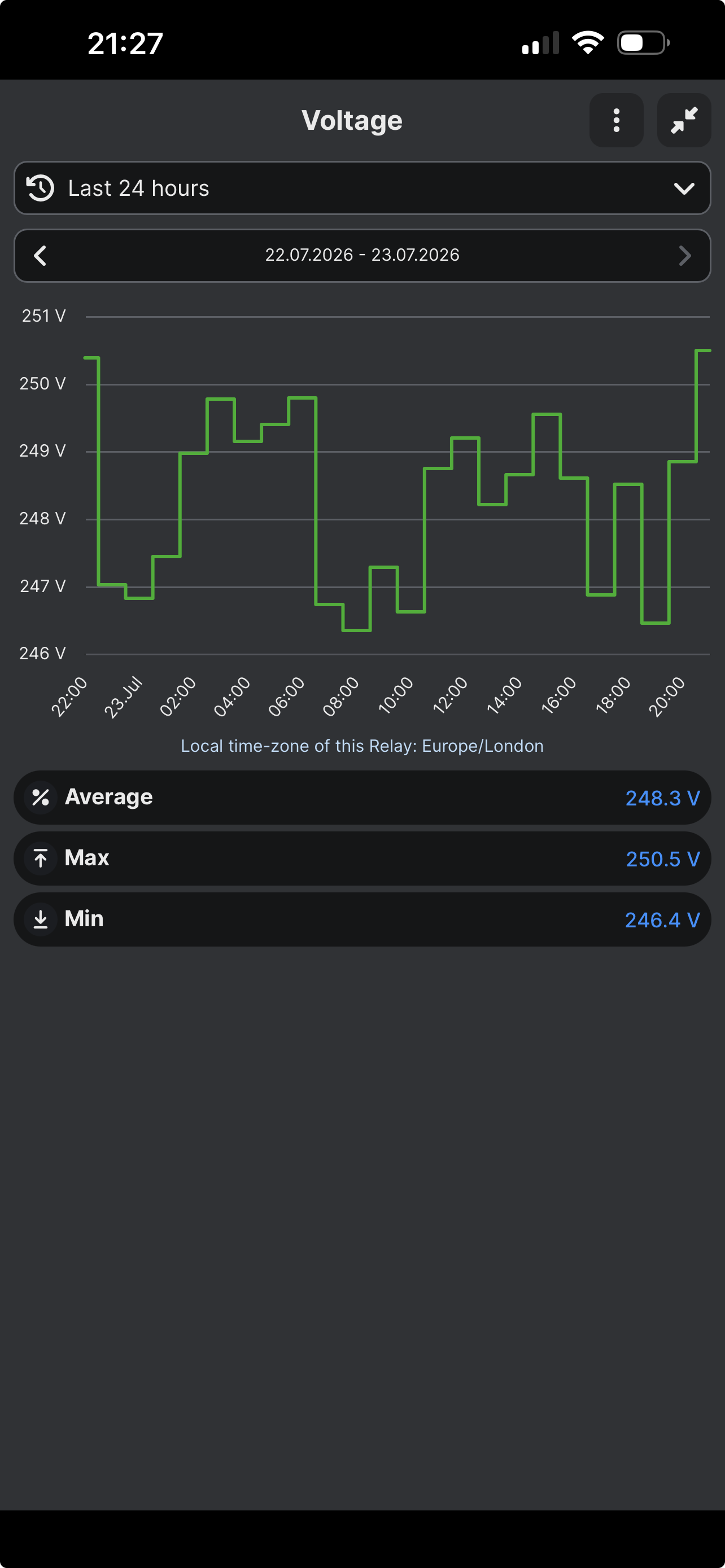
My hifi related question is reference voltage. In the United Kingdom, the standard voltage for single-phase electricity supply is 230 volts. The allowable voltage tolerance range is typically 216.2 volts to 253 volts, this is -6% to +10%. Fluctuations within this range should not cause issues for most electrical equipment. I’ve been monitoring my ground floor ring main with a Shelly Plus Plug UK for a week or so and there is quite a swing. (FYI, the hifi is on a separate radial)
I certainly notice my 222 transformer during the peaks, so how else are these frequency and voltage changes affecting the sound? We all have days and nights when our music just doesn’t sound as good as yesterday; maybe this could be one of the influencers.
Food for thought!
Oh, the Shelly plug is amazing bit of kit for those who like control and data.
I’ve not had above 243 but I’ve had a 300B amp blow a fuse, a DAC that has broken 4x and a cooker hood which blows far too often so I’m awaiting the fitting of a voltage recorder to look at whether there’s something going on.
I believe the standard in UK is actually 240V. Calling it 230 was for harmonisation with EU, but instead of any countries changing supply voltage, the tolerance was fudged as you quote to encompass all, or at least that is my understanding, and whenever I have checked the mains supply voltage myself in UK it has been around 240, often between 240 and 250 as you have found.
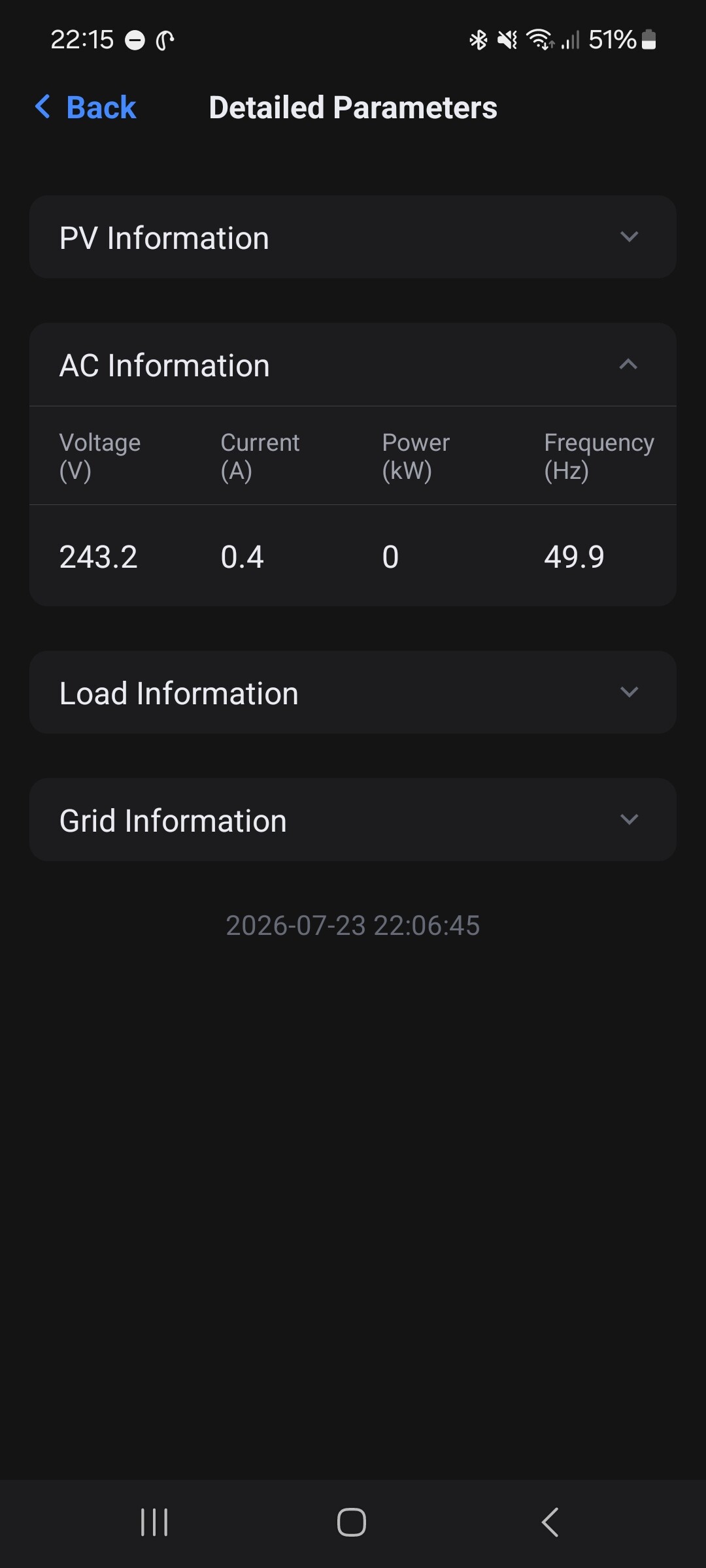
Right now, as I am typing this, my voltage from solar charged battery is 242.7, but whether thatis because it is synced with the grid I don’t know (I am still learning about how my solar system operates).
Maybe I’ll fill in a customer form on the SSE website and they can have a proper look. But I’m also aware the Shelly will be seeing the load of the whole ring main; fridges, ovens, TVs and the like.
When fitted, I’m sure my Sigenstor EMS will provide a lot of data for me to get excited about
First, don’t bank on getting competitive export rates as a long term income to justify the cost of a solar instal. These payments are a way of encouraging people to install solar, but energy suppliers are obliged to pay you for exporting power when nobody needs it, often at times when larger wind and solar farms are being paid to disconnect from the grid to prevent oversupply. In some countries the payments are zero, or even negative. It is likely that more dynamic export tariffs will replace the SEG tariffs, where you are paid to export only when the grid actually needs the power. As solar gains in popularity its anyone’s guess whether export rates will remain as generous as they are now.
Second, in order to export, your inverter has to push out power at a higher Voltage than the grid. Without a potential difference, the power simply wouldn’t flow. So you can expect your mains voltage to increase with a solar and/or battery installation. As neighbours do the same, they too will increase Voltage levels going to surrounding houses.
I agree @ChrisSU , here in Canada you have to jump through hoops trying to sell Hydro back to the company. I used to rent a house on a property that the owner also had a house. He had a homemade windmill, plus solar panels covering his big garage. Inside the garage he had an entire wall of inverters, and a bunch of electrical stuff that is beyond my pay grade. Also, he had nine or ten lift truck batteries to store Hydro he made.
His big plan was to disconnect entirely from the grid, and try to make some profit along the way.
Never happened, too many hurdles in place.
Last I talked to him, the windmill was down, got rid of it and he just used the solar panels to reduce his bill a little.
We also used wood stoves for heat, cut our own trees down, split the wood ourselves.
These voltages should not affect your hifi equipment unless the voltage is very low and out of spec. This is one reason why the psus in the hifi have regulation to effectively drain excessive voltage to ground.
As for PV/battery/inverter, you should see a far stricter voltage supplied to your house.
BTW, your graph is an indication of liad on your local distribution network. Lows showing greater local demand, highs less demand.
A few years back my Solar inverter was showing very hight voltages, going above 263. I called in Scottish Power, and they found that the local transformer was et incorrectly and it was lowered.
The immediate effect was reduced hum. It’s around 245 nowadays, and I do get some hum, and just have to live with it. When they found the fault, it was temporarily on 230 volts and the humming was close to stopped, but they couldn’t keep it there.
I do not see an issue with your values, but I suspect you want some more info around this subject, so let me try here.
Because over a distance, you will naturally get a “voltage drop”, you will find the houses nearest the substation have a higher grid voltage than the ones at the furthest distance. I’m very near the substation and this was the reason they couldn’t keep my voltage on 230, as the furthest house on the run would be out of spec. The other thing to know is that your Solar Inverter will feed the grid by adding a little voltage to what the grid gives out, hence why it’s all a bit of balancing act for the Electricity board.
It’s good to keep an eye on it, but I wouldn’t over worry. When you get your inverter you might want to just check that the Voltages that the Inverter shows match your meter. (My inverter was over reporting which I could thankfully adjust)
I bet a big bit of that “ voltage drop” is due to the wet string they use between the LV side of the transformer and your house !
A mate of mine attempted to maximise a free electricity session. He dropped his local voltage to below 200v. Every 3rd neighbour couldn’t work out what was going on. Singlehandedly he managed to turn a potentially higher voltage network into one below 200v for a solid 3 hours.
The network operator monitored the voltage over a 2 month period and in the end upgraded the wet string to copper.
In my case, the transformer tapping was on the wrong setting, which had probably been like it for the previous 20+ years when the houses were built. So likely all the houses on that run were running over voltage for many years
Calling a cable a “wet string” means the connection or cable is performing so poorly, degraded, or inefficiently that it is barely better than a piece of wet string acting as a conductor.
There is voltage, and also current - but with mains I think another interesting variable is phase. Ie the power factor - as that will affect efficiency of linear power supplies.
Powerfactor is divergence of the voltage phase with respect to the current phase, which varies with inductive loads - such as large transformers - and changes in the local mains environment.
Yep - subtle marginal frequency changes (ie phase) occur with PV and/or battery inverter systems anyway for your local supply. and the inverter will synchronise with your utility supply … it’s how they work.. but yes overall frequency of the grid is important and managed as it impacts reactive loads.
I couldn’t resist…. if the string is wet with salty water, like sea water, it will be conductive to highly conductive - and the wet string will perform well as a cable.
If the string is wet with pure distilled water it will conduct very poorly.