I can’t help wondering about the environmental cost of manufacturing all that stuff compared to just using a kettle, which most people will already own.
Time maybe a minute (depending on size ov pan and number of eggs, but I doubt any saving of energy if you use an induction hob, and almost certainly not if the tsp water is kept hot for many hours before being needed.
As for kettles, if kettle shape and visibility of fill allows -which many modern jug kettles do- and decent power so heat fast (2-3kw) then it is easy with practice to heat almost the exact amount you heed for a cup of tea etc, with zero waste, rapid and efficient heating with minimal heat loss while so doing.
The case is irrelevant. Assuming two vehicles have identical damage, one ICE the other Electric, then the cost of repair is higher with the electric one due to the construction of the car and the additional safety requirements with high voltages.
Special footwear is needed for example.
Suppose if you use the tap for hot/boiling water once every two days and not as part of a functional kitchen.
But seriously I cannot comment on the energy savings but certainly the comfort. I’m convinced.
Against that, my understanding is that cost of servicing of electric cars is very considerably less….
When the Isle of Man TT started an electric race, about 15 years ago, much was made by petrolhead marshalls about their need to have insulating shoes and rubber gloves, with some prancing around displaying exaggeratingly, though its hardly a major thing. But within a couple of years attitudes changed as the bikes started doing serious speeds and top riders started riding them. Personally I am neither a petrolhead nor an electric car devotee, hoping my present cars will keep running long enough for clarity as to the correct/best personal motorised transport for the long term as I prefer to keep my vehicles for over 10 years, and don’t intend ever to change my policy of not buying a new vehicle, but want to minimise my personal environmental impact from whatever such transport I use. (As it is my car usage is now less than once a week, so actually I would expect to own whatever vehicle I get next for perhaps 20 years). As I intimated previously, all these anecdotes are meaningless because mostly promulgated by people with fixed views, sophistically picking arguments to suit their cause.
2 Likes
Yes, this is true. Just brakes, steering and suspension/tyres to check ,more or less.
My mate is the Service Manager at Honda and was issued ‘electric boots’ for dealing with electric cars. Perhaps they act a bit like Mary McFly’s hover board 

They’ve been dropped now. I don’t know the reason why. Attitudes must have changed…
When we boil eggs we put them in the cold water, bring them to the boil and then boil gently for five minutes. That gives a perfect hard boiled egg, and they are much less likely to explode than if you drop them into already boiling water. This way saves a bit of power as the heating-up time isn’t wasted.
3 Likes
Yes they stopped, primarily lack of popularity with insufficient entries to make it sustainable, support then pulled b Sle of Man Government, Interestingly in its first year, 2010, IIRC only 3 bikes actually made the one lap 37.7 mile hilly course, best av speed a bit under 100mph. The bikes all looked jerry-built. Development was fast, and by 2018 most bikes not only looked like “proper” bikes but most made the distance, with av speed of best being just over 121 mph, virtually the same as the first >120mph lap done by a petrol bike in 1989 (750cc). I dd hear there was talk of brining it back, but hasn’t happened yet.
1 Like
I find a hard boiled egg requires 10 minutes after coming to the boil, and with the eggs having been in from cold. 5 mins is still soft!
1 Like
Maybe it’s our southern water. I did exactly as I wrote earlier this evening and they were perfect. Solid whites and virtually solid yolks, with no runny bits. 10 minutes would be like bullets.
1 Like
Ah, you’ve said it yourself: almost solid yolks - that’s not truly hard boiled in my book! I speak with a lifelong commitment to hard yolks in my eggs (for fried the only way without burning the white is to break the yolks) - and I grew up with one of the hardest waters in the country.
You have fried eggs with hard yolks?
That’s a crime against food. And poultry.
6 Likes
How can you dip your sausage into a solid fried egg yolk
1 Like
That’s probably down to tyres. Back in 1989 they would be crossplies on bikes.
Time to change title thread from Quooker Taps to Cooking Tips?
3 Likes
There is a high similarity between boiling eggs and cable discussions.
4 Likes
Your wish!
1 Like
Lolz
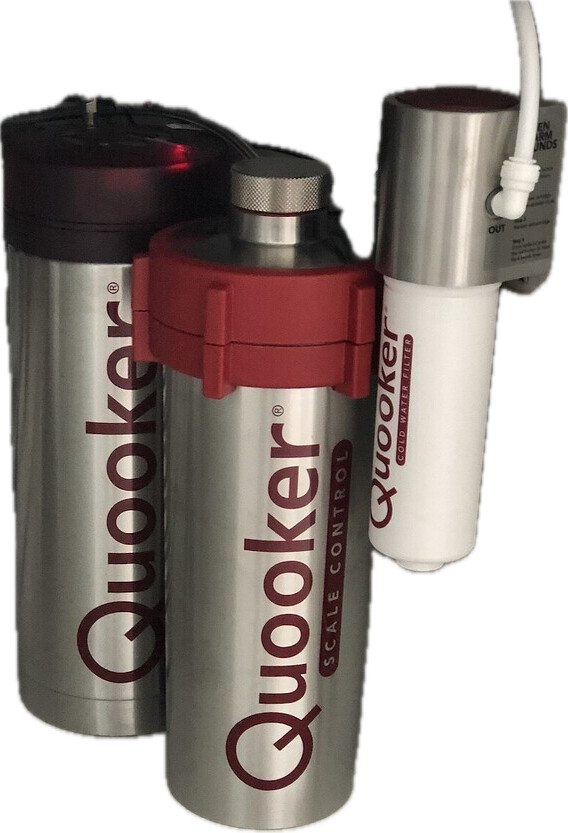
That’s a whole can of worms Chris, where do we draw the line with the appliances that we use. Half of whats there is what I would describe as essential for London water, the descaler increases the lifespan of the water vessel significantly and has an internal filter that I change every 3-4 years. The cold water filter last 12 months and if I didn’t have one connected to the Quooker I’d have something similar under the sink. The difference it makes to the drinking water is immense.
All that Quooker kit is extremely well made and over 7 years old, I don’t recall kettles lasting that long. I’m also well into the 8 cups a day club so our energy use would be at least similar. Once you get past the initial reaction and look at the whole picture then energy use would be very similar. I do boil eggs like HH though from cold on the induction hob.
I wouldn’t use a Quooker if I thought it was inefficient, our bill is around £2 per day on average so pretty low when you include the reason why we’re on this forum, otherwise we do everything we can.
When my previous jug kettle died about 4 years ago it had given at least 16 years’ sterling service, used at least 8 times daily. But that was in a soft water location.
1 Like