I had an Apple Watch 2 for a few years but accidentally dropped it on a solid floor and of course it landed face down and smashed the touch display. It might even still charge/connect for basic step/HR usage but I obviously can’t see the display or select any specific apps.
I’ve held off getting a new one for a while but the current models are not supported by old iPhone.
I suspect I’ll upgrade my 7-8 year old iPhone X when the new ones come out in September and I assume we’ll see new Apple Watches again this year too.
Although I’m likely to continue with the Apple ecosystem I don’t know much about the competition.
Any alternatives with good iOS support I should consider especially if they’re cheaper?
Previously had some excellent Polar HR monitors but no idea where they are or if they still work!
I previously had a Garmin Epix Pro Sapphire, but now have an Apple Ultra2 watch.
The Garmin worked well with the Apple ecosystem. It did get notifications and had a good battery life, but was always disconnecting and reconnecting with the iPhone. This was my second Garmin watch, the previous one was the Instinct2.
With the Ultra2, I have now a full Apple ecosystem, iPhone, iPad, MacBook, AppleTV, AirPods Pro and everything is just seamless and no effort at all.
One of the things I did was to understand what I wanted from a smart watch. In the end, it came down to the Garmin being a predominantly sports watch, that in reality, I was only using about 20% of its functions. Whereas, with the Ultra2, which is more of a business smart watch, I actually use more of its functions.
I’m very happy with the Ultra2 and still finding things that it can do. Downloading Apps is very easy, using with Apple products is a no brainier. The battery life of 36 hours is a good improvement over the earlier Apple Watches.
If you have an Apple ecosystem they make it very easy to use. The Garmins were good, but for me, the Apple Ultra2 is much better and more usable.
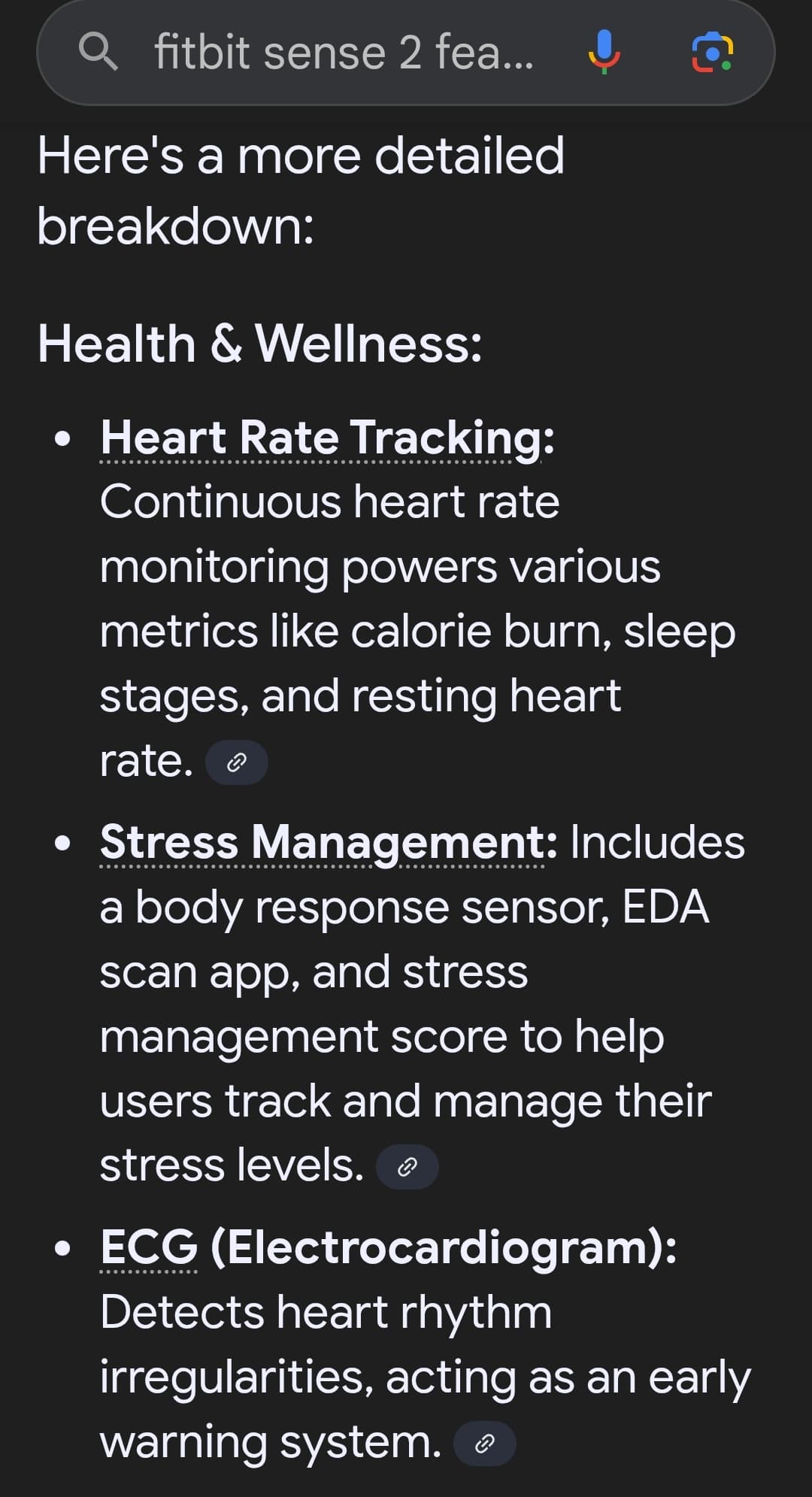
Fitbit make 2 types of smart watch, one aimed at people who want to get fit, the other aimed at people who want a watch that will monitor their health and advise ways of staying or getting healthy.
I bought my wife a sense 2 at Christmas, which is a health and wellness monitor.
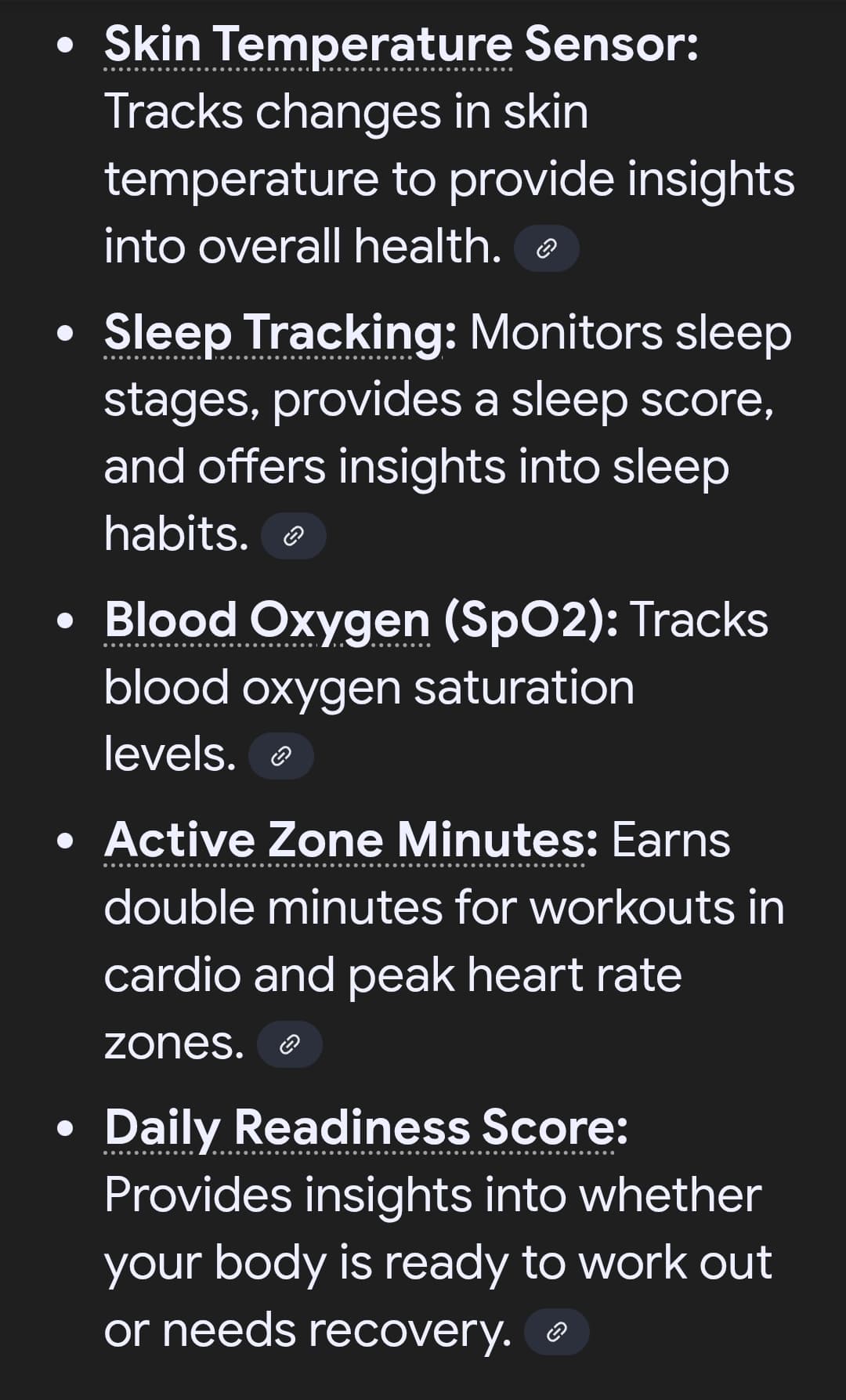
It is definitely a smart watch, but I think some functions like ECG requires a subscription.
What do you want to use it for? If it’s purely HR and steps then a cheap fitness tracker will more than suffice (Fitbit for example).
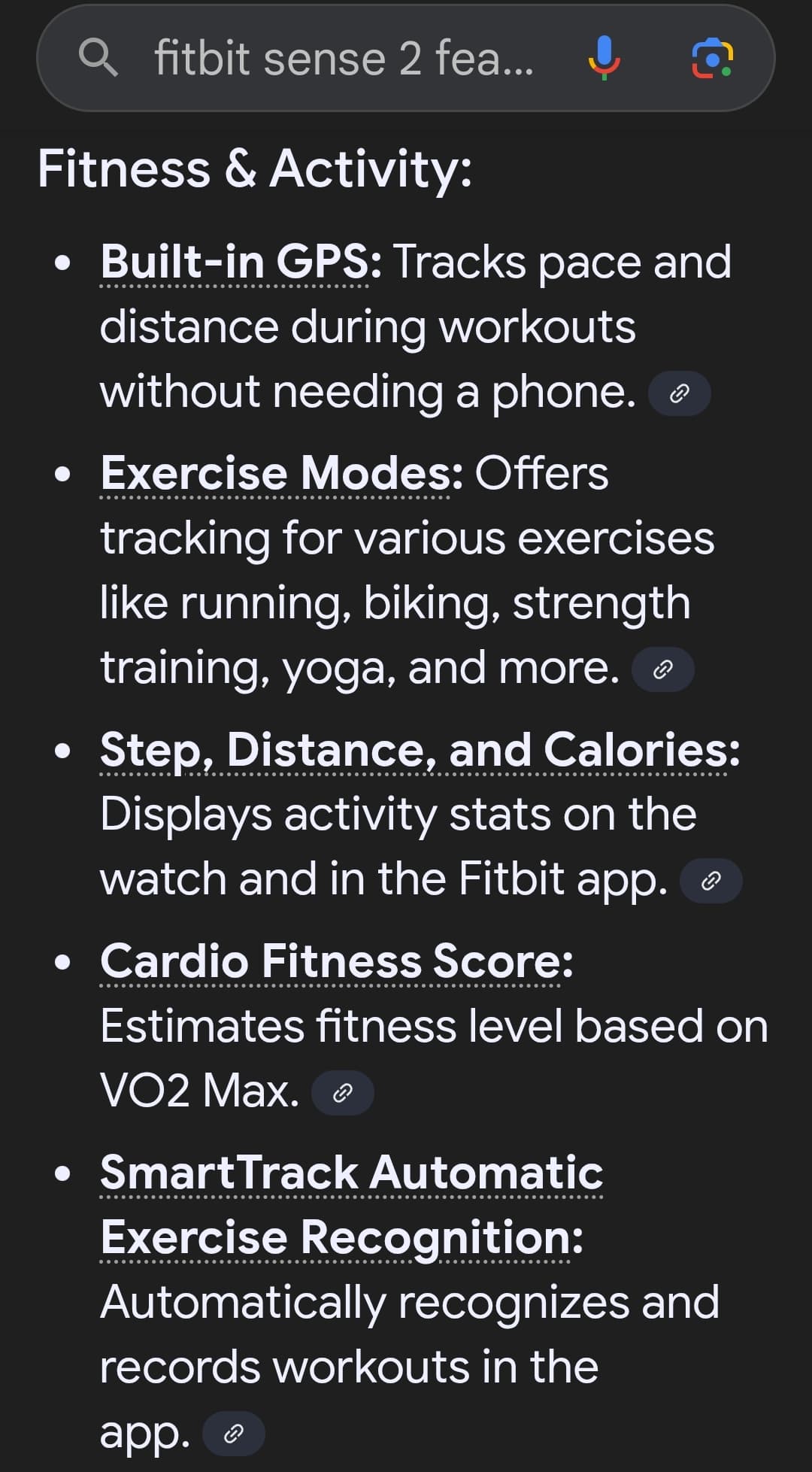
If you really want a sports watch then Garmin leads the way with GPS and HR technology. All will work through their respective Apps on an iPhone. Garmin Connect has never let me down with a 5 year old Forerunner 255.
If it’s a fashion statement then Apple Watches probably look the smartest - you pays your money…
How much of that is useful, relevant or even accurate is another matter.
HR can be useful during exercise but is far from essential. People managed before! I don’t personally think an app telling me if I am stressed or not, or have had a good night’s sleep would be tell me anything I did not know. As for skin temp and blood 02, those are just not useful in any way I can imagine for a healthy person exercising. Only in significant illness might they be of utility really. An estimated V02 max is not likely to be terribly accurate, and beyond curiosity I can’t see much benefit in monitoring it. ‘Readiness score’? No idea.
Data like this is fun perhaps but shouldn’t supplant common sense. If you like data I guess it may motivate or help you to exercise effectively but as for informing general health I am far from convinced. It should also never be followed slavishly.
I’ve got a garmin Fenix. But really only need that because I like all-day bike rides, and so need strong battery life.
If very long battery life is not an issue (and if like square shaped watches), then as an iPhone user, the Apple Watches are probably the more sensible way to go.
I had an Apple Watch Ti for a year or two but never quite felt at home with it. The main problem is the battery life and even the new huge version only lasts 36 hours (claimed). It was really handy not having to take a phone when dog walking etc but being told to stand up every hour just felt like it was trying to hard to do the wrong things.
I moved to a Garmin Forerunner 965 as I also have a Garmin bike computer and sensors. This has a realistic 1 month battery life so you can go away on holiday and forget about charging. It works much better than Apple for actual sports activities but still does lifestyle stuff really well. I find the data around fatigue and recovery brilliant as well as the productivity of training.
On the negative side, Garmin connect wont import data from other sources directly by links but you can upload files on a computer (it’s a faf and not recommended). You can export from Connect to most other places like Apple Health on your phone and keep Garmin for the sports side though. I use mine for Rowing, Cycling and Walking.
If you want lifestyle and don’t mind daily charging then I’d recommend Apple. If you want a sports watch, I’d choose Garmin.
I swear by my Garmin Instinct fitness watch.
It is built to an American Army spec.
I never have to worry about taking it off, no matter what I am doing.
I cannot comment on dropping it on a solid floor ,as I have never done that.
I have used mine for swimming. It is intended as a Tri watch so quite suited to it. I did also swim with my Apple Watch but I have never compared the data output from either.
I probably wouldn’t want to stretch to the ultra level watches price wise but they do look good.
I’ve really lost my feel for current Apple products too - will be looking at a new iPhone soon -was in the Apple Store today and I felt there were too many models available.
I just want basic metrics for fitness - primarily heart rate and steps as I’m fairly sedentary a lot of the time these days and this needs to change. I find heart rate useful say when using an exercise machine and my hands are free and not gripping any in-built sensors. The old Polar watch was pretty accurate HR wise using a chest strap sending data to the watch via bluetooth but was far from a smart device - it had to be docked to a computer via USB to see rates during exercise sessions and was not for 24/7 usage.
Many of these devices may not be that accurate calculating steps but I’m probably less bothered about that than having some form of daily metric I can try to improve over time.
I did use several simple apps on Apple Watch but the early version was limited in memory so you couldn’t sync a lot of music to it say I wanted to use that as an audio source when walking/exercising rather than the iPhone.
I don’t think I’d be keen on subscription services for in-built features. I accidentally pressed the voice control function on Mrs AC’s car’s steering wheel today and a message flashed up saying I could purchase a subscription for voice control in the ‘Shop’ - the feature was free on her older VW.