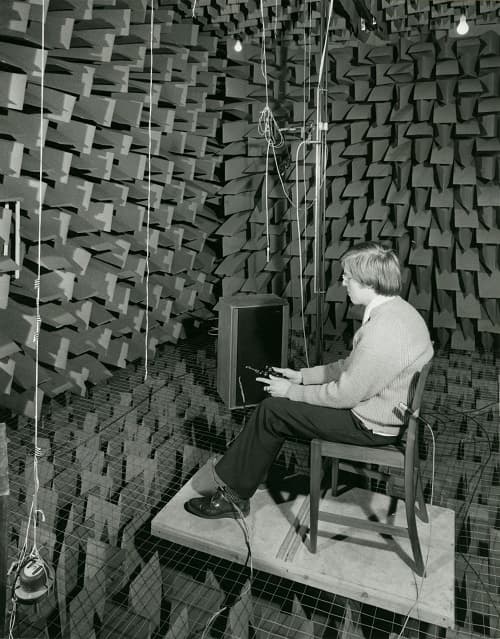
This thread is, er, very, er, enlightening.
1 Like
Hi Edmund, I have a question for you, as you seem to know well the acoustic world.
The wall behind my head is some kind of cartoon, cardboard.
It doesn’t isolate the noises behind it ( our room) and probably isn’t good for good sound.
I don’t want to put panels on it, but treat it on its entire surface .
What is a good solution, to have both better sonic isolation and improve the room acoustic?
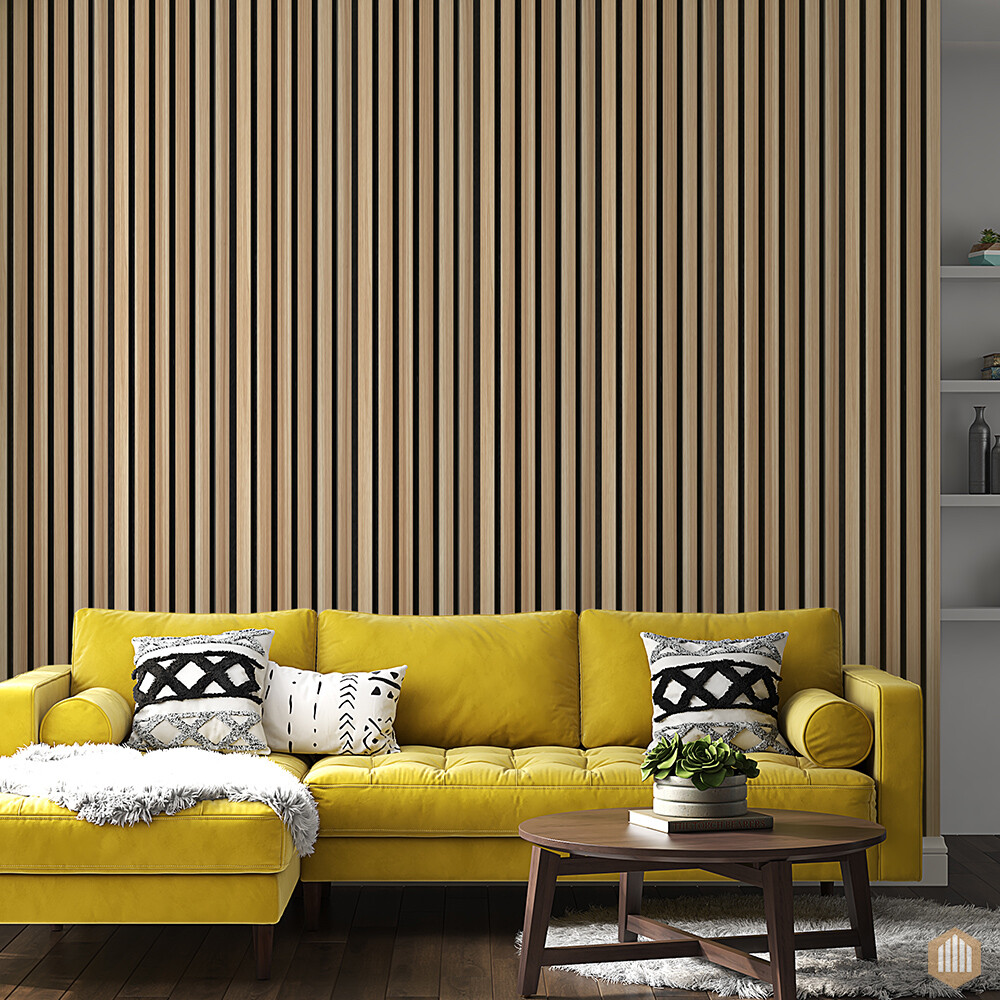
Wood laminates ?
2 Likes
I couldn’t relax if my room looked like yours!
I have considered room treatment and had a quote for around £7k!
That’s many years subscription to Qobuz and some equipment tweaks, so I didn’t pursue that!
Simply enjoy your music 

Occasionally I do update, although I do still run my good old faithful 252, Olive Supercaps, & Olive 250’s.
I “could” spend (or waste) many hours experimenting, or just sit and enjoy the music which already sounds way better than any of my friend’s systems.
I also like the way my room looks, therefore, I won’t spend much, if any time on room treatment.
If I had identifiable issues (such as booming bass or lack of sparkle, or too much sparkle), it might be something I’d look into.
1 Like
This may not apply to you, and for all I know your room acoustics may be close to ideal, but it is worth observing that when people have systems in far from ideal rooms, acoustically, they often have grown and developed their system and hfi experience in such an environment, it sounding normal to them, blissfully unaware that in sone cases just a few acoustic tweaks can bring such a change that it is like upgrading black boxes, though achieving more than any black boxes can in the acoustically poor room.
There have been a number of threads on the subject over the years, of which this is probably the most comprehensive: The Listening Room Reality
3 Likes
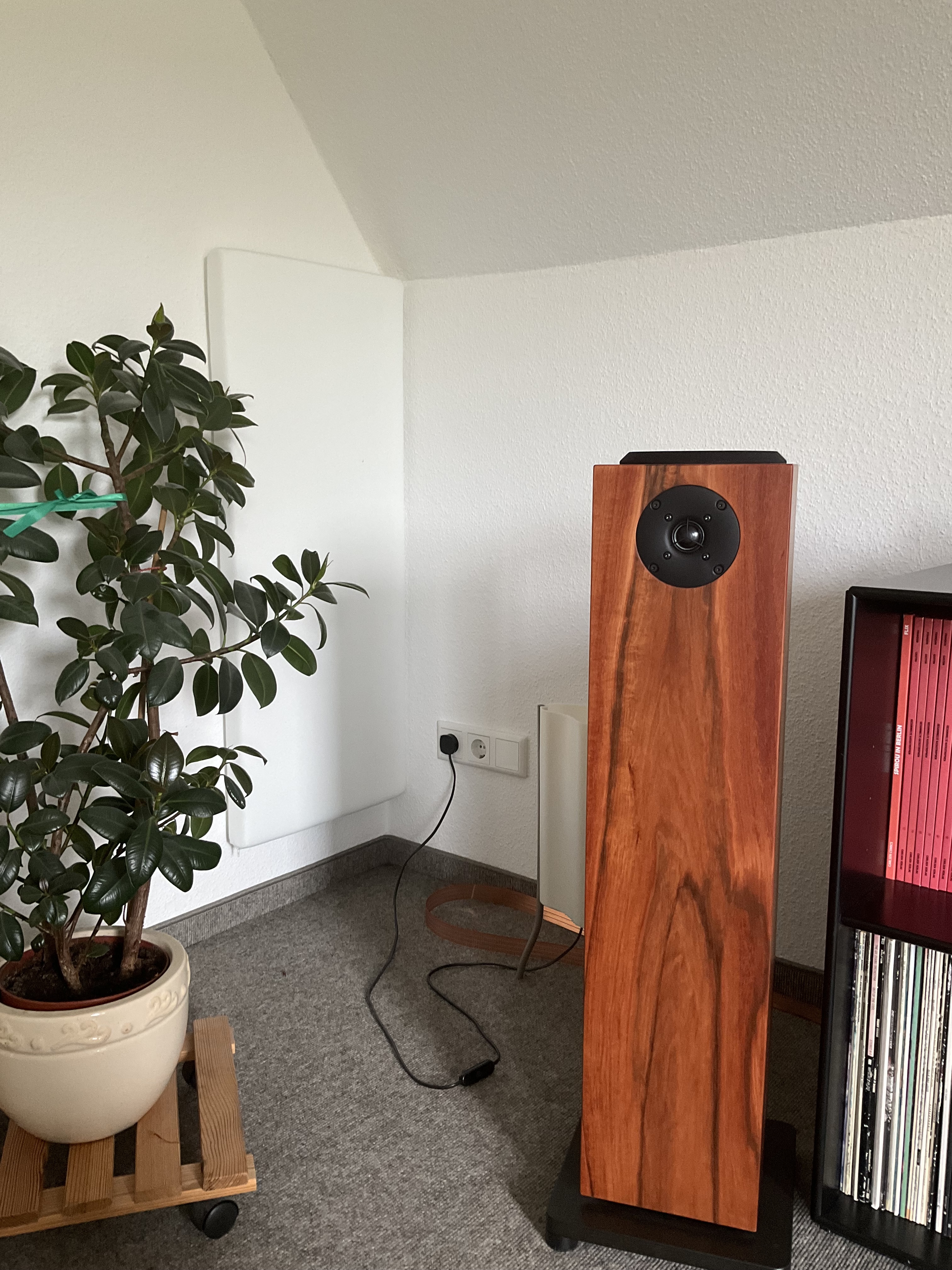
To lose myself into music the room has to be pleasurable to both eyes and ears. Untreated there is too much bite to the upper frequencies and because of that two Fast Audio Pico Parete absorbers grace the walls outside the speakers. The one on the left hand looks like this (speaker, lamp and cable included in the picture):
2 Likes
Thanks @Innocent_Bystander , I had been looking for that thread in the middle of last year and completely failed to locate it! Also, I note that the original thread creator has left the forum? I seem to recall they (Thomas) had Magico loudspeakers with a Naim NAP500 system and then switched to Soulution?
Hi @frenchrooster , OK thanks for asking. I am sure there are others here who can legitimately provide input to your question. So do take wider input from others.
The first issue is I am not in your flat so I do not know the ‘size’ / magnitude of the two problems. I say two, because the information on the www from professional businesses suggests that sound isolation of a given room needs to be dealt with and treated separately from the improvement of acoustics within a room.
There are many English language videos, some USA based, but also European that discuss these topics.
Here is my personal experience for my room which may provide some direction for you on your room…….
- I bought a house with an extra room that could accommodate a large TV and be separate from the living space.
- I moved in, put my modest Naim based HiFi (which I had already owned for 8 years and been very happy with the sound), and it sounded horrible!
- I worked hard for several years trying to figure out what was wrong.
- I bought a second Naim + Neat loudspeaker system to put in another room as the original media room was so bad.
- One of the fundamental problems was that 2 of the 4 internal walls in the media room resonated like drum skins when music was played at even a low volume.
- Two, the room was close in shape to a perfect half height cube. Ie poor room dimensions. See my AMROC posting earlier.
- I took the decision to solve all the problems and committed a lot of personal time and effort to developing a 20 page document to instruct a sympathetic builder who understood why I was asking for things to be done a certain way. PS: it subsequently turned out that he had also been the owner of nightclubs, so his team knew what they were doing!
- I solved the sound transmission problem using double the amount of vertical batons in the timber frame walls, correct depth and density of insulation and sound isolation rockwool, double thickness acoustic rated plasterboard.
- Then I used GIK Acoustics to help inform what I needed to treat this poorly dimensioned room. Actually, I had input from GIK whilst I was in the process of writing the building specification document. PS: the document also contained instructions to the electrician on how the mains wiring was to be made suitable for anticipated upgrades for Naim amplification and other things. This electrical info I had previously obtained from this forum.
So, in summary, you will probably need to solve your room wall sound isolation issue separately from the room acoustics improvement. And it will involve dust and noise - sorry to bring this news😢.
PS: The wall behind the couch you posted looks like it has simple ‘slap echo’ reduction thin absorber with surface slats for scattering.
1 Like
But the original poster asked “I never see folk showing room treatment?”. They then went on to say “I have looked through system photos and listening positions and only a couple have shown room treatment, which I find bizarre”.
I believed I was answering the question as to why, in my case, I never show room treatment and don’t find it at all bizarre.
I don’t feel the need for it.
I don’t wish to spend / waste time on doing it.
I enjoy listening to the music and generally don’t feel the need to tweak to the N’th degree.
Each to their own my friend! You see, my rational was reaching the top rung of hifi I can reach, realisation that Eva Cassidy was now shrill with ‘Autumn Leaves’, then down that rabbit hole.
Using the money I made from my former speakers.
My plan - what I tell my partner ( ) is once I have optimised, e.g. James Blake. I will get that paraffin bottle out, open the patio doors and scrub.
Then a few pictures to neaten, and voila. A domestically acceptable room with ultra high end sound!
Jon
3 Likes
It seems that acoustic treatments in a room can be almost as contentious as ethernet cables. It’s definitely an ‘each to their own’ thing’, influenced by differing domestic environments. I can certainly see how contentious it could be in a shared living space.
There is definitely more latitude if you’re lucky enough to have commandeered a small space of the house as your own.
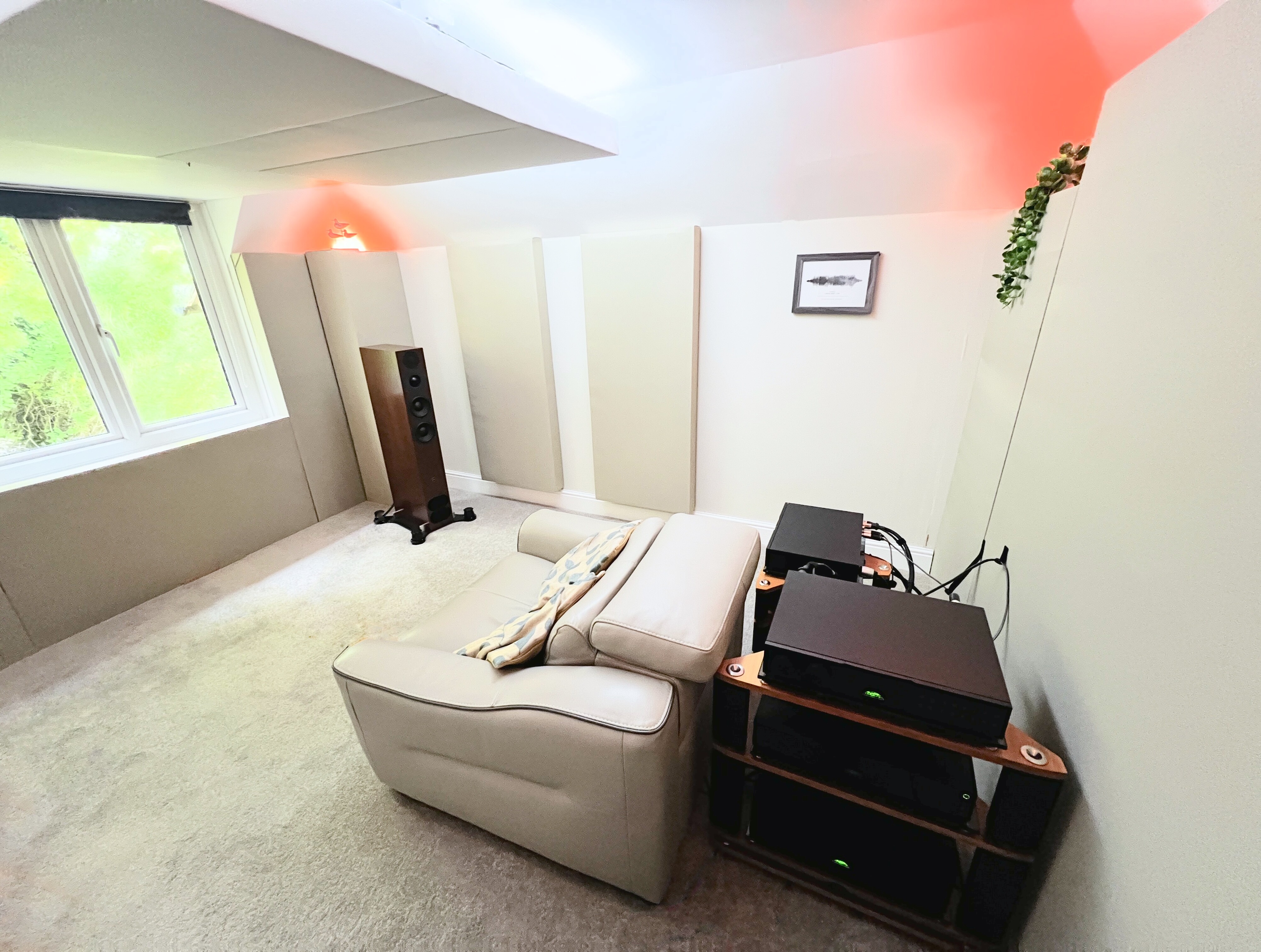
I like building stuff, so I designed and built the acoustic panels myself. I found where bass is concerned there’s no point in piddling about. To have any chance of taming those long wavelengths you need some seriously thick panels. The ones in the corners go as thick as 50cm, and the entire back wall is treated.
After I had finished, there was still an annoying node in the 1kHz range coming off the window glass. That was resolved by building some quadratic residue diffusers. The panels themselves are hinged when I don’t want them over the windows.
As I said, I enjoy building stuff, so it was fun.
The treatment, along with the principle of sacred ground (have nothing) between your speakers results in detail, resolution and 3D imaging that is quite startling.
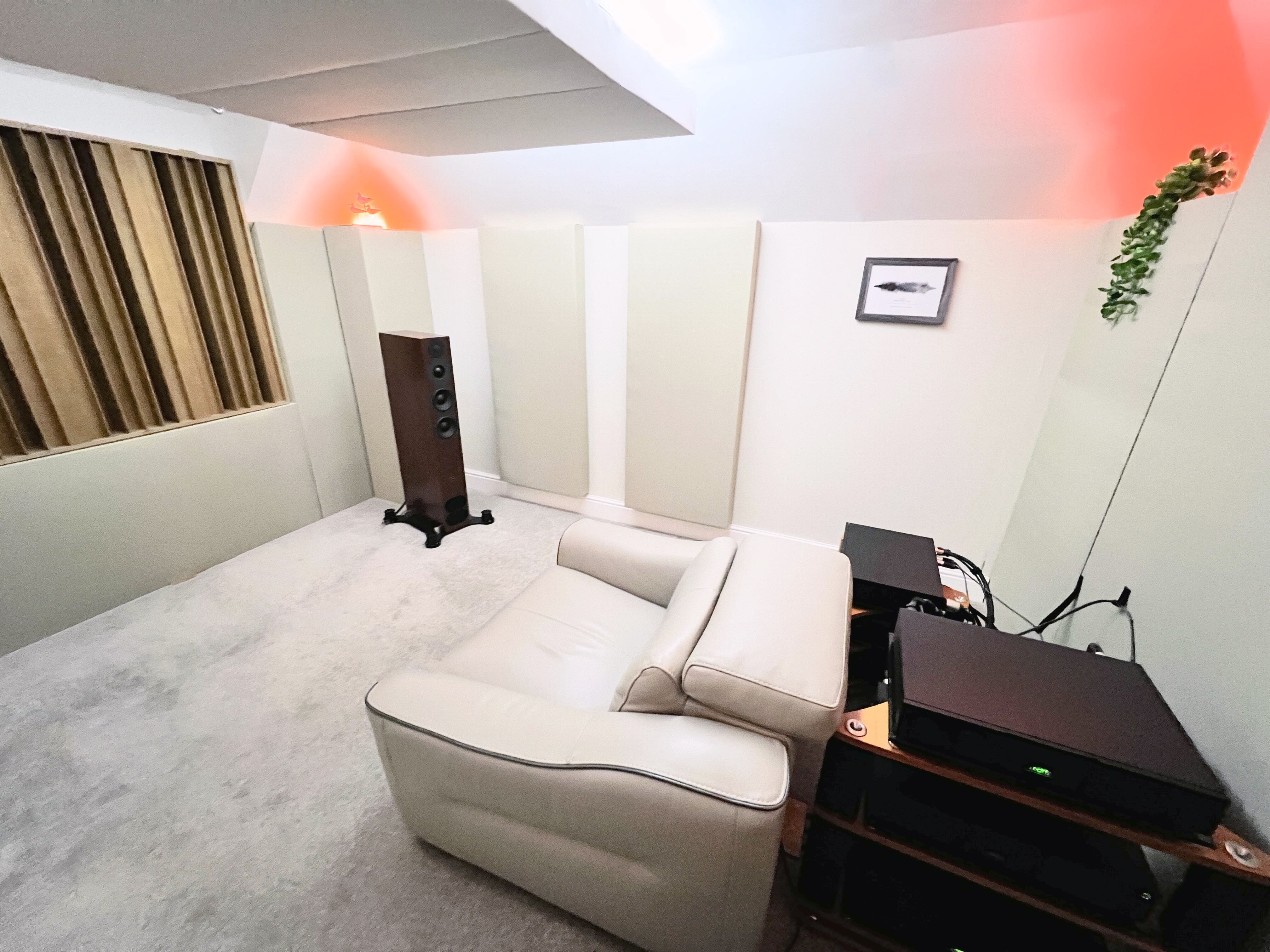
13 Likes
Indeed that is true for passive absorbers. There is an alternative – as a cost, though in decent hi-fi terms the relative cost perhaps is not that great – and that is active absorbers.
Good to hear you made your own. Another who has done so is @Xanthe. Once I know whether my room is remaining in the long term, with its due modifications, I will have to do at least some by DIY to custom fit in available spaces. I wonder if it is possible to buy acoustically transparent fabric printed with one’s own artwork choice, perfect for at least some wall panels?
Hi @Innocent_Bystander , I would try asking that question of Lindsay at GIK Acoustics. GIK Acoustics would certainly manufacture a bespoke panel using your image printed on the cloth they use for many of the components. You can also order the cloth and filler from them in bulk.
Just ask, many of my panels are bespoke from GIK Acoustics. Even to the extent that some of their own employees did not know the art of the possible of customisation within their own business.
Nice work!
For those of us that do this kind of thing - audio nirvana - the one remaining question is the fire rating for the content of the room.
I made some choices that mean I keep some products fixed in ways that can be removed rapidly if there was any emergency.
As @Edmund-of-Essex, said, GIK definitely do a bespoke service. I think you can upload your image directly onto their website. Obviously you’ll need a pretty hi res image for it not to come out all blurry. (Eggs and teaching you have to suck them springs to mind here).
1 Like
I used Knuaf Rocksilk RS45 for my panels which is the same stuff GIK used at the time. They may use something different now. They are hung with French cleats which remove very easily.
I also bought a roll of Camira Lucia which is GIK’s premium fabric.
1 Like
I know GIK do art panels, but I was thinking just of the fabric for DIY use.
Hi team, i think i shot myself in the foot with my myth comment, i was more thinking if one has to go to so trouble with additional tweaks and treatments, maybe the speakers aren’t suiting the environment, cheers
Martin
2 Likes
Whilst using the most directional speakers available beaming the sound to a tight listening position would minimise some room problems like early reflections of the higher frequencies, and having speakers that cut off most of the bass would minimise problems at those frequencies, room effects would still come into play in the frequencies between, and of course many people do actually like the bass in the music and don’t want an extremely tight hotspot listening position.
Acoustic optimisation in itself isn’t really tweaking, though of course like anything else if so minded you can tweak to your heart’s content: room acoustics, and any necessary treatment, really it should be thought of as just a much a part of system building as refinement of black boxes etc.