FR, when you quote please reference and give context. Thanks.
As I have said before, in many situations blind testing is simple (as long as you can find a willing volunteer to assist), and can greatly help. I find it odd tgat so many peope are resistant to the idea of doing that, even though it can save them money, or reassure that the cost of something is worthwhile. It gives the impression that some people don’t want to realise that sometimes they might be hoodwinked. Then, it seems not uncommonly, some time later the same people decide that whatever it is isn’t the best after all and revert or go grabbing a another snake oil product, never satisfied - perhaps because they never can be satisfied, always believing when someone suggests better is possible if they’d only buy X. (Then Y, then Z..,)
1 Like
I responded to @thebiglebowski , as he wrote he doesn’t know what I was referring to. It was his post .
Thanks, using the quote function of the platform can help you there. Just highlight the text you wish to quote and then press the quote button that appears. It will then open a new post and you can then enter your own text underneath, just as I have done here in this post.
1 Like
Get Full Fraim and be done with it. It’s designed for your kit. Or better still Fraimlite. Job done!
And change the speaker stands for what your dealer suggested.
Make decisions, be bold and then rest easy. You’re making life too complicated for a simple system.
2 Likes
Perhaps you need to question why/how you even came to consider that? It seems you are very ready to jump at something on the odd, unfounded, expectation of benefit, rather than study and assess and make a reasoned judgement… If you will permit me to make a suggestion, it is to err on the side of not changing anything unless you have clear evidence that it will be beneficial.
A small business I worked for many years ago, a partnership of two people. Their agreed policy was “the noes have it“, meaning that when it came to deciding on a course of action, such as an item of expensive laboratory equipment, etc., unless they were both convinced it was a good idea they didn’t do it. It made for a remarkably strong partnership, and profitable business. I think that is a good policy, and I commend the notion to you- no you’re not a partnership, but the principle of not buying something, or in this case changing your hifi, until you can convince an unseen doubtful person might be beneficial to you.
2 Likes
I’ve never felt the need to indulge in blind testing. It seems to me to be a completely alien and artificial way of choosing equipment. Blind listening, rather than eliminating all supposed psychological bias can actually introduce pschological biases in itself. You will be trying harder to perceive differences. You are creating artificial listening circumstances where you are forcing yourself to choose between things. You are setting yourself a challenge - choose between A or B. Thus it’s not representative of normal listening at all. It’s anything but normal. It can lead to wrong decisions based on immediate short term impressions as opposed to longer satisfaction.
4 Likes
You might not have felt the need, but from many of the things you have said you have done in your hifi journey I feel you would have benefitted if you had used blind testing! And when I do I am not trying to find differences, but looking for consistency in choice as to which is I like best, that making my decision between any two things. It is quite liberating, taking away the pressure of “x must be better because it is more expensive”, or “y must be better because everyone says its great”, or even z can’t be good because ot is a hype”. And if I don’t hear a difference I simply stick with what I have or choose the cheapest, whichever applicable. I don’t find anything alien or Artificial at all, it simply frees my auditory responses from possible influences, as I am very well aware how easy it is to be influenced subconsciously.
1 Like
I know why. Because I don’t like the look of Quadraspire. Nothing to do with wanting better sound - though a possibility of it which would of course be welcome.
I like the look of Mana and it has an excellent reputation for good sound. I didn’t want to order it without first enquiring here about it and taking on board other people’s experiences, since I’ve no first hand experience of it myself. What I’ve learned has put me off it. That seems to me to be a perfectly reasonable course of action in the absence of the possibility of a first hand audition. I had no particular expectations of it - I just prefer the look of it over Quadraspire. I did make that point much earlier on when I said that I would be happy as long as it was at least as good as my Quadraspire.
1 Like
Yes, but I was using a phone and the quote function doesn’t always appear.
Hope this thread will not open the blind test again. My god ! No, not again!
2 Likes
Why are people so afraid of it?
Well of course you do. That’s because you advocate blind testing! It’s hardly an unbiased opinion.
No, it doesn’t. It removes some possible influences and introduces others.
IIRC you have identified that you made various wrong decisions in your hifi journey, including following fads, or at least things things with more experience or hindsight you would have done differently, and certainly gone one direction later to make a complete change. I have only made one error in my journey, which was the one time I let myself be persuaded by a dealer without auditioning first. Whilst I haven’t used blind testing throughout my hifi journey, I have at least applied rigorous assessment and not allowed myself to be led apart from that one time (a dealer Inhad bought from a year earlier). Blind testing has simplified the process. You of course are free to consider your way best!
The only bias that can get through blind testing is believing that two things will not sound different, and so not hearing a difference. Actually that could be avoided by being more sophisticated with the testing and throwing in a third thing that the listener does know to sound different, but that aside, I was a non-believer in cables sounding different until I did a blind test and did hear a difference, so my non-belief didn’t influence that.
From a different angle, I understood you to have been a scientist. In what way does a scientist reject blind testing? In my professional life I had to be absolutely neutral, data had to be correct, and decisions completely unbiased. If was a tough time for my profession when they had to realise if wasn’t enough to intend to be right and believe they were right but actually had to prove it, but once through that we were more effective than ever. Avoiding bias is difficult. But possible, and necessary if anyone wants the best decision. Of course it is perfectly possible to be happy with whatever one believes, though in the hifi world that can come at an unnecessary cost.
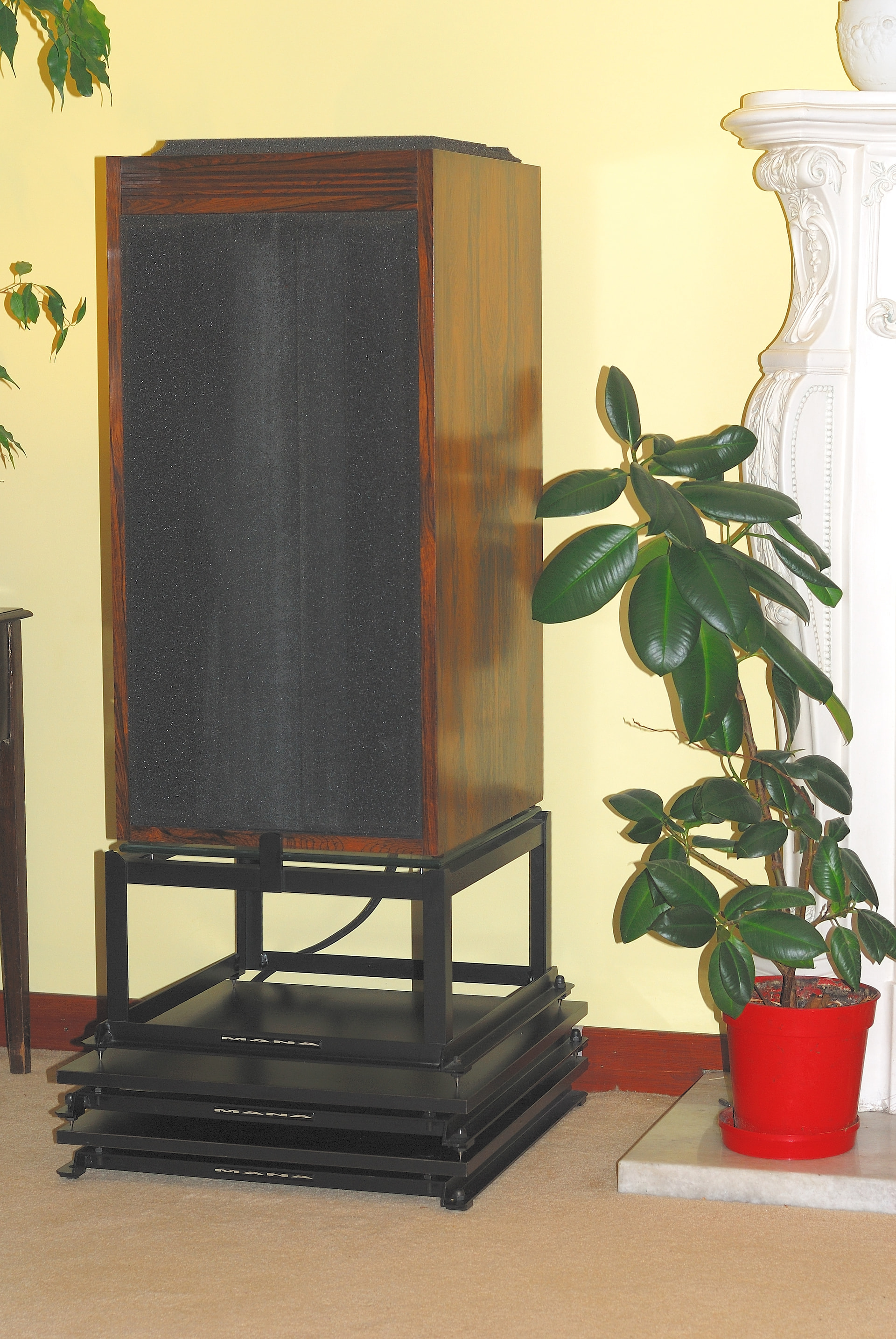
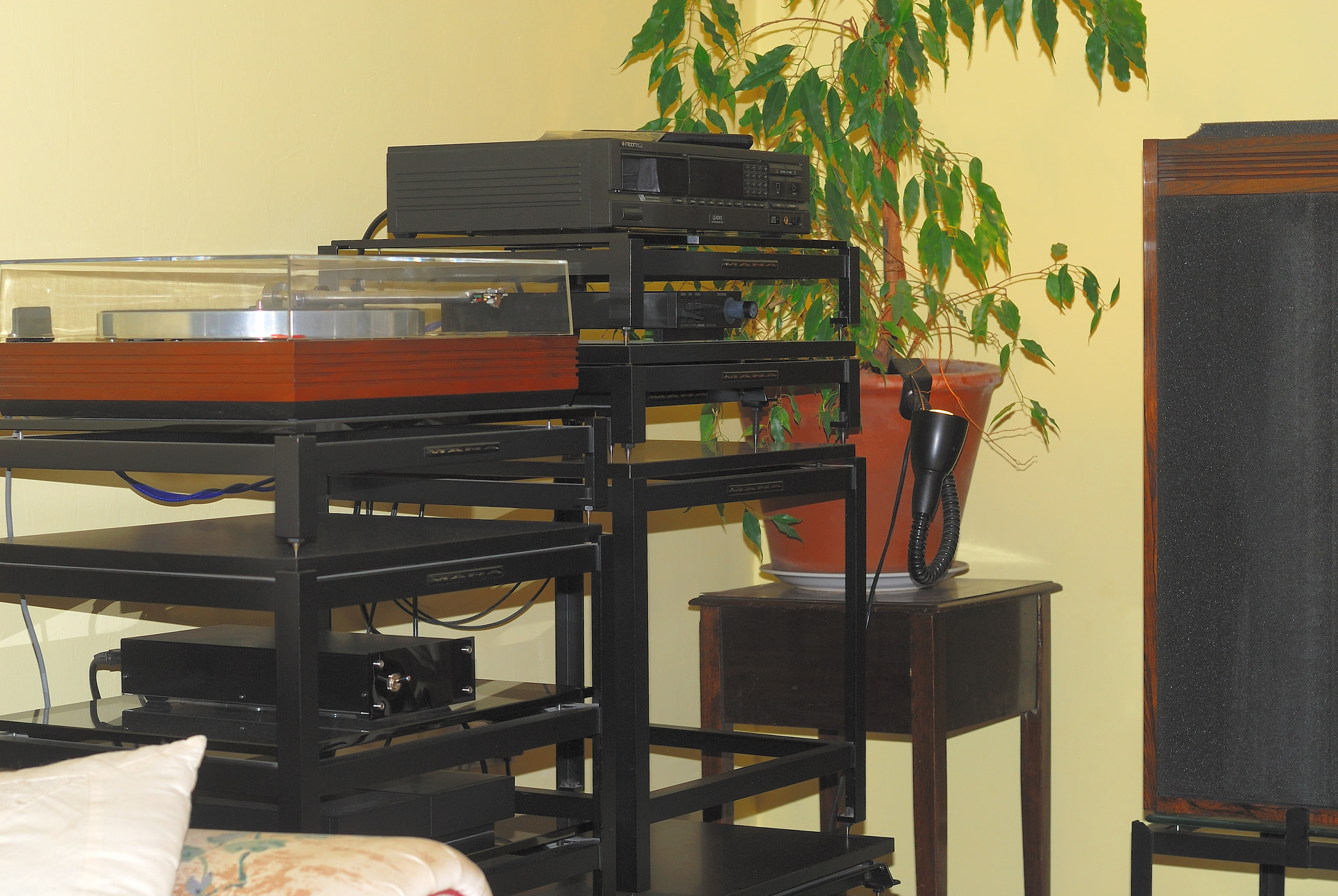
A few years ago now, took these two pics whilst listening to a fellow enthusiasts system - sounded pretty good at the time…..
3 Likes
I don’t reject it per se. But let’s be clear. We aren’t talking about a scientific pursuit here. We’re talking about listening to music. I feel that the mistake you make with your approach is in attempting to apply the rigours of science to choosing hi-fi equipment. It’s perhaps partly because of my scientific background that I reject this approach. I don’t see, and never have seen, any connection between listening to and choosing hi-fi equipment and science.
I believe you are wrong in believing that blind testing eliminates psychological bias. As I’ve explained, it creates psychological influences by it’s very nature. Also there is an assumption that psychological bias exists. Perhaps it does with you, and it’s something that you feel the need to combat. But it doesn’t follow that it exists with me. You could argue that it does but how would you know that? It’s just an assumption that fits your particular view of things. I sense that you make many such assumptions which seems odd to me in view of your own scientific background.
1 Like
I believe that, perhaps through my inherent scepticism, I have a high degree of resistance to psychological influences, but I am not foolish enough to consider myself immune, nor to consider myself not to be totally bias free. In fact have to admit that actually I have no way of knowing for certain what is my degree of susceptibility to psychological influences. Also I try not to be biased, a skill I learnt professionally, but I also know how hard it is to avoid all bias.
I would be worried if I considered myself immune, as no-one is, though the degree of susceptibility can vary.
This is a highly contradictory statement. You believe you have a high reisitance to psychological influences, yet you also admit to being inherently sceptical! What is scepticism if not a psychological influence?
Ok, everything we think is psychological. I thought it was obvious in this discussion that we were talking about external influences on our subconscious, e.g. marketing claims, fashions and fads, a need to conform to or follow something, peer pressure, etc, and other subconscious influences such as confirmation bias.
Scepticism is a tendency to disbelieve in the absence of evidence. I therefore seek evidence where it is not known to me. That evidence can come from, as a pertinent example, blind testing or other objective testing. It is not a refusal to accept.
No. Scepticism is not accepting without question and requiring proof before you will believe. A tendency to disbelieve is not scepticism, which is healthy, It is a lack of open-mindedness, which is not healthy. There is a subtle but important distinction.
The evidence or proof that you seek comes simply from using your ears. Blind testing is superfluous unless you believe or know yourself to be susceptible to being influenced by outside factors and you feel the need to devise a strategy to cope with that. IMO it’s otherwise entirely counter productive.
1 Like