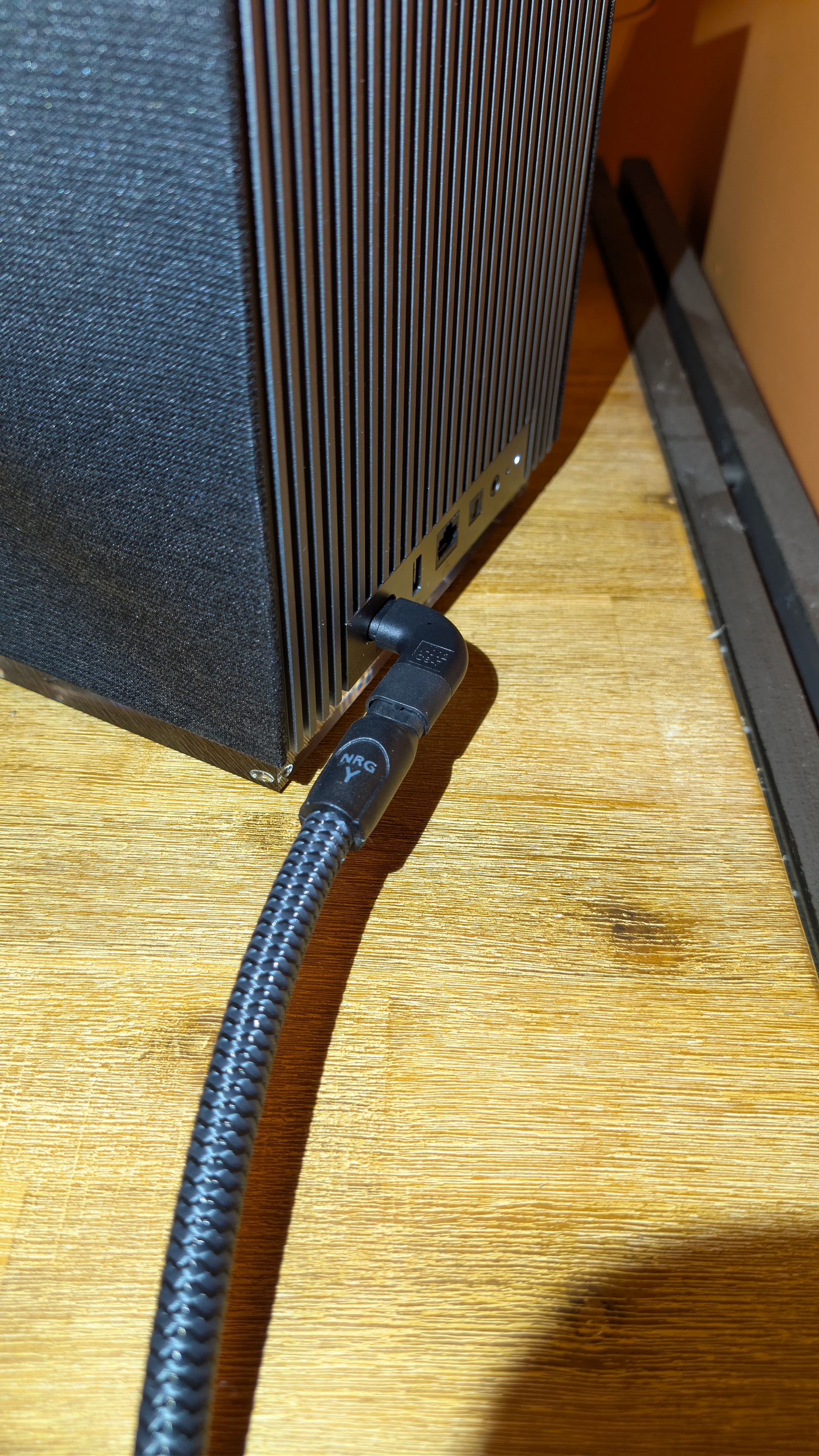
When it comes to power, as the owner of three Mu-so 2 devices (one large Mu-so 2, two Qb 2), I am thrilled to report that purchasing better power cables, using a power filter, and professional phase alignment with a voltmeter has been extremely worthwhile in terms of sound quality. I wasted a lot of sound potential for more than two years without these power optimizations that highly affected sound quality.
I use Audioquest NRG-Y2 power cables for the Mu-so 2. The large Mu-so 2 also has also an additional audiolab Block DC power filter connected upstream (with additional Audioquest NRG-Y3 to power socket). With the correct phase, the bass is much drier and crisper without loudness setting, and the previously slightly muffled mids are now very present. The only challenge is to find a suitable ground measurement. I’ve connected a 3,5mm socket to cinch adapter cable to my Mu-so 2, so it’s easy to measure the phase with ground by cinch.
When you say “phase” I assume you are referring to the polarity of the figure eight mains lead? Yes, definitely worth trying both ways as one way is usually preferred over the other I find.
In Germany, we refer to the phase and the ground when talking about electrical outlets. Therefore, the first step is to determine the phase using a voltage tester on the outlet and then check it again at the output of the Audiolab Block DC. Theoretically, there are then two possible connections for polarity from the Mu-so to the power filter, which you can try out by ear. However, as mentioned above, you can also measure the correct plug position by using a voltmeter. The sonic effect is impressive.
I’d like to buy another Muso QB and get rid of everything else. I’ve already had the Muso 1 and QB 1, and I preferred the QB; the voices were better. Then I’ll try your option as well.
I was surprised at this when Richard mentioned this to me a while back, and yes it does have an effect, also our Muso2 is in Germany where the mains plug can also be switched 180 degree too. Interesting stuff
What surprised me most, apart from the plug position, was the sound effect of the last meter with a thicker and better shielded power cord. The effect is clearly audible.
I am not familiar with the Mu-so 1, but if you are thinking of a new purchase, I would recommend the larger Mu-so 2. Of course, you always have to consider the available space to place the device. But if you have the option of placing the device on a sideboard at least 30 cm away from the wall, the large Mu-so 2 is the better choice in terms of sound quality. The Qb is generally good for smaller areas in the kitchen or bedroom. But considering the small difference in price I prefer the higher value of the bigger device.
If you’re thinking about the option to replace the power cord, pls take into account that most power cords are sometimes a bit thicker and not as flexible as the original cord. A 90° adapter might be a good solution.
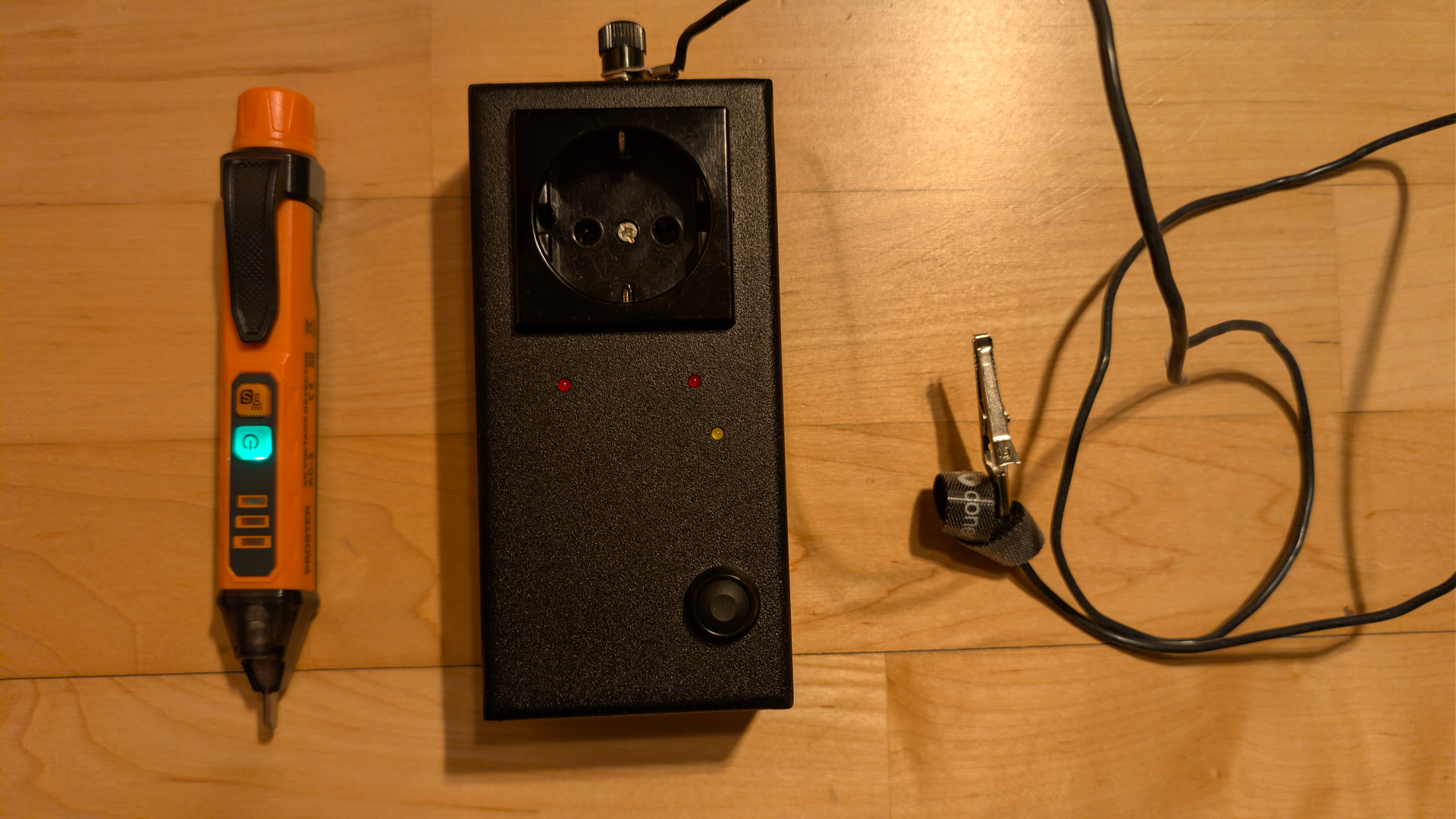
The phase at the power outlet can be determined easily with the orange phase tester. For the polarity of the device’s power cord, I use the black phase tester, attaching the clamp to the RCA cable, which is plugged into the 3.5 mm jack. This is an important ground connection for the measurement.
When I plug the connector now into the phase tester in this configuration and press the button, the light on one of the two sides will glow red. If I turn the connector 180 degrees, the light on the other side should glow, which means I have determined the position of the phase. This side of the plug should correspond to the phase of the power socket. Determining the phase with a voltmeter is a little more complicated.
Yes using a good figure 8 cable makes a nice difference. I don’t have a Muso or NRG-Y2 cable, but use Nordost puple flare figure 8 with a Furutech silver plated plug on my av stuff and they’re great.
P.S. you’ve really got to get rid of the 90 degree connector.
I agree, getting that “figure 8” Naim power cable orientation correct, into my Bentley Mu-so 2 definitely improves the musicality and enjoyment. ( I also use an audiophile power conditioner for my audio satisfaction).
There are probably a whole range of good alternatives to the standard power cable. With my Audioquest NRG-Y2, it was also a question of price, and I needed 2m and 3m lengths. That excluded a number of manufacturers. QED, for example, does not offer cables with C7 (Euro plugs).
Referring to the Adapter: I couldn’t hear any difference in sound with or without this angled plug.
For a Mu-so with it’s C7 female plug it’s not important how you connect the power cable as you can measure the phase (live) as described above at the side of the power cable that’s connected to the wall.
One thing I forgot to mention, you should remove the LAN wire (if you use some with the Mu-so) while connecting the phase testing device with the clamp to the RCA cinch (this should be the only ground connection).