Fine when you’re in a hot and humid place and need something to cool you down … but decent beer drunk in reasonable temperature surroundings should have nil or negligible condensation making the glass obscure and creating a puddle on the table!

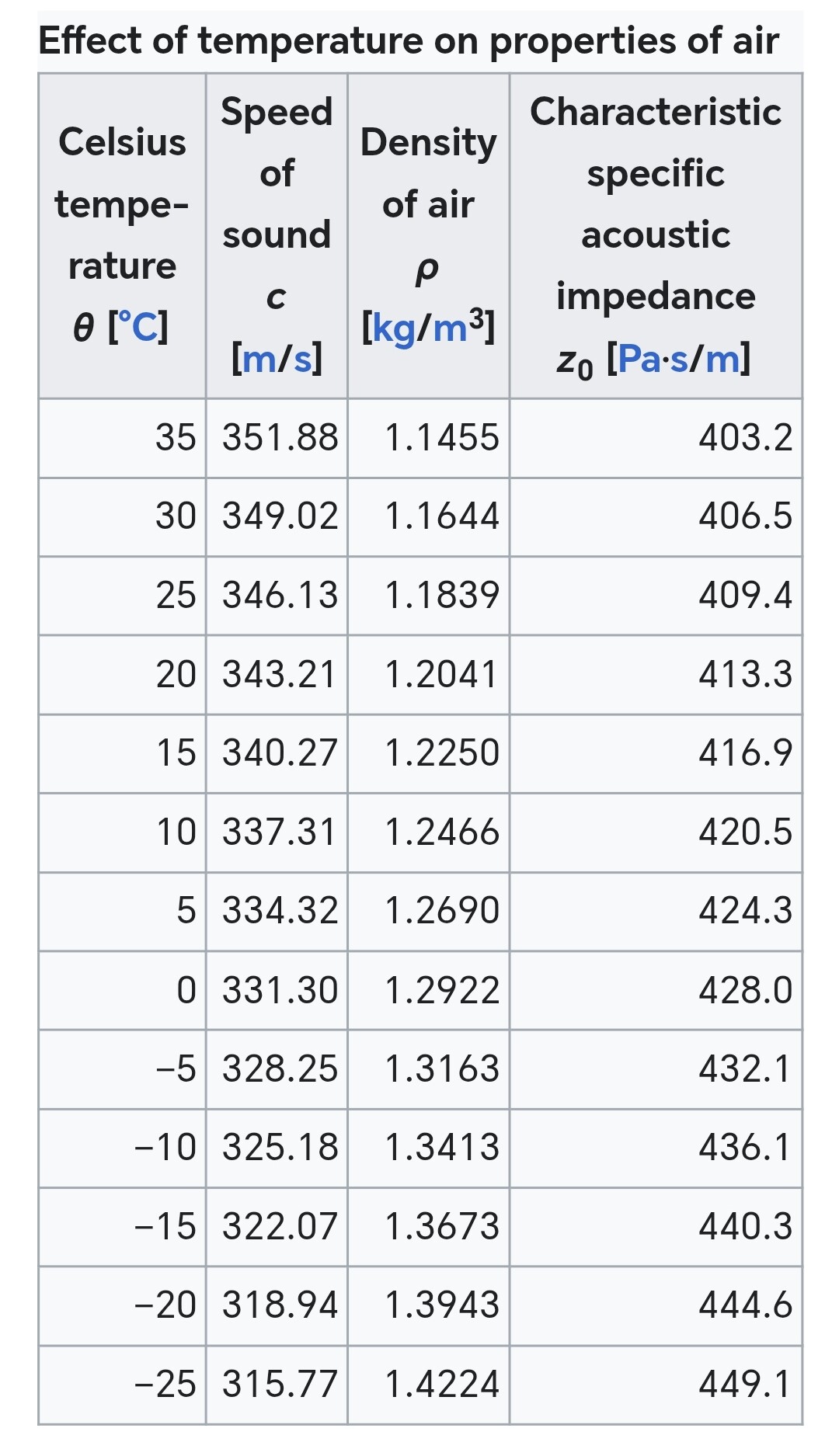
So the only way is to measure it, then enter the right number into the Linn Space Optimisation calculator.
Gosh, I feel settling VTA on an arm for each lp must be more straightforward.
Enough already with h2o 
No prat at -25 C then . 
1 Like
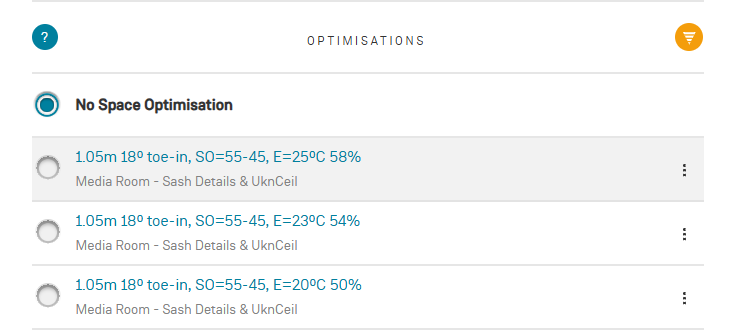
It’s OK FR, you can precompute all the typical settings you might require ahead of time and then just selekt  the relevant setting at a push of a ‘radio button’ on the Linn account software that you get with your system. Of course, if the internet goes down then you are stuck at whatever was the last setting.
Also, it is a bit like engine mapping, and it could be a lot of settings to cover various temperatures and humidity’s. Plus it takes ~8 mins to calculate each Optimisation for a medium sized room.
I think if some malicious group (obviously not the Naim community) wanted to drain the Linn company of cash, they could buy the lowest cost SO enabled products and continuously request new SO computations. I think the Linn SO CFD cloud service bill would be huge, but I expekt that the malicious ones would get bored before Linn ran out of kash .
1 Like
Looks like this thread has descended into Beltism, with the argument about relative humidity.
Interestingly “Beltism” does offer some theories that whilst questionable have some solid foundations. Which for Audiophiles, can be useful to “have under your belt”.
Also to add most importantly was that the products he offered were relatively very cheap. You could secretly buy them and no one would notice - the wife/partner/bank manager. - and potentially avoid embarrassment.
This Everyman approach is still attractive to those willing to be creative with the process.
I would be worried about my cats and small children being left alone with those beasts.
1 Like
Follow my next thread about systems pics and disappearing pets.
1 Like
How are the summer holidays going, Rooster? You must have holiday by now?
Yes, thanks. Peaceful holidays here, nice weather. Would be hard to complain.
And you? Some holidays next?
1 Like
Today starts the holiday. We’ve 3 weeks planned. In the last week I’m going to swim in the Seine with my 2 youngest kids:-)
1 Like
I have not tried yet, but I am tempted. Between Champs de Mars and Javel, there is less people. But if it rains the day before, it will be closed, until it’s clean enough.
Let me know when you go, maybe I can join.
1 Like
Clean with some “javel”, should not be a problem
1 Like
I don’t know much about the old stuff. But there are materials now that can be used to directly mitigate EMI/RFI that can be applied to the exterior of a cable.
3M’s AB7000HF series can be gotten in .2mm and .1mm thicknesses that can conform to a cable jacket.
I’ve experimented a little with just adding a 25mm wide strip to each end of a DIN interconnect and have heard some minor bit positive effects.
Every cable is an antenna. If the cable conductors aren’t, the shield still is.
The 3M stuff absorbs the RFI/EMI over a fairly broad range and converts it to tiny amounts of heat. With my WiFi mesh node being about 3 feet from my Naim equipment, it makes sense to me that I’ve found a benefit, however small.
1 Like
Then that’s all that matters.
1 Like
Hi @frenchrooster , I have picked this posting of yours to which to reply, but I hope my posting covers quite a few prior and subsequent inputs on this temperature and humidity topic.
Fristly, I think it has been clarifed that Relative Humidty (expressed as a percentage) is what we are using for experssing humidity - and this is certainly the case in Linn Space Optimisation.
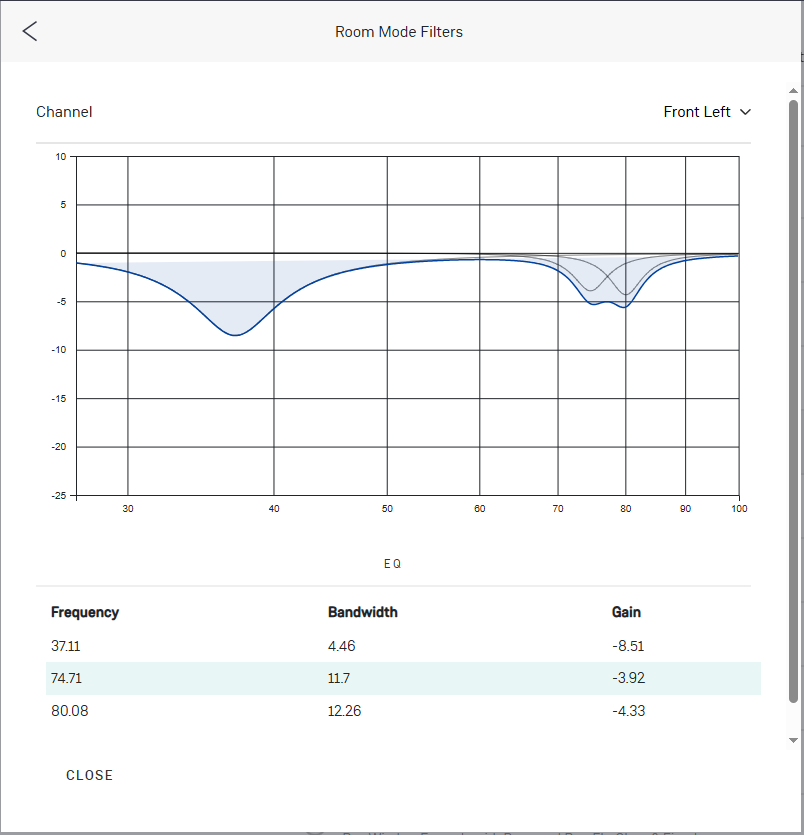
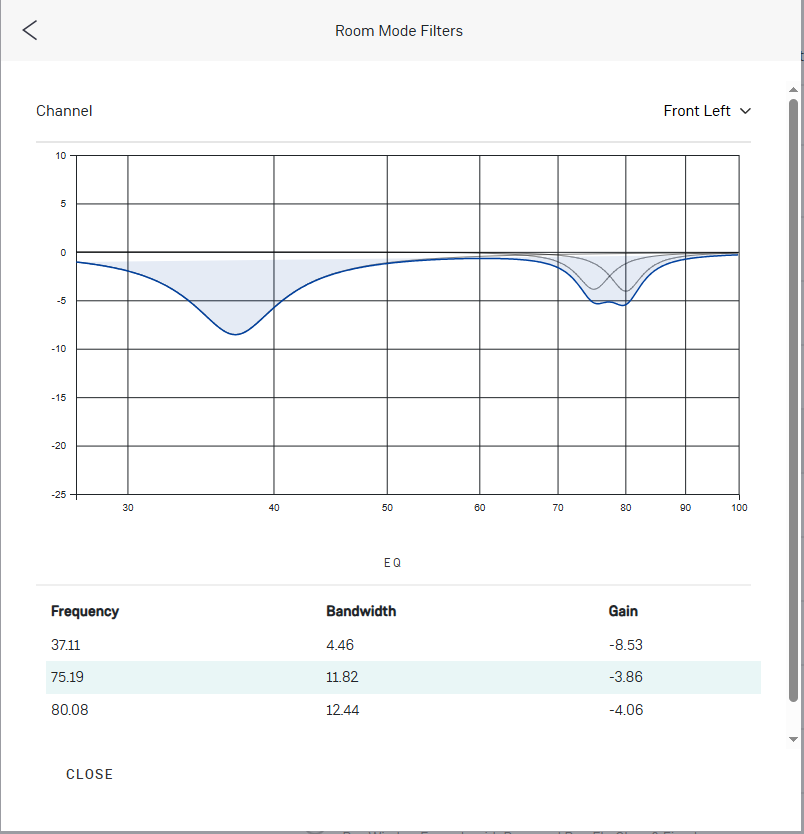
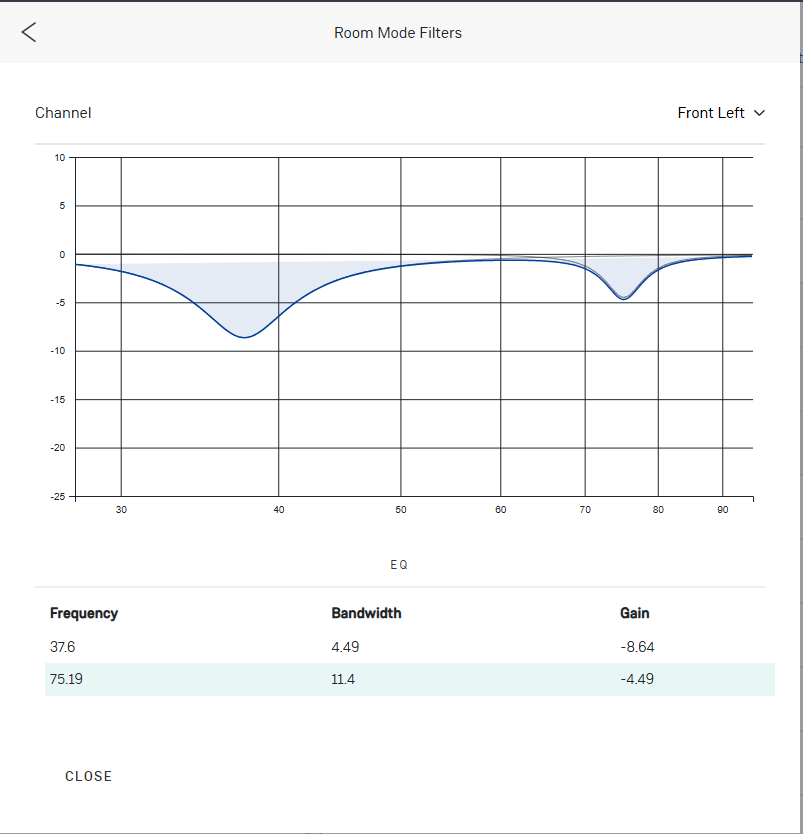
Below there are three images taken from the resonance nulling filter calculations in Space Optimisation for my Media Room. The pictures all relate to a fixed Optimisation bias preference (55-45).
The first calculation is for 20 deg C and 50% relative humidity.
The second calculation is for 23 deg C and 54% relative humidity.
The third calculation is for 25 deg C and 58% relative humidity.
Hopefully, even though I have explored less temperature variation than that which you requested, it is clear how significant the impact of temperature and humidity can be?
I also note a few postings questioning whether one can actually hear these effects (and references to ‘Beltism’). For those who wish to look closely, the ‘double dips’ introduced at lower temperatures of 20C and 23C in the run time SO correction filters, have merged into a ‘singal dip’ with a different Q factor at 25C.
FYI: Linn Space Optimisation is attempting to linearise the phase below 100Hz (as percived at the listening position) as our ears are quite sensative to phase distortions at low frequency.
Clearly, the phase adjustment will not be correct IF the Environmental Conditions are not modelled correctly - and errors in this aspect are quite audible (to my ears, in my room, with my equipment etc etc). In this case, the ‘audability’ comes not directly from the ‘temperature’ or ‘humidity’ of the air itself, but from the fact that putting the phase correcting nulls of the filter at incorrect frequences does not reduce the room resonances, which are audible!
PS: Regrding you other observation FR, here is a view of the ‘Radio Buttons’ in my Linn SO account that enables me to selekt  the precomputed calculations.
Hope all hope the above helps,
and,
maybe,
stimulates further discussion on this thread?
4 Likes
As we’re talking about the effects of air temperature, etc. on the speed of sound etc., perhaps Patrick McGoohan’s explanation from 1968 may offer further insight…….

ATB, J
1 Like
Number 6?
3 Likes