You obviously want cabinet stiffness or the cabinet will vibrate and effect the sound quality.
At the same time, the speakers are by far the greatest device in a hifi system that produces air born vibrations as well as vibrations that will travel through products.
So obviously you don’t want any gear directly infront of the speaker or behind if rear ported. Also trying to eliminate vibrations going into the floor can certainly be very beneficial. Even more so if you have a suspended floor.
3 Likes
Indeed. It’s a marketing trend right now talking about smart product design turning vibration into heat… Maybe not dropping physics in school would have been good.
Indeed, I had an experience a few years back at a parent’s evening, when a a physics A-level teacher did not seem to understand what I was talking about (expressing physical concepts in terms of M,L and T). Got into trouble with my wife on the way home!
As I have said elsewhere (? in this thread), these devices are actually mitigations against other problems ( for example wobbly floors) and in this case compliances result in loss of information.
As you responded” the picture depicts a fantasy “, i logically thought you were laughing from the technical explanation from Stillpoints.
They are simply superb! I use isoacoustics Gaia-4 under mana double stacked sound frame and Gaia-3 under my SL2 that sits on the manas. I also use isoacoutics Oreas under all my Naim Gear on Full Fraim Racks. They are not moving. Suggest you go to your dealer listen side by side to a set of speakers without Gaias fitted and a 2nd pair same speakers with Gaias fitted. You will want a set after that.
under all my naim
2 Likes
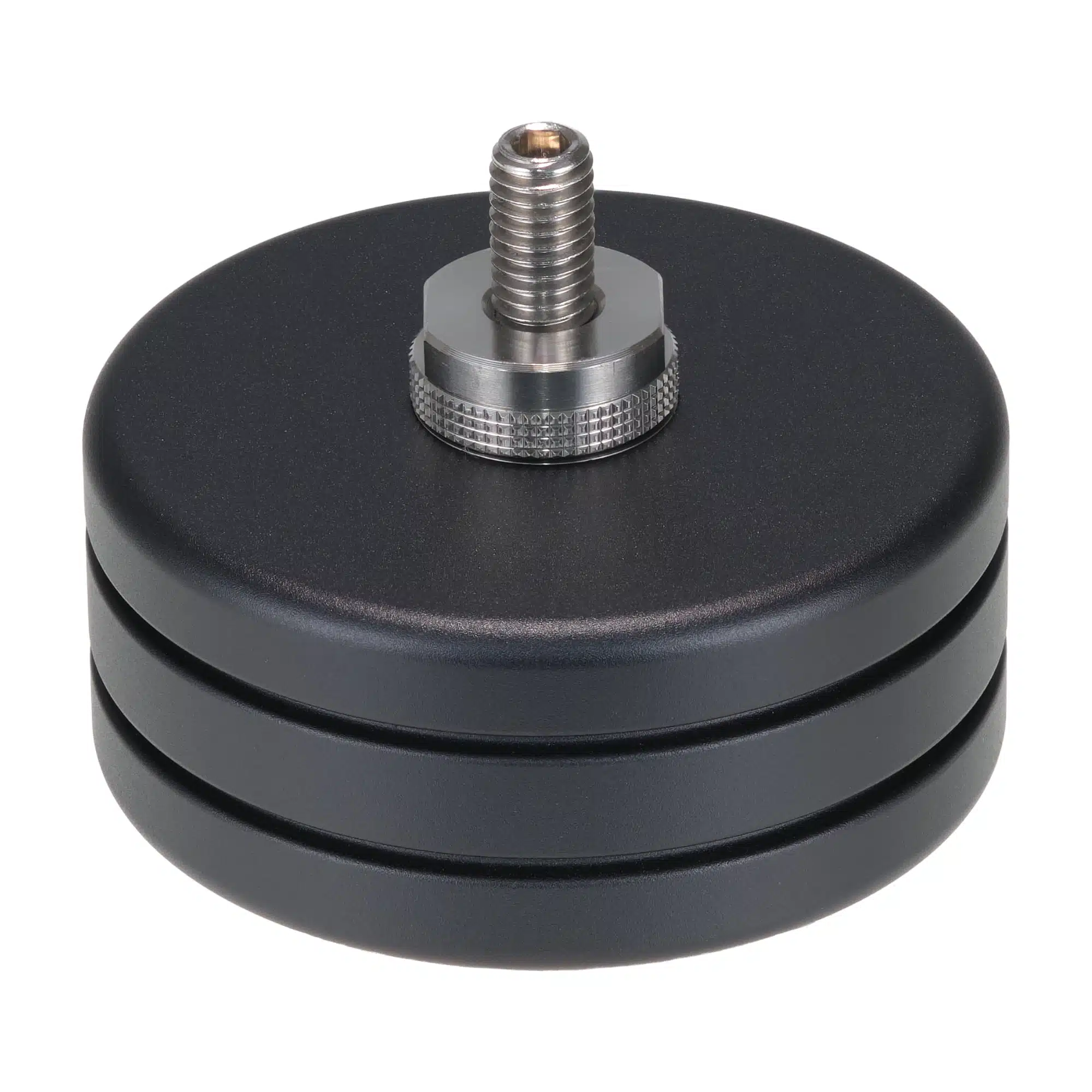
Generally you have more open soundstage, nicer tones, better defined bass, clearer sound, more details, and more sensation of all sounding without constrain.
No whobble at all, but more solid and stable holding of the speakers on the floor.
3 Likes
No wobble = coupled, so these do the same thing as spikes, but better. The technical explanation (the one with metal powder)…skeptical
2 Likes
thanks jazz65b it is good to hear some actual listening experience - i must confess the circular pseudo-science arguments are tiresome. rather than theoretical arguments based on half digested basic physics lessons possibly decades ago the scientific approach would be to test the devices in a lab - until then listening experience is the best we can have
3 Likes
A side question which always puzzled me : Why do most stands have 4 spikes rather than 3 ? Surely a tripod arrangement the simplest way to guarantee coupling and avoid having to level the base at all ?
1 Like
Why, well a stand with 3 legs means you will have a leg at the rear in the centre.
This can get in the way.
Also just because it has 3 legs doesn’t mean it’s automatically level, but it just means it won’t rock
Dunc - The single spike is actually at the front on my Slate Audio stands, but even if it were at the back, I don’t think it would be any more in the way than two spikes on the corners. And in the way of what ?
Also, if you’re a “no movement at all” person, then, to me, not rocking would seem more important than a level base.
Isn’t this why camera tripods are…tripods ?
A single stand then no but a rack with many shelves like fraim then a centre leg can certainly get in the way.
While watching a video of the new Dynaudio Contour Legacy, I noticed the guy had them sitting on some kind of isolation platform.
Looks like it is a UK company I had not heard of
Audite Acoustics Phaenon 2 speaker platforms.
They appear to “wobble” like the Townshend Podiums, so there must be some advantage to this right?
1 Like
I went to see them on their website. Seem to be well made. However they look a bit bulky and also the height is 9 cm. The raise a lot the speakers height.
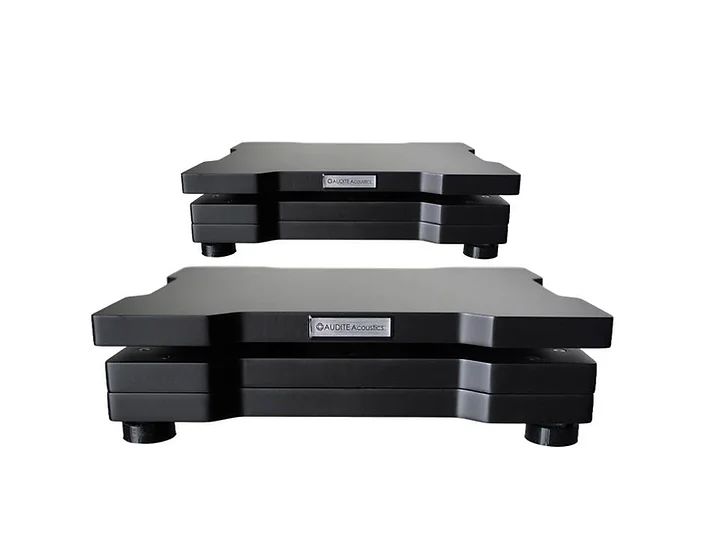
Not cheap too.
1 Like
I agree FR, I just wanted to highlight the fact that they appear to use the same method as Townshend Podiums, where the speaker kind of floats, rather than being rigid on spikes.
A few people on this thread seem convinced that the only way is that the speaker should not move at all. Yet they probably have never tried other options personally, just go by physics they learned in high school.
Maybe we should all just bolt our speakers directly to the floor…?
1 Like
One issue with any podium is the challenge in mounting a heavy loudspeaker on to them. My Townshends just about tolerate putting my ~50kg+ 'speakers on to them aided by using magazines as a ramp/staging point. Trying to lift even one foot on to a plinth ~9cm high suggests some, unknown to me as yet, yoga-like manoeuvre, where the leading footer doesn’t mean putting the whole weight through the plinth 
1 Like


For sure it is a struggle lifting the speakers onto the Podiums if you are doing it alone. I have a surgically repaired knee, and my
bad back/fat belly did not help. My DB7’s have a big port in the back, which I lifted from, and kind of bear hugged the speaker to lift it in place.
That’s of course not a fair characterisation. I think it’s been made sufficiently clear, and should be obvious, that that’s the ideal. The cone moves the air, and shouldn’t move the box or anything else. Yet none of us have an ideal situation, these device could well fix more issues than they do harm in some situations. Vibrations travel after all. We’re all dealing with our own compromises.
It’s like a bad room vs DSP. Which is worse? For some DSP might be the answer despite theoretically being far from ideal.
2 Likes