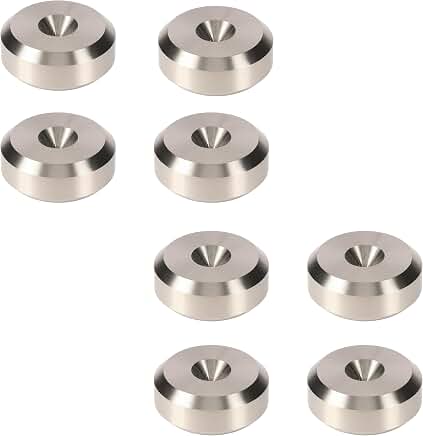
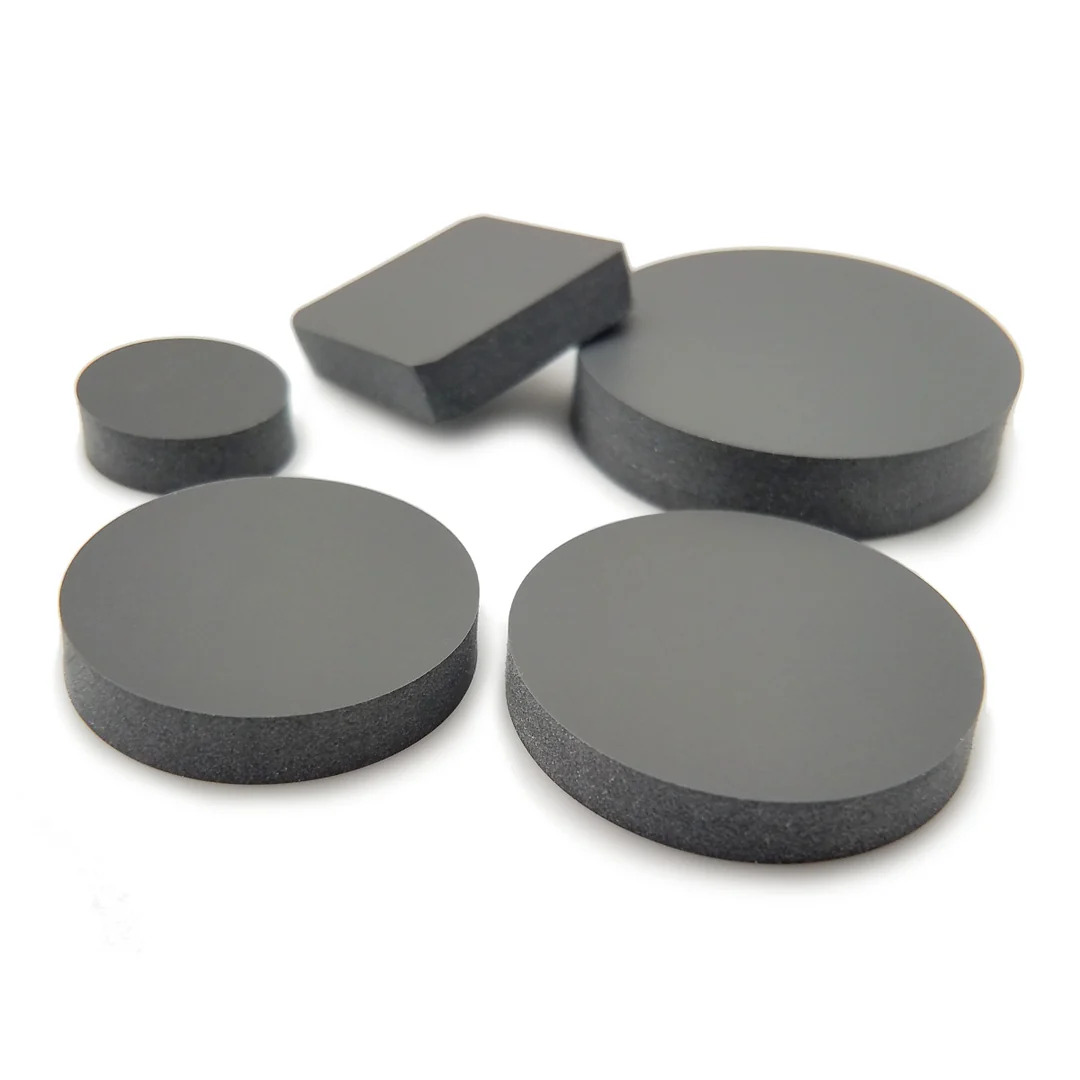
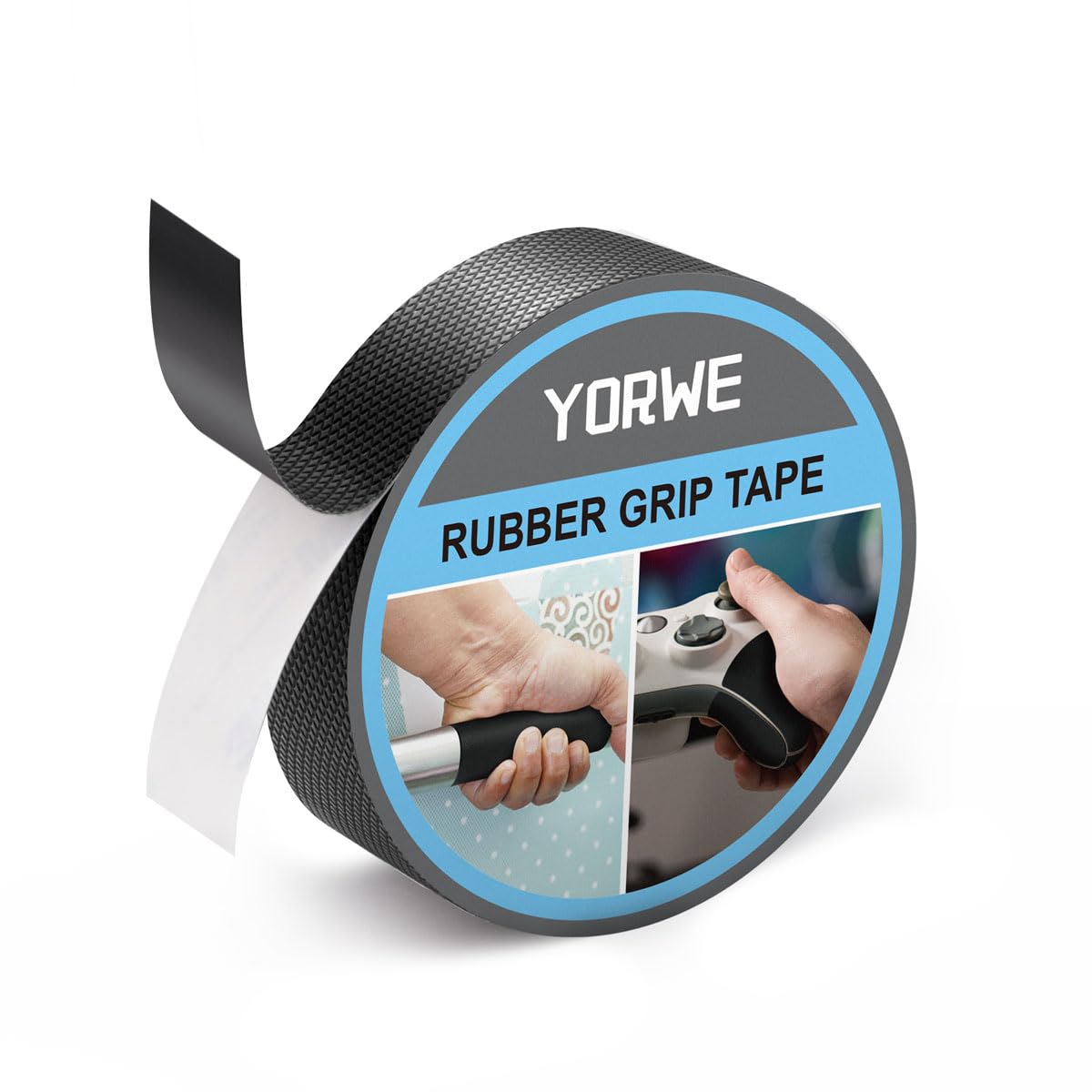
There are one or two old threads on this kicking around but I’m just wondering if anyone has come up with anything new since. At present my JBL 4309s are on Atacama stands with the supplied Atacama gel type pads between stand and speaker. These do good job of keeping the speaker from slipping around but I’m not convinced they are anywhere near optimum for sound. In fact I tried these many years ago and as I recall they reduced any colouration from the stand but there was also a loss of impact and immediacy. Not surprising as they are not rigid but compressible.
JBL did supply some thin stick on discs, but again soft material. Blu tack seems popular, but again it’s soft. In the old days the Kan stands had integrated upwards facing small spikes which worked well. One dealer / reviewer, who used Kans on Sara stands as he thought they sounded batter that way, advocated using small steel nuts with very thin layers of Blu Tack. In similar vein I was thinking of these:
There’s a technical paper available on the SOLIDSTEEL website detailing their acoustic isolation technique and decoupling.
Worth a read.
And compounded with that, my real time experience bears out their findings and engineering solution.
Hi
Whenever I’ve used speakers on stands I’ve always used the short sharp spikes and spiked the cabinet.
Rock solid but does take a bit of headspace to do it.
Very careful positioning and measuring and don’t press hard until absolutely sure
I’ve never chopped and changed stands so once in their in.
If done properly it’s always easy to remount after cleaning etc.
I’ve tried the little rubber blocks etc but the best result was the most brutal.
Probably not what most want to hear.
Herbie’s Fat Dots provide good isolation and decoupling. I’ve bought several sets and use them to good effect. They’re reasonably priced and offer a good grip between speaker and stand. Hope you are enjoying your new setup Pete.
The speaker and stand interface can be absolutely critical to performance, which is a lesson I learnt a long time ago when I had Linn Kans. Originaly I used the standard Linn Kan stands but when I was up at the Sound Organisation (back in the 80’s) Roger Macer was launching the SO equivalent Kan stand. They actually looked a lot nicer than the stock stands with their duel sloping front legs, so I asked Roger if I could take a pair home to try. He was only too willing but I’m not sure he was so happy with my feedback! They sounded awful, strident and unresolving were the words I think I used. The main culprit seemed to be that SO had tapped some holes in the box section for spikes and used simple nutserts, whereas the Kan stand had a big heavy plate in the top. The Kans didn’t react so well to this low mass solution. I don’t thing Roger sold very many of those stands.
I have used blu-tack, not to stick but to take out any minor imperfections in stand surface: on each corner a 3mm or so ball of blu-tack softened by rolling in hand, an inch square of blu-tack release paper on top, then on goes speaker. Weight of speaker spreads the blu-tack very thinly, but because it doesn’t stick the speaker can still be removed easily, ensures no possible rocking. N.B. I’ve only done this with heavy speakers.
You could drill the stands and screw through into the base of the speakers. More sophisticated and better in the event of ever wanting to disconnect and reconnect would be to mark positions and fit nut inserts and use bolts. This approach locks the stand and speaker rigidly together so they move, or don’t move, as one. (I have done latter.)
Having flat top stands you could quite easily put constrained layer damping between, though not sure what would suit, while the light weight of your speakers might limit options. Could be DIY or commercial feet things. I’ve no idea what effect this may have - one definitely for trying at zero or minimal cost before committing.
Thanks everyone. I’m definitely inclined to a spike solution, knowing how well it worked with Kans. The problem is that unlike the Kan stands the Atacama stands don’t have any spikes on top. I’m not sure therefore how I would go about this. I suppose I could drill through the top plate and bolt some spikes on. This might be the ideal solution in fact. The top plates are quite thick though and although I do have some titanium drill bits I’m not sure how easy it would be, and my drill is a pretty rock bottom basic model. I’ll need to consider this and perhaps work up the courage to have a go!
Remember you were looking at the Partington stands too.
Did you turn one round to see the front to back stability.?
Make sure before you commit once spiked it’s done.
Hope you’re enjoying the new journey.
Hi Skeptical and thanks. I haven’t tried turning one round yet. All options are still on the table. That’s the trouble - once drilled there’s no going back. It’s a hell of a life! But fun too and thanks I am really enjoying it. Honestly I haven’t been this pleased with a system since I last owned Naim and that was approaching twenty years ago now. I had to part with that as life conspired against us at the time and we needed some cash. When things got better again for some reason I decided to try something different. Big mistake. But I’m back home now to what I loved for many years. This is a very modest system indeed in monetary terms by the general standard here but there’s nothing modest about the way it makes music. I’m very happy - just wish I had made the move sooner!
If you drilled for spike and decided you didn’t like, I doubt very much that you’d hear the holes after removing them…
BTW, if you do try drilling, and at the risk of appearing to try to teach my grandmother to suck eggs (hi Grandma!), given that you give the impression you may not have drilled steel before: if you don’t have a punch to make an indentation to keep drill bit in right place, it can help to use a small bit first to do that. Then use a drop of oil to lubricate, and drill fairly slow. HSS bits are fine for steel, though a new sharp one will be of benefit. Ti should be OK as well, assuming its not just a coating for show on a mild steel bit. Even 1/4” steel plate is not difficult to drill.
Thanks. Yes if I do decide to go ahead then I’ll start with a small bit. My drill is so basic that the only speed control is the pressure on the trigger, ie. squeeze harder and it goes faster. Sounds simple enough but I find it almost impossible to avoid squeezing too hard as the trigger is so sensitive and not easy to make fine adjustments. In practice it’s either ‘off’ or too fast.
Back in the day when I wanted a spike solution, I bought some from a sports shop, I cannot recall if it was running or golf shoes. Then went to a local engineering firm who drilled and tapped the holes for me.
After trying various so called dedicated and other solutions I’ve found that a thin piece of firm leather (faux is just as good) works best for me with a pair of not too light speakers- e.g. 6-7kg or more (mine are 12-13kg I think).
Just cut several pieces and use as needed. Within a few days they also get to stick in place.
It’s a mixture of safety (anti-slip, veneer etc.) and sound quality - firm in place, no wobble, no detriment to sound quality with retained tactile bass and imaging. Next best thing to drilling your speakers.In fact mine are pre-drilled to be screwed in to the stands but I’ve never thought that’s needed with this simple solution.
It’s easy and cheap to try and non-invasive, so if it doesn’t sound good then I’ll try something else. Drilling the top plates and bolting on spikes seems like the best option but a one-way journey. I could always just try the thin pads supplied by JBL as well.
Intuitively I feel that supporting the speakers on something solid that prevents slipping but isn’t soft like the supplied Atacama pads is likely to produce a sound more to my liking. Ideally I would use the metal spike shoes just as they are but I’m mindful of the safety element. Apart from damage to the speakers, if they were to slide off the stands they could easily cause a nasty injury with their 10kg weight. So attaching the rubber tape will prevent slipping.
No, but I’m following the same principle as the guy (reviewer/dealer - Chris Thomas I believe) who advocated using Kans on Sara stands. He used nuts/washers between the speakers and the stand held in place by small slivers of Blu Tack. He apparently got excellent results though, much better than using Kan stands. It may turn out to be a fools errand but cheap and painless to try so I’ll give it a go.