I’m going to solder up some custom plugs to supplement the standard 100R and 220R plugs supplied that I have been jumping between. I’m thinking to my ears a value somewhere between is best. I’m ordering a range of values of the Takman metal film resistors which is what I think Naim use before moving to a z foil once I’ve zeroed in.
be interested in anybody’s input here based on their experience with this cartridge.
You can combine existing plugs, the two loading sockets are in parallel. For instance I landed on my preferred loading for an SPU Royal by adding a 560Ω plug in the cap socket to the 220Ω one recommended by Richard in the R socket, giving a combined load of very close to 160Ω, a 500Ω with the 220Ω didn’t quite hit the spot for me. I then ordered a couple of 160Ω Z foils from Hifi Collective to make a custom plug.
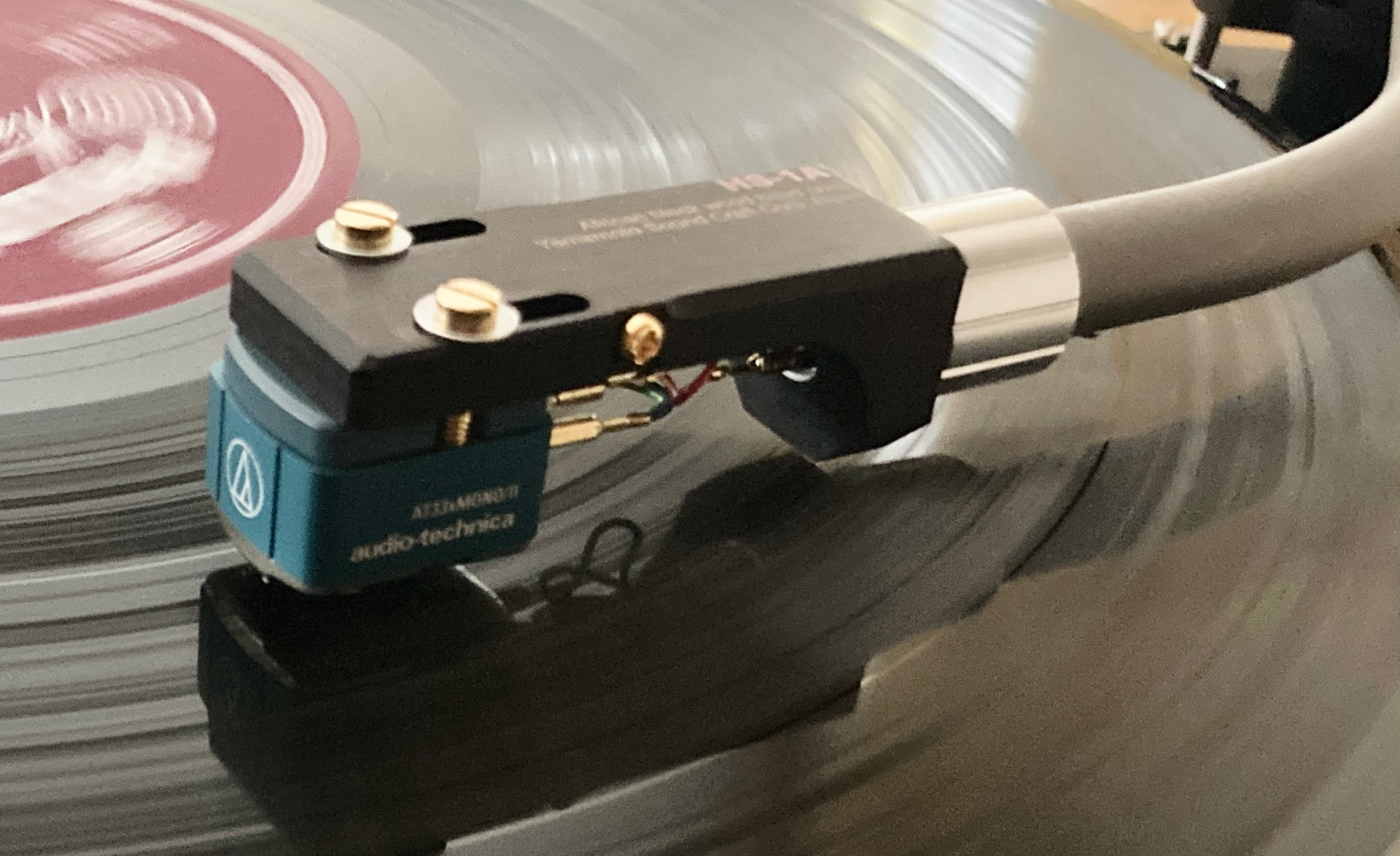
I’ve just ordered an AT33x mono/II for my second arm so will be interested in your findings, though that one will be using a SUT as the Korf arm seems to make my superline unstable to a large transient.
I now use my AT33Mono with a SUT plugged into the MM section of the NVC-tt. However before doing that i experimented with using it on the MC side and played with the settings.
I finally settled at R=165 and C=400 and Gain=Low as the best for my system.
By contrast for the Linn Krystal the settings i think work best are R=330 and C=2700 and Gain=High. My dealer recommended R=430 and C=3100, but in my system that setting did not quite have enough meat on the bones boogie.
The gain setting seems weird because ostensibly the Krystal has higher output (5 vs 3.5). I think Linn and AT are doing the measurement differently. The AT definitely is a higher output cart. I think Linn used to show the Krystal at 2.5 and it was changed later to 5. Based on my experience i think it is really a 2.5 output.
Loading is also affected by capacitance of tonearm cable, and personal preference. The new tonearm cables I got last year have very low capacitance, and I ended up using even less loading than I was before, with everything else the same. From 450R down to 600-750R.
The Lyra PhonoPipe tonearm phono cable is specifically designed with ultra low capacitance of 32pF, specifically so one can use less loading (i.e. higher R values) for better performance.
This is all a great education. I’m using a 576 for my Akiva along with the standard Aro lead. Not sure there’s an alternate to that lead but I’m very happy with the result thus far.
I plan to make some time this week to play with AT33 on my spare arm and armed with the set of available resistive values from my XLS using your formula and my limited set of plugs I hope to home in on a ball park number.
In other news I’m hankering after a SCDR . Powering via the aux2 on my 52 at present.
I used my AT33 PTG II with my Naim K Prefix (560 Ohm) with good results.
I use my Linn Krystal on Superline with a 576 Ohm Z Plug a big upgrade from the original 500 Ohm plug.
I went for the mono II as AT say it has a richer sound and my favourite stereo cartridge is the SPU Royal N. Most of my mono discs are classical.
Playing it through the 1:26 SUT I bought for an SPU, which loads it at around 76Ω, somewhat below the 100Ω+ AT recommend. Doesn’t seem to bloat the bass the way too low a resistance would with the superline but with only 5 hours on it so far that might change.
This microgroove of Beecham conducting some Berlioz is filling the space between the speakers in a most stereo like manner after a my preliminary VTA adjustment.
OK. Thanks. Now that you mention it I remember that 1000Ω plug.
Given that, 10kΩ seems really odd for a default resistive load of a LOMC. My Boulder phono-stage has cards for each channel of each input to set gain, capacitance and resistive load. If you use no resistive load then it defaults to 1000Ω for MC gain and 47K for MM gain.