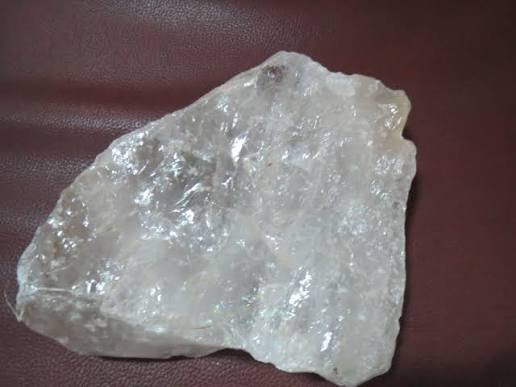
Update. My latest experiment coincides with your experience, only if the appropriate support is used. I just replaced the wooden board with quartz stone and currently the amp is sitting on it without the Nobsound isolation feet. Sound quality is different, and better.
With the wooden board alone, everything sounds mushy with reduced energy and extension in the treble. Adding the isolation feet below the amp still supported by the wooden board, music sounds slightly more expansive and the treble sounds airier and more extended. The wooden board and feet replaced entirely by quartz stone, music now sounds more ‘correct’ - less mushy with sharper and more defined lines, and the overall delivery is slightly more energetic, smoother and clearer. In short, it’s a more powerful, robust and clear presentation. I haven’t tried the isolation footers on the quartz stone and don’t have the urge to do so at the moment.
I will need more time to complete the evaluation but so far it’s sounding great.
My understanding is that the human brain does not remember sound accurately, all the more of you have in the meantime been listening to something else, with your apears then accustomed to that sound,
Yes, that may well be true. Anyway it’s a separate matter now as my recent experience of upgrading the isolation footers for the rack (last month) and using a different shelf material (earlier this week) has produced a very noticeable result. The difference is significant and all my previous impressions of the components supported by the rack/shelf especially the amplifier, and cables are now inaccurate.
It’s amazing what these devices especially the material of the shelf can do to the sound. I have been using wooden boards as shelving on my rack for many years, and it was only recently I replaced the one supporting the integrated amp with a quartz stone and it’s one of the best decisions I’ve made. Although I should have done it much earlier, better late than never!
After this experience, I will need to evaluate all my other amps as the Luxman L-590AXII is now performing close to its true potential. The wooden board is bringing more harm than good although the Nobsound isolation footers did manage to ameliorate the negative effects of the board. Nevertheless, replacing the whole wooden shelf setup with the quartz stone produced the best optimal result.
ps. the Naim Hicap DR and NAPSC used to sit on the wooden shelf and I’m not sure if that has caused the sound quality to go downhill.
Indeed you need to make some sort of association or consciously notice something you couldn’t notice before to make a memory…
Your brain otherwise adapts to what it is hearing…
Kind of like with vision your brain adapts to the ambient colour temperature without you realizing it… but if it is quickly changed or extreme you notice it.
Wood can be a good support as it is usually damped… though you may have had vibrations in your previous wooden setup that interacted with your amp and its connections… it appears your stone supports are working better for you, I guess they have greater mass than your previous supports
Yes, there are many different types of wood. The wooden board I had was lightweight and feels hollow, and I”m not sure if it’s low-density fibreboard(LDF). I had a solid wooden bench supporting the components many years ago and sound quality wasn’t too bad.
My experience with this sort of thing is that one can become totally lost and disorientated through making a number of changes that may invididually seem insignificant. Nothing then appears to make much sense and often the desire is to attempt to rectify things by naking even more changes. This can take you even further into the wilderness.
My approach has been to get right back to basics. You need to re-oreintate yourself and get back to some kind of reference point. Strip out any fancy cables, isolation devices etc. and take it from there. Almost anything will impact on the sound of a high resolution system so take nothing for granted.
That if course would be the so-called quartz stone, in fact a misnomer as it us a mannade product containing ground up quartz. Actual quartz stone is rather different…
Generically, probably synthetic stone worktop. There are dozens of brands with different names for their individual products, some of which are made using quartz but U’m not sure that they all are. Sellers often call them quartz, though that is actually wrong! They are sold as a [supposedly] more sustainable product than natural stone worktops like granite or marble. But in my experience they are not as durable as granite, or are not as durable as the granites I compared them with, mostly Star Galaxy and similar. (I have done many scratch tests on samples!) Also granite is more heat resistant, doesn’t stain as some of the synthetic ones do quite readily, and if you make pastry granite is higher thermal conductivity keeps the dough cooler. Granite has remained my surface of choice to several kitchens!
Researchers at the University of Iowa have found that when it comes to memory, we don’t remember things we hear nearly as well as things we see or touch.University of Iowa
However, the brain is very good at remembering patterns or meaningful sounds (like music or voices) over long periods.University of Chicago
That is how I understand it too. Detailed audio memory is (very) short, seconds rather than even minutes. What we remember are probably more memory of impressions or like a very broad painting.
I’d bet that there also may be a training effect. I’ve certainly found that the more I listen, the better I get at auditory memory. (Same with other kinds of memory, e.g. numeric: the more I use the “muscle,” the stronger it gets.)
Not that my auditory memory is great by any means, just that it’s better than it used to be before I invested time and attention to hifi listening and season subscriptions at the symphony and opera.
Maybe this is one of the biggest payoffs of “high end” hifi? It encourages more listening, which makes one a better listener.
My Qb sounds different every 10 minutes or so. Let me explain, it’s on R3HD for 4 hours every morning, some recordings rasp away, that’s just the nature of the music and production, other stuff more gentile.
Unless something has happened to the OP’s mains or a component is breaking down the system will be performing as the norm, but the coffee could be slightly changed, you get my drift!
Valid point which I agree with. The material we listen too, how it was recorded, quality of equipment, production and mastering, there are times it’s just not as enjoyable as other material. It’s important to bear this in mind sometimes.
Totally agree IB.
One good example is after a long day of works (probably with sore shoulders) I find myself hearing lesser low ends. But after relieving my shoulders and neck at the gym everything just sounds good as usual. Dxxn enjoyable low ends.
And then I found tinnitus is closely related to neck and shoulder issues.