If you don’t want to do the earthing thing,maybe
install a separate spur for the Hifi,that make big advantages.
Stick with Naim @Alco - no need to worry .. if I read it correctly, this makes you happy.
Thanks Igel. That thought also crossed my mind, but as it’s not a ‘try before you buy’ kinda thing I’m tempted to leave things as they are for now. (also because it sounds fab to me already) 
I might ask some local electrician companies about the possible cost and work to have one seperate spur installed. (I assume a seperate spur would eleminate/lower the chance of transformer hum too, which I had when trying a Nait 5si a few years ago)
Thanks Klout10. I must say, I’ve tried several other brands over the years and always came back to Naim, sooner or later. The only brands that came (very) close were Sonneteer and currently Rega.
Btw,..sorry to take a small sidepath, but I’m considering adding a turntable to my system. Now, my little Rega IO’s phonostage is very quiet (only some hiss at higher volume, which is perfectly normal for a phonostage) The N50’s phonostage otoh hums like an wasp’s nest.
I’ve read that the N50’s phonostage is extreme sensitive to humming/buzzing.
I did a test, connecting one end of a bended paperclip to the groundscrew of the Nait, having the middle part of the paperclip touch the CB trim and the other end of the paperclip to touch the side of the left (white) rca input. Bingo…silence!  (well ok, the usual hiss and a bit more so than the Rega IO, but totally acceptable)
Would that imply that connecting a (likely Rega) turntable would eleminate the humming ?
When I had N50,I needed to connect it to a Naim
source to avoid humming from the Phonostage.
Oops… that’s quite an expensive way to avoid/solve a humming phonostage. 
I believe the word you are looking for is enjoyable 
Haha, well,…it wasn’t the first word that came up, but I’m sure it’s a very true word and one I should’ve added. 
You should always have a Naim source at hand 
The Nait 50 is different from the Nait 1,2 and 3,they didn’t have this problem.
I checked the correct phase with a phase pen today. I had to change things. At least good for my piece of mind Thanks again for pointing this out.
1 Like
Exactly correct. And I’ll build on your point by highlighting that most ground rod bonds are only a single, cheap brass clamp.
US oriented comment: One can greatly reduce contact resistance at the ground bond by using a wire brush to (gently) clean the copper cladding on the ground rod, and buying a couple extra direct-burial-rated ground rod clamps (the two screw, brass variety) at ACE Hardware and really cranking those down in addition to tightening the main clamp. Use rubber gloves and wear shoes. 
1 Like
Well, my total parts cost 10 or so years ago for a “dedicated line” - 30 amp breaker, 30 amp Romex , and a hospital grade or industrial dual outlet - was less than $30.
I also added a separate ground wire from the outlet to a iron which I buried in my yard. Its simple technically, be sure to shut off the power at the breaker box first.
i did this when I used olive 250s.
I now use an XS2. I probably wouldnt bother to do this separate dedicated line and ground for just an XS2. The olive and chrome amps maybe were more sensitive to EM/ RF [?].
can anyone clarify what phase is and how it is in 3 prong outlets?
I dont see how “phase” could be an issue since there is only one way to plug in a 3 prong plug from Naim gear into a 3 prong hospital grade or industrial quality outlet. The 3 prong outlet has 3 screws, one for the hot wire [usually black wire] attaching to a brass screw on the outlet, one for the neutral or return line usually with a nickel screw on the outlet, and a green screw on the outlet for the ground connection. Where could “phase” become an issue in this case?
FWIW, I think this may be a translation issue - when some talk about “phase” they are actually referring to polarity. In the UK the polarity is clearly marked on plugs etc.. with green and yellow wire for Earth, blue for Neutral and brown for Live.
3 Likes
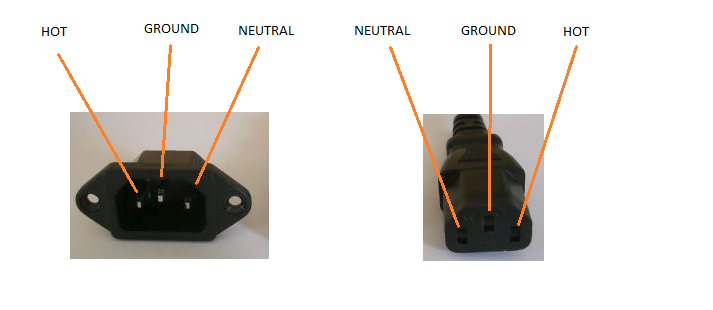
EU Schuko can be put in in two directions. If wrong the L (live, hot) will be “wrong” and the system often doesn’t sound as good as it can and transformers can hum mechanically bit more. A UK plug can only be put in in one way, but, it still requires that the electrician have put L + N correct in the socket. So a phase pen is always the best to verify you have phase on the correct pin on the IEC - product end connector of the cable. Where the pen lights up it should be HOT (L) as below. I usually see the pins as a mountain and my right hand as my “Live” hand to remember it 
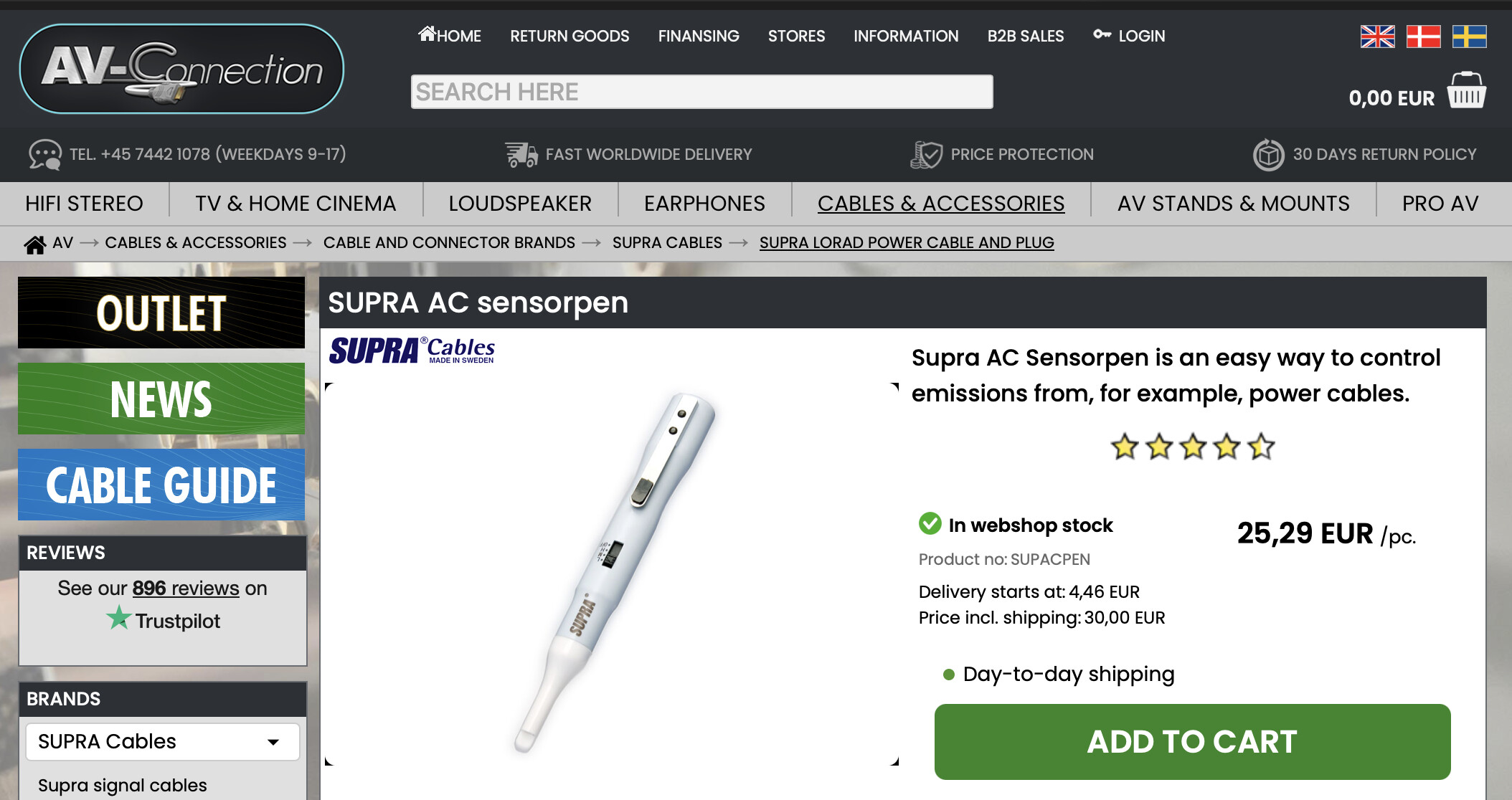
Something like this. They are available here and there and it doesn’t have to be a “Hifi” branded one of course but the Supra is good
The golden rule of electrical installation is never assume that anything is correct. Always test.
Our DNO once connected our whole house with with reversed polarity, everything continued to work, but it nearly killed a heating engineer who assumed that the wires he had previously installed were correct, until he touched what the thought was the neutral wire.
2 Likes
I seem to learn a little each day. I didn’t know that having the powercable plugged in ‘wrong’ can cause a bit more mechanical hum. Knowing now that (until last week) I had my Naim amps always connected the wrong way for many years could that mean that the mechanical hum I was hearing from a Nait 5si could also be lowered/minimized by just turning the plug of the powercord ? (although I think the humming was mainly caused by dc noise on the mains)
It can but most often it is DC noise which is easily removed/reduced with a DC-blocker or a mains block with DC-blocker built in. DC is a left over component that other equipment put on the grid like heat pumps, hair dryers, washing machines, SMPS, dimmed lights, fridges, AC etc. They often make Naim transformers mechanically hum but you should not hear it through the speakers because then it is something else. A humming transformer eventually can get saturated and if so it doesn’t perform optimal which in return could affect sound performance. That’s why I believe a re-start is healthy now and then because then it “resets” the transformer.
You can get better results if an electrician move around these products to other fuse groups or make a dedicated socket.
1 Like
FWIW in English the term is not ‘phase:, it’s the Live and Neutral (ie send and return, but both are in the same phase). The neutral is the utility return to complete the circuit and depending on your earthing system is grounded at the substation/utility transformer or at your utility supply demarcation point. Phase means something else, and yes most consumer devices are single phase. Higher power devices like industrial machines and some high power EV chargers are multi phase. Two phase supplies provide typically around 415 V RMS as opposed to single phase which is 220 V RMS. There are split phase systems too, I understand more common in the US.
In the UK, and I suspect most places elsewhere, supplies on single phases typically sequence through the phases in turn from the utility provider to balance out the load across all three phases. The three wires you see on power lines are the three phases.
In the UK there are two pin socket plugs, where live and neutral are inter changeable but they are designed for very low power ’wet’ environments such as electric shaver sockets in bathrooms and sit in front of an isolating transformer which avoids an electric shock from just touching one of pins.(ie there is no circuit to ground possible through your body)
1 Like
I see,that’s why you seldom talks about it,thanks 