Thanks for sharing, that’s an amazing work!
1 Like
One word — WOW 

2 Likes
Amazing.
Is this room not over dampened? Does the music still sound lively with so much absorption?
1 Like
Quite the opposite, actually 
The term “overdamping” is often both misleading and misunderstood.
What people usually mean by “over damping” is a room where the midrange and treble have been absorbed while the bass has been left virtually untouched.
This commonly happens when a room is treated with curtains, carpets and relatively thin absorbers (typically less than 17–20 cm thick).
Such treatments have virtually no effect on low frequencies. Really none.
The result is an unbalanced room : the bass remains unaffected, while the midrange and treble are significantly reduced.
That is what “overdamping” really is : an acoustically unbalanced room.
In fact, there is no such thing as a room with “too much” treatment.
My room takes a very different approach to acoustic treatment.
Between roughly 14-15 m³ of Caruso Iso Bond and four PSI AVAA C20 units, the treatment extends well into the low frequencies.
Given that the AVAAs are effective down to around 15 Hz, I would estimate that my room is well controlled down to around 35-40 Hz, although I really need to take some proper measurements to confirm that.
I’ll post the measurements when I get the time.
One thing is certain : the bass is fast, tight, precise, and hits remarkably hard!
All of that while preserving a glorious midrange and utterly captivating treble 

In short, I hear my loudspeakers, not the room 
5 Likes
I’m so jealous! 
1 Like
Don’t be!
You can achieve excellent results with far less effort than I went to.
No, your bass won’t be clean.
And that’s absolutely fine.
There’s no getting around the laws of physics.
The reality is that our hearing is far more sensitive to the upper midrange and treble. That’s where relatively modest and well-placed acoustic treatment can make a dramatic difference.
Many people assume that adding a few acoustic panels will solve their bass problems.
It won’t.
There really isn’t a shortcut.
What those panels (if well placed) do quite well is improve the upper midrange and treble, and that alone can completely transform a system.
If you’re reasonably handy, you can build a very effective acoustic treatment for less than 500 USD or Euros, and quite literally transform the sound of your system 
2 Likes
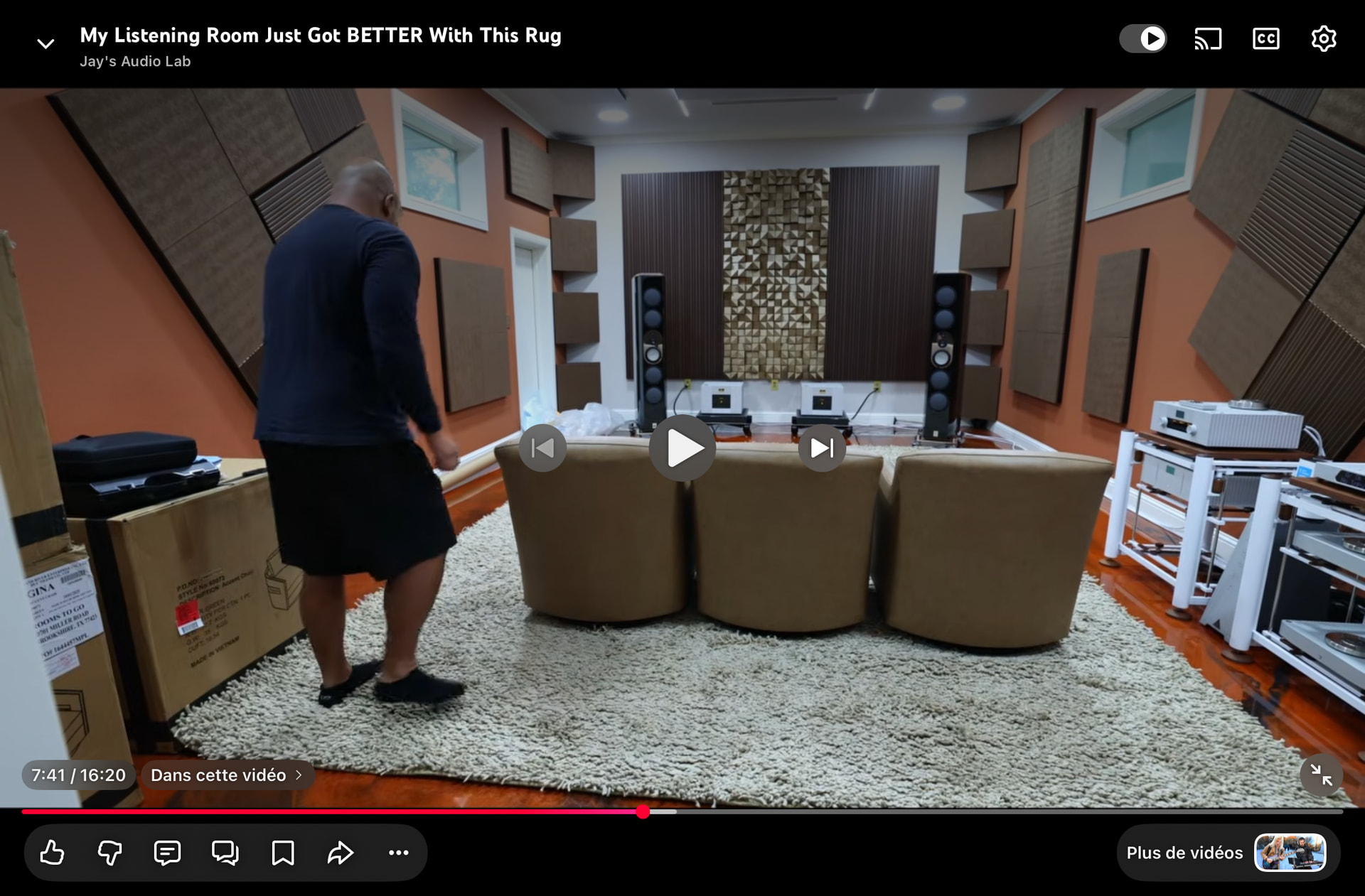
Jay’s room is ready. With new system: Taiko , MSB sentinel, Golmund, Martens speakers.
We will have his impressions next.
1 Like
Hi Thomas,
while I think that you are right with pretty much everything, I can’t agree with this statement. Having been in the reverberation free “Freifeldraum” of the local university several times, that room really has too much treatment for any other purpose than measurements and some recordings. Most people feel sick after a while.
Your room seems to have reverberations, just very controlled and even in the relevant frequency range.
2 Likes
Hi Mulberry
The purpose of acoustic treatment, whether modest or extensive, is not to completely eliminate the room’s reflections (or reverberation).
Its purpose is to maximise the direct sound from the loudspeakers : hear more of the loudspeakers and less of the room.
So when I wrote, “In fact, there is no such thing as a room with too much treatment,” I was, of course, using a little hyperbole 
In practice, it is virtually impossible to remove all reflections from a listening room using the types of acoustic treatment found in listening rooms or even in professional mastering studios.
Even filling the whole room with conventional absorptive material would not produce a true anechoic environment.
That is why I would argue that, in practical terms, there is no such thing as too much acoustic treatment.
The only meaningful definition of too much would be a room with virtually no reflections at all ; something approaching the performance of one of the world’s very few true anechoic chambers.
As you had the opportunity to visit one, you know just how unsettling they can feel.
Human beings need acoustic cues to feel comfortable in a space, particularly those provided by reflections from the floor.
That’s one of the reasons why the floor is rarely treated as aggressively as the walls or ceiling.
Of course, if one were to line all 6 surfaces of a room with 1-2 metres of absorptive material, it might eventually become possible to over-treat it (from a human perspective) , but such a room would be entirely impractical and serve little purpose.
In my view, the objectives of good acoustic treatment are actually quite simple, although achieving them is anything but:
- A reasonably uniform RT60 from around 40 Hz to 20 kHz.
- A reasonably uniform decay time over the same frequency range.
Despite the amount of treatment in my own room, I’m fairly certain I haven’t achieved either of those goals.
That said, I believe I’ve come reasonably close, and the result is already quite extraordinary. 
5 Likes
I might call on your expertise in about two years when I plan to move to an appartement. There the challenge will be double:
- First ensure the room doesn’t leak so much sound out so I can play at desirable volumes (haven’t seen so much on how to do this best)
- And obviously after the number one the topic of acoustic optimization of the resulting room.
2 Likes
Hi Thomas,
thanks for your response. Having followed the whole thread, I was hoping for something like it. My comment was exclusively directed to the single statement that you consider hyperbolic.
A dissonance between the perceived and expected acoustic in a given space is quite stressful for me. The (mostly) anechoic room actually isn’t in this category, as I have a good understanding of what I’m going to expect even before I went into it for the first time.
If you want to take a look: Freifeldraum - kreativ.institute
@Richard.Dane : I hope the link is okay, as it is to a strictly non-commercial site.
1 Like
Hi Mulberry 
Thanks for the link. It’s fascinating!
It also gave me the opportunity to test my German, which, unfortunately, gets a little worse every year through lack of practice.
Paradoxically, German is actually my favourite language.
If I’m ever in the area, I’ll certainly ask whether it’s possible to visit.
The sensory conflict you refer to is very similar to vertigo in the mountains. In that situation, there’s a mismatch between what your eyes are telling you and where your feet actually are.
I imagine spending time in a true anechoic chamber must be a very unsettling experience. 
On the other hand, listening to a stereo system in such a room must be absolutely awesome!
Just don’t stop the music… It’s a bit like a roller coaster: you’re perfectly fine while it’s moving, but it’s when it comes to a stop that your stomach starts asking awkward questions! 


Cheers,
Thomas
1 Like
Hi Bert
If you’re moving from a house to a flat, then sooner or later the question of neighbours inevitably comes into play.
I bought/moved into my apartment in 2016, the year the building was completed. So it’s a relatively modern building, built to fairly strict Swiss standards.
I never hear my neighbours. That said, I rather suspect there are times when they can hear me…
Acoustic treatment and sound isolation are two completely different things.
The basic principle of sound isolation is actually quite straightforward: decoupling. In other words, you’re essentially building a room within a room.
Acoustic treatment is equally simple in principle: its purpose is to convert acoustic energy into heat or mechanical motion.
Trying to achieve both at the same time is a very different challenge!!
If you’re buying a new-build property, there are a few things that can be done during construction. Otherwise, maintaining a good relationship with the neighbours becomes rather important! 
There is one interesting side effect of extensive acoustic treatment, though. As the room becomes acoustically quieter, you tend to listen at lower volumes. It sounds counter-intuitive, but that’s exactly what happened in my room.
As a result, your neighbours are less likely to hear you, or perhaps not at all.
In any case, we can always discuss it in more detail when the time comes.
Cheers,
Thomas
2 Likes
Hi Thomas,
I’m fairly sure your German is much better than my French, which is virtually nonexistent. English is the only foreign language I’m able to speak fluently, although I’m trying to improve my Dutch for roughly a year.
If you ever happen to be near the KIO, please let me know. I might be able to facilitate a visit, as I have a working relation with them, hence the multiple visits.
1 Like
I came across two more videos of the listening room during its construction.
I recorded them just after I’d finished installing the acoustic fabric.
Installing the fabric was quite a job in itself!
It took me the equivalent of five full days, as there were two layers to install.
Nearly 5000 staples!!!
After that, I spent another two days fitting the skirting boards, which hide all the staples.
Even then, there was still a great deal of work left before the room reached its current state.
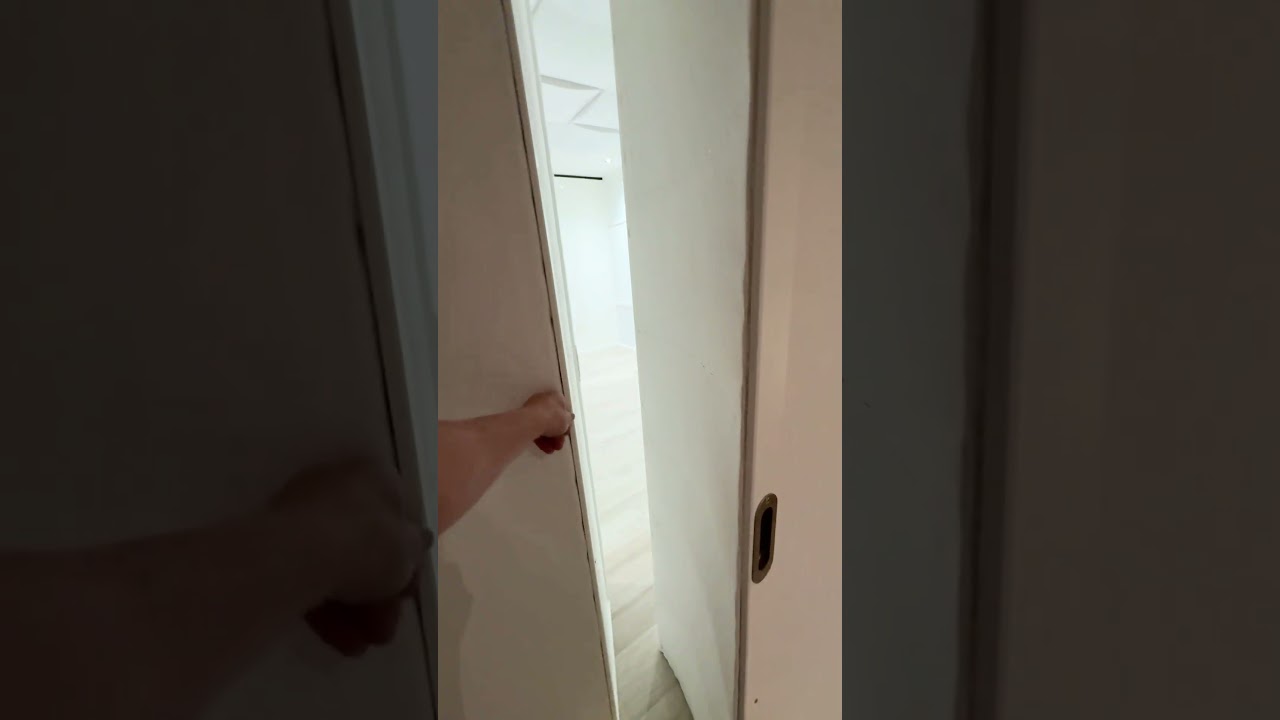
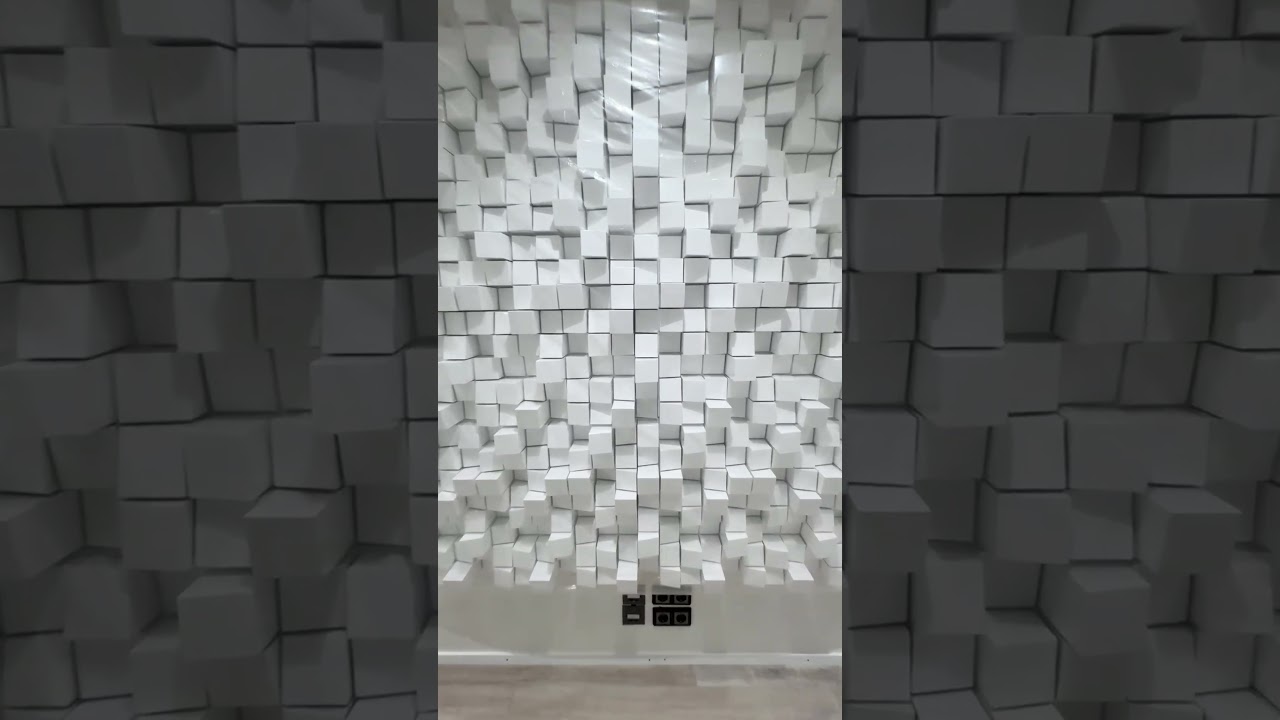
Previous videos here :
→ The Listening Room Reality - #2401 by Thomas
Room as it is now :

9 Likes
When I moved to the city, I optimized my apartment search around this:

1983-vintage Marshall JCM800 2204.
The solution: top two floors of a townhouse. So the music room - upstairs - has double brick walls with an air gap to the neighbors on either side, myself as the neighbor below, and God above. So far no complaints, although if I ever do get one from upstairs, it will be epic.
5 Likes

1 Like
We had rooms like that in some of the hospitals I worked at. They were used to, calm people down or where they couldn’t hurt themselves.
Sorry couldn’t listen to music in a room like that no matter how good the acoustics were.
Each to our own I suppose 
3 Likes
I wouldn’t draw conclusions about the acoustics of a room without ever having experienced it in person…
Very few friends have actually listened to my system in that room, fewer than I can count on one hand.
But two of them were particularly interesting.
The first is an amateur musician (bassist). He arrived openly sceptical, and perhaps even a little amused.
The second is the owner of a well-known hi-fi company. He was simply curious, without any strong preconceptions.
After about 45 minutes of listening, the bassist turned to me and said, “Now I understand.” He didn’t say much else, but he was visibly moved.
The second, being more of an engineer, summed it up rather differently. He simply said, “You’ve taken the room out of the equation.”
My point is simply that pictures reveal very little about how a room actually sounds.
With a little curiosity, you might be pleasantly surprised!
6 Likes
“Now i understand… that i won’t do personnally the same error”
" You have taken me out of the equation of the room"

2 Likes