That IS dedication to listening!
6 Likes
Wow. Really impressive, Thomas! I would love for you to try and put into words the difference between what you heard from the same system in the untreated room and in your room.
1 Like
Looking great @Thomas, probably hard for most to imagine just how impressive what you’ve put together sounds like in person. With all my playing around, I’ve come to the conclusion that I think the room combined with the quality of power has more impact then the kit itself. I know with what I have achieved with, in comparison a “modest” system (that is still a work in progress), your results must be outstanding.
I need to post some updated pics on here, I’ve been adding some more panels/traps & working on my ceiling cloud. My dealer was around the other day as I have some issues with my new speakers but while there I gave him a listen. I think he was pretty surprised at the transparency of the system. They typically have speakers on demo running in the $30-200K range, the tracks I played were ones we’ve all heard 100’s of times before & he was hearing things he’s never heard before.
3 Likes
Sweet listening space. Congrats.
1 Like
I suspect you’ve achieved something rather like my experience of playing a system outdoors, except without the ambient background.
1 Like
That’s not an easy question.
I’ll do my best to answer.
But this may be a bit long… 
Describing the strengths, or weaknesses, of a hi-fi system is actually quite straightforward.
The same themes always come up: detail, separation, stereo imaging… the famous “black background”, and so on.
These are relatively easy to identify because, broadly speaking, it comes down to hearing more, or hearing less.
Describing the distortions introduced by the room, or even by the loudspeakers themselves, is a very different matter.
And the reason is simple: we’re so used to it that our brain integrates it as part of the listening environment/experience.
It’s important to understand that, in a typical untreated room, you’re hearing at best 50-60% of what actually comes out of your speakers.
Which means the remaining 40-50% is dominated by room-induced distortions.
That’s quite unsettling when you think about it.
Our brain is a remarkable piece of engineering. It filters out all that noise and tries to retain the “signal” (music, conversation… or the bear sneaking up on you! ).
But that filtering comes at a cost: listening fatigue.
Imagine the following extreme scenario: your hi-fi system set up in a bathroom.
You’d immediately be dealing with 80-90% room-induced distortion.
You could still listen to music, but not for very long. There’s simply too much noise/distortion.
And when I say “too much”, there are two aspects to that: quantitative and qualitative. But that’s another discussion.
In short, an untreated room is essentially just a larger bathroom with a bit of furniture.
Now that the scene is set, let me try to answer your question.
Broadly speaking, there are two types of distortion: additive and subtractive.
In other words, either something is added, or something is lost.
Whether the room is treated or not, both phenomena are always present.
When you reduce part of that distortion, as I’ve done in my room, listening becomes much much much less effortful !
It’s a much more relaxed experience, if I may put it that way.
And you get used to it very quickly. It simply becomes “normal” (but it’s not actually).
All the more so because you can’t easily compare, unless you remove all the treatment.
That said, I did have the chance to make that comparison: hearing my own system in an untreated room.
Same speakers, same amplification, same source.
It was unbearable.
All you hear is the room. And once you’ve identified it, it becomes impossible to ignore.
It’s just… tiring.
You’re listening to a system worth around 450k, and you start thinking your AirPods Pro aren’t half bad after all.
And the strangest part is the person next to you, who finds it absolutely incredible. 
Yes, it’s a 450k system… so what!?
It’s still a 450k system sitting in a “cloud” of room-induced distortion…
Personally, I couldn’t go back to listening to any stereo system, whatever the price, in an untreated room.
I think I’d rather use a good pair of headphones.
My system is reasonably good, but without the room, it would lose at least 2/3 of its appeal.
And in that case, a pair of AirPods Pro become a surprisingly competitive alternative… 
EDIT :
I should probably temper what I wrote earlier.
When I said “I couldn’t go back to listening to any stereo system, whatever the price, in an untreated room”, that was perhaps a bit of an exaggeration.
What I really meant is that I couldn’t see myself listening to a very expensive system in an untreated room.
My way of listening to music is perhaps less “lifestyle” and more “meditative or immersive”, if I can put it that way.
In that context, the room delivers not only a cleaner acoustic environment, but a calm and enveloping refuge. 
12 Likes
Yes, I completely agree.
You’re far better off with a 50k system in a properly treated room, with clean power, than a 500k (or more) system in an untreated space.
You only see the true potential of a Formula 1 car on a race track. Otherwise, it’s just a rather nice trophy.
1 Like
Thank you, Thomas, for taking the time to write and post such a thoughtful, detailed description. I don’t think I’ve read anything quite like what you describe on the forum, so this is a unique contribution. I love that when it came to treating your room - as we say in Canada - you left it all on the ice.
5 Likes
Hi Thomas,
I wasn’t planning to add to your explanations re room distortions as we both know these thing really matter, however something did occur to me regarding these statements……
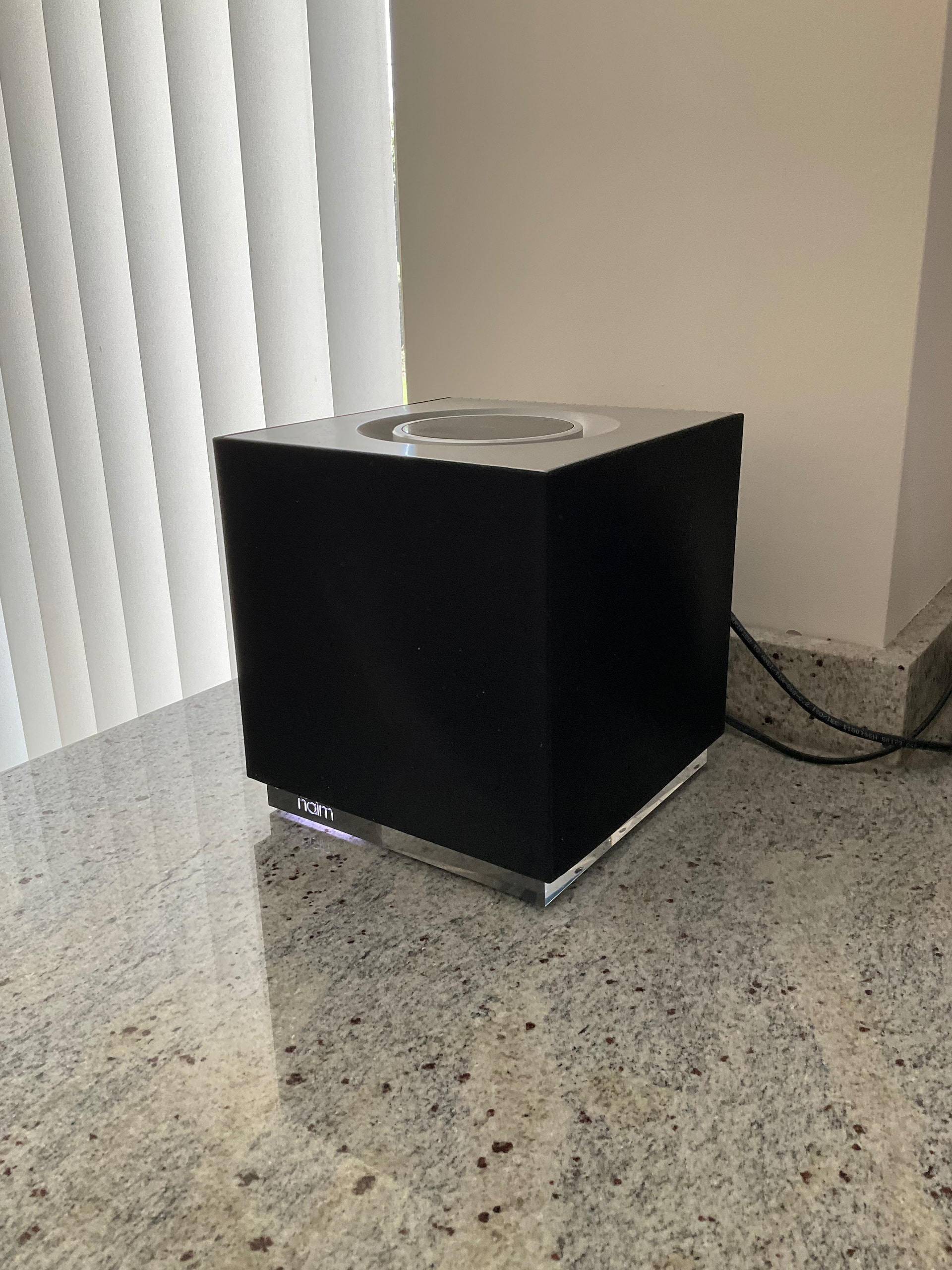
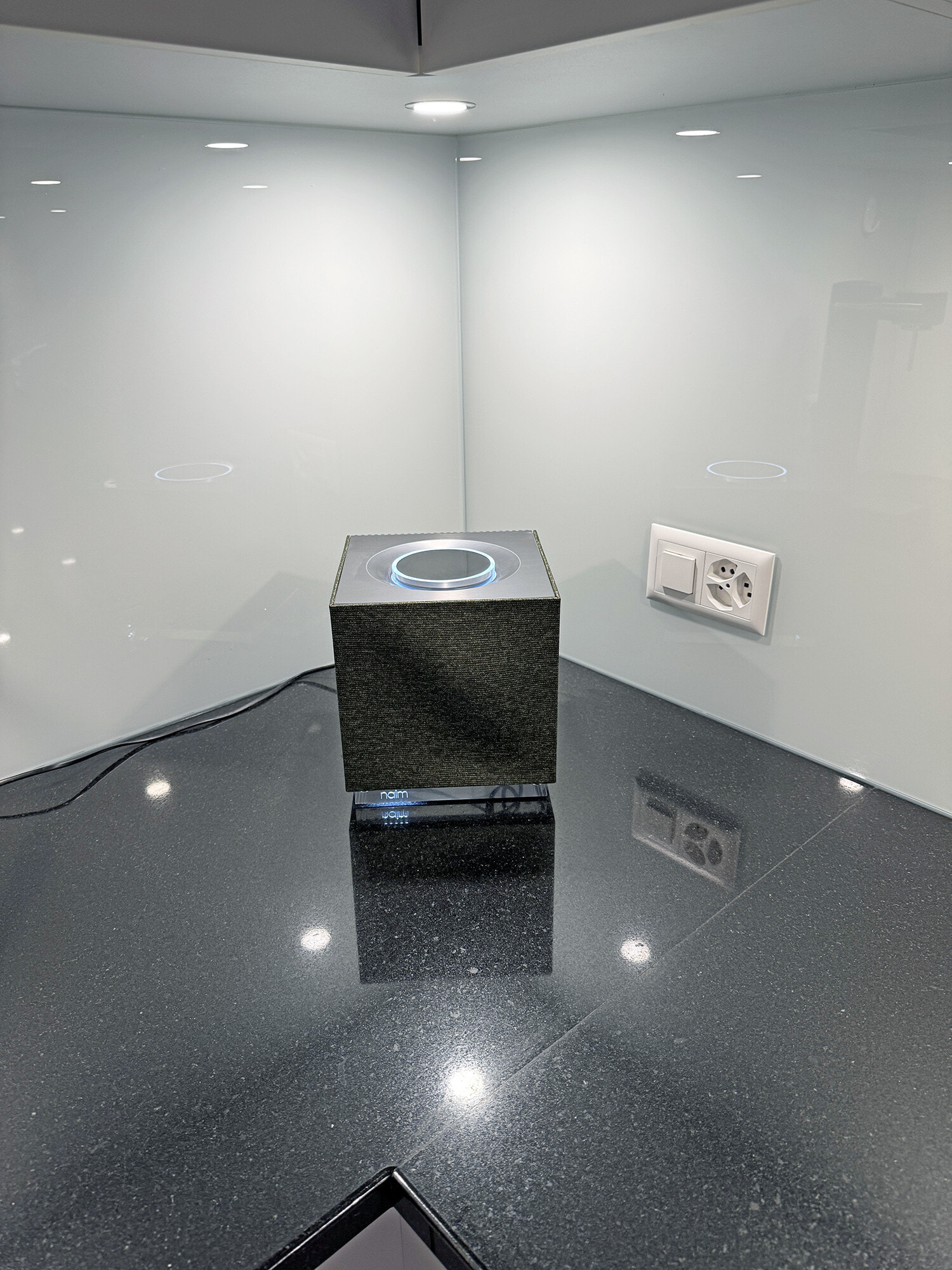
My personal experience regarding this was trying to get a decent quality of music replay in our kitchen which has hard floor and surfaces and is highly reflective - perhaps much like a bathroom?
We had a Rega separates system that my wife owned and we tried that. Absolutely awful! No way could you listen to music with that fairly decent HiFi system in our kitchen.
Instead, I thought what about buying something much more appropriate from Naim, that has been designed for those kinds of environments, with the basic tuning adjustments for wall proximity etc.
The audio (and visual) results can be quite magical….
1 Like
Is it all that distortion in the bathroom that makes my singing in the shower sound better - IMO. Mrs B does not agree with me. 

2 Likes

Currently faced with a similar problem. I act as the “DJ” for a U3a classical music group. Monthly meetings in an ancient (? 200 year old) former school.
The equipment is modest, a old Denon all in one and MS bookshelf speakers playing CDs or MP3. As far as I am aware nobody hears a difference in the formats.
The charity owning the building has refurbished. Replastered and emulsioned walls, removed the industrial carpet tiles and laid a marmoleum floor. Members are asking what I have done. All I do is load the CD, press the buttons and adjust the volume. The sound is now bright, splashy, all sense if any soundstage has disappeared. Two hours leaves me exhausted. Removing hearing aids helps!
1 Like
But you then have the limitations of the ‘system’, a Qube never being able to produce sound like a system with a decent set of speakers, but I am sure you know this. (I have heard a Muso 1, and to me it was no more than a boombox, not hifi - albeit a not band sounding boombox, but it would have to be at its price point.)
Yes, it’s obviously a fairly limited system, but it does the job.
That said, I struggle a bit to describe my little Mu-so QB2 as a boombox…
Let’s just say it’s a very nice boombox! 
And for the way I use it, it’s more than enough.
This evening, it was used for this:

1 Like
Hi Thomas,
I really appreciate this thread that you started. I have a question for you - and please take this request in the genuine spirit of exploration and learning - as it would involve work for you.
In any case I would like to continue to share some of my progress with my own media room on this thread - I hope you don’t mind.
But I have an idea. Given that you and I have taken slightly different approaches to room treatment (me using GIK Acoustics products, you undertaking an absolute approach of depth of treatment with active traps enhancement) whilst owning identical loudspeakers and similar sized rooms…
Q: Would you be up for taking some acoustic measurements in your room to share and post so that the Naim forum community can see the benefit the of specific acoustic results of the different approaches? I am particularly interested in the extent of effect of the very deep passive absorption that you have used on the room lowest frequency axial modes and the extra benefit that the active traps bring (to the floor-ceiling modes and harmonics etc)?
The tools I use are a single MiniDSP UMIK-2 with either Room Equalisation Wizard (REW) or DIRAC Live analysis software.
Presently I am trying to fully integrate the Magico Titan 15 that I purchased last year. I am pretty happy with the results - but I know that I can get more from the arrangement. I am trying to decide whether to add more room treatment or continue with the DSP correction methods that I am presently using (Linn Space Optimisation and Titan DSP tweaking).
To set the scene, here is the 17pt spatially averaged measurement result from DIRAC Live for my media room.
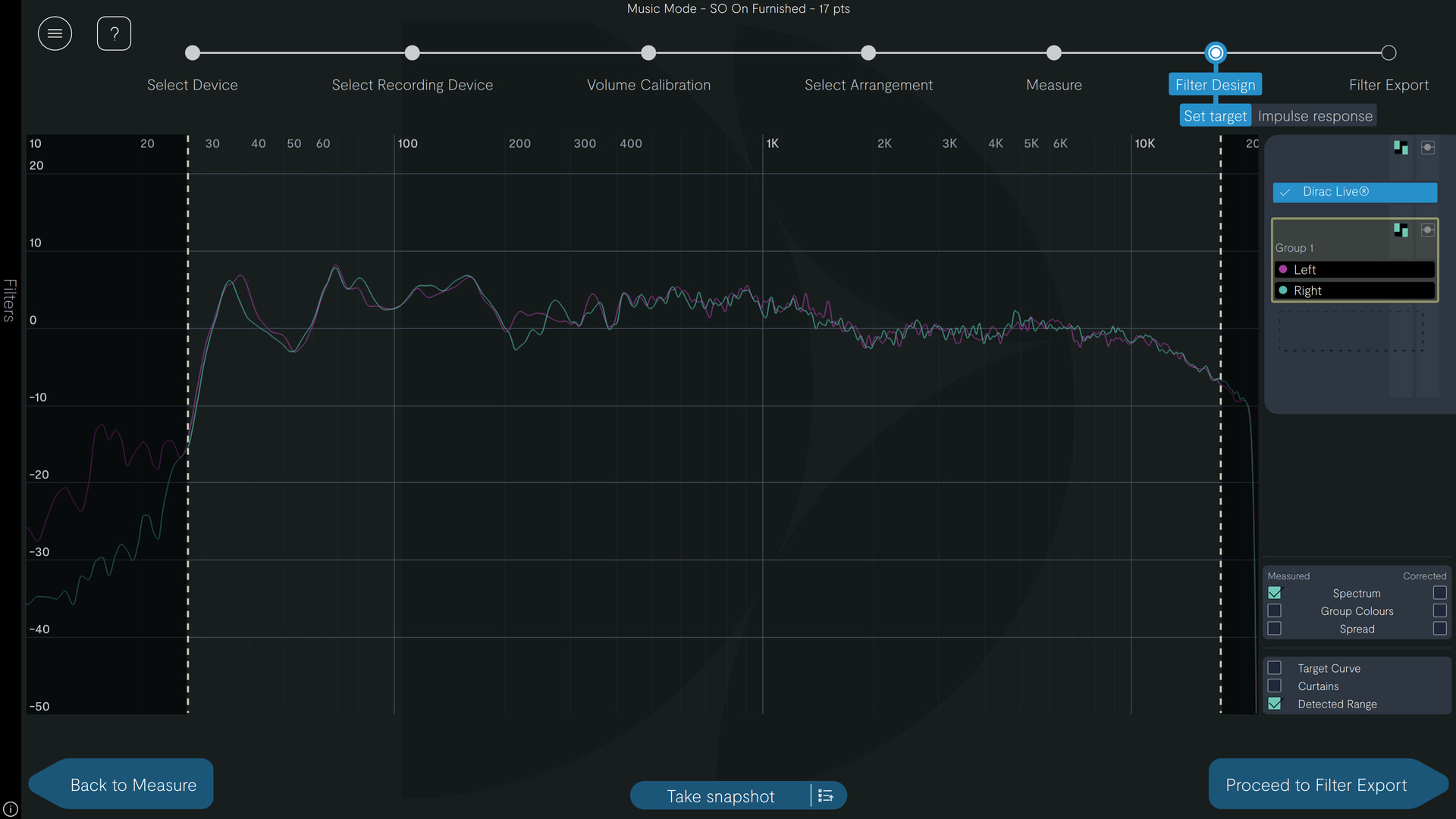
Image Credit: DIRAC Live
One can see the presence of peaks at around ~35Hz (wall to wall axial modes) and 72Hz (floor to ceiling axial mode) and the harmonics of those.
ATB
E of E
I think if you apply smoothing to those lines you will find you have a superb response, I will kill for that lol.
One thing I have learnt making my own crossovers is though, these graphs are only 20% of the story when actually listening to sound. I see all these videos on youtube about cross over responses etc but a response can look nearly identical but sound totally different.
2 Likes
Hi @garyi ,
Thanks for your observations and your comment on my graph. I have been particularly fascinated by the information and progress you posted on your FrankenDibbles thread.
I agree with your point about SPL magnitude vs frequency response graphs being hardly ‘20%’ of the story when it actually comes to listening perception. FYI I did not want to post something too demanding and deep to ask Thomas to do acoustic measurements. Perhaps @Thomas is considering the request?
I have quite a few things queued up for my Media Room. Presently I am still working on integrating my sub (12 months after getting the thing!).
For example, this evening my wife was the listening candidate for ‘masked’ listening tests on three choices of filter settings on the Sub to give the best linear phase integration of Sub and Main Loudspeakers for superior in-room transient response (below 100Hz).
If you have any specific observations and tips, e.g. interpreting whether the in-room and other measurement graphs that Stereophile reviewer posted for the Magico M2 suggests a particular corner frequency to select (for the Sub roll-off) then please do comment?
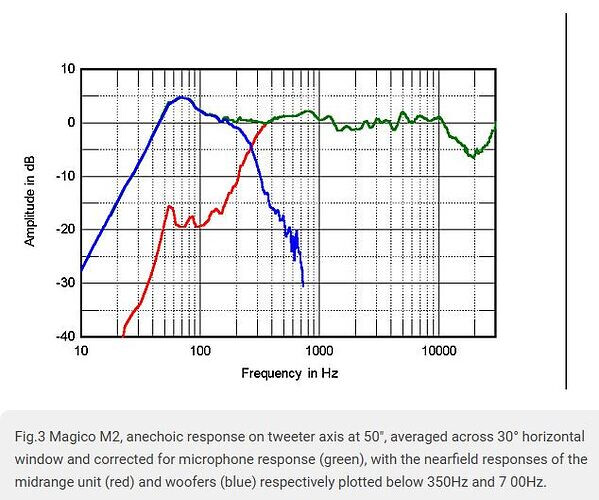
Image Credit: Stereophile Magazine (Jan 2020)
Following the design ethos of Alon Wolf and the technical team at Magico, I am typically using Linkwitz-Riley 4th order filters. I have explored additional EQ corrections at various times, but mostly I just seem to add more room treatment. I make the technical judgements using some of the more advanced measurement windows in REW.
PS: The Sub is OFF in the DIRAC Live measurement graph I posted previously - but the Linn Space Optimisation was ON for my digital source for that set of measurements.
1 Like

I came across a couple of videos of my listening room taken before it was covered with acoustic fabric.
They provide a good view of the wooden framework and the large amount of absorptive material used throughout the structure (Caruso Iso Bond).
It is probably easier to grasp the overall concept from these videos than from the finished room, as everything remains visible.
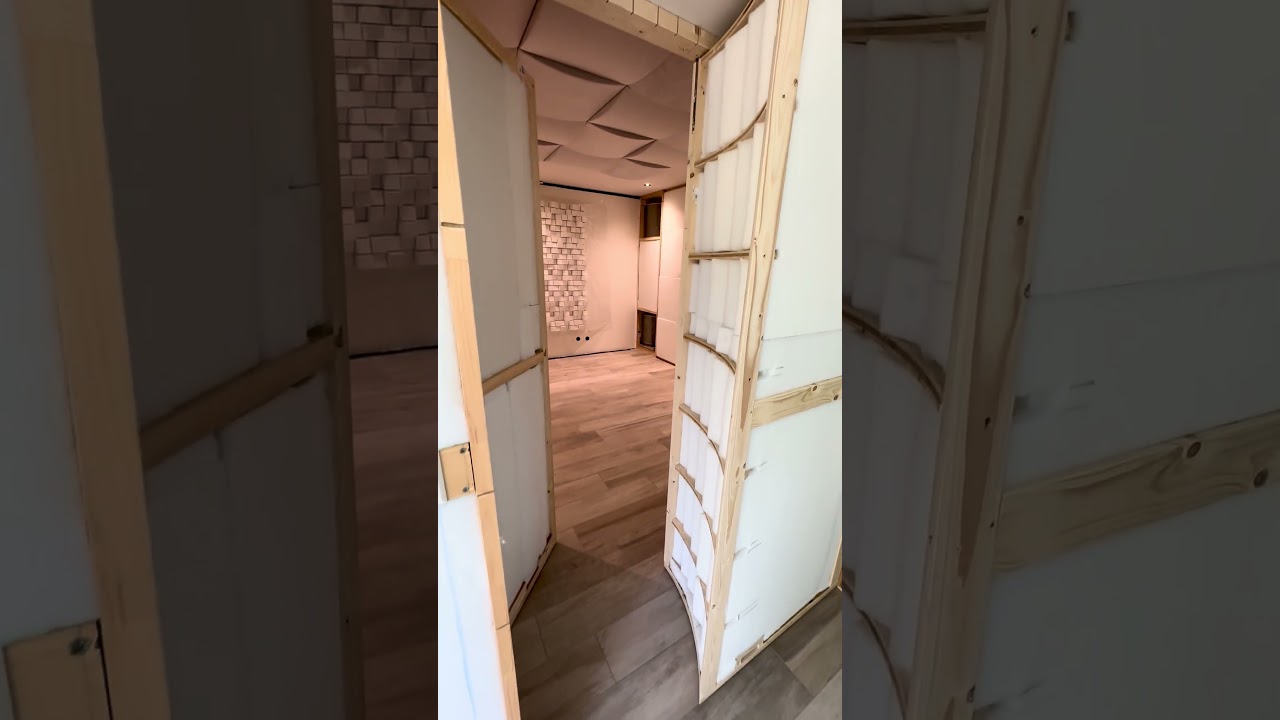
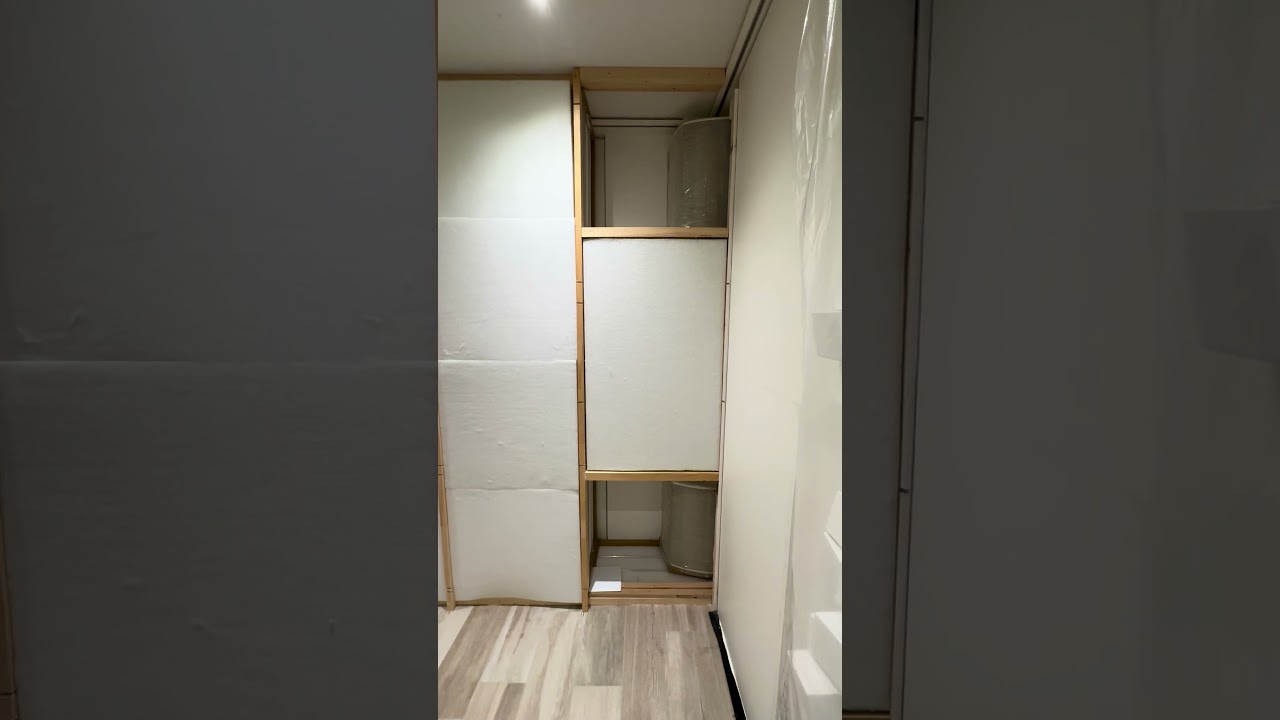
The pictures :
→ https://photos.app.goo.gl/2DPoRdCEKvT3K2yk8
11 Likes
Phenomenal. The electrical components must certainly be humbled by their surroundings. Hats off.
1 Like