Not at all, in fact quite the opposite I feel, the LS3/5a gets you closer to the recording, exposing characteristics like timing (phase transient response), pace and dynamics (when setup properly)which helps convey the feel or ‘emotion” of a production, which to me is what Naim is often about. I think the LS3/5a compliments Naim amplification very well.. even to the extent that many Naim amps and sources are slightly reigned in the high end, which complements the ls3/5a slight higher end lift… the latter which appears deliberate if you read the original BBC design paper. I find the relative dynamic accuracy of the LS3/5a sometimes too accurate when playing different production masters one after the other, and also more obviously exposes production or post production processing traits.. such as LUFS processing,
When I used my 552DR/250 setup I was mostly using ATC SCM19 speakers.
Depending on what I am doing I change between S3/5a and Russel K Red 50 speakers on SS6 stands.
As far as possible downgrade on SQ, I haven’t really noticed it much. there are performance differences yes, and being super critical a smidgen of ‘air’ is absent on the N50 compared to the 552DR/252DR based amp.. but it doesn’t get in the way, and the N50 seems to excel at phase timing, pace and coherence (possibly down to the phase timing).. and I do wonder if the N50 with my RKs is more authentic. Why do I say this? Well my masters of my own music sound closer to how I originally mixed and produced them.. but that could be for other reasons too.
my N50 really is ideal for near field type listening.. my 552/252 NAC based amps seemed more suited for greater power with their separate power amps and far field, large room listening.
Hi Simon. Thanks for taking the time to explain your thoughts/reasoning. Your take on the LS3/5a’s is fascinating to me. Back in the day Linn Kans were regarded as near perfect match for a ‘flat earth’ system, ie.Linn LP12 and Naim amplification. Although superficially almost identical to the LS3/5a’s in outward appearance, two more different sounding loudspeakers would be hard to imagine. The Kans were all about PRaT and paid little heed to tonal balance, imaging, subtlety and other classic hi-fi virtues. They cut straight to the heart of what makes the music tick in a no nonsense way. I can discern I think from your comments that you wouldn’t quite get what you want from the Kans. The LS3/5a’s on the other hand were regarded as totally lacking in PRaT and excelled at midrange tonal accurracy, low colouration and imaging. Having heard them, and having owned Kans for around seven years, I agree with the widely held views on both. I concede that the LS3/5a’s make virtually every other speaker I’ve heard sound broken in terms of midrange tonal accuracy and low colouration. But at the same time to me they always sounded slow, with a bloated one-note bass and compressed unexpressive dynamics. They engaged my head in some ways but definitely not my heart. But as I say I’ve never heard them driven by Naim amplification.
Your experience of the LS3/5a’s is clearly very different and I find that intriguing. I’ve never heard the RK Red50’s but I seem to recall reading a review that likened them to modern day Kans. So I might expect them to sound quite a bit different in their approach to LS3/5a’s.
Your comments regarding the Nait 50 vs 552/250 make perfect sense to me.
Anyway thanks for sharing. I always really enjoy reading about other people’s experiences with products I’m familiar with and especially so if those experiences differ from my own.
This interesting, and I do wonder if down to the quality of the crossover components and qualify / design of stands, my Falcon Acoustics Gold Build LS3/5a are the tightest most uncoloured speakers I have heard in a long time in the bass and sub bass down to about 35Hz with suitable room reinforcement. Really useful in EDM mastering where you want to clearly hear the timbral qualities and accurate tuning of bass and sub bass as well as spot on timing. Slow bass speakers would simply be a disaster to master here, though they may push more but less controlled bass energy.
It’s just sometimes I find the upper mid extension/colouration of the LS3/5a not what I want when listening to some commercial productions as it can sound slightly too hot.
I have my Nait50s instant on switch currently set to the off position, additionally I’ve removed any input /source cable from the amp. I’ve noticed that absent a signal into the amp for 20 minutes the front panel led continues to remain bright. My understanding (which I’m not positive is correct) is that N50 should enter standby mode after about 20 minutes of no signal and that the front panel light should then dim indicating its standby mode. Can you clarify what should take place after 20 minutes with no signal detected? Might my amps instant on feature is not be working as designed?
Hi RSP, the switch can only be set in two positions.
If you have the instant on set to off then the function is disengaged, as in the amp stays on.
If you have it switched to on then the function is active and after about 20 mins of no signal the amp goes into standby and the led will dim somewhat.
The amp will not leave standby unless you depress the power button, the wake up on signal was never implemented and the manual is wrong.
So it’s a simple life, either set it as you have it and amp on until you turn it off or switch it in and it enters standby when idle for 20 mins, that’s all there is to it.
Bloody h**l my Nait 50 - NSS 333 - 555PSDR - All Super Lumina + Powerline + Ansuz D2 Powerswitch + Shunyata Sigma ethernet SINGS! I don’t think I need anything better to be honest. Such a musical synergy! Wow
Hey Clive, I didn’t notice if it was a repeat post but had noticed a theme of similar question being asked so thought I’d keep the answer as straightforward as I could.
With auto on, ‘on’ (switch up), the Nait 50 stays on 24/7
With auto on ‘off’ (switch down), it will power off after 15 mins or so of no music.
Make sure the switch is fully down and try leaving it quiet again.
Select the ‘stream’ or ‘aux’ input. If nothing is connected to the phono, it can pick up noise. This noise could be enough to keep the Nait awake.
FYI, there is no software in the Nait 50. All control and sequencing is carryout using hardware logic circuits. No firmware updates, no reboots needed.
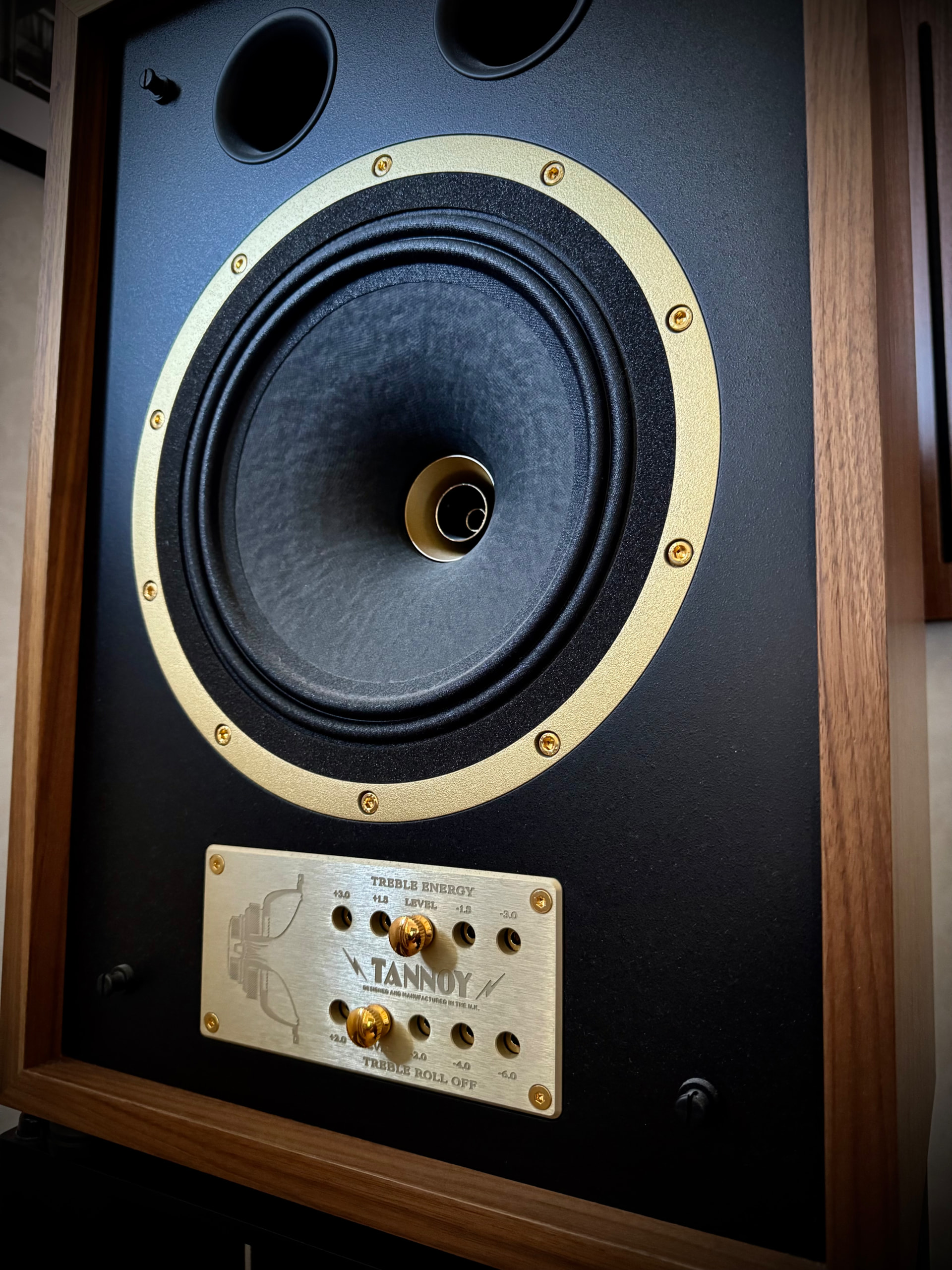
Of all the systems on here, this is the one I’d be most curious to listen to. I can only imagine how good those two and a half boxes sound through your Tannoy Eaton Legacy speakers. I suspect you’ve got a killer combination producing a fabulously balanced sound going on right there - without the need for a load of boxes.
 I don’t think I need anything better to be honest. Such a musical synergy!
  Wow
Wow