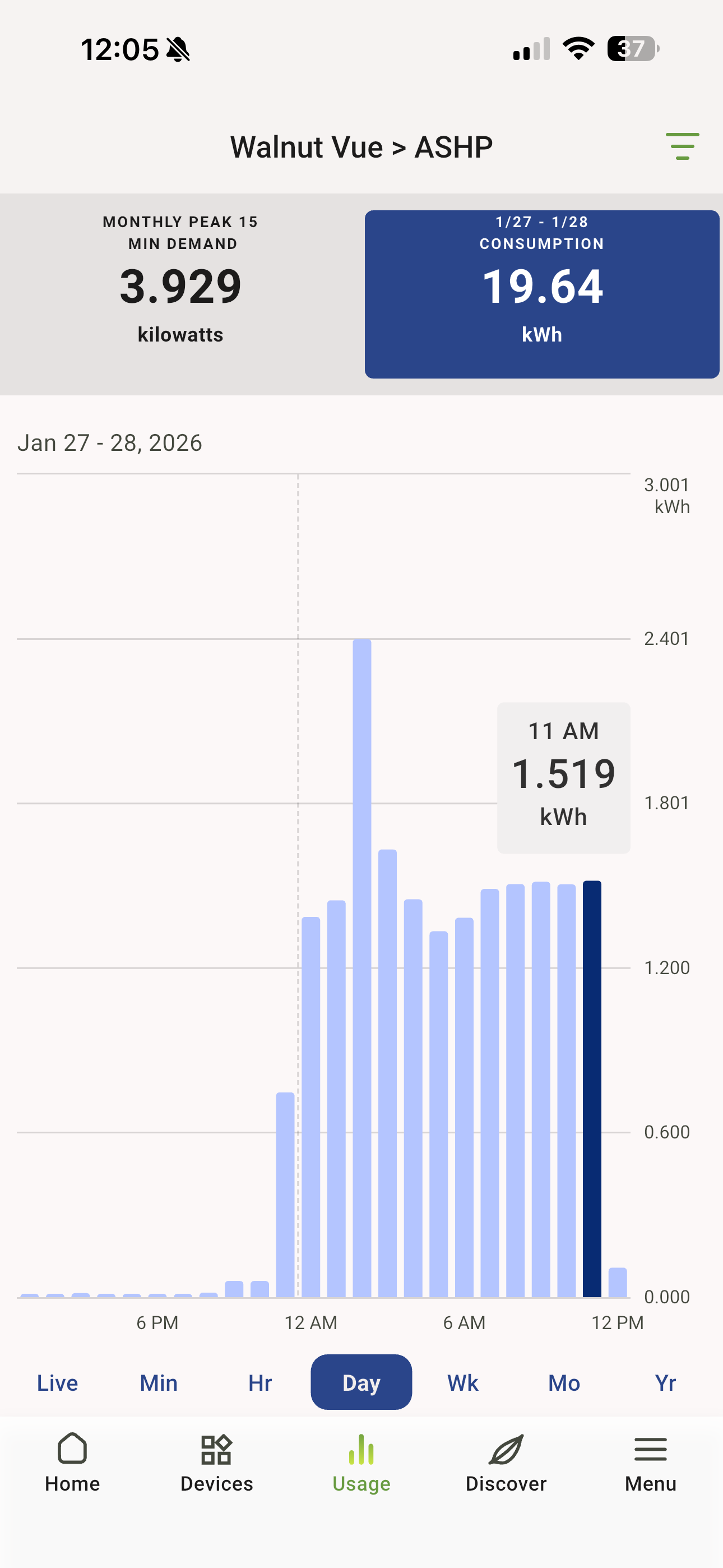
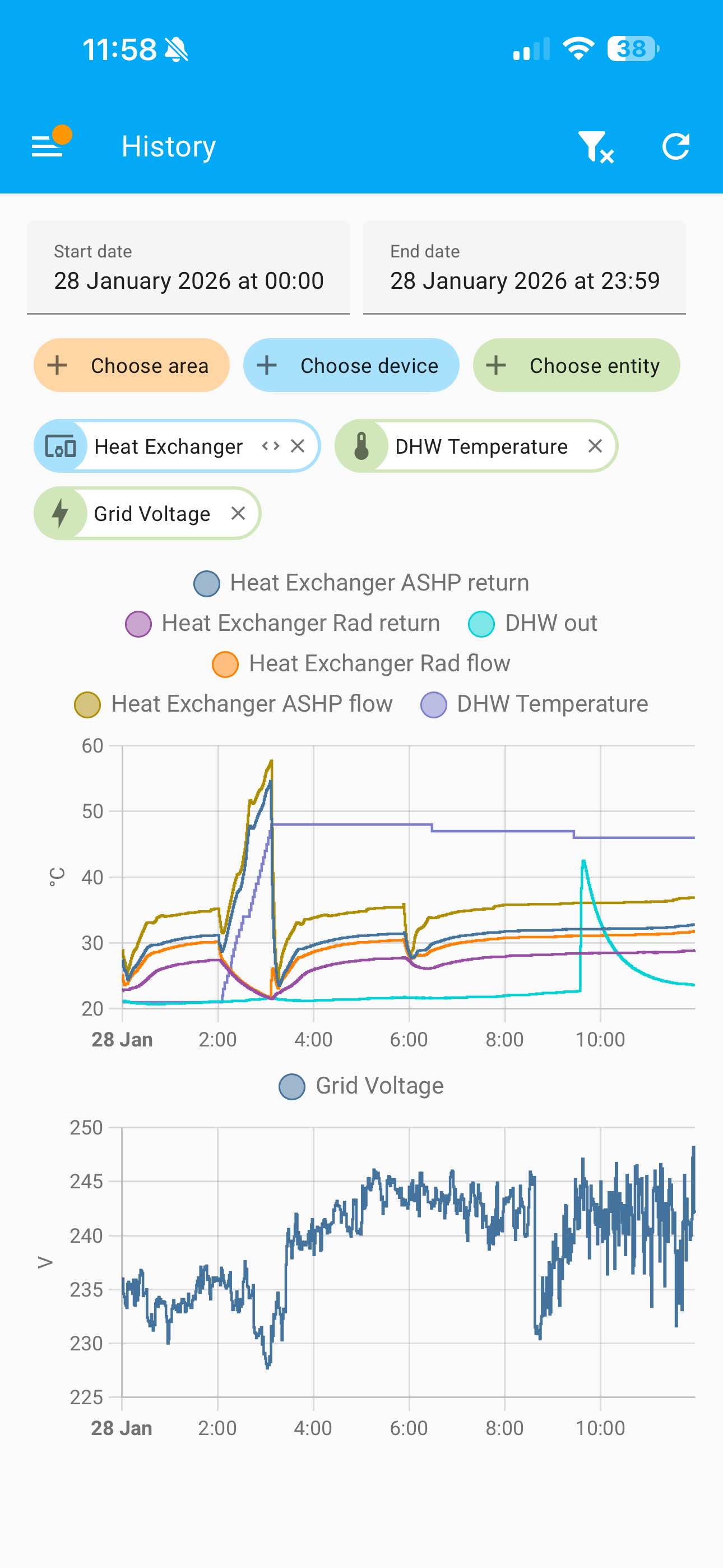
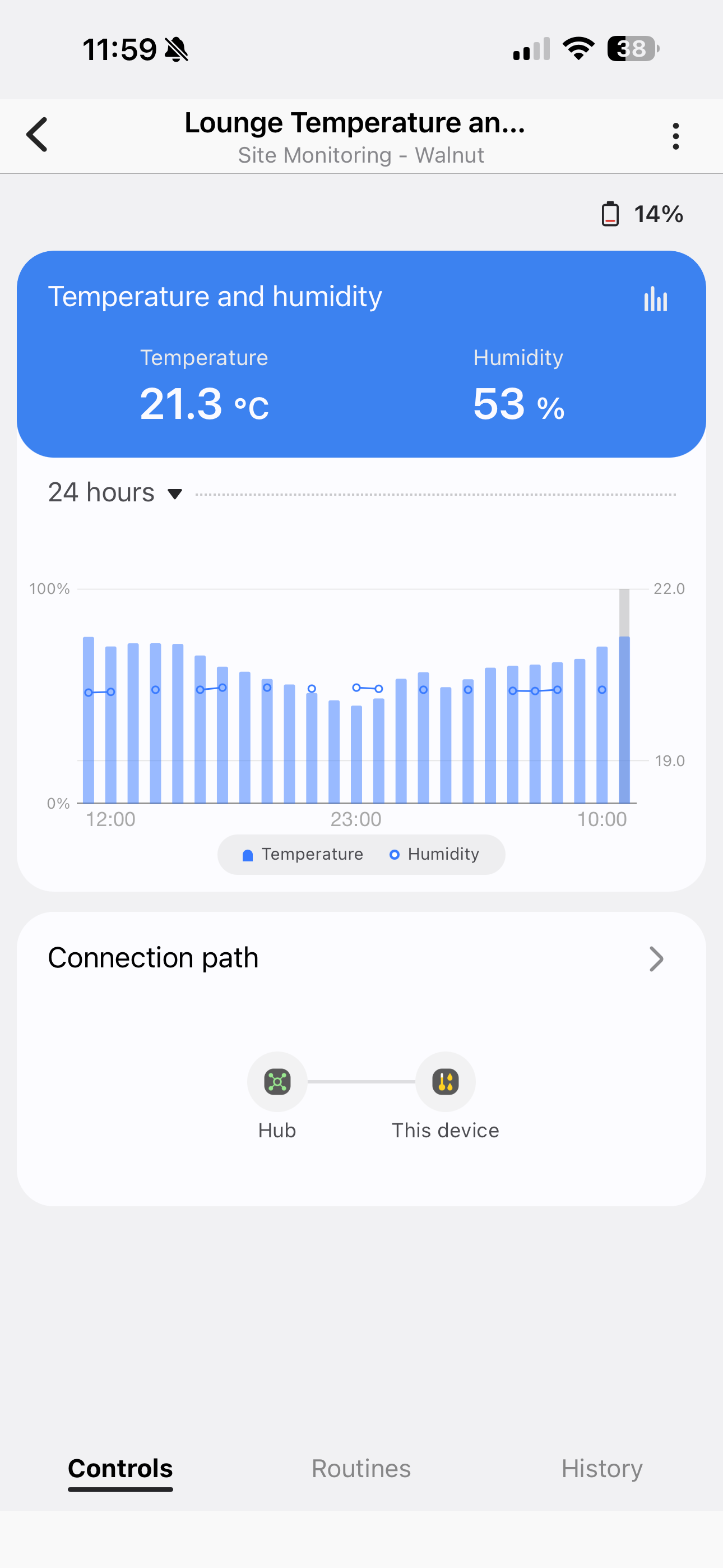
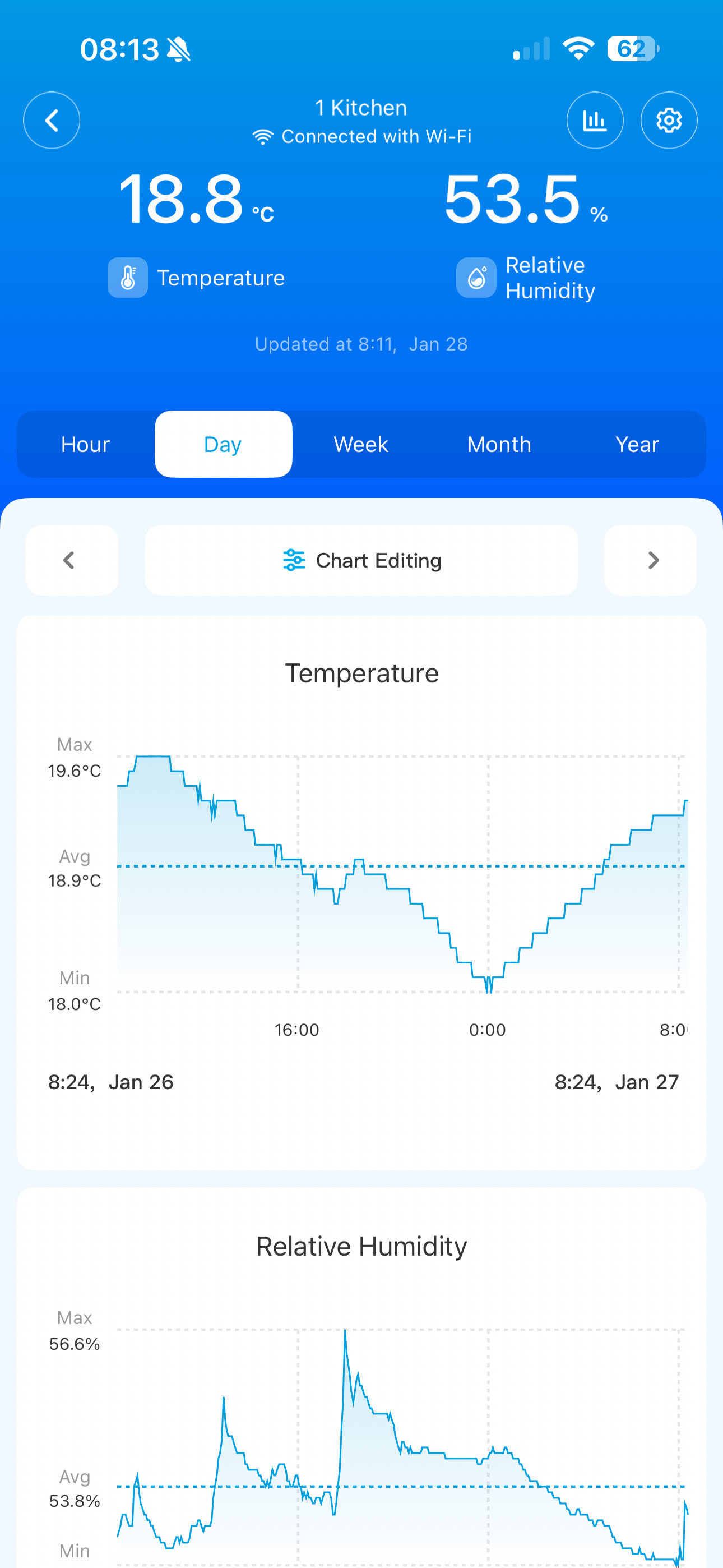
Our system is like a supertanker. Here is Monday 8am till Tuesday 8am. It took all night running until 10am to raise the temperature enough to last until 11:30pm when it came on again. This way we wake up to warmth and can deal with the gradual drop in temperature without needing more heat. If it is colder outside I run it beyond 10am.
I suspect a schedule would force the ASHP to choose higher flow temperature which would cost more. 8-10 hours for a 2-3C increase in temperature is very long. Once the outdoors is 15c it is much quicker so the heating can stop at 5:30am or if warm inside it doesn’t need to come on. This kind of approach is very amenable to AI with weather forecasts used as well.
At a fixed 35c flow what happens in the cold weather is that the ASHP knowing the outside temperature works harder (1.5kW mild increases to 1.8kW below freezing or more). It needs to run much longer to compensate for the increased heat loss and the inside temperature fluctuation reduces because there is a degree of equilibrium between heat input and heat loss.
I think if you are out at work all day then cooling down during the day is OK. As I am retired I am at home during the day so I want it to be warm when I come in from outside or from the garage.
The whole house at the same temperature smacks very much as a compromised system (sorry ) but I want the bedrooms at no more than 18 and the living room at 21. My computer room is around 20 but my sitting position is close to the rad.
My overnight gas costs were 13p per hour. About 2kwh per hour.
Flow temp is average mid to high 30s at the moment but will drop as the day progresses.
The living room rads are tepid and it’s 21.4 at the moment.
You’re right, HH’s SensoComfort controller has a temperature sensor in it to measure the room temperature. IIRC from a previous post, he uses active mode in the Room Temp Mod, so the system and zone runs continuously, modifying flow temps based on required temperature, outside temperature and the WC curve. Ideal for a heat pump.
In expanded mode (which I run on my system as we’re on a gas boiler), it takes all the active mode settings and adds a thermostat function where it will activate and deactivate the zone as needed around the required set point. Works very well and very comfortable.
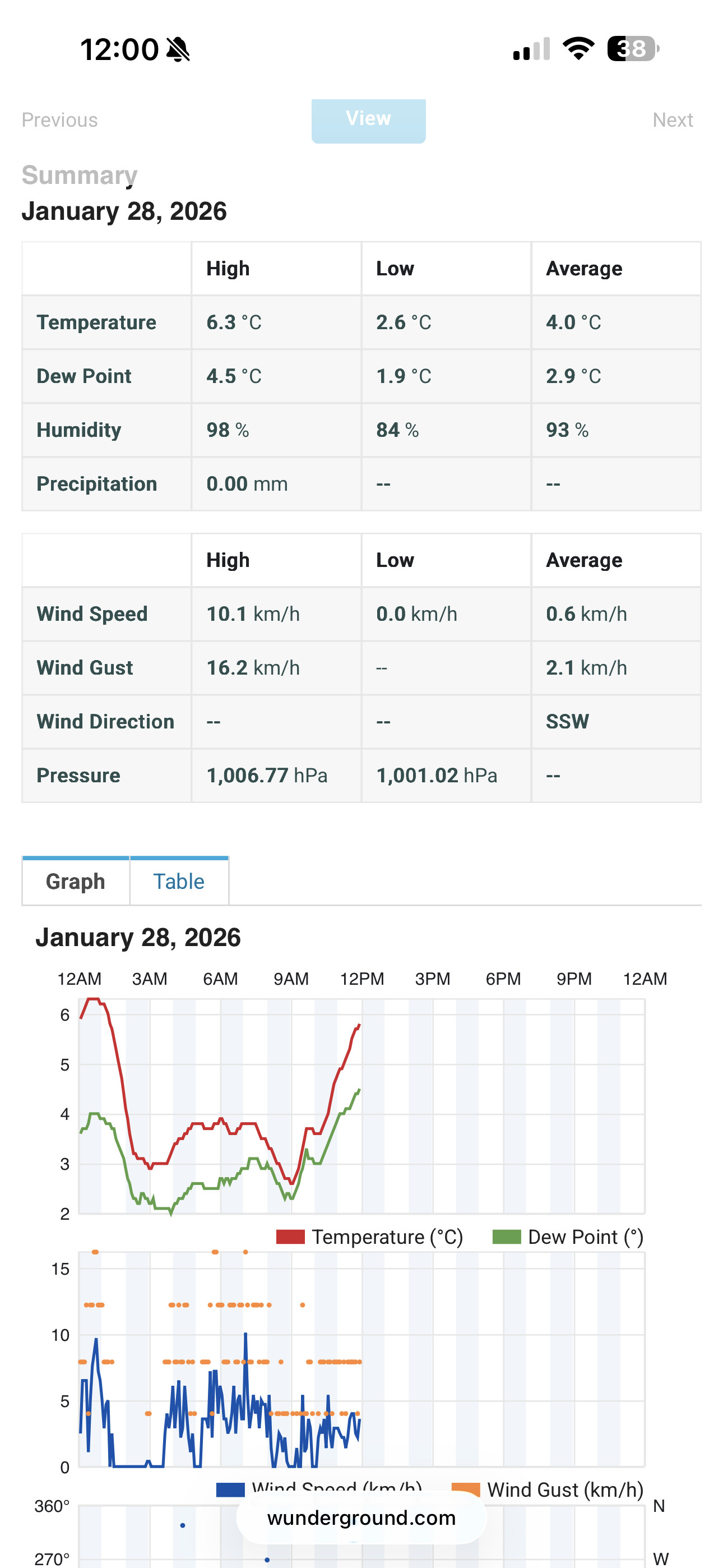
I have a Weather Station on WunderGround for collecting data. However the ASHP has its own outdoor sensor (naturally). Not sure if that answers your question. The WS and weather forecast inform my decision making on flow temperature.
The Midea ASHP is cheap and cheerful but reliable so far. Vaillant failed to respond when I made enquiries 4 years ago. I got two quotes and rejected the Eco Dan one when they wanted to amend their quote for expensive pipework changes that with hindsight I justify (my intuitive feeling) as being unnecessary.
Were it not for the fact my practice nurse is leaving next week she’d be facing a complaint by now. Went for my 4th B12 loading injection. She called two people in ahead of me and then called for “James” who was clearly not there. Called my name and when I stood up I could see the dawning horror that she’d administered my dose to someone else and recorded it on my medical record.
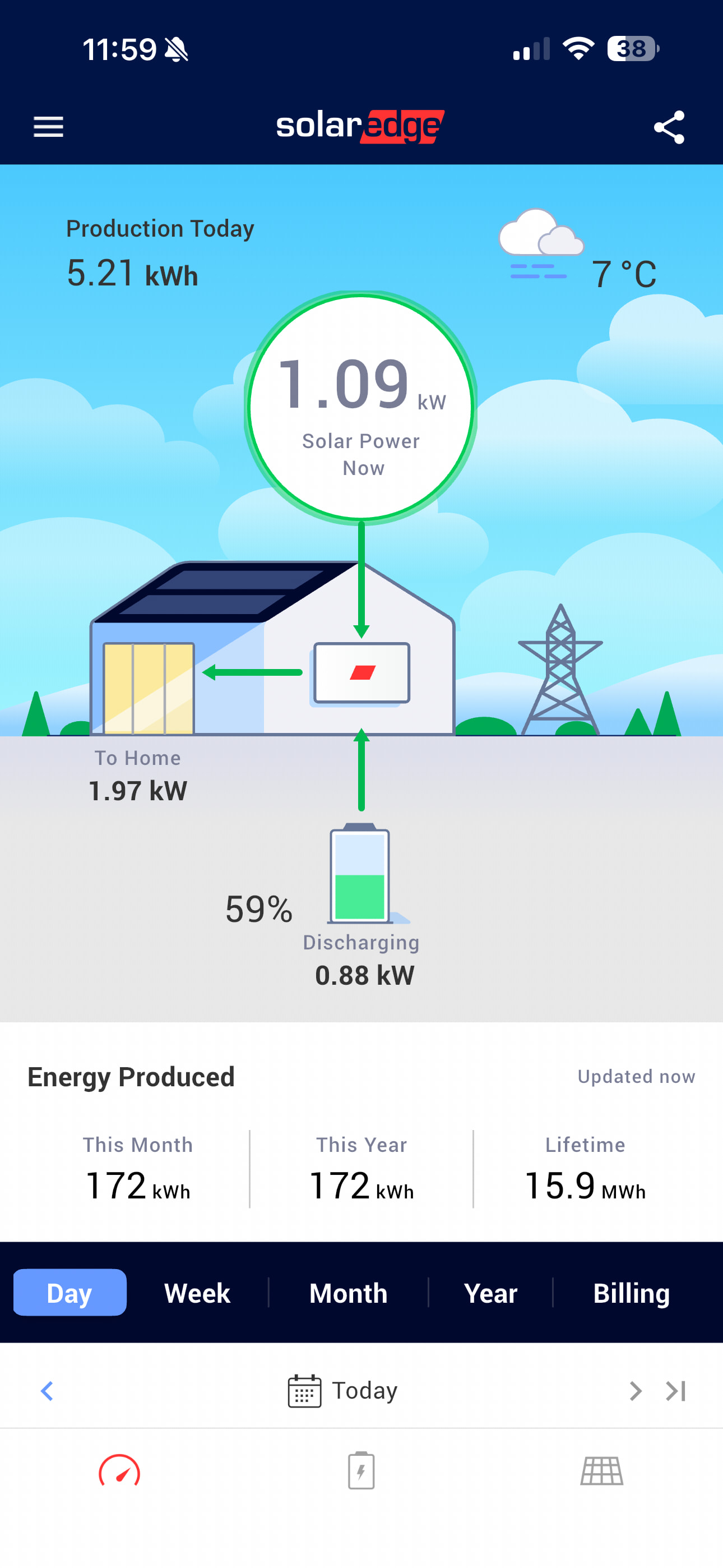
Today started quite cold so I have run beyond 10am using some solar. The ASHP has run continuously for 6 hours (very efficient) and the lounge has continued warming.
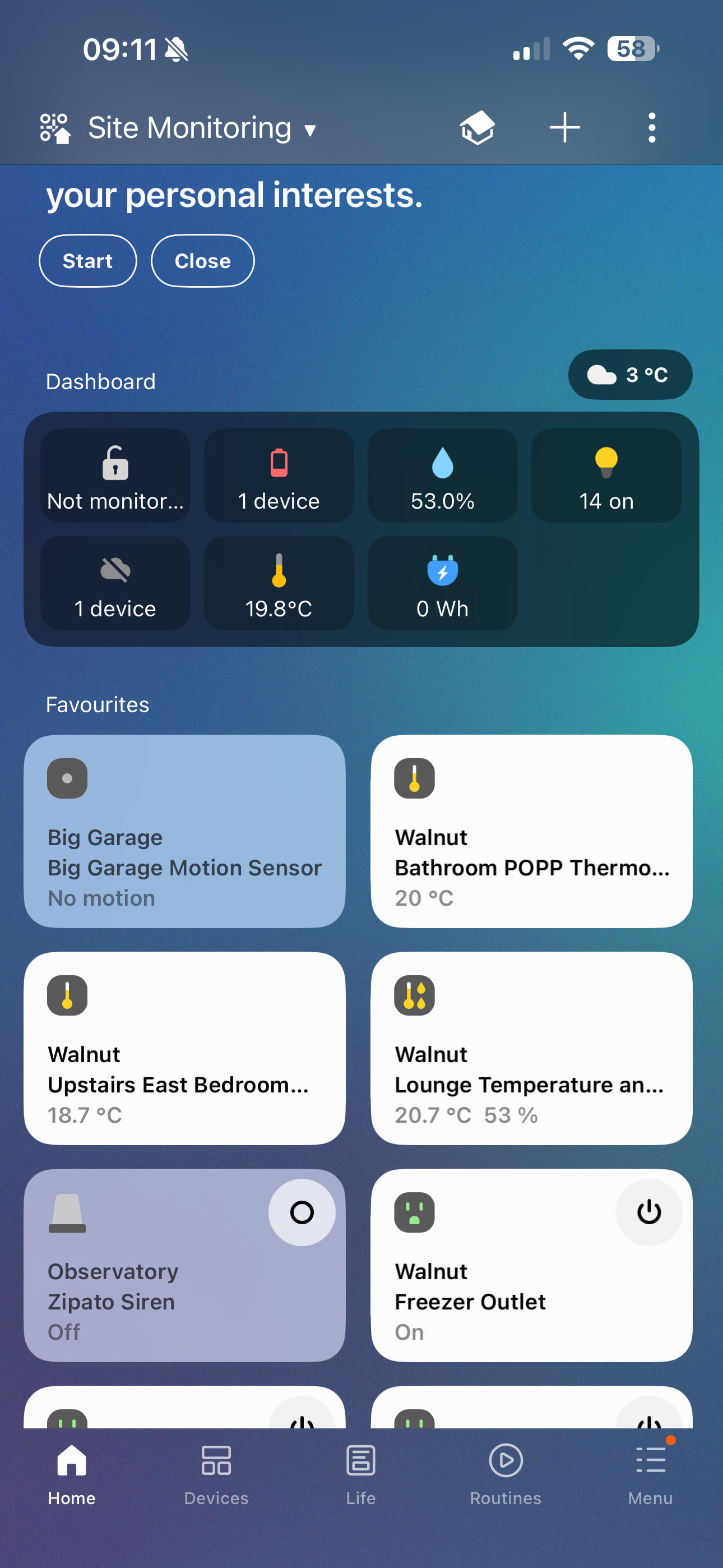
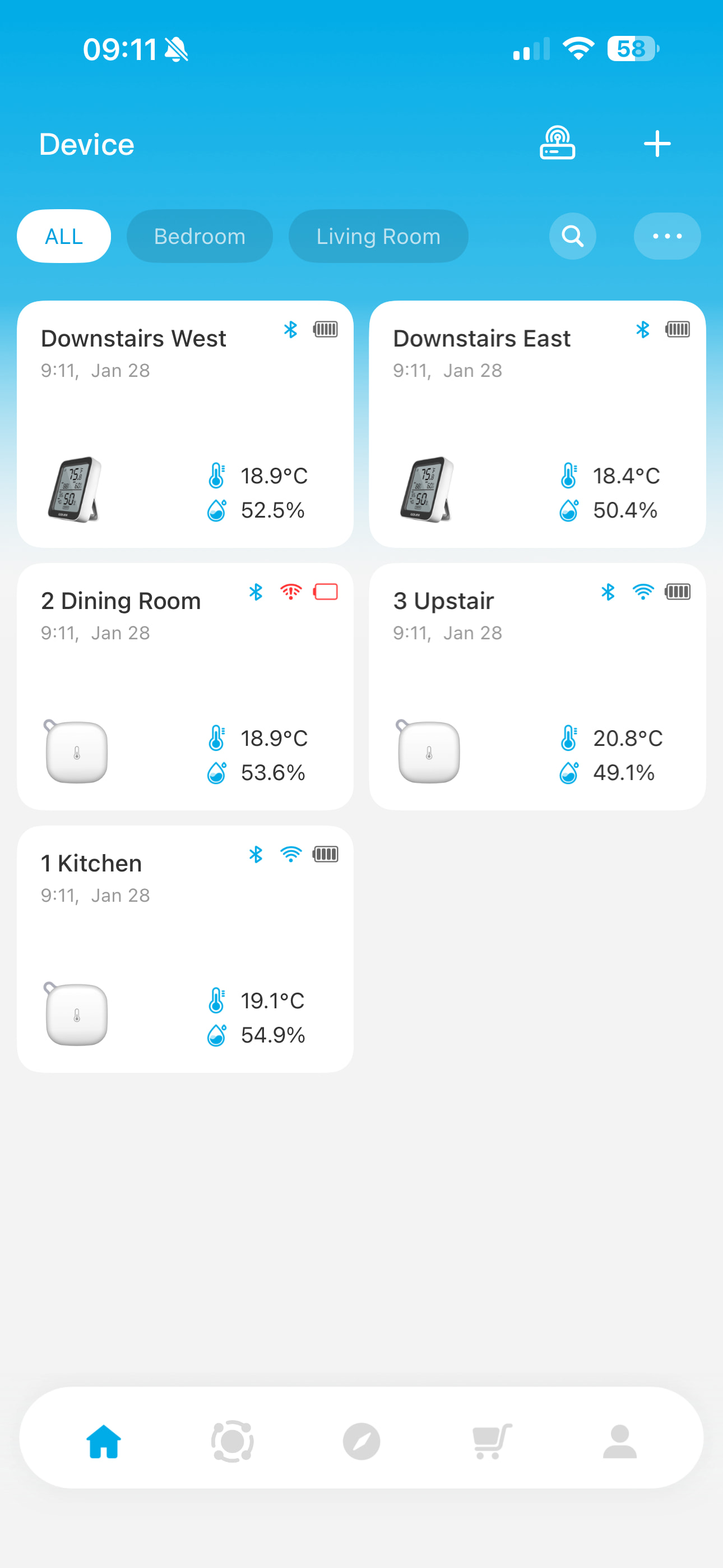
I built a simple wemos(!) temperature collector (5 sensors) for the ASHP monitoring using Home Assistant.
Helped inform decisions. In my opinion something of the sort would be useful for every ASHP system to evaluate setting flow temperature and any Weather Compensation.
Whether you are an engineer or not, you are wrong. It does work with no regard to internal sensors. We have the room temp mod set to inactive, not active as @james_n suggests. Everything was set following discussions with Vaillant themselves. Of course, you may know more than their own experts, but somehow I doubt it.
I don’t know what experience you have of owning or installing heat pumps, but while I may radiate an air of general cluelessness, in this case I do know what I’m talking about.
When using pure weather compensation, which we are, with room temp mod inactive, everything is controlled by a table of flow temperatures that’s stored in the heat pump. Flow temperature increases as external temperature decreases, and also increases as the target internal temperature is increased. So if the temperature outside is say 5°, the flow temperature will be higher if the set internal temperature is 20° than if it’s 16°. With room temp mod off, the system pays no regard to the actual internal temperature. If it gets too hot you lower the heat curve and vice versa.
We have our curve set at 0.85, and the system manages to keep the temperature within 0.1 or 0.2° of the target, despite us having six time periods set.
The room temp mod can be set to take account of internal temperature, so the heating will reduce if, for example the sun is strong and heats the room where the internal sensor is located. We don’t use that. It’s the most purist way to run a heat pump, which is what Vaillant will tell you if you speak to them.
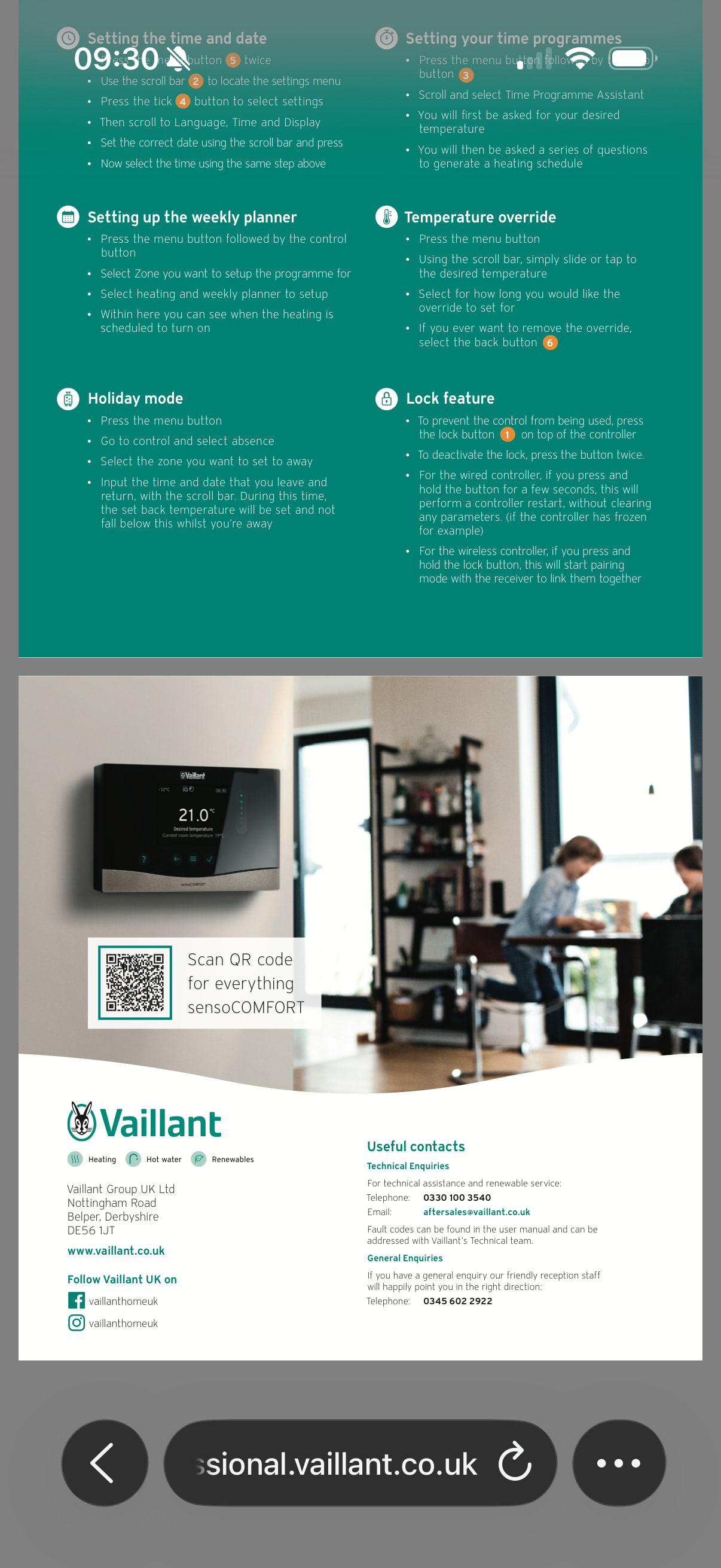
If you still insist I am wrong, please call the technical enquiries number in the screen shot below. It will get you through to Vaillant’s renewables team, who are just brilliant and so helpful.
Apologies Nigel, I thought you were running active, so it looks like you are just using the set point and the flow temperature is purely based on outside temperature and the heat curve. Interesting.
Fibre optic fast broadband installed today. Was able to make use of an unused secondary aerial connection route into the house, minimising impact and no new holes.
Had a fascinating time talking with the engineer and checking out his compact cutter/alignment, splice and test box.
Muso seems to be running better off the internet !
 ) but I want the bedrooms at no more than 18 and the living room at 21. My computer room is around 20 but my sitting position is close to the rad.