That’s what Time of Use tariffs are meant to do - encourage use when electricity is cheaper and discourage it when more expensive. Having Solar and a decent size battery makes it possible to only use electricity at the cheap rate, but this obviously requires significant investment. Over time it should more than pay for itself and deliver a profit, but it’s something of a gamble and many won’t be able to or wish to afford it.
2 Likes
They are slightly different issues; one being about too much power on a sunny day, and the other being about people drawing too much power in the evening peak.
Everyone I know who has an EV will only charge when the power is cheap, which usually means in the middle of the night. While my car is plugged in now (6pm) it won’t start charging until 11.30pm when power costs 7p rather than 29p per kWh. Only a wally would charge outside of the cheap hours.
1 Like
The problem in our area is partly because of generous grants for solar PV and heat pumps, but not batteries which many low income households will not pay for, which might at least help it iron out the peaks.
Even our installer, who is constantly working flat out doing new grant funded installations, says that he thinks too much cash is being put into grants to users and that some of it should be diverted grid upgrades which simply aren’t happening.
2 Likes
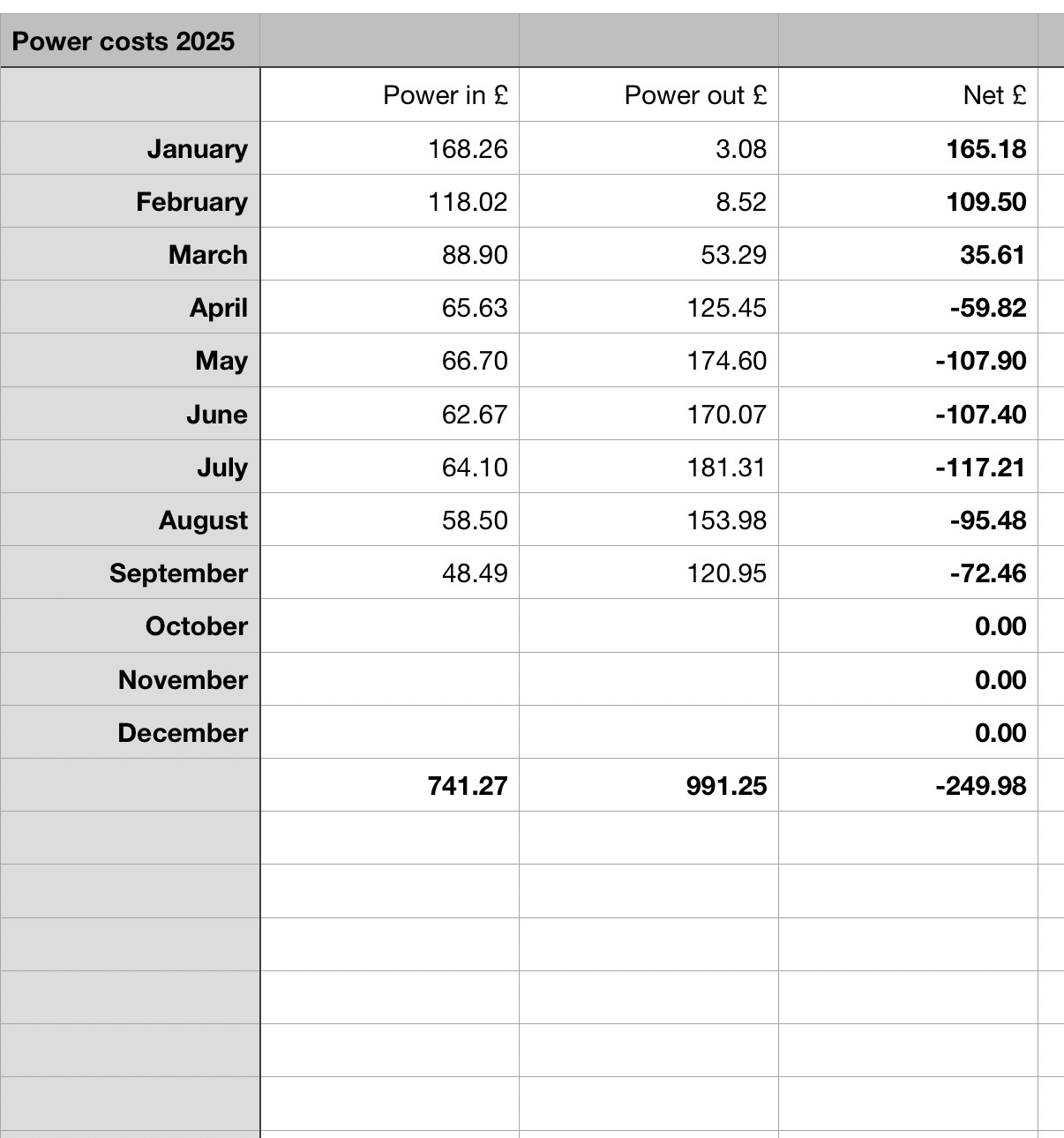
These are our cash figures for our power for the first nine months of the year. They include the cost of about 5,000 miles worth of car charging. Whether it’s good or bad for a setup like ours I don’t know, but overall it’s a lot better than we were hoping for when we had everything installed last December.
1 Like
My electricity costs for Oct/Nov/Dec is just under that of January, so as a rough guess I suggest you will end up with an annual bill of ~£240 - pretty good eh, well done.
I don’t remember if you have gas as well; we don’t so our costs cover everything. So far in October we are +12p! Of course, this year was really sunny so it will be interesting to see what 2026 brings. Our monthly direct debit payment is £25, which may actually be a bit much.
I do have gas. It will be interesting to see your end of year report. If I’m close, I’ll let everyone know, if I’m far out, I’ll never mention it again 
1 Like
Your figures for the first 9 months look very good indeed HH for someone with an 8kW PV array, a storage battery, heat pump central heating and an electric car.
Your “Power in £” figures for January & February were remarkably low. The last 3 months of your first year may well mirror your first 3 months, in which case you may break even over the full annual cycle. It will be interesting to see what the kWh equivalent of your table looks like after 12 months.
Best regards, BF
That’s useful feedback, thanks. From January to March we were using Cosy Octopus, and virtually all our power was at the 14p Cosy rate. In April we switched to Go, so virtually all our power since then has cost us 7p. We are planning to stay on Go through this winter and see how it works out. Outside of the Go hours the power costs 29p, so if we only use 1/3 at the 29p rate, it should work out the same as Cosy, or cheaper. How far the batteries will get us through the day will be interesting and of course on sunny days the batteries will last longer. We’ve generated 6,750 kWh so far this year.
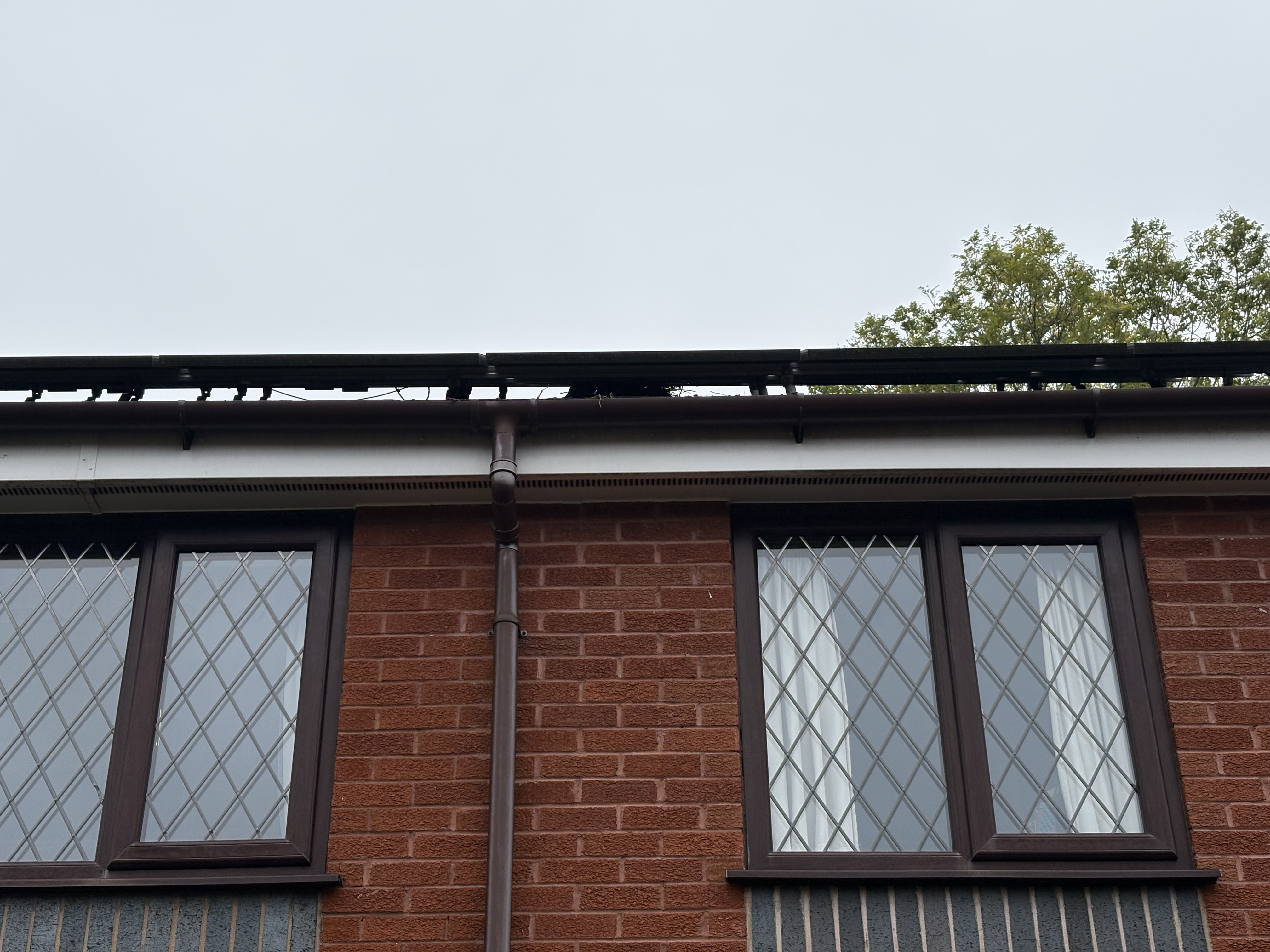
As I have mentioned, I am now in my 7th year of having panels. Until this point I have had no issues with birds. However a few weeks ago we spotted the pigeon nest under them. There appears to be 3 babies, and one adult. There are numerous cables under there, so have been worried about what they may be doing. I’ve struggled getting anyone around to install a mesh around te panels, but hopefully someone coming next week to have a look. In the meantime I’m playing a bird scaring track on a tablet in the loft during the day. Typically the mother will often fly off for most of the day, but we need to turn the sound off when we go to bed, and the mother is back. The babies appear fully grown now, and should have left the nest, but it would appear they are enjoying the warms and protection of the panels too much.
Anyway, the reason for sharing this is to warn the solar newbies that putting mesh around them is an excellent idea, and would be best done at time of installation, but even a retro fit should be considered IMV.
1 Like
We had mesh fitted when we had our current system installed. In our previous house our system installed in 2011 didn’t have mesh fitted, but this was retrofitted after we noticed broken eggshells in our garden!
Snap!
Absolutely second that.. the extra cost is trivial and the prevention of potential roof damage and panel damage from nesting birds is non trivial.
… and in the end it was about -£150 for the whole year..
Excellent. Based on that years savings, how long will it take to recoup the cost?
about 5 to 6 years ( and I am over a year in so another 4 - 5 years) - possibly less given that electricity has risen further in the last year… though I hear it might just to start to come back down again next year.
That’s very good. Is that less that you were estimated at installation.
Previously I had thought the battery pay back was not great, but that was based on my figures and my installation which whilst nearly 5KWh, would nowadays be blown out of the water with nearly double the energy output of a panel compared to mine from 7 years ago, not to mention battery improvements.
Yes it is - I was expecting 8 years or so.. but I guess if we have several very dull and wet years the generation will be right down so the return might take longer, and the first 2/3 of this year has been very sunny - but we have had a month now of mostly dull wet days with few exceptions.
The generation difference between summer and autumn and even more so winter is very significant.
The time shifting of E7 rates using a battery provides a huge saving as well that I really didn’t anticipate significantly until I put it into practice.
If I was doing it again I would
a) Put DC optimisers on my DC chains from the get go.
b) I would have installed my south facing flat roof panels at the same time as my pitched roof E/W panels.
c) Gone for a bigger than 5kW inverter
d) Gone for a battery system with greater than 3.6 kW peak power drain.
e) Gone for an automatic UPS of battery power if there is a power cut. It currently requires me to throw two circuit breakers in the event of an extended power cut, which has happened three times in the last year… but then there are complications here - as manual awareness is good so one manages not to overload and have the inverter do a safety cut out… but then the freezers etc are not protected if we are away.
2 Likes
According to the Met Office we’ve just had the dullest October in 60 years - pah!
1 Like
Good info there, Simon. We’re looking at Solar for next year so this is useful information.
1 Like