Ones from Crewe cost even more 
Pigeon-knurling will never be inexpensive…
1 Like
Yeah, that’s the implementation I mentioned (copied from the Wiki article) with the high latency and 55% packet loss “due to operator error”. Or in the words of the Norwegian Linux user group from your link:
The remaining pigeons arrived simultaneously. Two of them didn’t have any IP packets, though, it turned out that things had been so busy at the other end that they forgot to shut the pigeon cage, and the remaining two pigeons escaped without an IP packet.

Ah sorry, it’s many years since I looked at the Wiki article and I don’t think it had the Bergen implementation back then. The April 1st RFCs used to be good fun.
No worries, thanks for the delightful direct link.
Indeed, the April fool RFCs were good fun, but they were also instructive at the same time. This one illustrates beautifully that the medium makes no difference to the protocol and the carried data, so Clare’s question about the pigeon color is very apt
3 Likes
It’s a bit of cheek really. Apparently, we all (in the UK) have the right to “request” a fast broadband connection. If you check on Ofcom’s website it says:
Every home and business in the UK has the legal right to request a decent, affordable broadband connection.
From 20 March 2020, if you can’t get a download speed of 10 Mbit/s and an upload speed of 1 Mbit/s, you can request an upgraded connection. You can make this request to BT, or to KCOM if you live in the Hull area. You do not need to be an existing customer of BT or KCOM to apply.
Which sounds a bit nice and altruistic. What it means in practice is that if you want a fast broadband connection and you’re prepared to pay BT to install the infrastructure then BT are obliged to install the infrastructure.
The crucial bit of this “right” we all have is as follows
What will it cost?
If the cost of building or upgrading your share of the network connection is £3,400 or less, you won’t have to pay for this work to be done.
If it will cost more than £3,400 to connect your home, and you still want a connection, you will have to pay the excess costs. If you want to do this, BT/ KCOM will conduct a survey and give you a quote within 60 days.
£3,400 is probably just enough to pay for a quantity surveyor to go to site and draw up a bill of materials.
How apt, this is the best ever post from the forum. 
2 Likes
Naim black and green are the best sounding pigeons.
Haven’t seen any yet? That’s because they’re waiting for the RAL codes from you.
1 Like
The resend is irrelevant to the injection of RFI (viewed from either amplitude or time domain) via an input port to a box. The reclocking largely prevents the jitter affecting the data supply to the digital components, but the RFI is still in the box and will still couple to all the other signal lines inside the box.
Yes it can; it can excite resonances in parasitic tuned circuits. This is why the effects are so inconsistent in the interaction between different devices and so insidious and difficult to eliminate.
2 Likes
Interesting
Would the goal then be to get rid of RFI or to screen against it?
Presumably it’s more important to be able to get rid of it, since anything upstream of screening won’t have screened out RFI?
Apologies if I am over simplifying, but for the Electronic Techies, are we saying that when people get a big benefit from this switch, they would also get the same benefit if they switch to using a WiFi link to their streamer rather than hard wired ethernet? (assuming WiFi connection was strong)
3 Likes
So jitter on the Ethernet creates RFI that is strong enough to significantly affect analog circuits in any decently designed device? Is this an issue anywhere except in audio? Any references for this? Sorry, not buying. (I did buy an EE though because why not )
Edit: if that’s so strong an effect, it should be not very hard to detect. If so, serious audio companies should/would have developed solutions, I suppose. Yet it’s only aftermarket gear in the hobbyist hifi area, a market that is always plagued by snake oil at inflated prices, and it seems that someone will hear differences for anything and everything
Ah but then you would have people being afraid of wifi creating some mystical interference. There is always something to be scared of
What WiFiFi? a real killer!
Beethoven 5 played in rural Brittania
Timing not as good as it is supposed to be.
1 Like
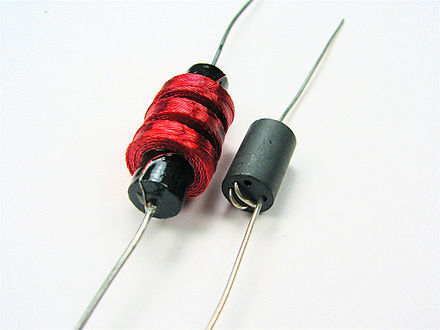
RFI is all around us, one of the most prominent sources these days being cellular networks, so the only option is to screen against it. Most if not all decently built audio equipment has some kind of filters for RFI, for instance in the form of RF inductors:
Or RF chokes:
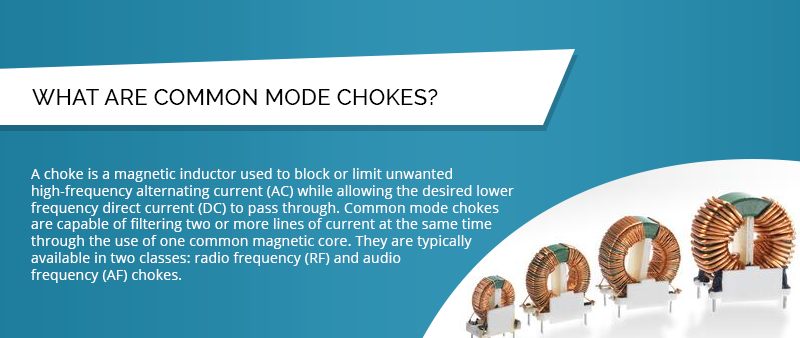
Some manufacturers argue against filtering too much, since they feel that ‘choking’ the signal too strongly could degrade the sound quality.
But generally speaking it’s an issue that manufacturers are well aware of, and have taken measures against in their equipment designs.
1 Like
Not doubting that RFI exists, but small amounts of clock jitter on an Ethernet cable creating so much that existing measures in units are insufficient
Right indeed, i was more or less confirming your earlier point:
As far as manufacturers feel that measures are needed to reduce or choke RFI, they will usually already have built in those measures in their equipment.
So there generally shouldn’t be a necessity to resort to after market solutions to get rid of RFI in other parts of the chain, since it’s going to be filtered by the streamer / preamp again anyway.
1 Like
I expect new 50K devices to shield my apartment from neighbours’ cell phones and whatnot. Wait, maybe Vortex Hifi are onto something!