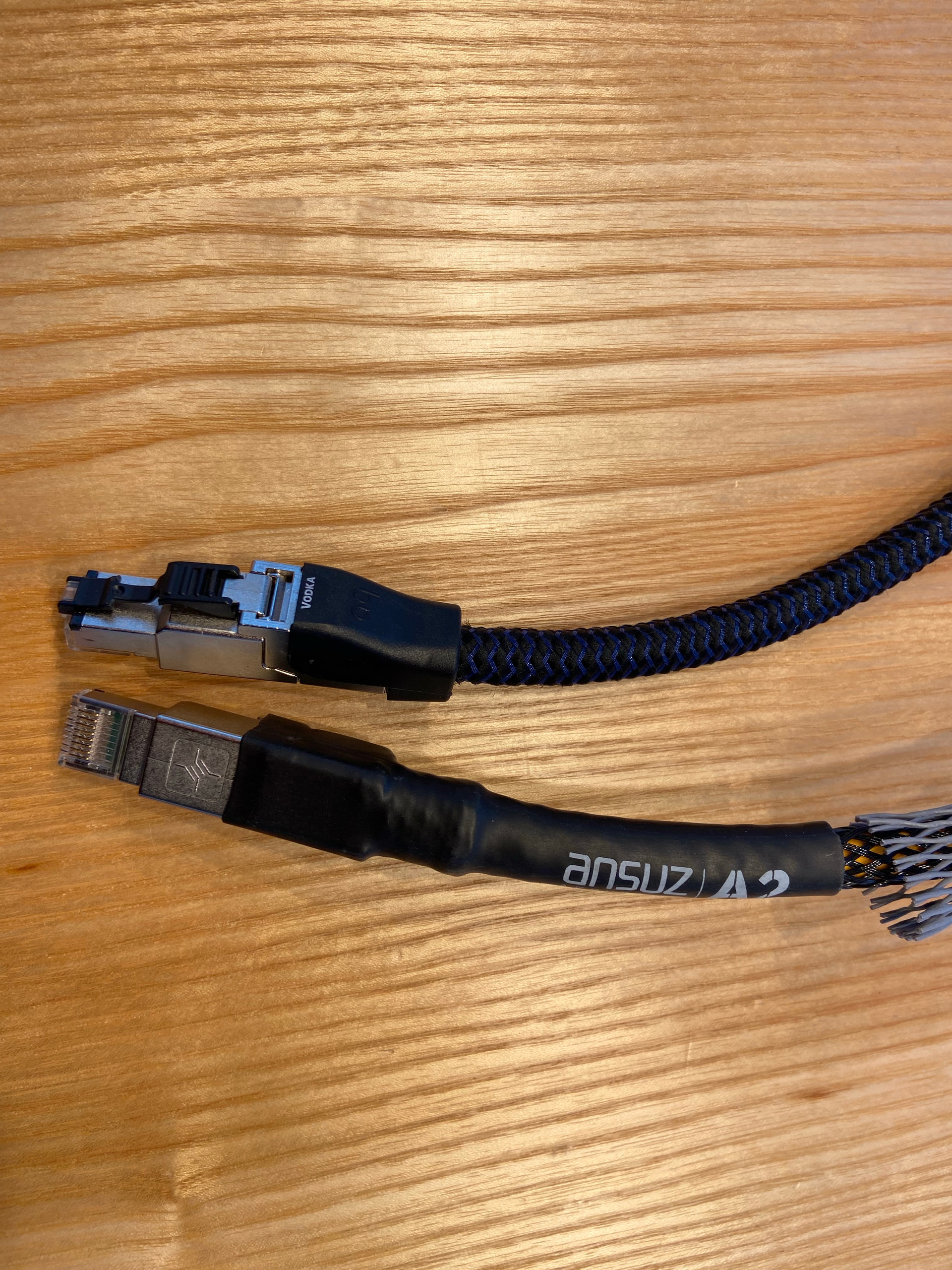
OK So I did a little reading. Ethernet cables come in different qualities, specified by a standard.
Higher-category Ethernet cables, such as Cat6 or Cat7, offer improved bandwidth and reduced interference compared to lower-category cables. These enhancements can theoretically lead to better data transmission with greater stability. However, when it comes to audio quality, the potential benefits gained may not be as evident as with the connections between a source, DAC, and playback device.
In most cases, the difference between using a Cat5e and a Cat6 cable may not be substantial enough for the average listener to notice. The cables themselves cannot enhance sound quality; rather, they ensure that the audio data arrives intact and in the correct order. Thus, while it’s reasonable to invest in higher-category cables for the sake of performance, the sound quality improvements may be negligible in practical application.
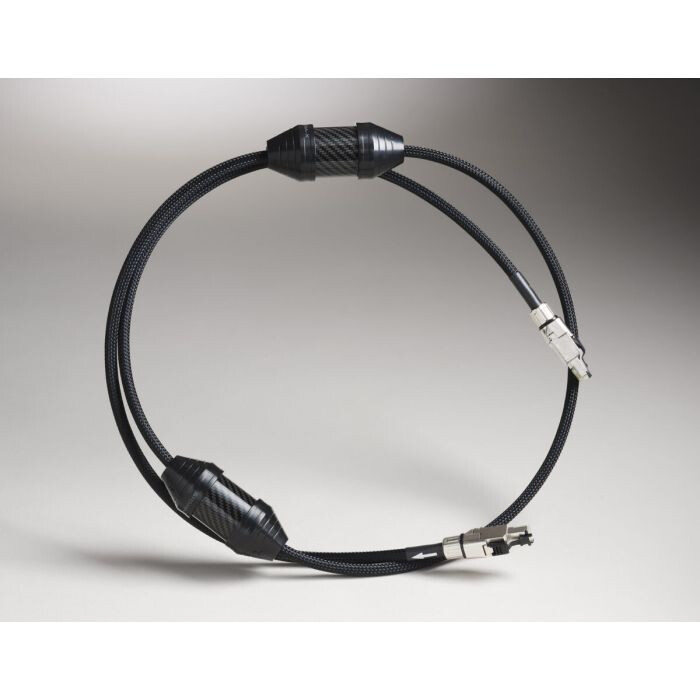
This costs Sigma X $2800
And is 6a
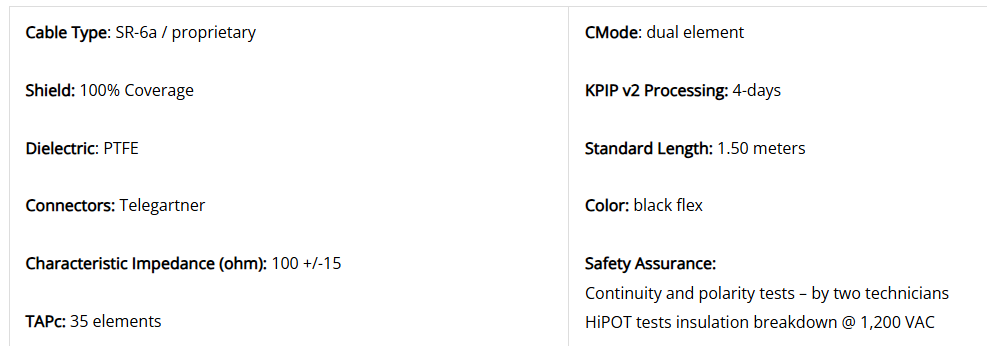
Cat6a (“a” for augmented) is the top choice for high-performance setups. It supports 10 Gbps up to 100 meters. Its frequency reaches 500 MHz. It also has better shielding (usually full foil wrap) to block interference. This cable is ideal for: Hospitals and schools use Cat6a to support large networks.
Telegartener connectors cost about €20! BTW
This theoretically better cable is cat 7 and costs €26 from a Hi Fi cable supplier in Rimini
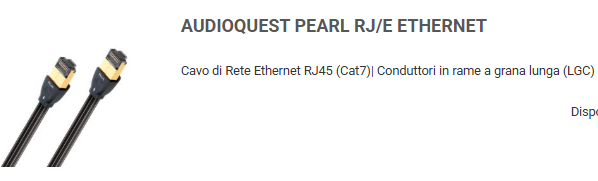
If you want to exaggerate €53 for cat 8
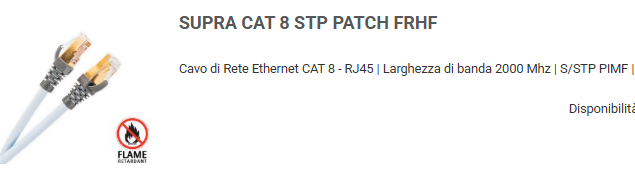
These cables are certified to TIA standards
The Telecommunications Industry Association (TIA) is accredited by the American National Standards Institute (ANSI) to develop voluntary, consensus-based industry standards for a wide variety of information and communication technology (ICT) products, and currently represents nearly 400 companies. TIA’s Standards and Technology Department operates twelve engineering committees, which develop guidelines for private radio equipment, cellular towers, data terminals, satellites, telephone terminal equipment, accessibility, VoIP devices, structured cabling, data centers, mobile device communications, multimedia multicast, vehicular telematics, healthcare ICT, machine to machine communications, and smart utility networks.
So, your €50 Class 8 cable will be better than the €2800 class 6a cable. It is a question of specification and certification.
Or am I missing something?