I’ll use of these as my work switch - just to ensure it doesn’t melt by end of day if less heat is able to escape…
Seems effective to lower noisefloor - could be placebo but I’ll compare to the EE8. Haven’t found a way to open up the EE8 - to wrap it up with the sheet to see if that makes an additional difference.
1 Like
If your enclosures are metal there will be effective screening anyway, and these sink compounds are designed to impede EM reflections WITHIN the metal cavity / enclosure. By putting this on the outside of the case you will simply be impeding signal reflections of certain frequencies bouncing/reflecting of the external of the case…..
However WiFi is extremely low level compared to mobile/smart phones, so they are more of a consideration. If you hear no mobile/smart phones reception or transmission signals break through you certainly will be not getting to get any WiFi or Bluetooth signal break through. Zigbee is super low level so you can likely ignore that. Products not working properly when some uses a mobile phone (when not using wifi calling) in the house is hardly going to be practical.
BTW recommended practice for wifi APs positioning is to keep them away from large metal enclosures and other electronic equipment such as network equipment and computers, so they don’t interfere with radio field strength performance of the AP. Remember WiFi uses very very low level radio signals.
unless you are using home made or unlawful consumer electronic products they have to be manufactured to avoid low level EM interaction as well as limit emissions to extremely low level. This is part of the CE/UKCA marking,
3 Likes
I’ve used a combination of similar materials to good effect as a Faraday cage and absorbers.
Würth Elektronik WE-FAS TC Thermal Conductive and EMI Absorber 39410 & and EMI flexible absorber 30410S:
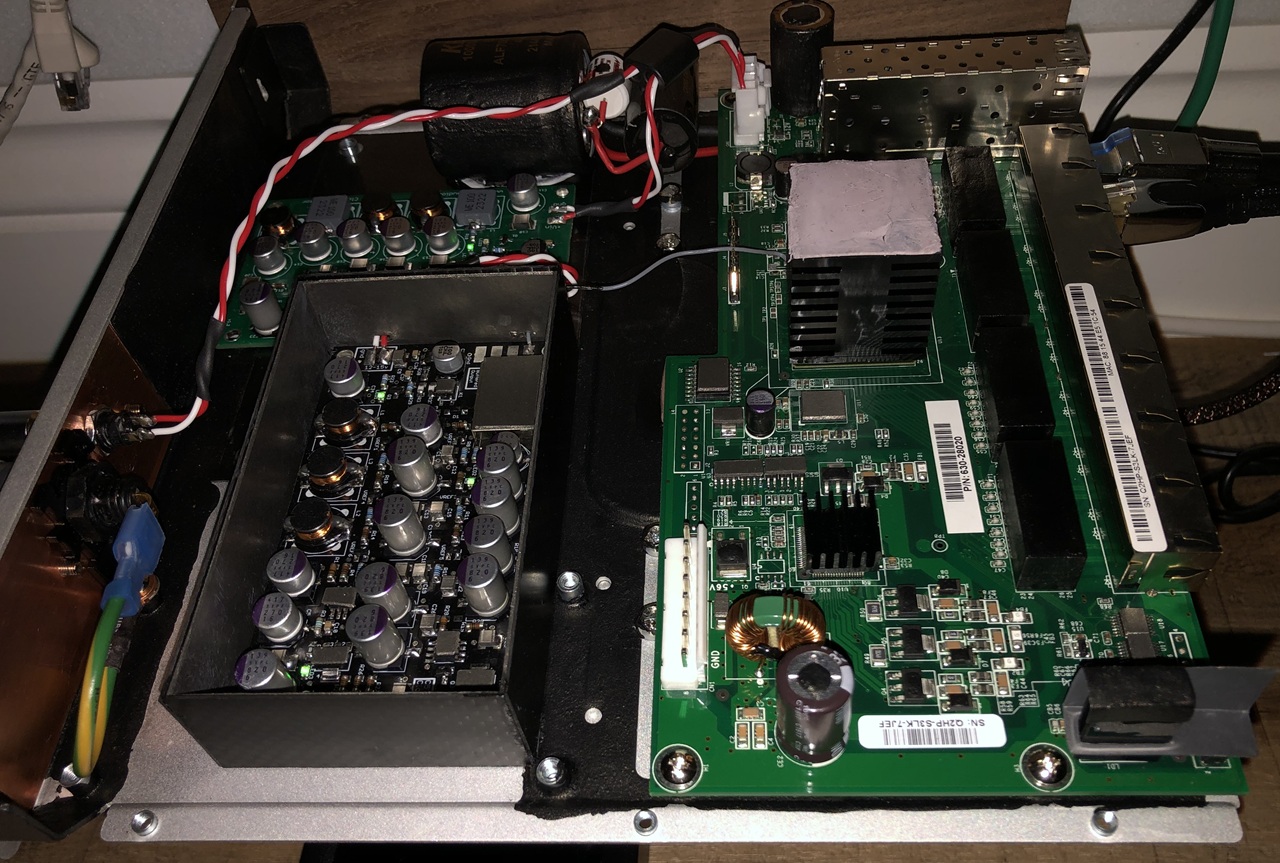
with the addition of a grounding connection on the switch rear.
1 Like
Carbon is also an excellent material for this purpose, here combined with 39410 absorber (internally lined):
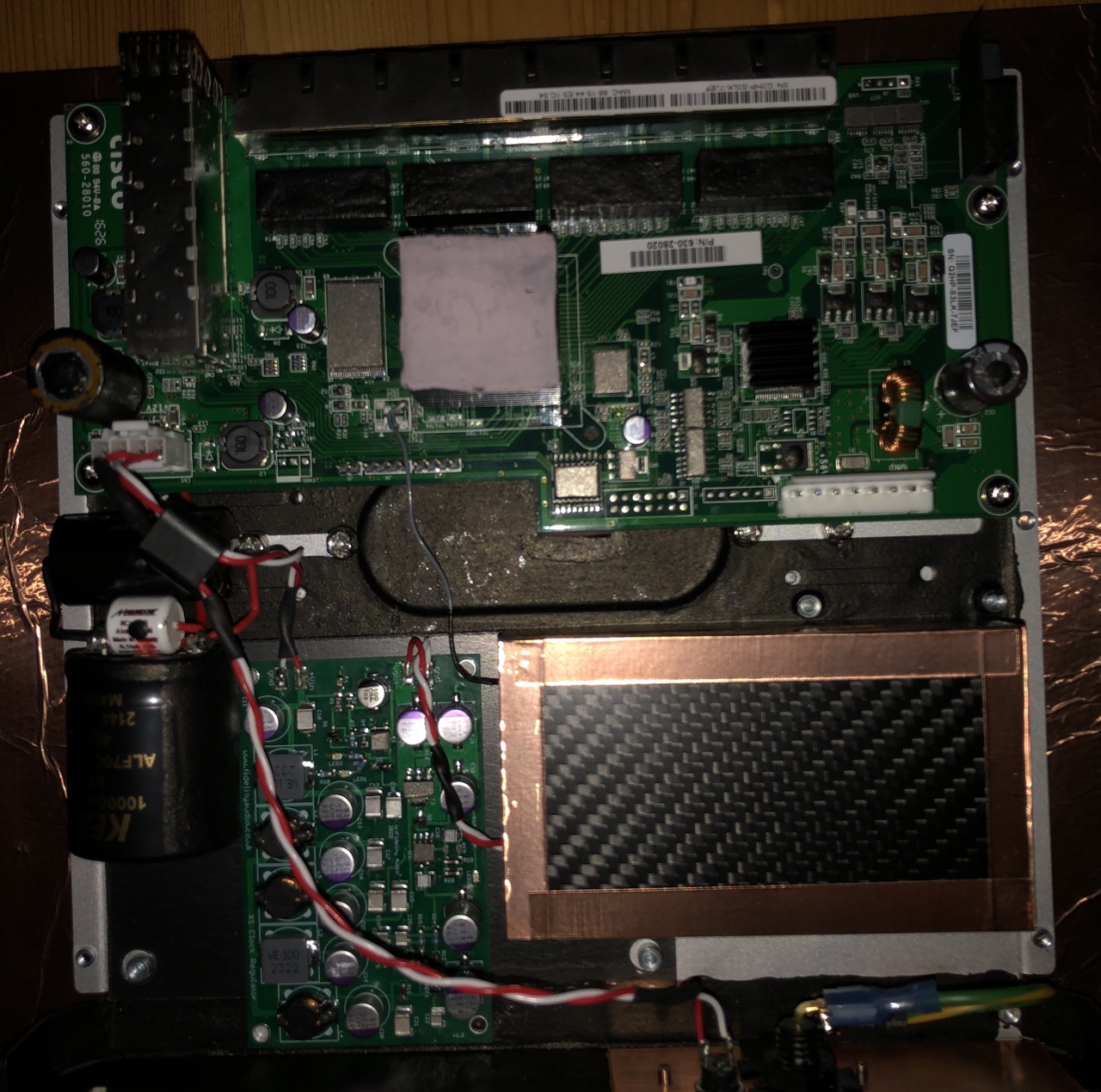
and venerable copper tape has its place (grounded) using copper braid desoldering wick.
4 Likes
That is superb work!! 
1 Like
I have been using AB7050HF for a long time on IC’s, It was very effective on the NODE used as a streamer, in many cases I have gone to town with copper chassis additional plates, damping and Foil etc. I note the Fidelity audio clocks. Interesting point about Carbon.
One thing worth looking at is how well the chassis connected to the sheild on switches, I found filing and sanding in a few places to improve and using copper foil can assist here as well so it is well shielded
The ALKAID switch from Ali express is actually very good BTW and seems to like SMPS unless it’s a very good LPS
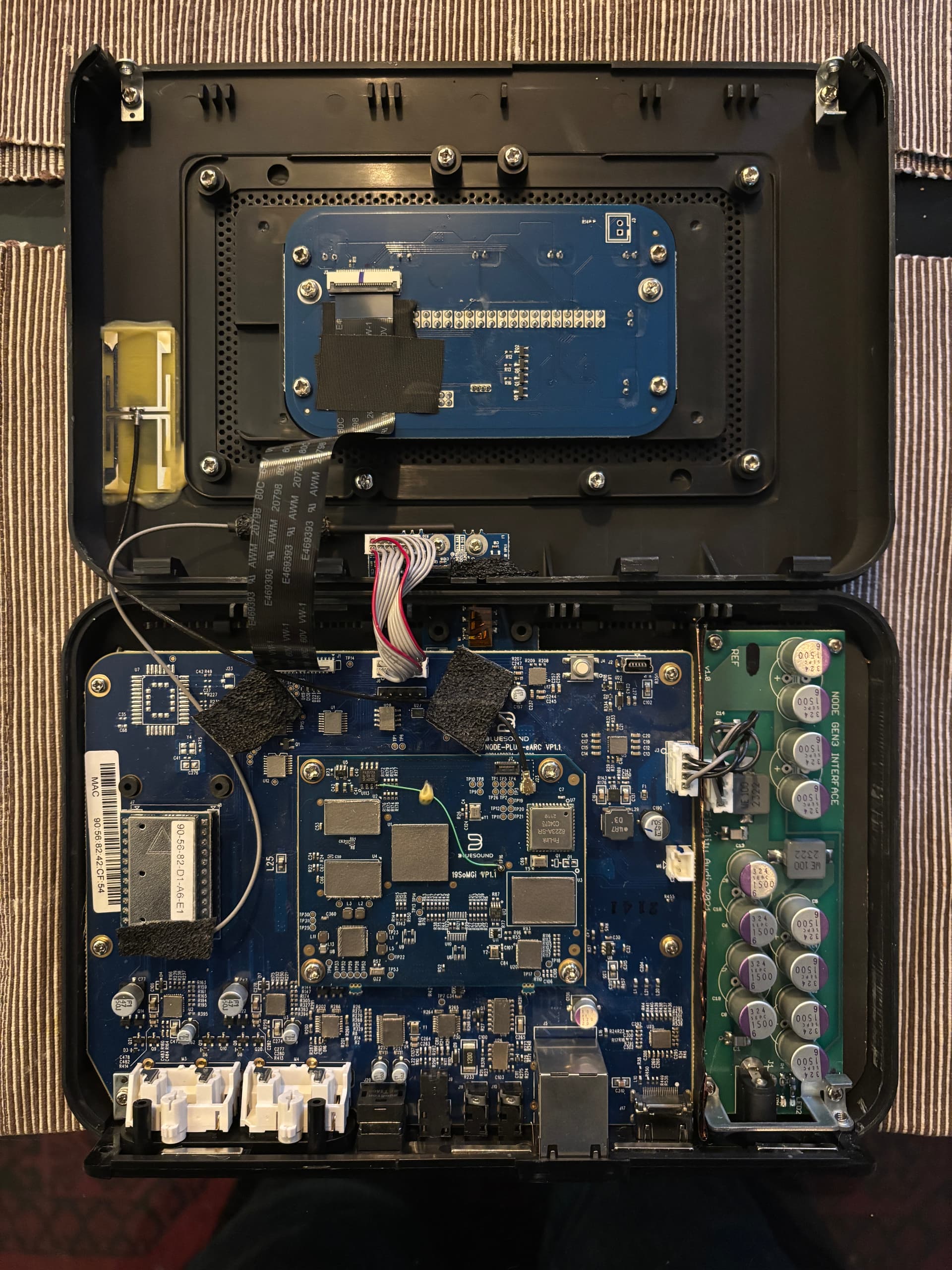
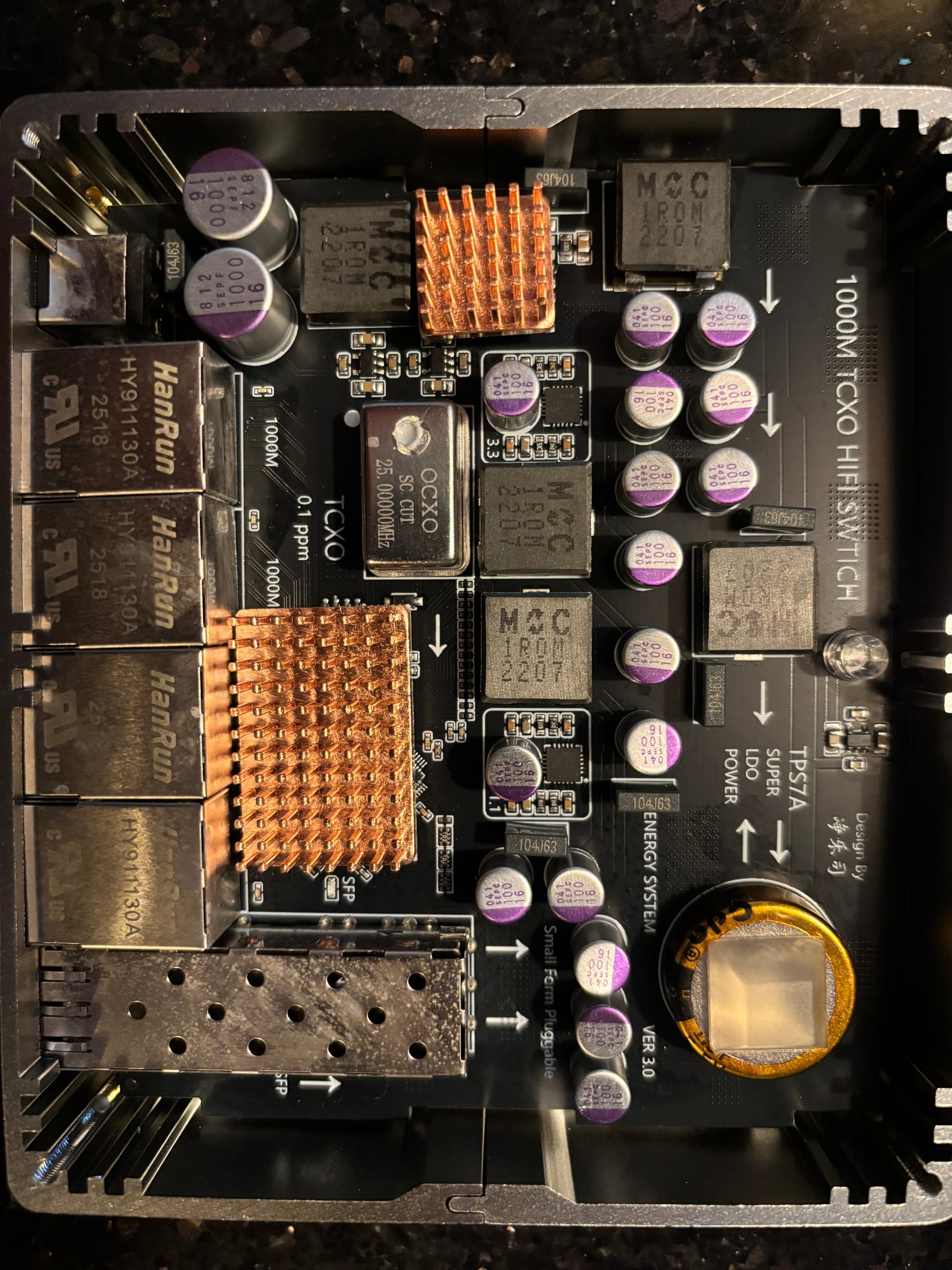
3 Likes
@Mike-B (& @MangoMonkey ) I just received my order of a Fair-Rite 75 mix kit.
I’m shocked silly at how much improvement they have made on SMPS power supplies’ DC output and AC input. I dunno if the AC input ferrite is preventing the SMPS from dumping hash back on the line or what.
I want to thank both of you for the solid info.
4 Likes
Happy to read its worked out for you @cb01
Did you run any of the DC cables a few turns around the ferrite ???
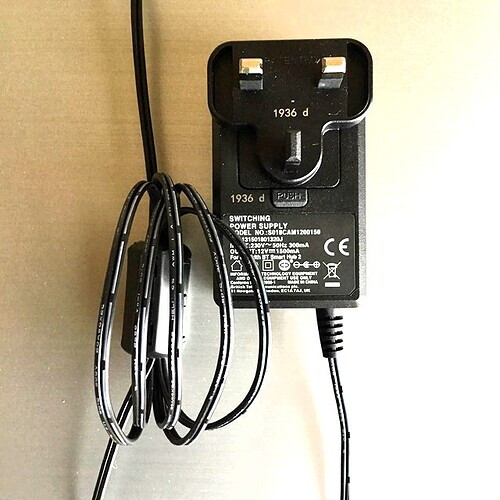
This significantly multiplies up the impedance, e.g. the impedance of Fair-Rite 75 at 1 MHz changes from 87 ohms with a single pass to 790 ohms with 3 turns and 2200 ohms with 5 turns.
How many turns obviously depends on the ferrite core size and wire size, I just go for as many as possible.
This pic is my BT Smarthub-2 SMPS with 6 passes
1 Like
Great point and not yet. I ran out of the larger (multi-turn capable) ferrites in the kit so I’m currently using two ferrites back-to-back near the iFi Elite’s DC output connector. I ordered another kit and will change that to a 3x + turn setup once that arrives. I don’t think using consecutive ferrites gives you the N2 effect, but I could be wrong.
Correct, its just the sum of each.
1 Like
As Mike says unless it’s a larger multicored cable, it’s common to loop the wire multiple times through ferrite core or ring. You also see this in commercial products where certain EMC requirements need to be met.
1 Like
Plenty of ferrite cores in this Primare integrated.
But something I’ve never noticed before is a ferrite core on the earth cable.

2 Likes
Noise coming from ground into the electronics is also an issue.
2 Likes
That does indeed seem to be bristling with ferrites! Perhaps that’s because it’s a Class D amp with an optional MM phono stage which is powered by a switching supply, very different from a Naim amp. Presumably the ferrite in the earth are to stop the amp polluting the mains.
Then again, from the photo it looks like it’s only the case that’s grounded.
2 Likes
……. and talking of ferrites ….
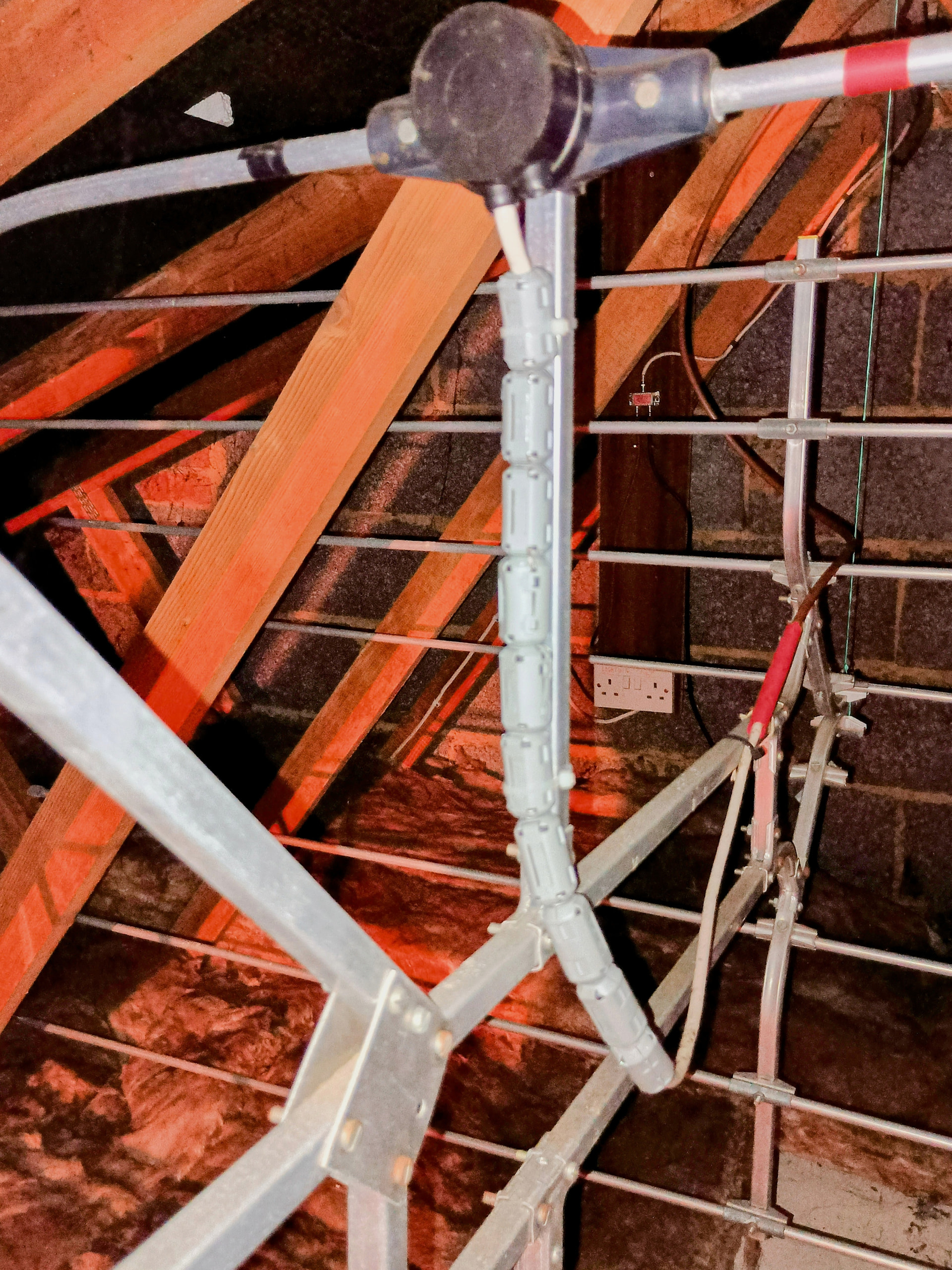
I spent 15 minutes in the attic adding a ‘feature’ to my Ron Smith … not quite finished, needs some extra fettlin’
The ferrites are TDK H30 mix … 10 to 500MHz
If anyone can name the device I’ve installed, you win geek of the year award.
3 Likes
Is that a Yagi or Log-Periodic FM-band antenna?
No …. it’s a Ron Smith Galaxie, a full wave loop with Yagi type directors and reflector.
But yes it’s for 88-108MHz FM band.

My question is what have I added.
A clue …. the Ron Smith aerials don’t include a balun.
1 Like
This topic was automatically closed 60 days after the last reply. New replies are no longer allowed.