Thank you for the time on that post and the research
2 Likes
This topic was automatically closed 60 days after the last reply. New replies are no longer allowed.
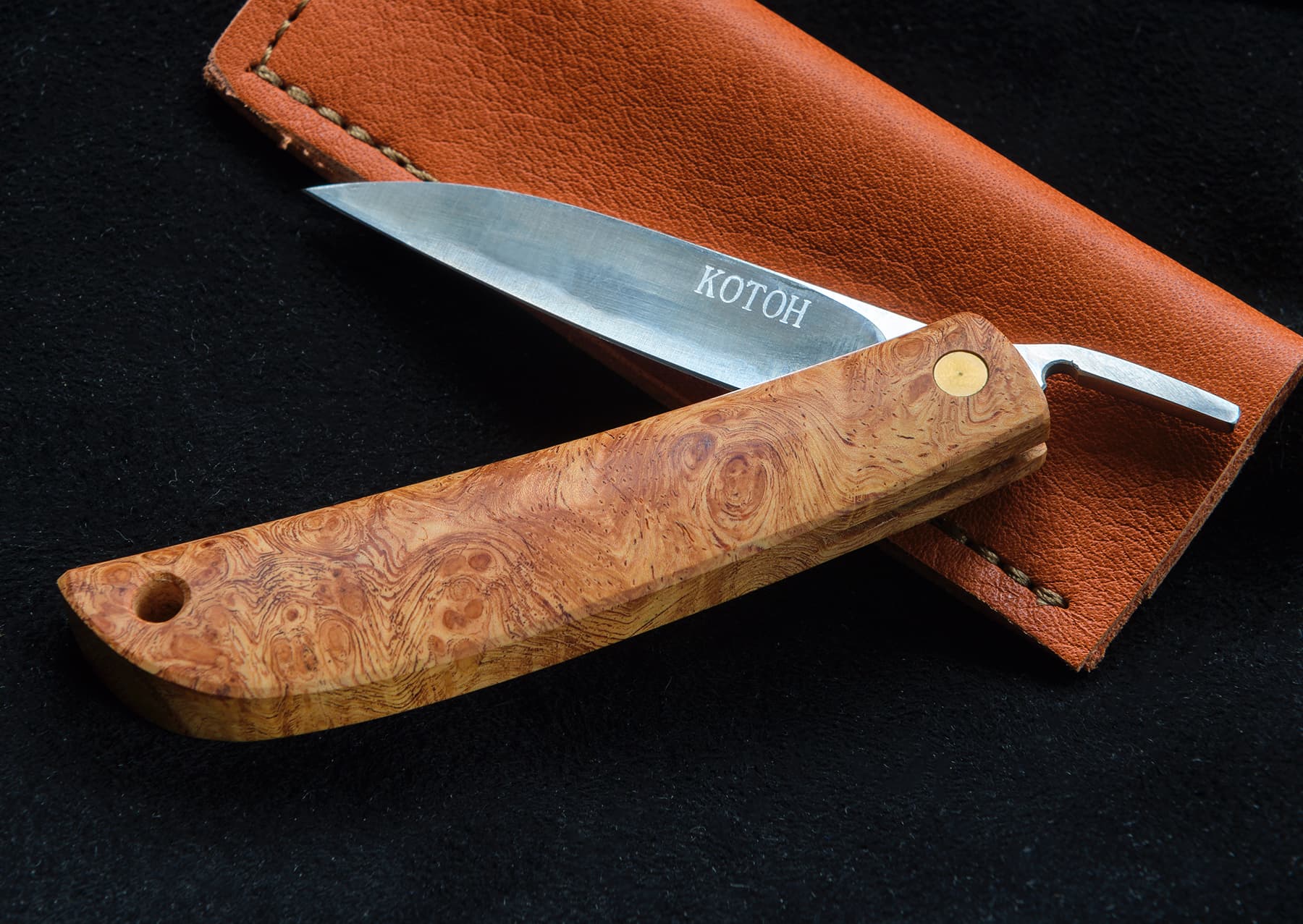
Just bought this folding knife by Japanese craftsman, Kotoh. Hand forged stainless blade with a handle of quince burr. Quite stunning. What’s equally as stunning is the weight of just 17.3gr. To give you a comparison, my single blade Victorinox knife, which is only 10mm longer, is 81.2gr. Surreal feeling using this knife. How can a simple penknife be so different? Photograph of it on my black gloves in the kitchen.
9 Likes
Lovely to see such handcrafted tools.
What will you use it for?
1 Like
I’m not, I’m just going to leave it on my desk to look at and oil the wood every few months 
I bought it because I decided I didn’t like my Victorinox blade being curved (concave towards handle). I find it awkward to cut anything tbh. This Kotoh knife is so light, it makes you handle it and the thing you’re cutting with more delicacy. I’ve never thought about it before, but I think that’s how the Japanese craftsmen want the user to use it. They are very clever at thinking about the right tools for the right job. It’s not a rough/tough knife to be abused. I will use it for delicate cuttings (very clean cut) and notching above/below buds. Anything that requires precision delicate work on select plants.
1 Like
Birthday present for my wife. 
Izumo Yasugi blades with Japanese oak handles. Very sharp and lighter than I expected.

4 Likes
Better make sure you don’t upset her! 
2 Likes

Just added the Tobisho Pro Snips (far right) to my collection. These are perfect for deadheading flowers and delicate pruning. When you have multiple flowers on a plant, it makes deadheading much faster and easier than using secateurs. Another class Japanese product.
I can only buy yellow and red tools now.
8 Likes
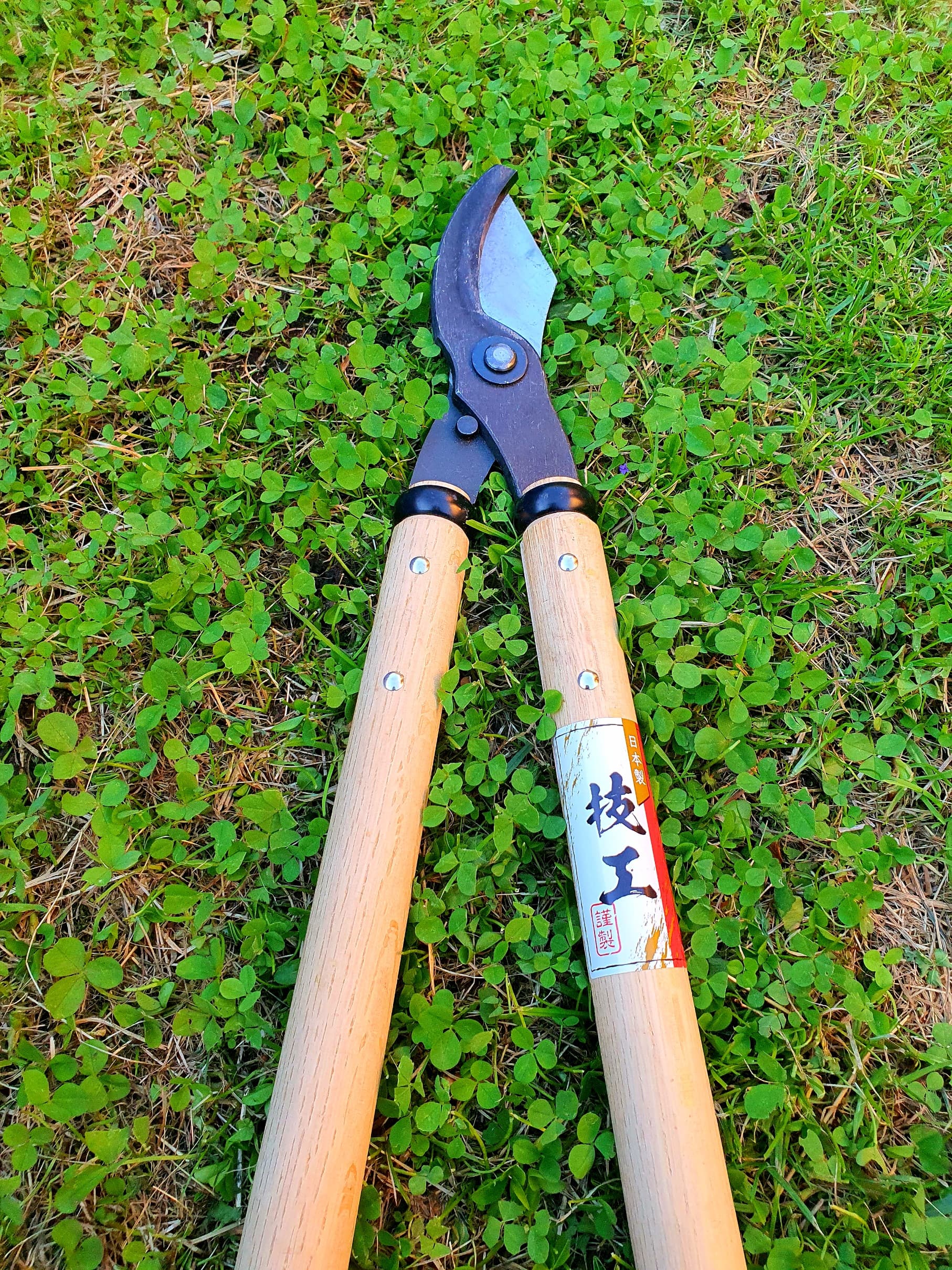
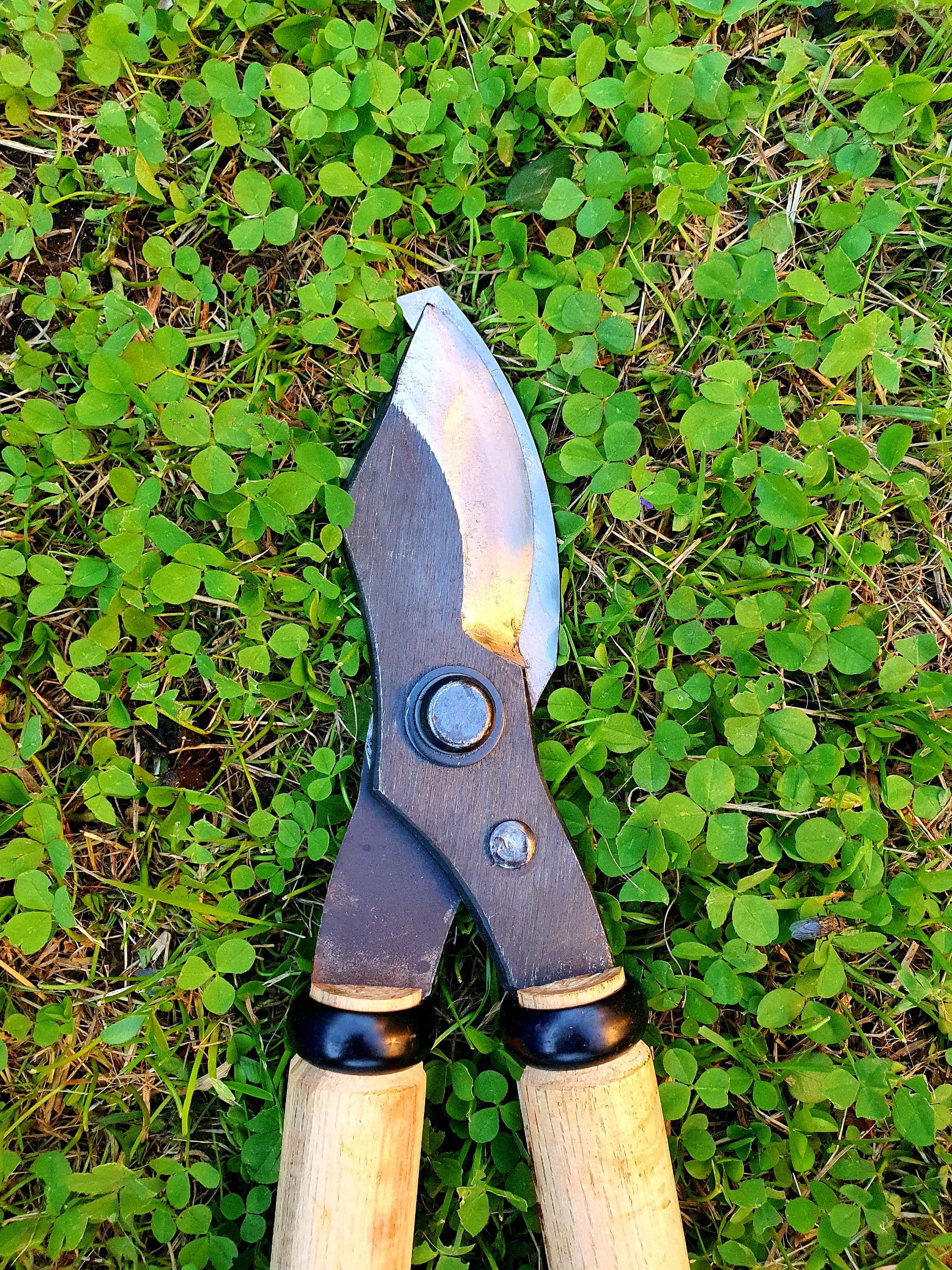
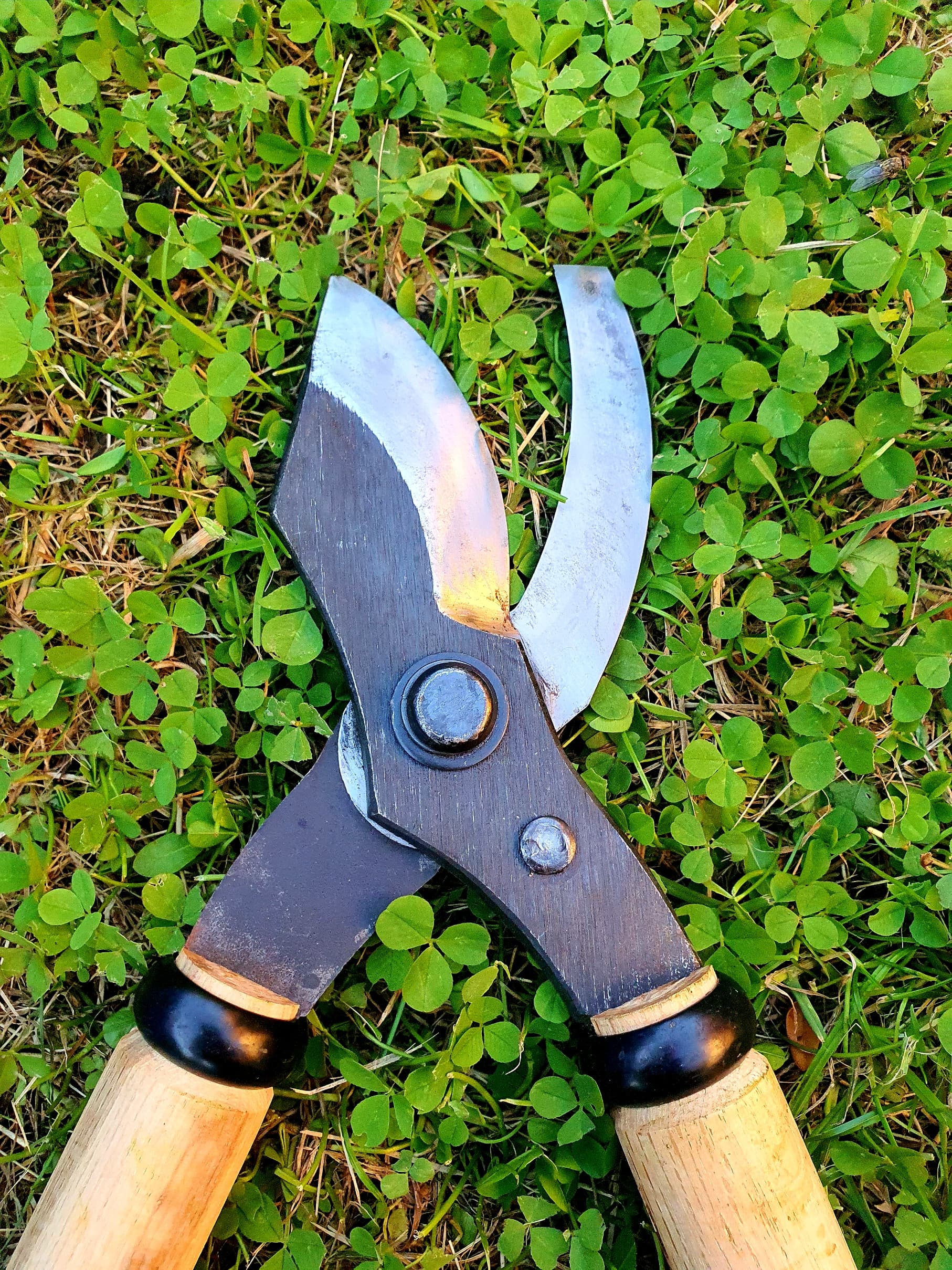
This lopper is from the Japanese brand KaKUrI. The blade is forged from Yasuki steel and is extremely sharp leaving a nice clean cut on branches up to 25mm (1 inch) in diameter. With handles made from white oak they are an absolute pleasure to use 

4 Likes
Nice.
Japanese garden tool manufacturers seem to make equipment that has similar design.
KaKUrI shears look very similar in design to Okatsune shears.
Tobisho secateurs and pruners look similar to Okatsune, apart from red/yellow as opposed to red/white and an elegant design as opposed to an industrial look.
2 Likes
From my understanding the similarities that you have noticed pertain to designs that have stood the test of time with the main emphasis on the grade of carbon steel that they choose.
Btw, I think you have chosen a lovely pair of shears for your wife. Wishing you a lovely evening 
2 Likes
I’m not familiar with Okatsune, so had to Google their tools. From every tool I saw on their site and others, they’re nothing like Tobisho at all. Tobisho are hand forged from very hard one piece steel. Okatsune are two piece for a start and the bolt joint is not the same spec. I’ve used Felco for 20 years and never been that impressed with them, even though they’re apparently what professionals use, so never felt the need to look elsewhere. It only needs the slightest flex in the blade during use and the cut won’t be clean. The Tobisho cut with extreme ease. It’s in the detail and not the way they look.
Hmmm.
Seems like I’m spending most of my time recently clarifying the meaning of what I’ve posted. Maybe I should have taken the advice of one of the forums (super pedants) and written an essay on the meaning of “elegant design” and “industrial look”. 
Elegant design refers to the Tobisho single piece of forged steel
Industrial look refers to the Okatsune two piece construction. It reminds me of the tools used in a factory workshops; functionality over looks. The type of handle construction will not effect how the blade cuts.
I’ve noticed Okatsune specify the hardness on their blades is 60/61 Rockwell C, I don’t know how hard Tobisho blades are, but I’d expect something similar. With both secateurs giving similar performance, given they are very similar.
I don’t understand why you’ve told us the Felco’s aren’t very good???
Like any subject, the more you go into it, it’s not that simple.
I took elegant to mean something that looks prettier, but doesn’t really offer any benefit. The one-piece forged handles do offer benefits. Take your secateurs and cut a piece of thin paper. If it doesn’t cleanly cut, you try again, but this time your brain adjusts your grip to put a slight side-angle on the handles to make the blades cross over each other with more pressure. This time the paper cuts. When you are using them outside in the real world, your brain is doing this all the time without you thinking about it. You don’t just apply perpendicular pressure to the handles. Forging from a single piece of very hard steel makes the whole secateurs work better and even more so on thicker, harder wood. Also, no one wants riveted joints if you’re paying good money for secateurs that you’ll be using (and probably dropping) for years.
Even the blades on the Tobisho are very carefully and subtley curved along the flat so they only touch at one point. Clearly other manufactures do this, but to what tolerance and quality control?
I suppose you could say that all secateurs look generically the same, but they’re totally different.
I mentioned Felco, because they’ve been the two-piece standard for decades and very popular. It would be easy for someone to casually say that the Felco are good enough and just the same. They’re not. They’re actually pretty rubbish tbh.
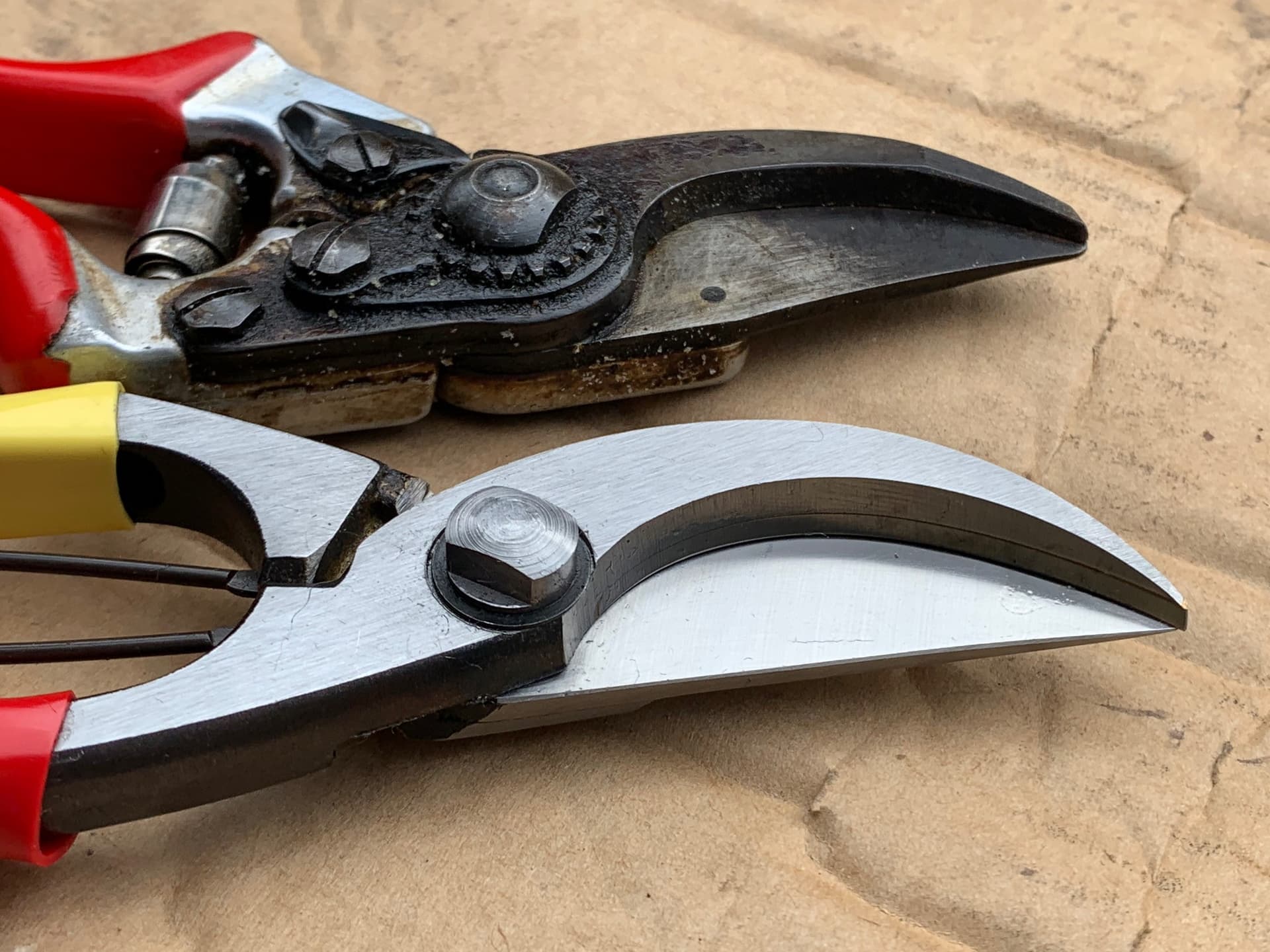
Here’s a pic of my Tobisho next to my old pair of Felco, to show you the thicknesses for just one example of differences.
2 Likes
If I try to cut a piece of paper with my wife’s Okatsune secateurs, no matter how many times I try, it will end in failure. They are not designed to cut paper.
Only one blade is sharpened, with a chamfer on either side. It is claimed they are designed to force the blades together not apart, when cutting. The fact that the chamfers are different angles may be the reason for this, but I’m not sure.
They are not handed due to the geometry of the blade; just apply even pressure to get a perfect cut.
Satori’s KaKUrI loppers look like they work on the same principle. One blade sharpend, camfer on both sides.
Video below compares Okatsune and Tobisho. Not convinced it is totally accurate, I did think the Okatsune blades where hand forged. He does say the design is similar but the blade geometry and way they cut are obviously different, if the Tobisho can cut paper.
Okatsune if you want pair to open paint cans and Tobisho if you want a shiny pair. 
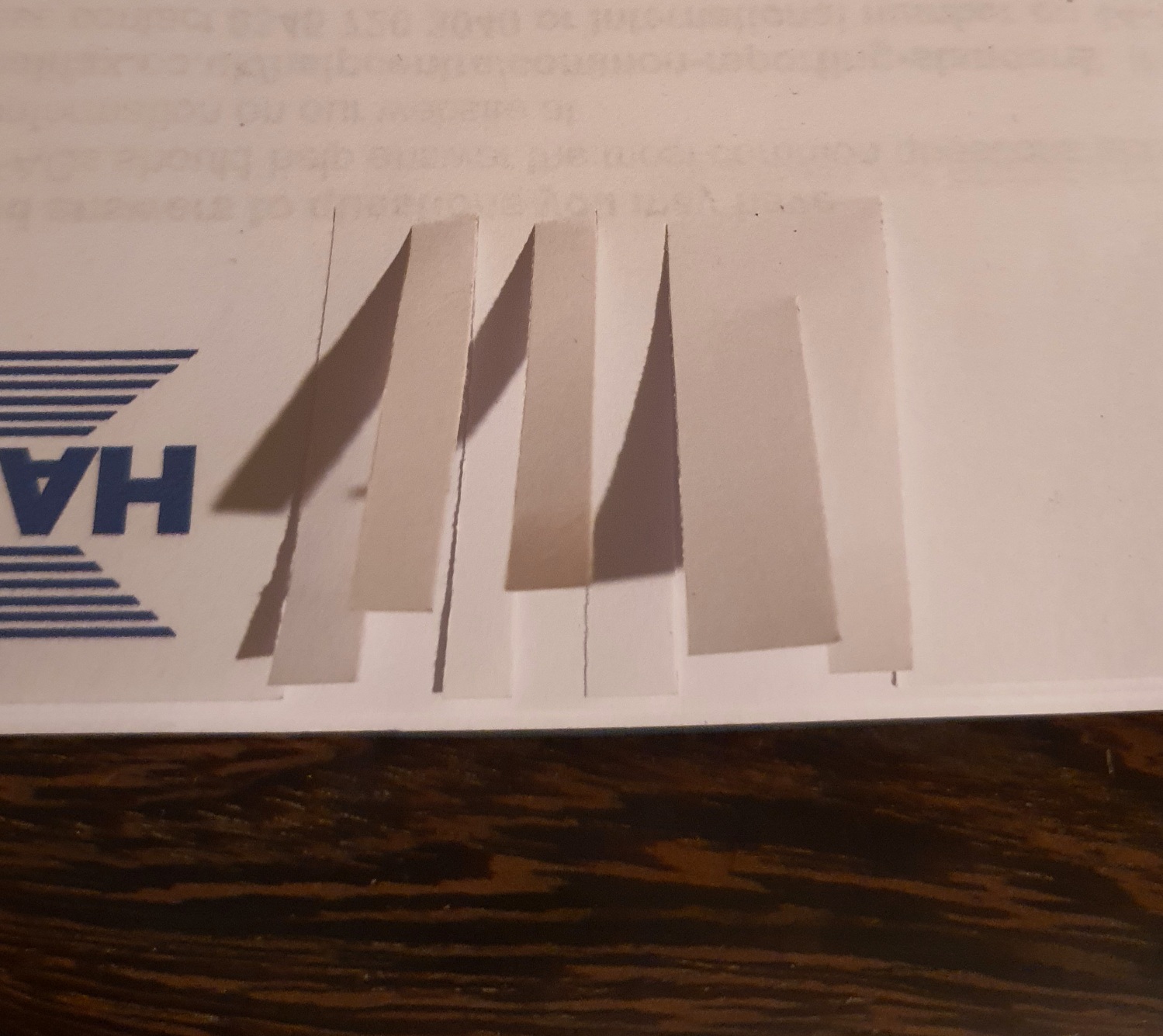
Here’s my Tobisho secateurs cutting through paper as suggested by @Count.d :
My wife has an entry level pair of Sentei secateurs and they can also cut through paper. When did you last sharpen the Okatsune’s?
2 Likes
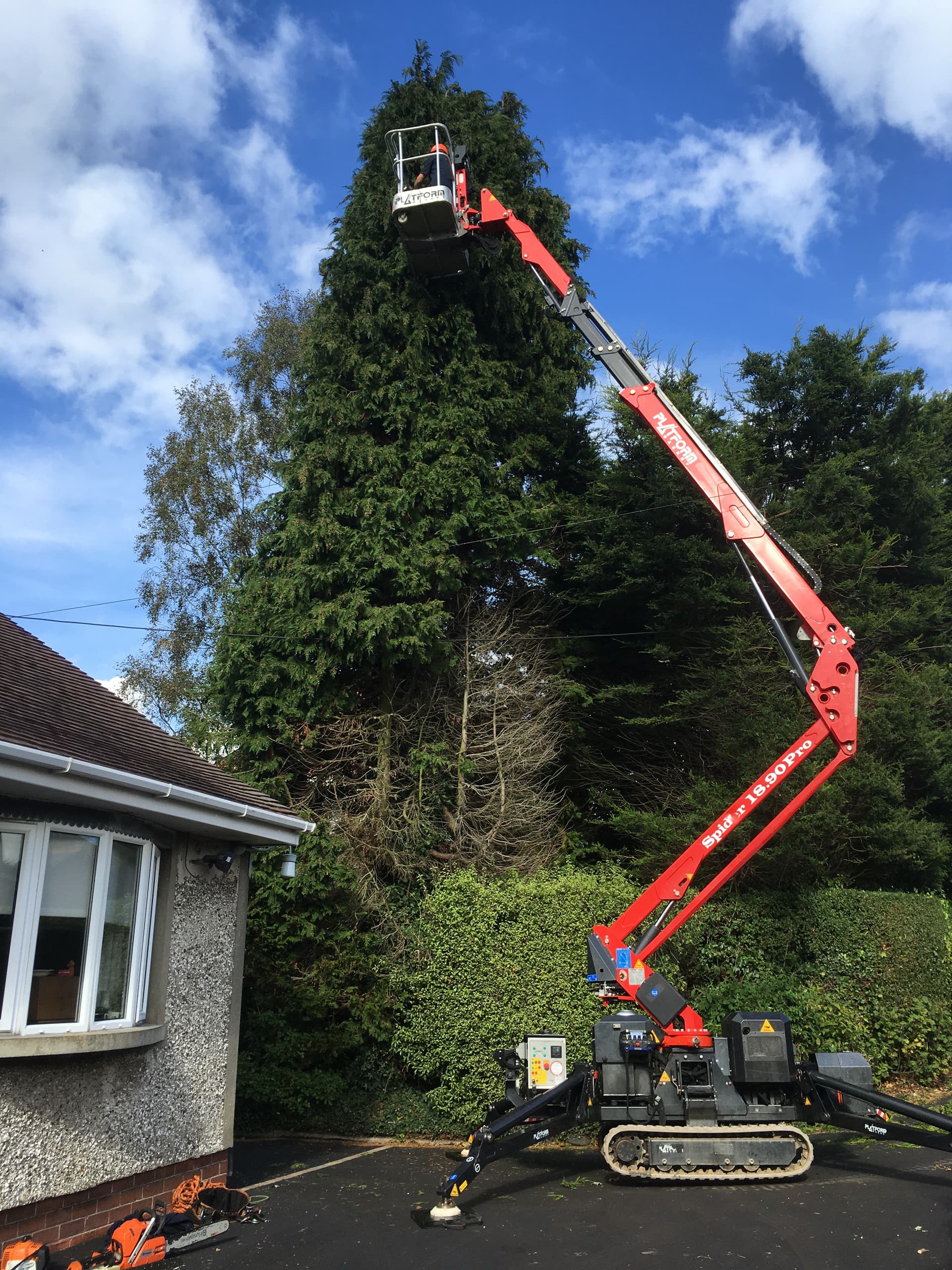
That is a really impressive piece of engineering. How high does it go?
Is it yours?