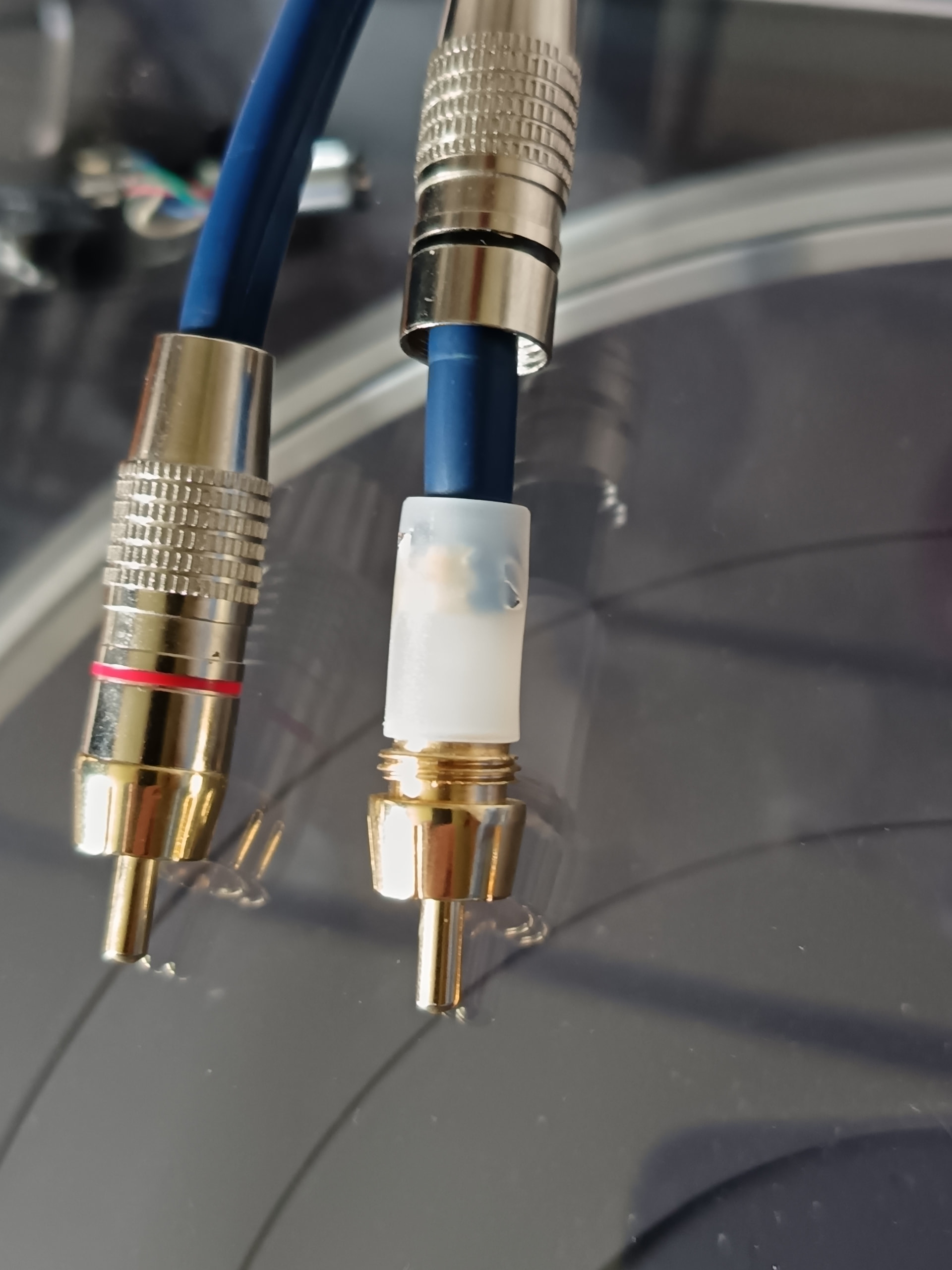
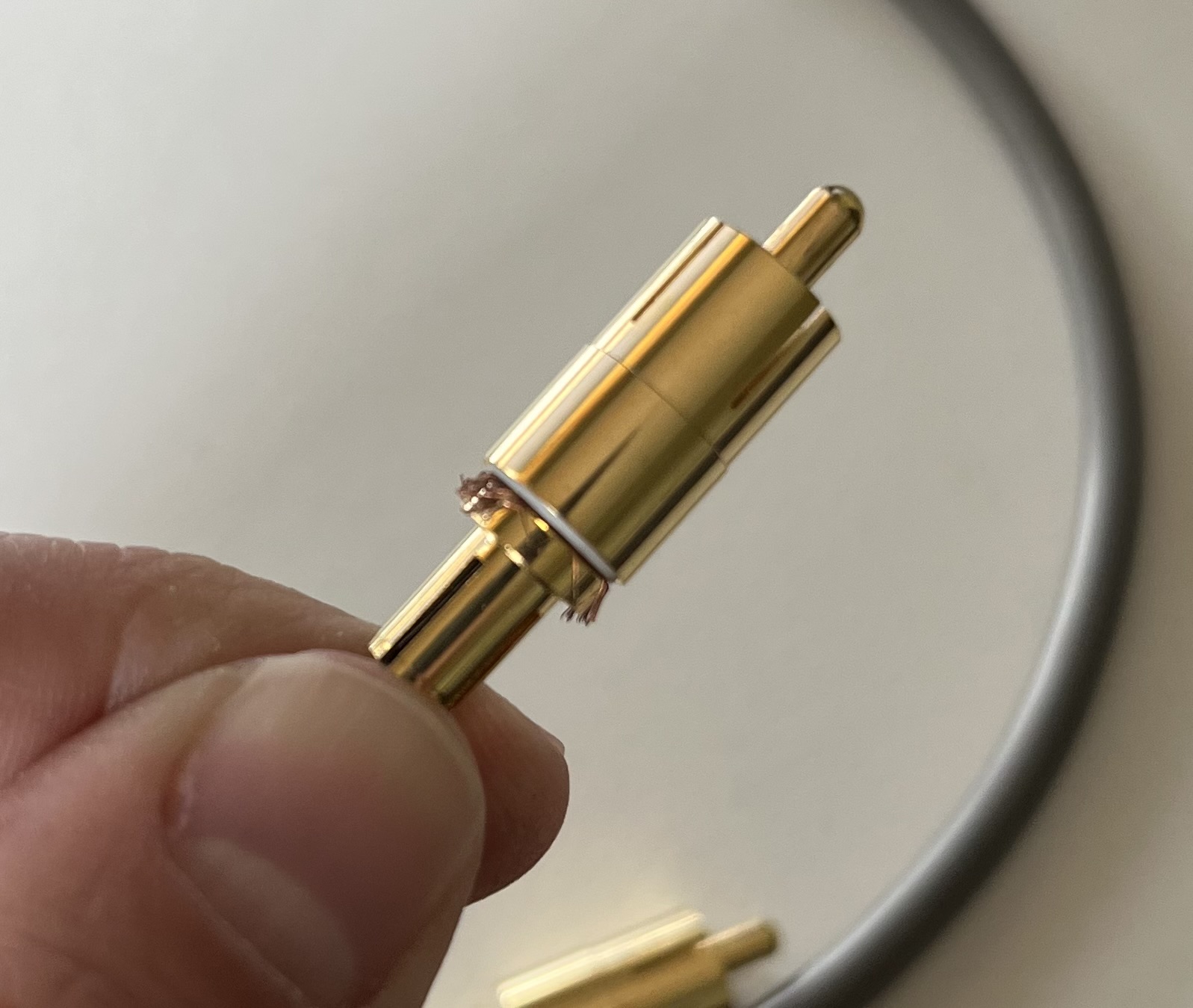
My friend swears that he pulled the plug and not the cable. In any case he is happy to contribute to the costs of the repair. Maybe he didn’t handle it as smoothly as the cable can handle, who knows… Knowing him, I believe he was reasonably careful in the process.
However, at the first plug-in, the sound quality with the lavender cable was clearly below the cheap (€17) inakustic RCA interconnect that I was using before, which leads me to believe that the cable was already not in good health.
The ebay seller also seems to be NAIM-knowledgeable and with excellent reviews, so I lean towards believing him when he claims that it was working perfectly at his hands. Maybe it’s simply down to the fact that the fragile construction didn’t survive the travel (including flying as checked-in luggage from London to Brussels). In which case a warranty repair is perfectly reasonable to ask.
I’ve contacted the selling shop in UK and the Benelux distributor, so hopefully I will have some feedback on Monday. Let’s see.
A quick update: The original dealer has agreed to take care of the cable repair under warranty. It will be a few months before I get the chance to try it again, but glad that there was a positive outcome in the end.
I would recommend @Alco to contact your dealer and also ask to get it repaired under warranty while there is still time.
Thanks for the recommendation. Just found out there’s a 2 year warranty on the Lavender cable, so I do have some time left. (bought it last year september)
Those heavy gold coloured RCA plugs are far too weighty for that rather delicate signal cable. I bet this is a very common problem with this version of the cable.
I suspect the failure mechanism here is not pulling on the cable but twisting the connector by small amounts, clockwise/counter-clockwise. Cumitivly via fatigue this will shear the strands at the solder point.
The underlining problem is no credible strain relief on the connector and a stiff cable up to the solder joint, so all of that flexing is focused on the 1mm of wire just short of the solder.
Indeed, the issue seems to be that the cable strands themselves are load-bearing rather than the wire jacket. That opens up the door to several failure modes…
Same thing with my lavender interconnect. It seems like these cables does not like it if you twist the plugs back and forth to get them loose from the source. I did not pull the cables on my brand new ones, but I twisted the plugs to get them in a tight rca and then the cables just fell out.
It happend with two cables before I realized how fragile they were. Main reason I changed to chord.
Same thing happened to me a couple of weeks ago when I was unplugging everything to take my NSC222 back to my dealer to sort out a Qobuz Connect issue. I’ve owned the cable from new and definitely haven’t been tugging on the wires. Fortunately my dealer says they have fixed it but the proof will be when I get my 222 back (hopefully soon).
Same here, the RCA plug was very tight into my Dynavector P75, (probably a good thing) and my hand slipped and the wire just came away. When my dealer repaired it he instructed me to twist it next time, which reading here doesn’t appear to be a good idea.
It’s hard to believe Naim would sell an interconnect where the plug is not designed for the size of cable they are using. Therefore no cable strain relief.
Denon use an interesting method for securing the cable to the plug in their interconnects. I’ve never seen it before.
A plastic/nylon tube. Presumably an interference fit with the plug and cable, so no cable crimping required.
This is really interesting feedback. Just to be clear, can those who have had issues please confirm that it’s with this later interconnect with these plugs..
Latest design indeed for me as shown in the first post picture. Not sure when the design change occured, but this cable was purchased in Feb 2025, so relatively recent.
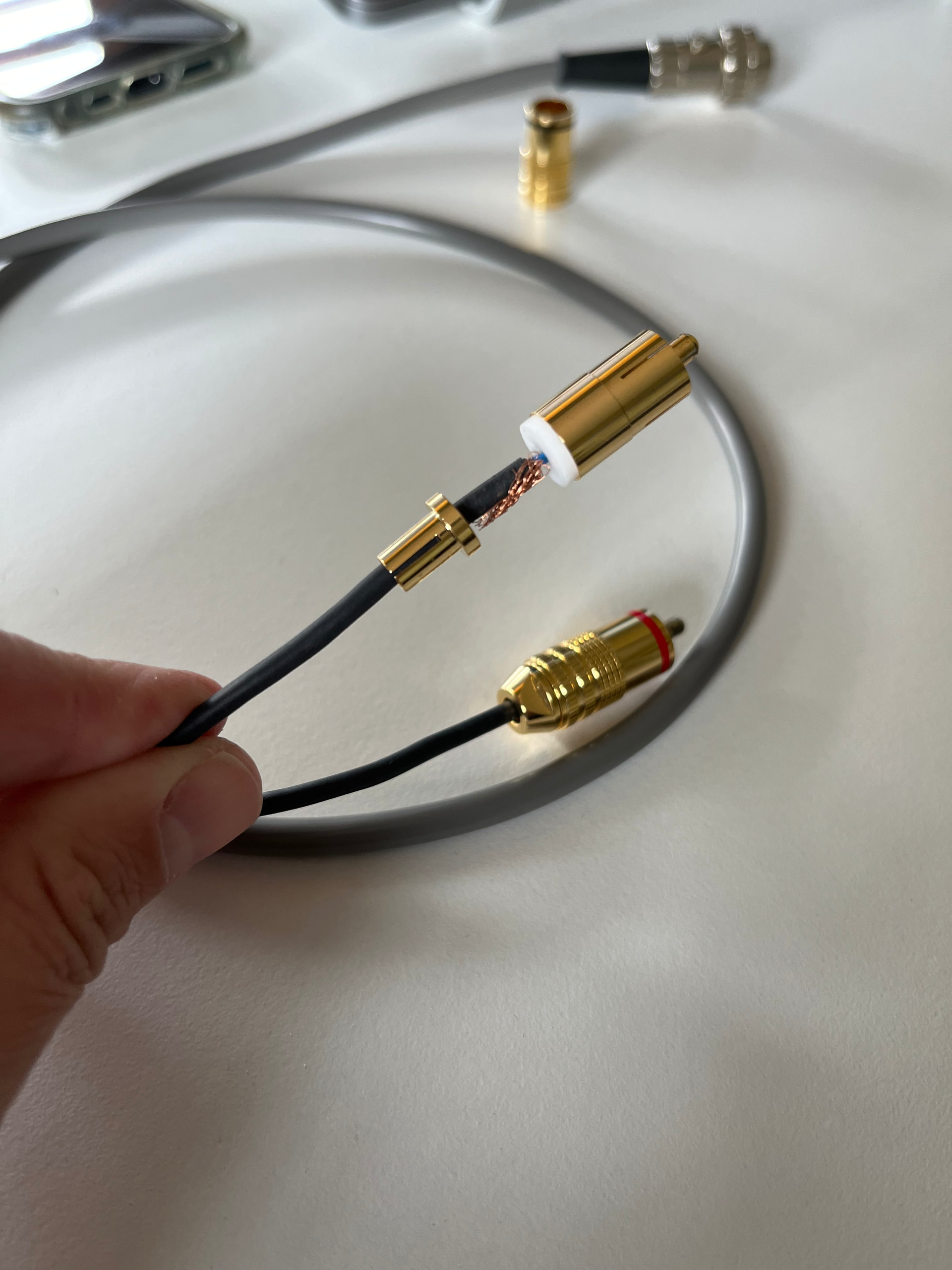
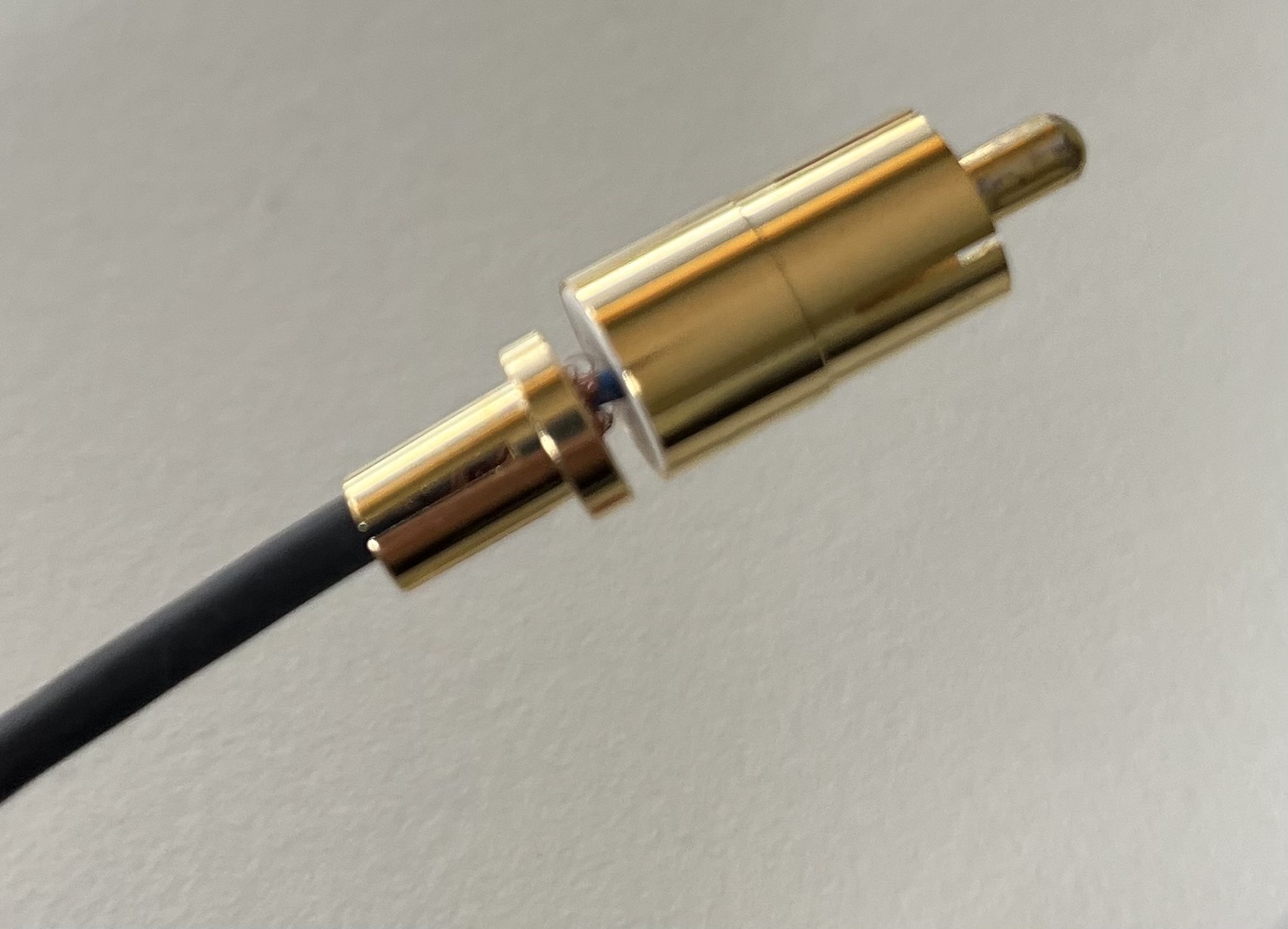
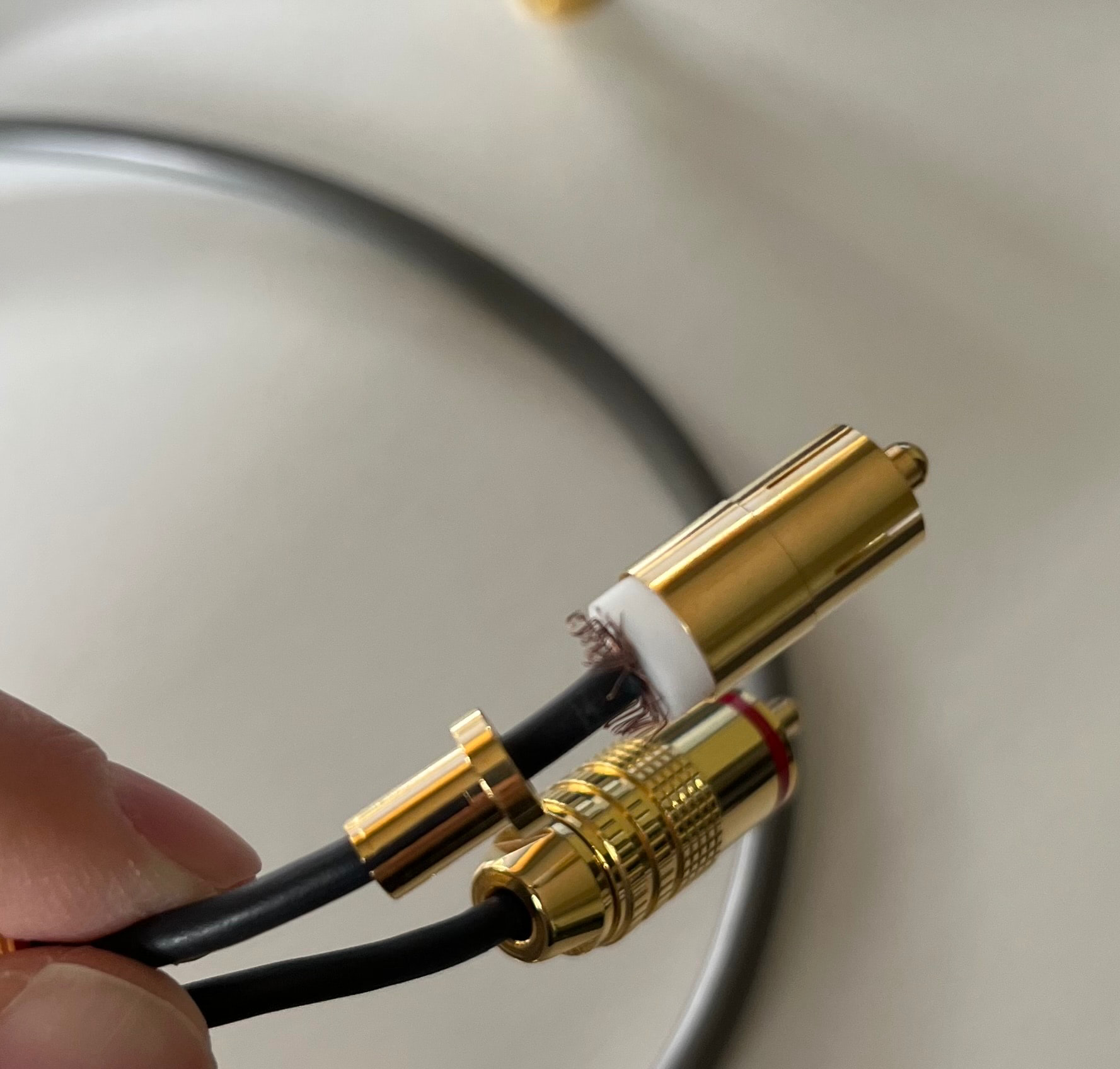
You can then see how fragile the blue inner core is with this arrangement. The chuck does not grip the black heatshrink so the wire can freely twist inside the plug.
I’ve made my own repairs (shown here on a different lead) and trimmed the shield so that it folds back between the chuck and the body. This is similar to how a BNC connector would be assembled.
Thanks for the replies so far. So it does seem to be the newer RCA Phono plugs with the issue rather than the earlier ones (unsurprising to me really as I have lots of earlier ones with the old gold Chord Co. plugs and they’ve never given me any issues despite lots of plugging and unplugging). I have asked Naim to take a look at this thread so they can get to the bottom of it.
 Just found out there’s a 2 year warranty on the Lavender cable, so I do have some time left. (bought it last year september)