From what I recall of the timelines involved, the first Internet services added was Spotify, at a lossy ‘below CD quality’ and this streamed ok but sounded poor. Next was Tidal with CD quality loss, which was acceptable. However this streamed fine for some but was problematic for others. This is where the buffer issue in the BridgeCo board was discovered. At the same Tidal was down the ‘Tidal Master’ path encoding HiRes content in MQA, which Naim had decided not to embrace.
I’m not sure there was the opportunity to work with BridgeCo board provider again, plus a number of other standards had also moved on - Bluetooth, WiFi, AirPlay and although completely irrelevant for HiEnd use, important as tick box items for mass market consumer use. Same with the colour screen, mono green screen was viewed as old-fashioned. Completely useless across the room, but looks more modern against the latest offerings.
So a new streaming architecture in a new line, as well as a price hike for new flagship to cover manufacturing costs, knowing that many existing customers would just upgrade regardless.
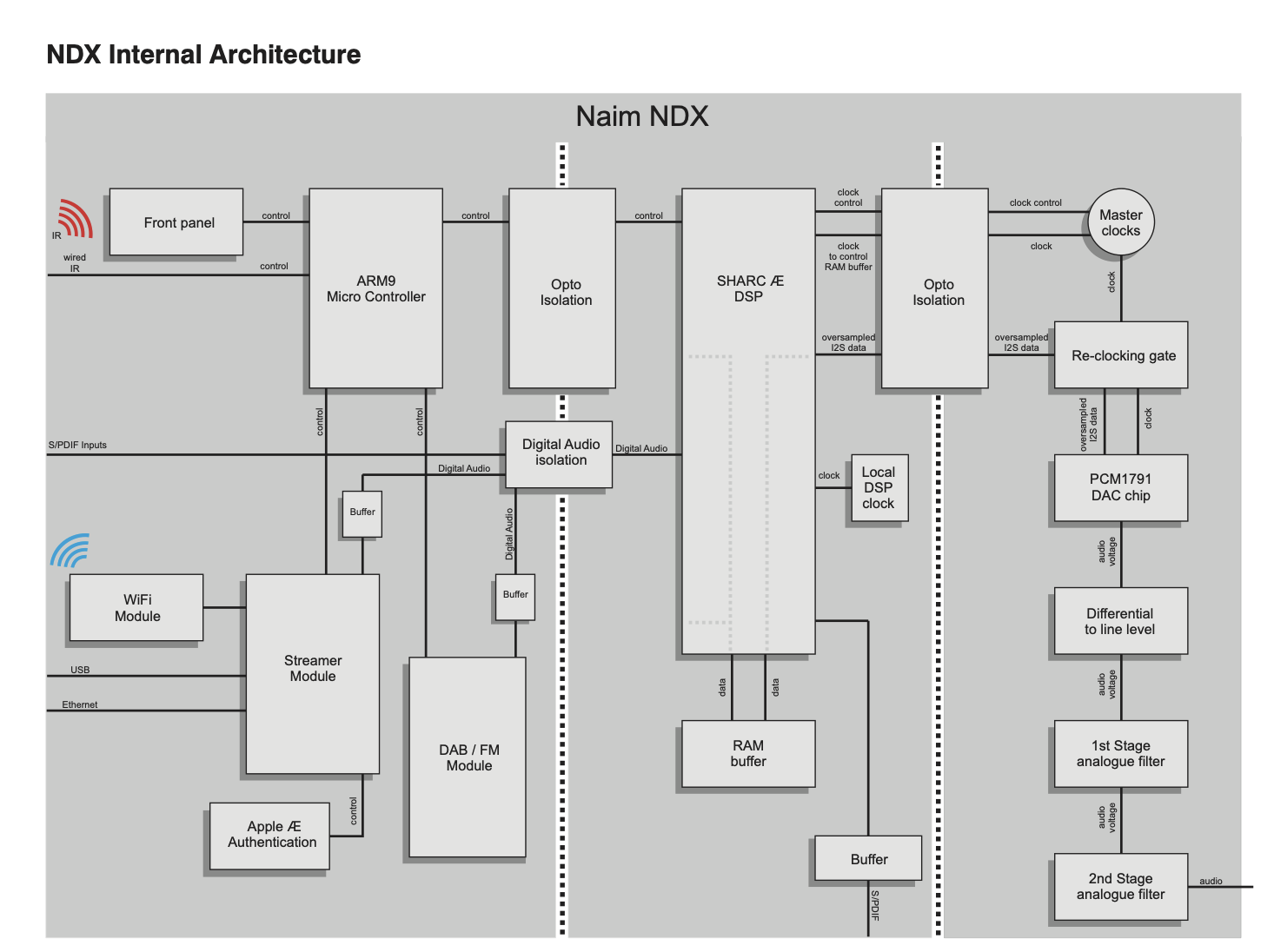
This bought in the Streaming Unlimited board, which solved all the network connectivity and was upto date with Bluetooth, WiFi, AirPlay2, RoonReady, Over-the-Air updates and most importantly all the required compliance work for Naim to be able to market the new range with all latest technology items, for the mass market to view it as upto date, in the now very competitive streamer space.
But who was to know that the Streaming Unlimited board came with hidden firmware issues that would kill the performance and the sound especially in the flagship, a problem still being dealt with today in the latest Beta firmware, after an entire year or so.
Tidal has subsequently changed direction with Masters for Max, as Qobuz launched their HiRes FLAC service.
Another solution to retrofit is an off-board server for the WAN connection within the user’s LAN approach, or extend the capabilities of the UnitiCore server to provide this. But this would not be straightforward and an additional cost for the user, increased product & technical support as would be more complex for users to setup.
Networking in the mass market space has to be a simple Plug n’ Play operation - additional networking connections & cables, requiring switches, just increases complexity.
Any user willing & able to go this route was more likely to undertaken it with 3rd party products anyway, hence the solutions available today.
All of these work well but the consumer user has to do a little more, configure more than one networking product to get the desired outcome, so not for everyone.
Analogue is the same, if you are prepared to spend time matching components, setting them up, a better result can be obtained over a ‘product in a box’ approach.