The signal is AC, so what direction? The whole concept doesn’t make any sense (for our application), unless perhaps a screen is involved. Not for speaker cables.
As you say, do as you please, but it doesn’t matter.
The signal is AC, so what direction? The whole concept doesn’t make any sense (for our application), unless perhaps a screen is involved. Not for speaker cables.
As you say, do as you please, but it doesn’t matter.
Naim and most other cable manufacturers just make it up then and a random google master is correct.
I am not saying one way may sound different to the other way.
What i am saying is mogami w3104 doesn’t have any right or wrong way from the manufacturer. That could be for many reasons, maybe they don’t bother to run the 4 separate cables in each main cable the same way off each reel ?
I haven’t a clue, but i have run mine properly different ways, as they have been in and out a few times, and i didn’t mark which way round. I also didn’t notice any thing different.
I hink you understood my post. It’s science telling us that the music signal is AC, i.e. doesn’t have a direction. So, shall we say, scientists just make it up and a random google master is correct? Or would you care to explain what exactly is directional in the context of speaker cables ? Did scientists get it wrong? Is there something else I’m missing?
For the record, I’m actually very happy to be educated if there is a plausible explanation. But are you? Or are you happy believing any marketing blurb?
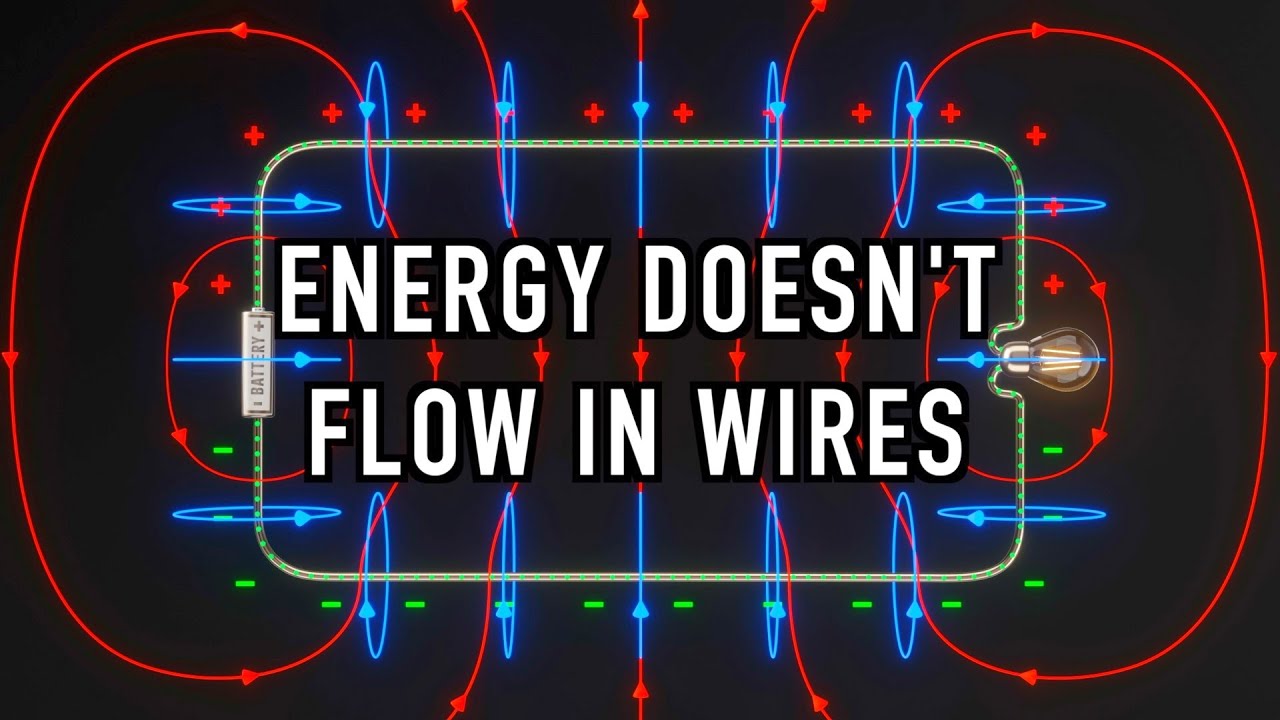
Is a fun watch.
I’m not sure what I think about cable directionality, but there’s definitely energy flowing from the amp to the speaker, obviously when you think about it. I could imagine an extruded wire might have some property that could affect that. I’m still not saying I have an opinion either way, but I do like to think there might be a physical basis to the sound quality differences we hear.

Main issue is most people just think of AC going back and forth and that’s all there is. It’s bit more to it. But it’s a tough discussion when there’s people that think a coat hanger is as good as a high end audio cable.
How can cables be directional?
When cables are manufactured they do not have any directionality. However, as they break in, they acquire directionality.
Although the cable signal is an alternating current, small impurities in the conductor act as diodes allowing signal flow to be better in one direction over time. This effect is also called quantum tunneling, which has been observed in experiments over 25 years ago. Regardless of the purity of the metal used, there are still diode effects in all conductors. In addition, the insulation material will change when it is subjected to an electrical field.
You didn’t said you have copied and pasted from Nordost site.
“ How can cables be directional?
When cables are manufactured they do not have any directionality. However, as they break in, they acquire directionality.
Although the cable signal is an alternating current, small impurities in the conductor act as diodes allowing signal flow to be better in one direction over time. This effect is also called quantum tunneling, which has been observed in experiments over 25 years ago. Regardless of the purity of the metal used, there are still diode effects in all conductors. In addition, the insulation material will change when it is subjected to an electrical field”. ( From Nordost site).
I much prefer the more believable explanation from Schiit about their PYST cables:
PYST was the god of drinking in Norse mythology. He’d be much better-known if he wasn’t getting schiit-faced all the time. Or, well, not really. PYST stands for Put Your Schiit Together, a set of short cables that make stacking your DAC and amp easy.
Beyond Just Technology: SuperUltraHyperTechnology
PYST cables are made from only the finest 6-nines Unobtanium™ alloy, molecularly assembled in our Alternate Universe™ reality-distortion tesseract field , using a secret geometry reverse-engineered from crashed UFOs, painstakingly smuggled out of Area 51 by deep-cover operatives. Performance is further enhanced by the use of a QuantConnect™ quantum-entangled pair of transmission interfaces, held at absolute zero by our exclusive Stasis Field™ technology. The cables are then wrapped in NanoAeroCap™, a nanotechnology-enabled aerogel anti-capacitance insulation system, featuring Fractal Interleaved Geometry™ to create negative inductance for maximum audio transmission quality.
Or, er, well . . . again, no. These are nice, high-quality cables, with solid, reliable connectors. That’s it. Hope you like them!
PYST cables come in three flavors:
*Or not. It may have been a hallucination. USB PYSTs are actually just nice, 1M long, USB A-B cables that have thicker than normal power conductors and silver-plated copper data lines, as well as a tough, braided outer jacket that may come in handy for sawing off your leg if you are ever trapped in a landslide. Not that you’ll probably have a PYST USB on you.
In addition, to make things even more confusing, you can choose some PYST cables from different manufacturers. We have cunningly hidden who’s making these cables by having them clearly labeled as “Straight Wire” or “Snake Oil.” Both companies make really good cables.
As we said, both companies make great cables. Neither is the cheapest in the universe, and neither is the most expensive. If you’re looking to save cash, there are plenty of other options out there.
But this makes it sound as if break/burn-in solves the issue. Connect them up whichever way you want and after a while they’ll sound their best, or am I missing something?
BTW, you should post this explanation into the ‘Burn-in a myth’ thread, seems like it gives an explanation for that.
And of course there’s Ohno - continues cast copper
Did some reading (wikipedia mainly) and if I understand correctly that effect won’t occur in copper cabling, it’s more the realm of semiconductors.
Ah well, that’s it then. You’ve proved that that couldn’t be the final explanation.
Alright, Nordost one of the major high end manufacturers of cables is wrong then. Maybe email them the wiki link so they can correct their web page.
Don’t know why I would bother. Perhaps mailing the FTC would make more sense?
But yes, I 'd rather trust an independent source than a companies marketing blurb. But please do provide any links to any independent scientific studies you might have, happy to be educated. Or at least someone explaining why introducing distortion is a good thing.
I did just read Nordosts FAQ on it, seems they’re contradicting themselves a bit there. First they claim no cables are directional, but only become so during burn-in. Then they say all their cables are 
I don’t see quantum tunneling explicitly mentioned BTW. But I guess that’s what they’re hinting at with diode effects.
But going by their FAQ, focusing on the first bit, we can conclude that unless it has a shield you can connect it any way round you like as over time the correct directionality will create itself.
In the real world though, let’s hope there’s no such effect in their cables as better flow in one direction would mean the cable introduces distortion. The signal is AC after all, so is traveling in any direction for 50% of the time.
Amazing that the signal arrives at the destination given that it’s going back-and-forth like that.
I have listened to the same second of Neil young Harvest for 25 years. I hate AC.
It is quite amazing, I agree.
In case you’re interested in the 101:
@Blackbird Perhaps you’d be interested too.
It’s how he fitted out my Diapasons
With Morgami 2972? What length?
6 m each speaker I think. The total was 16m but that includes the cables from the bottom box to the top box of each.