No argument from me. I’m fine with your standards and if you feel happier adhering to them then I really don’t see any problem. Just making the point that legislation exists to protect us all and one, in my view, can assume that cables and other equipment sold by reputable manufacturers is safe and one need not have any concerns. That, I concede, doesn’t necessarily mean that it can’t be made even safer, and if I understand you correctly this is the point you are making. That’s a perfectly valid and rational approach in my view. You do have a point. Hmmm….
1 Like
Actually the No 75 power hub is around £180 and I picked it up from their stand at the Bristol Show for £100, so cheaper than the Gold Standard one you went for.
Think I got a bargain.
@70sPete
Hi
I did think earlier in our exchanges that you showed good logic with good ideas.
Please bear in mind I don’t make the regs but do adhere to them and better for my own and family safety.
I’ve been in and out of the hi fi trade many years and some ideas that have been suggested to allegedly intelligent customers never fails to amaze me.
But in life there is something for everyone and it’s up to the individual to make the best choice.
If I’m OCD and off my nut then so be it I’m responsible for me and my family.
If asked for advice I’ll give mine if anyone disagrees then reply to the OP not me.
I’m shocked sometimes how naive the well heeled and suited and booted can be duped into believing nonsense.
A good friend of mine is an insurance company fire scene investigator you would be amazed how much rubbish is out there. 
3 Likes
Yes that is a bargain. I suspect I’d struggle to get the MusicWorks one within budget. But if you want to swap……? 
1 Like
I agree safety first always. This is one of the reasons why in the past I’ve resisted the temptation of fancy mains leads and other contraptions. Although I’ve used a Graham’s Hydra in the past I must admit to being surprised that it was legal!! Not sure I’d fancy one now. I’ve invested heavily in mains cables and expensive mains blocks and I’m in no doubt at all that they have made very significant improvements to our system. I think this is something we disagree on as I recall from previous exchanges (in a former incarnation of mine!) that you don’t beieve these bring any benefits. And that’s OK. But as regards achieving maximum safety, which I’m very much in favour of, I agree completely with your approach. Which has made me think that maybe from a safety point of view all these cables and mains blocks were not a very sensible move. I’ll need to do some thinking. A good example of something being perfectly legal but still of very questionable safety is plug in three way adapters. The weight of plugs/cables on them can cause them to start to fall away from the socket, compromising the connection and causing over heating. Yes I’ll need to do some serious thinking for sure.
2 Likes
If I had a doubt I wouldn’t use it.
I’m not entering into debate about that. 
I’ve never really said they don’t make a difference as anything in a signal path has a signature.
It’s the ludicrous cost for next to nothing if any improvement or difference.
I don’t know who you used to be “ why change ? “
People don’t usually know until it’s too late.
These are not recommended in the UK now but if you fancy reporting a shop or the companies importing them then have deep pockets for litigation that’s why they are still around too much to deal with.
Same for other things too.

1 Like
Yes, the MusicWorks one is pricey, and they are up to gen5 now. A cool £3600
I have no specific safety concerns regarding my cables and mains blocks, and I would happily recommend them to others on the basis that I believe they bring excellent and very cost effective improvements in performance that cannot be obtained by any other means. I want to emphasise that in no way whatsoever do I consider these products to be unsafe or to fail to comply with the required standards.
Having thought about it some more I can see the virtues of sticking with tried, tested and accepted industry standard cables and plugs etc. in order to ensure not only safety but the absolute maximum safety possible. Whether it’s worth compromising on performance, which I believe it does, to achieve this is another matter. On the face of it the answer would have to be yes - things should be as safe as one can make them. The problem I then face myself is looking beyond this aspect at other things and applying the same logic. For instance, is it safe to leave equipment powered up all the time? The answer, from a logical perspective, would have to be no, of course it isn’t. And any fire safety officer would likely say exactly the same, ie. that things should be switched off when not in use for maximum safety. Therein lies the problem for me, for my way of thinking. One can’t do one thing without following the logic through and doing the other. And switching off is definitely a severe compromise on performnce IME. So it’s a bit like opening a can of worms.
In the final analysis we all must do what we consider personally to be sensible.
1 Like
No different really than the Fridge or the broadband hub etc.
I was brought up in a time when tech wasn’t as super as it is now and used to pull all the plugs out at night.
This stopped when we got our first Fridge although all that wasn’t being used was switched off at the wall at night.
Times and technology change and in a way so does attitudes to safety.
I remember in my late teens I worked in a radio and tv rental company workshop I got a call to go to a house where the tv went up.
I got to the house and the old dynatron telly was all blacked out in the garden.
I went into the room and noticed the black smoke damage on the walls in the corner but also noticed the plug socket was clean where it was plugged in.
I asked if the telly was being used when it happened and the owner said no they were getting ready for bed I asked if they pulled the plug out at night and they said no the BBC switches it off at night time.
It had been on for about 12 years non stop.
3 Likes
I agree that times and attitudes have changed. I was also brought up in the era of unplugging TV’s at night and indeed anything else that was not actually in use. This was standard practice back then. But of course this was decades before MCB’s and RCD’s. Just some fuse wire in the consumer unit and not even any fuses in the round pin appliance plugs.
How many people actually unplug their TV these days when not in use I wonder? Doing so is generally frowned upon since it can prevent smooth operation by interfering with software updates. I have read of some people who power down and unplug their routers at night. I believe however that this can result in problems with line speed as the systems controlling this can apparently interpret the regular powering down as a line fault.
One thing that always amuses me is that I have read in several manufacturers’ product manuals, including Naim (that was ‘then’ - don’t know about now), that their equipment should be left in standby mode or switched on for optimum performance, but if going away for a while (such as a holiday) it should be switched off (and possibly unplugged) for safety. This to me makes little sense. Why should it be any less safe just because no one is around? If it is prudent to unplug for safety if going away then why is it not prudent to unplug at night when asleep, or indeed whilst out at work all day? In practice this will constitute far more of the time than when away on holiday - unless one takes very many holidays a year. Presumably if the balloon goes up whilst you are asleep or out at work then it’s OK - but not if you are away on holiday! Personally I would much rather my house burn down while I was on holiday than when I was asleep in it!
I know I’m over-thinking this really, but still the advice I feel is inconsistent and doesn’t really stand up to close scrutiny. To my way of thinking it’s either 100% safe or it isn’t, there’s no grey area.
I’m a Wireworld 2 lover myself. I know they have a bit of knock for internal build quality, due to the plastic speed connectors they use but from an audio perspective I’ve yet to find a better sounding block. In fact I sold my Musicworks (not a sparkly one) as I thought it sounded better. I still have an array of 3 MK double unswitched socket on the wall but prefer to use only one twin socket to provide power directly to my amp and power to the Wireworld 2.
Thanks. I will see what I think of the MCRU and then if then if I’m not impressed, I’ll try one of these.
Just curious, but have you heard the Chord Powerhaus blocks (I use these) and if so what did you think of them compared to the Wireworld 2?
Hi 70sPete, I have tried both the S6 and M6. Whilst I didn’t find them bad there was something I didn’t quite like about them, a sort of ‘timing’ thing, which I thought was worse with the M6 than the S6. In fact my dealer mentioned that a few of their regular Naim customers had better success with the P6, which I don’t think has any of the ‘array’ stuff inside. My success with the Wireworld was partly prompted by Darkbear’s comments. I had a Wireworld 2 feeding the Sky box and TV system for years and thought it was worth a try on the system. I was, to be truthful, a bit blown away by the improvement as I hadn’t really expected anything special!
1 Like
Thanks @Geko and fascinating. I’ve never heard the Wireworld block but I do know it’s been criticised over its internal build quality. But then there is often little correlation between things like this and actual real world performance. Sometimes what may appear to be inferior connection methods can actually end up sounding better than something that appears more robust. I’m reminded of something like DNM cables that use cheap plastic bodied phono plugs beause they were deemed to sound superior to more expensive metal bodied types. These things can sometimes be counter-intuitive. If it sounds good then it sounds good regardless.
I couldn’t agree with you more. There will always be these odd ‘outliers’ that defy explanation. I’ve come across one or two over the years. That’s one of the reasons why I find it so important to listen and evaluate on how things sound rather than what they cost. The difficulty is finding the bits that are a fundamental ‘step-change’ in performance rather than just sounding different. There’s not much of the former stuff around but an awful lot of the latter!
1 Like
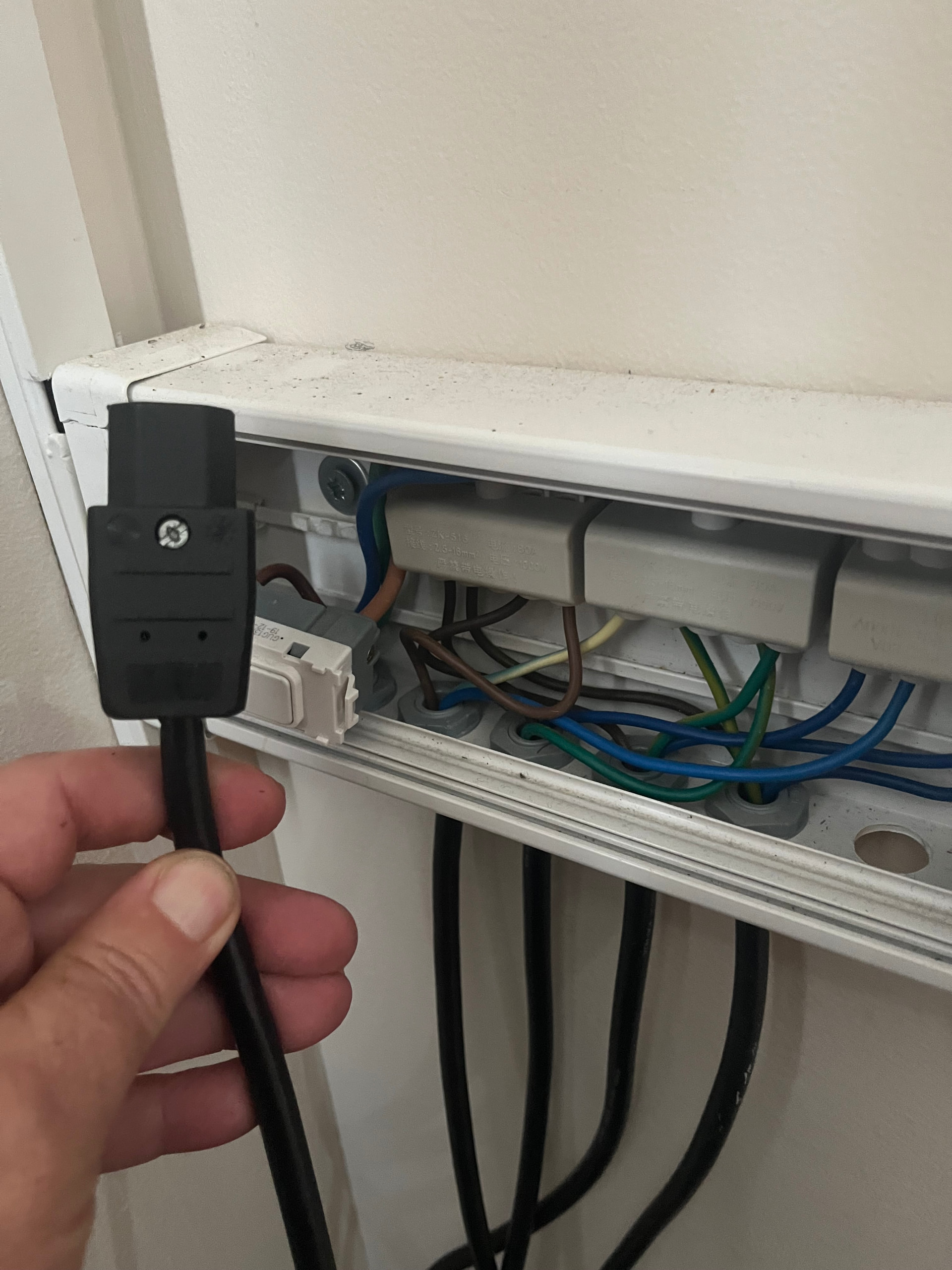
I would imagine that can potentially sound better than using a block (unless it’s a very good block) by virtue of fewer connections in the mains path and no fuses in plugs. And that would be my main concern - no fuses. Does this arrangement comply with legal requirements in the UK?
No. But that’s because 3 or 4 IEC outlet cables protected by x1 fuse is not explicitly covered.
It’s effectively the same as a Hydra.
3 Likes
Yes, it got signed off by an electrician
1 Like