Hello,
can someone help me to identify this guitar please? Sting appears in several photographs with it.
Mark..?
Thanks.
Hello,
can someone help me to identify this guitar please? Sting appears in several photographs with it.
Mark..?
Thanks.
Definitely a Martin, and with the abalone headstock and twelve frets, possibly a D41 model.
Thanks. I’ve also found a very similar one - same headstock, same size and proportions:
It’s a 12 fret to the body model. Looks to me around a OOO size. Rosewood body, Spruce (of some kind) soundboard. Square cornered headstock says it’s not a Martin even though the headstock inlay looks like Martin style.
Rosette style and lack of a pickguard also suggest not a Martin.
That’s a small body; wrong shape for a dreadnought. I’d say it’s an O size body…OO at largest.
I’m voting an O-28 12-fret custom shop. Looks like rosewood back and sides, and it has a bound headstock. But definitely tough to pin down.
Here he is playing it on Howard Stern but no info on the guitar itself:
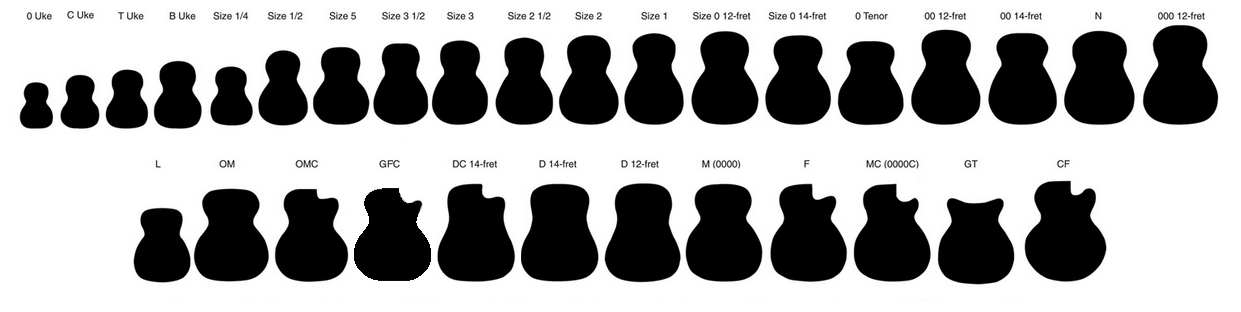
Martin body sizes:
Pilfered text:
Martin made their first 14-fret guitars in 1929. Be they 12-fret or 14-fret guitars, the most common Martins of the twentieth century can be equated thusly:
0 = Concert. The 14-fret version introduced 1934.
00 = Grand Concert. The 14-fret version introduced 1934.
00L = Long Grand Concert, introduced 2013. A 14-fret instrument with the slope shoulder shape inspired by Gibson’s Size L of the 1930s that was based upon Martin’s original 12-fret designs.
000 = Auditorium. The 14-fret version introduced 1934.
0000 = Grand Auditorium aka size M. Introduced in 1977 as a flattop guitar with the depth of a 000 that uses the body shape from Martin’s Size F archtop Jazz guitar from the 1930s.
OM = Orchestra Model, shares the same body size as a 14-fret 000, but typically has other differences. Introduced 1930.
S = Introduced January 2020 as the SC-13E. Martin’s first 13-fret design, with a unique asymmetrical size coming somewhere between OM and GP.
GP = Grand Performance (similar to Taylor’s Size 14.) Introduced 2010.
D = Dreadnought (similar to Gibson’s Jumbo size.) Invented in 1916 but limited to a particular dealer until 1931, when it first appeared under the Martin brand. 14-fret version introduced 1934.
DSS = Dreadnought Slope Shoulders. Introduced 2000. A 14-fret dreadnought with the slope shoulder shape inspired by Gibson’s 1930s Jumbo shape, which was originally inspired by Martin’s original 12-fret designs.
J = Jumbo (similar to Gibson’s Super Jumbo size.) The J is essentially an M with a Dreadnought depth. Introduced 1985.
Grand J = Grand Jumbo (similar to Guild’s Jumbo.) The Grand J is a flattop guitar adapted from the Martin CF-1 archtop of the early 2000s. Introduced 2015.
Other builders of guitars have adopted terms like OM and Grand Concert for generic use since the 1970s, typically indicating a 14-fret instrument with a smaller size and narrower waist than the Martin Dreadnought or Gibson Jumbo body shapes.
Jeez Mark, I should have asked you immediately!
Thanks, it’s enormously useful.
Yes another video with that guitar - it’s a real beauty.
At 0:57 you can barely make out the Martin stamp inside, and the closeups reveal it is very likely the 28-level “bling package” on the body with the herringbone instead of MoP.
What I also notice from these videos, is that Sting - after important statements like he’s finished with rock, he planned to move to the cello, after important moves such as orchestras and jazz arrangements - ends up every time with old Police songs.
I once met Stevie Winwood in the courtyard of the Conservatorio in Milano (where I worked). He was playing there that night.
I greeted him and told him I knew his music since the Spencer Davies Group. He kindly, but precisely, remarked that he had done a lot of other things since. Of course, I agreed.
That night I attended the concert. He played many pieces from the whole of his repertoire. Then, the last encore - for an enthusiast audience - was Gimme Some Lovin’.
It is 
This guy has an excellent channel, particularly if you are into the vintage thing. I really liked this guitar he found:

He’s an excellent player as well.
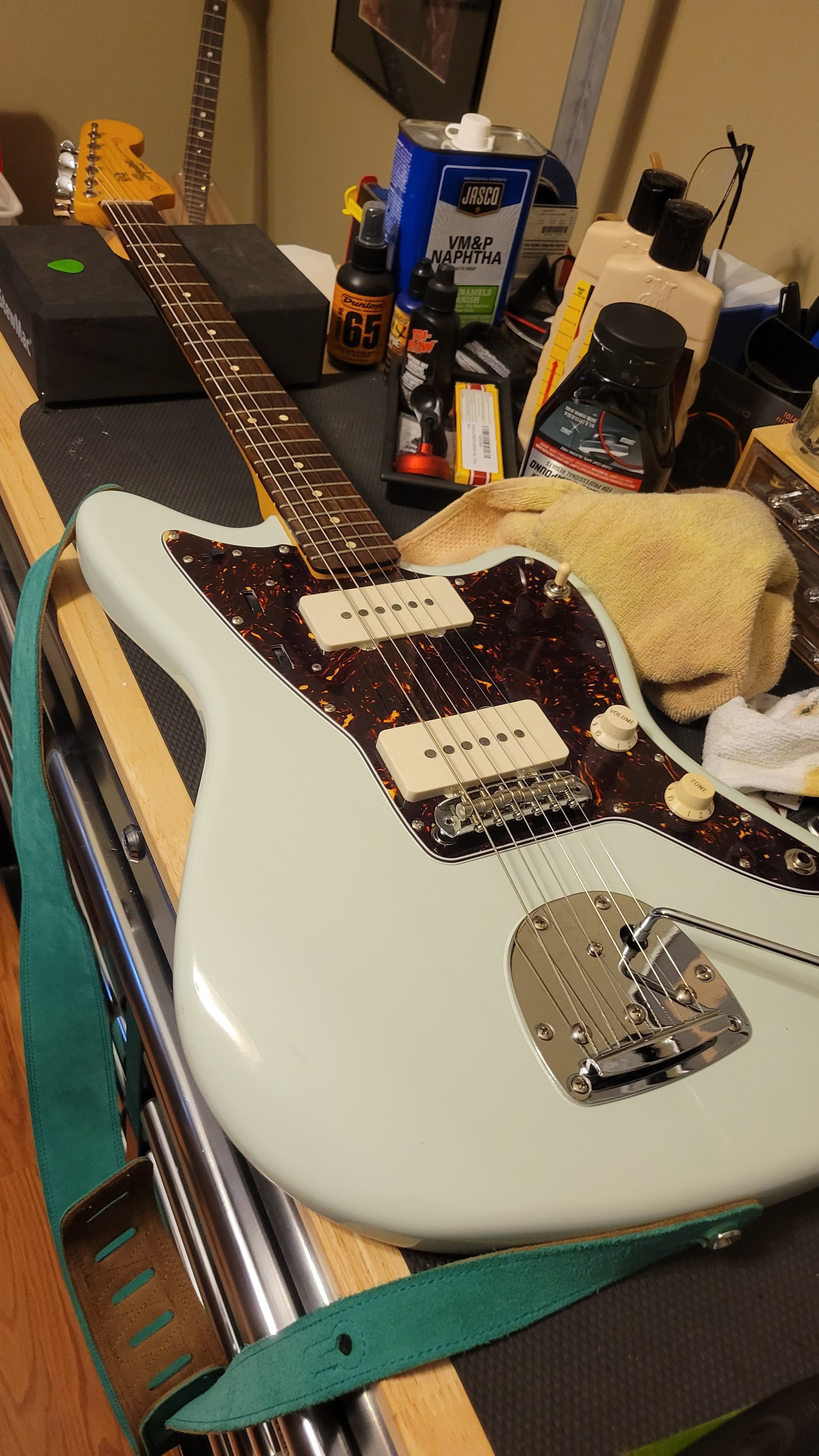
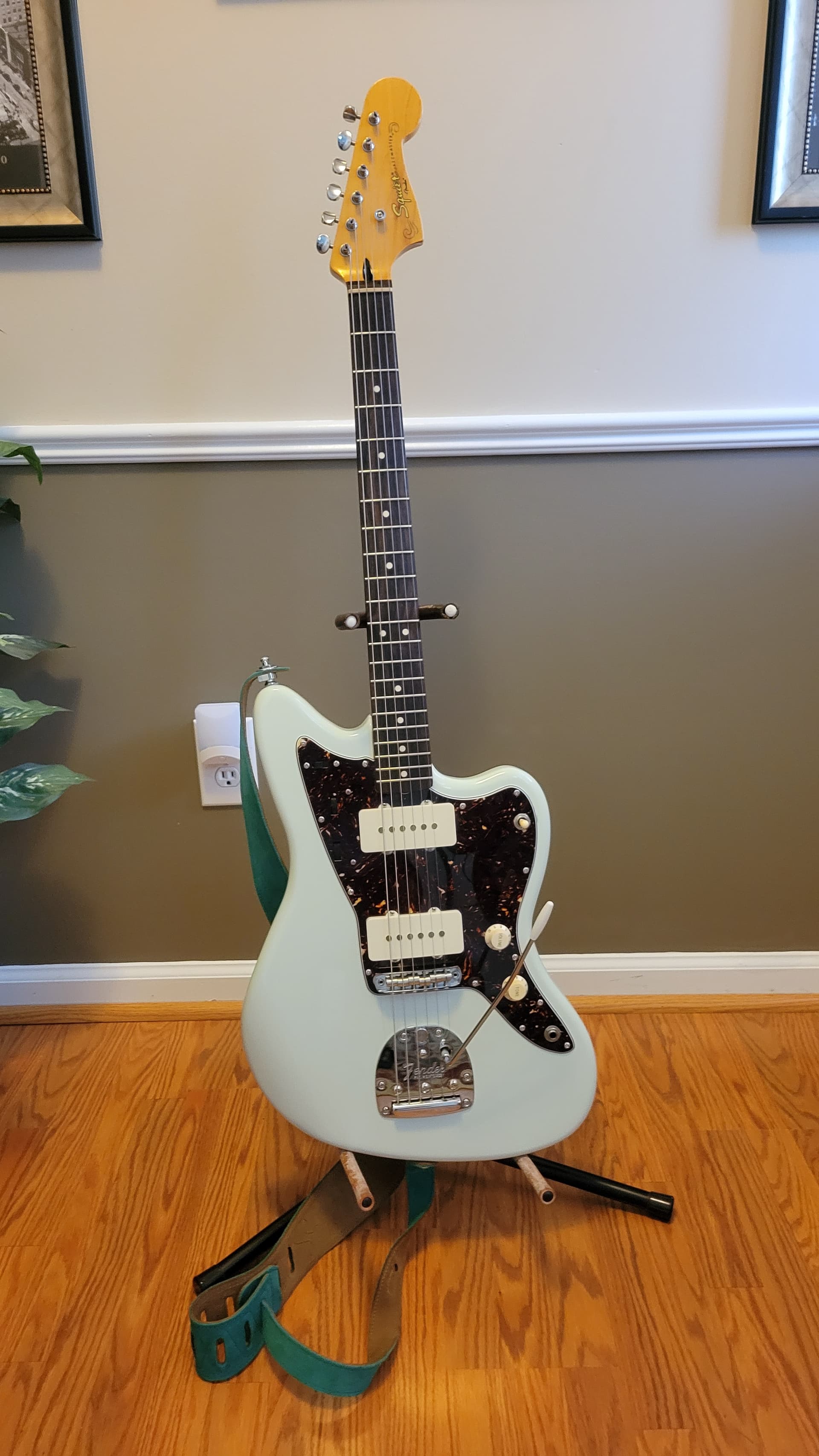
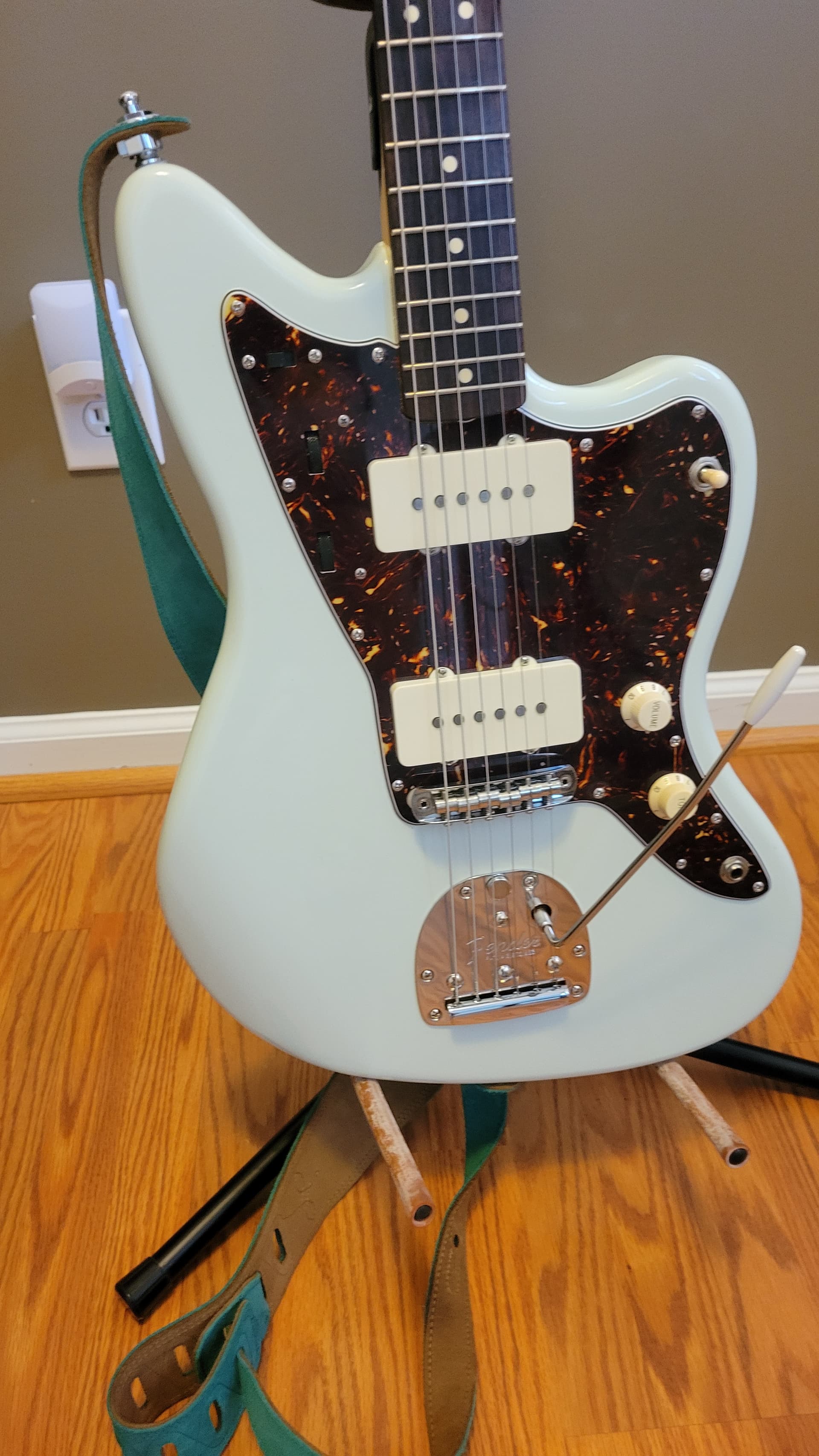
The newest member of the DrM “family” - my first foray into Fender Offsets…this actually being a Squier. The previous owner already substituted a new pickup selector switch and replaced the Squier Duncan Design pickups with Fender '65 Jazzmaster pickups and a Mustang bridge, since the JM ones are notorious for the strings slipping out.
The next mods I will undertake is replacing the stock tremolo system with a real Finder one which should improve tuning stability. Might change the nut and go for a roller bridge, and perhaps the gold anodized scratch plate - but those can wait.
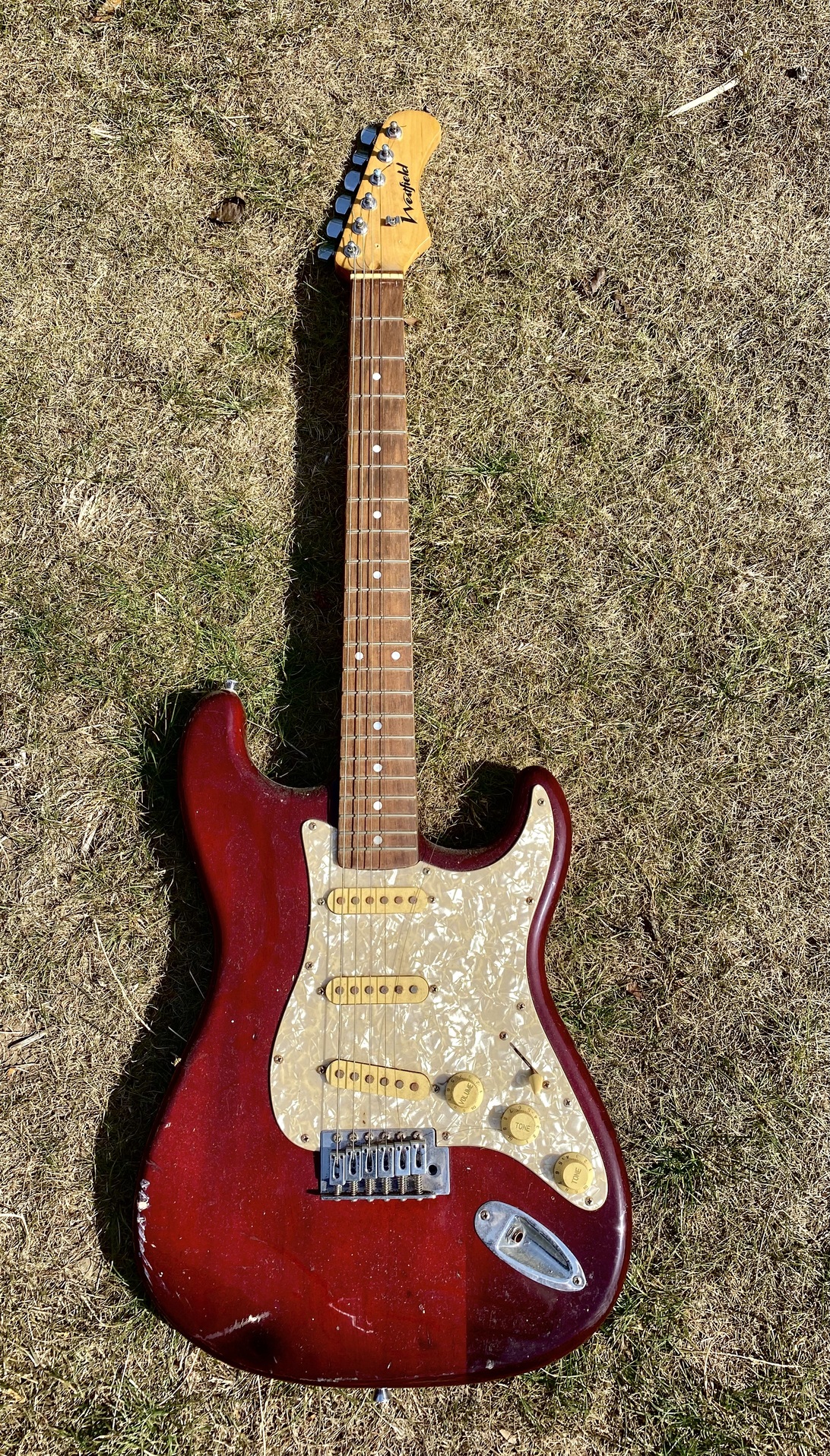
I visited my local council tip today to dispose of some garden rubbish.
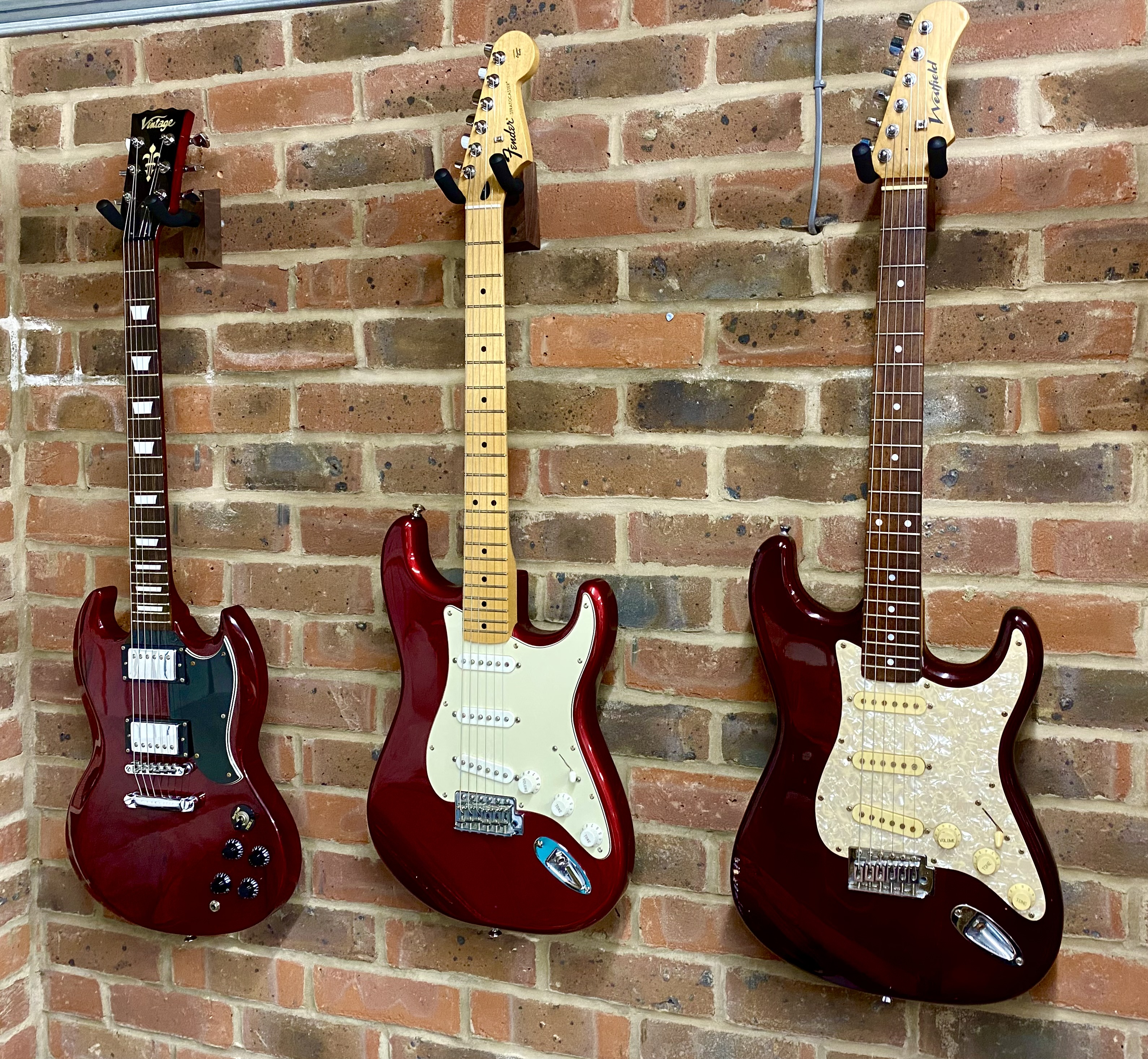
Whilst I was unloading my rubbish the guy in the car next to me walked past with a guitar in his hand to throw in the skip. I couldn’t let him do that so interrupted his purposeful stride with “are you throwing that away mate?”… to which he replied “yeah, haven’t played it in 15 years and anyway I’m a drummer now. Do you want it?”… so here it is, a lovely distressed Strat copy which I’ll clean up, restring and road test. Nice little project.
#retiredlife 
Nice timing and great find!
The Squier Jazzmaster has emerged from the bench with upgraded bridge post collets, a Fender Vintage Reissue tremolo, different string tree, a straplock on the upper horn, new pickup foam supports, and a fresh set of 11-49s.
Yikes! Are you tuning it open for bottleneck?
Heavier strings are recommended because of the minimal break angle, especially if one keeps the original style bridge, which most (or many) switch out to a Mustang-style bridge.
I usually use 10s, very seldom 9s or 9.5s, and the 11s aren’t that different unless you are into full step and higher bends.