This thread is very interesting . 
4 Likes
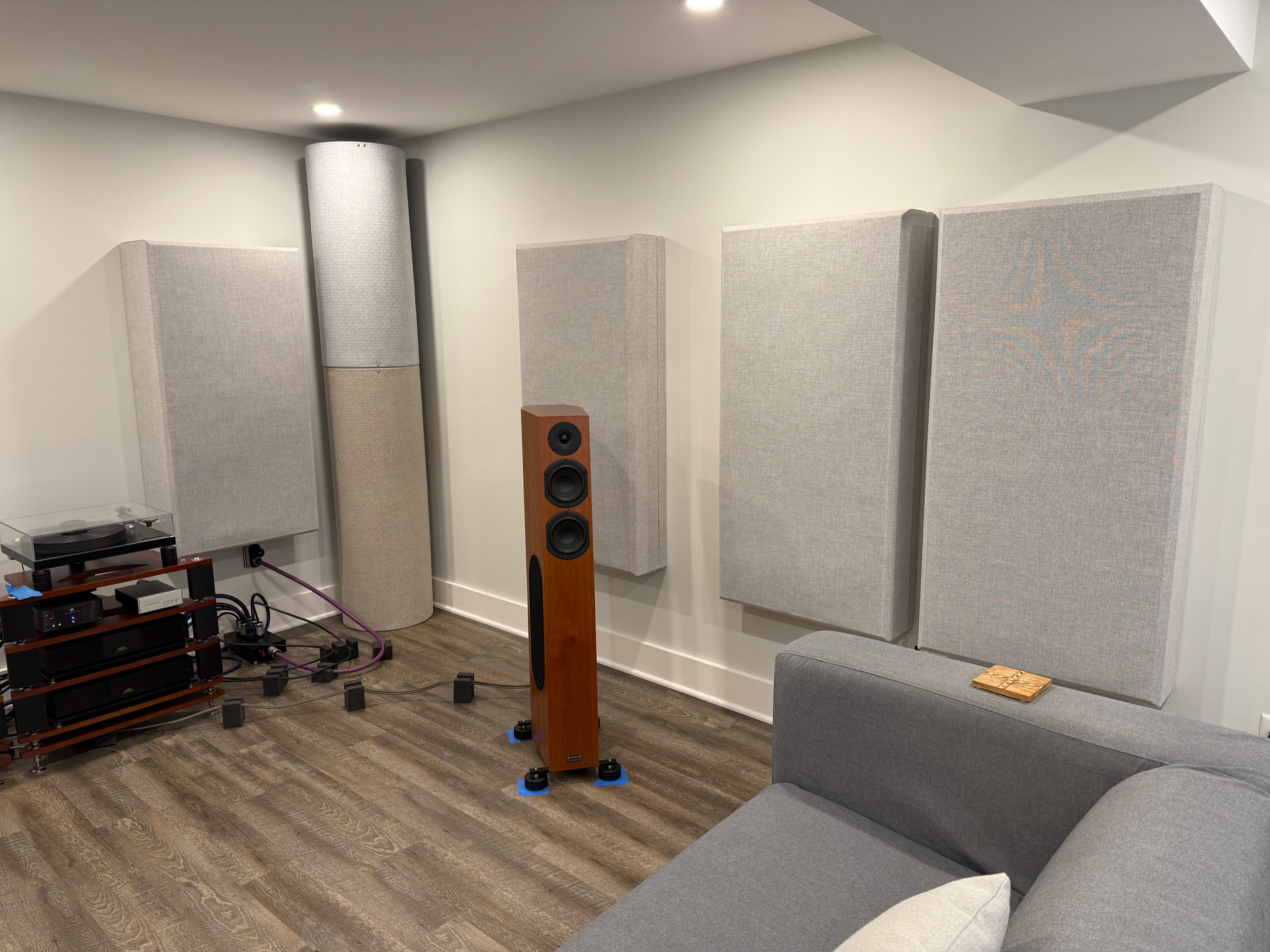
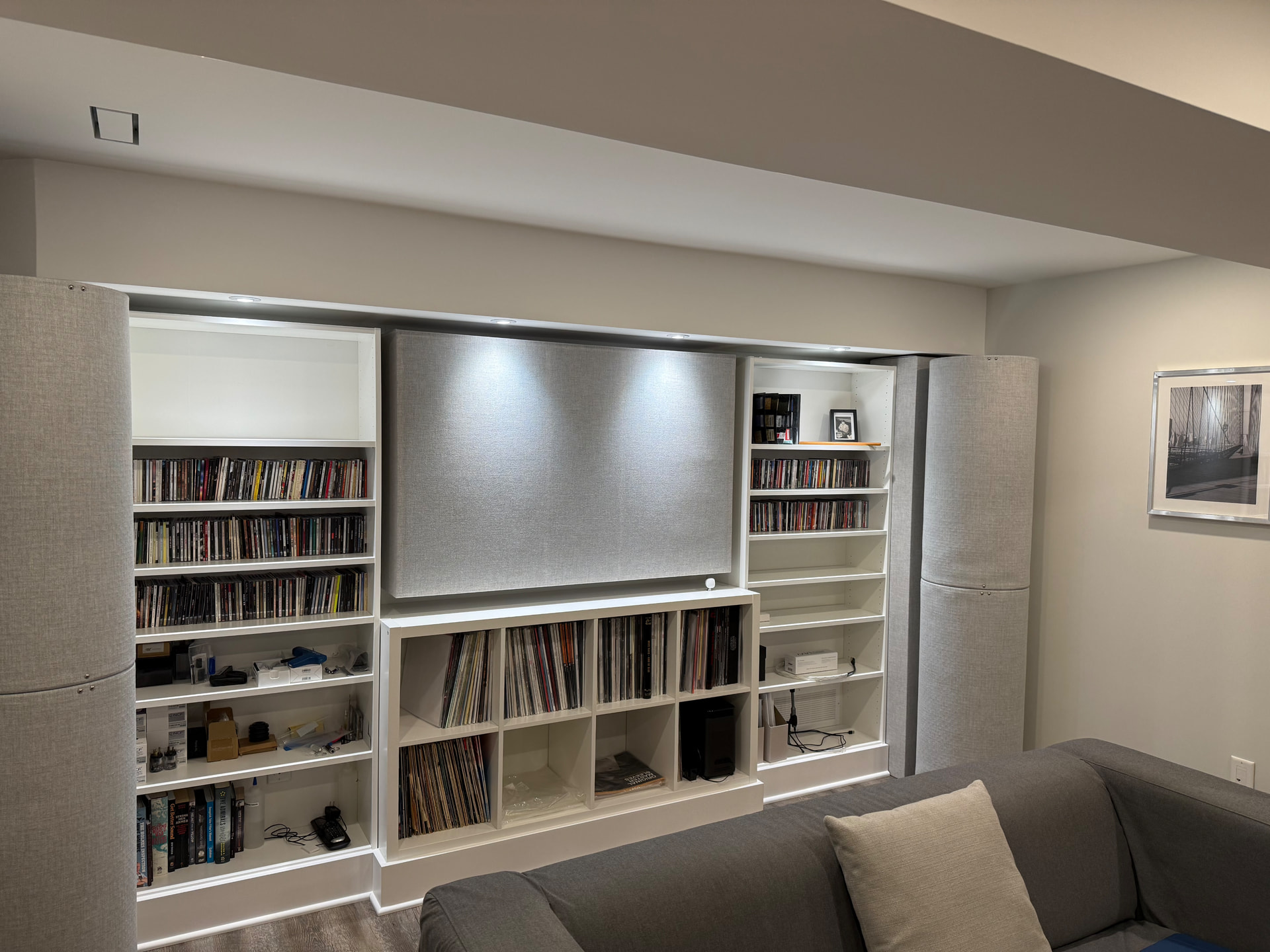
Thought I would post my progress over the holidays. As I mentioned above, finally getting around to covering my panels lead to some unexpected modifications. I had started to cover a bunch of the panels then realized my 2 front wall panels were only 6” thick, so I extended them to 10” & covered. Now my center rear wall panel was 7.5”, so obviously I wanted it to be 10” as well but I had already covered it. Not wanting to throw the material away, I instead made a frame extension & covered it. With my 3 wall panels on each side, I then thought they were lacking at 5.5” & extended them to 7”, they were also just covered, so again needed to build extensions, cover them, then install which was a huge pain. It took longer to cover the extensions then the actual panels themselves.
So as a note to any DIYer, bigger is better & don’t change your mind after the panels are already covered in fabric! I actually like how the extensions turned out. Again, excuse the mess on the back shelves. As a neat freak/general minimalist, this is the only room in the house with clutter. The only reason I have left it is I figured it would add some diffusion vs bare shelves  I didn’t want to add doors to the bottom, again would just be adding a flat surface but was thinking maybe get some door frames & fill the center with white acoustic fabric. So would look neater/hide the clutter & not end up with a flat surface.
I finally hooked up my UMIK-1/REW a couple weeks back, which has been fun/interesting to play around with. I was going to send some info to GIK to see their thoughts. Ceiling cloud, filling the rest of the front wall & possibly soffit bass traps are what I’m thinking. My initial thought for the bare spot on the front wall was diffusion, but GIK offers/now thinking about a 9.5” panel with a scatter plate might be a better option.
Edit: And if you notice the small blue piece of blue microfiber sitting on my Fraim, yes I use that when touching the buttons on my kit to not expose them to finger oils, yes I’m that OCD 

14 Likes
Nice reflection absorbers, but where are the windows and the natural sunlight, or was the picture taken at night.
For me listening with natural night, and in summer even with the window open helps heighten the senses for absorbing listening experiences.
The trick is to try and ensure windows are not at primary reflection points.
1 Like
Indeed if a window opens wide it can improve sound quality by an area of complete absence of reflection (depending on position of the open pane), however allowing in external sounds can be neagative depending on location, and not friendly to any near neighbours unless playing quietly! It is certainly nice visually to have a big window with a nice open view between the speakers, but acoustically less than ideal. Getting the balance right for the individual s the challenge - though listening only after dark in the winter would simplify these particular considerations!
1 Like
yes indeed its a balance - but a room with no windows in I would find extremely hard to relax and quickly get agitated .. in offices I need to locate the windows.. even if glass walls to larger areas..
I am not sure I am particularly unusual.
But yes listening to some genres in summer with bird song gently in the back ground is the equivalent of a 1000 hifi upgrades for me  … link to audiophiles all in the mind thread… And I agree acoustics often appear to improve with open windows - and I was readings there were reasons for this vs a closed room.
I did learn when producing certain genres work that having a very low level sympathetic foley type sound track in the back ground - barely audible - can help one to be come more receptive and connected to the work … kind of akin to super imposed very low level back ground sounds
But sure if you are at ground floor level next to a busy road your options may be limited..
Impressive and very clean. Does remind me of a Hifi shop listening room though somehow. Still, lovely to have such a space for listening.
Its a dedicated space in the basement, so there is just one window (to the rear right of the listening position, missed in these posted photos). For me I rarely listen during the day, so no natural light when I typically listen anyway (incoming power is always cleaner at night). During daylight hours, I’d much rather be outside enjoying the fresh air vs sitting in the house 
I’m not retired, so don’t have much time to spend listening to audio. Typically a couple hours a night a couple times a week is the most time I spend (unless of course I’ve just got a new piece of kit, then I seem to find a bit more time  )
)
2 Likes
I know the room won’t be to manys taste (why I don’t typically bother posting it). I will likely add a bit more decor so it won’t be so “drab” looking but for me this space is all about function first (I have lots of other visually appealing rooms in the house, if I want to look at things). I hesitate to add “decor” as this rooms one function is to reproduce audio the best it can & doing so can reduce performance. As mentioned above I typically listen at night, so if I’m listening I’m typically scrolling through these forums on my ipad or my eyes are closed, just enjoying the music. When I constantly hear kit multiple factors more expensive then what I have sound worse, the lack of decor doesn’t bother me in the least (YMMV as they say).
For the two panels in the middle of the front wall, I have been thinking about going with printed art panels vs more fabric, just to add some colour to the space.
2 Likes
Thanks, got you, I did wonder if it was in the basement… yes I am not retired either… so music in the evenings is very much not with natural light at this time of year…. 
Regarding mains, historically our mains was cleaner in the day vs evenings, but now moot as we use PV panels / battery and inverter now, so most of the time I am listening now we are under inverter power..
I had previously converted our house to TT which tidied things up a lot regarding mains borne noise.
Hi All,
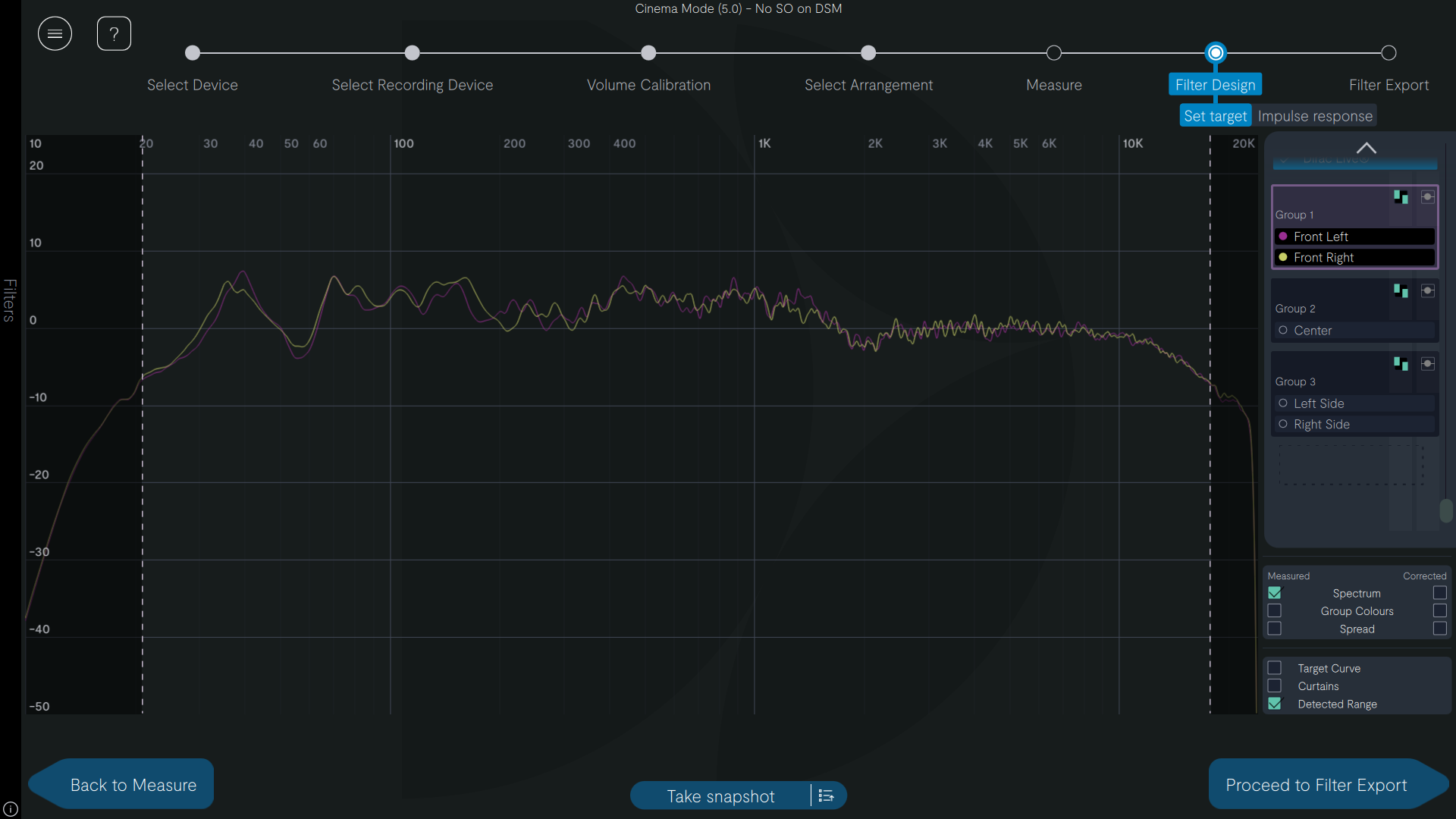
As promised here are some basic acoustic measurements from a (nearly) fully treated room.
Multipoint spatially averaged microphone SPL vs Frequency measurement.
(Media Room in Cinema Mode: screen out - no art panels on screen).
Original Image: Author Provided, No Reuse.
Computed Impulse response from Multipoint spatially averaged microphone measurement.

Original Image: Author Provided, No Reuse.
Original Image: Author Provided, No Reuse.
Original Image: Author Provided, No Reuse.
The REW measurements are more complex to explain and I will post those later. Nevertheless I thought the above might be a good prompt for other people who have undertaken any acoustic measurements in their treated rooms to post on this thread (hope you don’t mind @Thomas )?
PS: I have other plots from earlier in the project when less acoustic treatment had been fitted.
6 Likes
I’m interested in seeing some of the different REW plots you have. Above frequency response looks pretty good, do you know what smoothing is applied to that chart? Looks like a range of +/- 5db (or ~10db variance) which seems to be pretty decent. I’m sure you’ve probably posted it up before but as a refresher what are your room specs & I re-call seeing them in some other threads but do you have some pics to post in here?
Looks like your speakers roll off a bit early but other then that, just the suck out ~55hz seems to be about the only area of concern. Have you played around with speaker & listening position to see if you can improve this, or is this positioning already the best option for your room?
1 Like

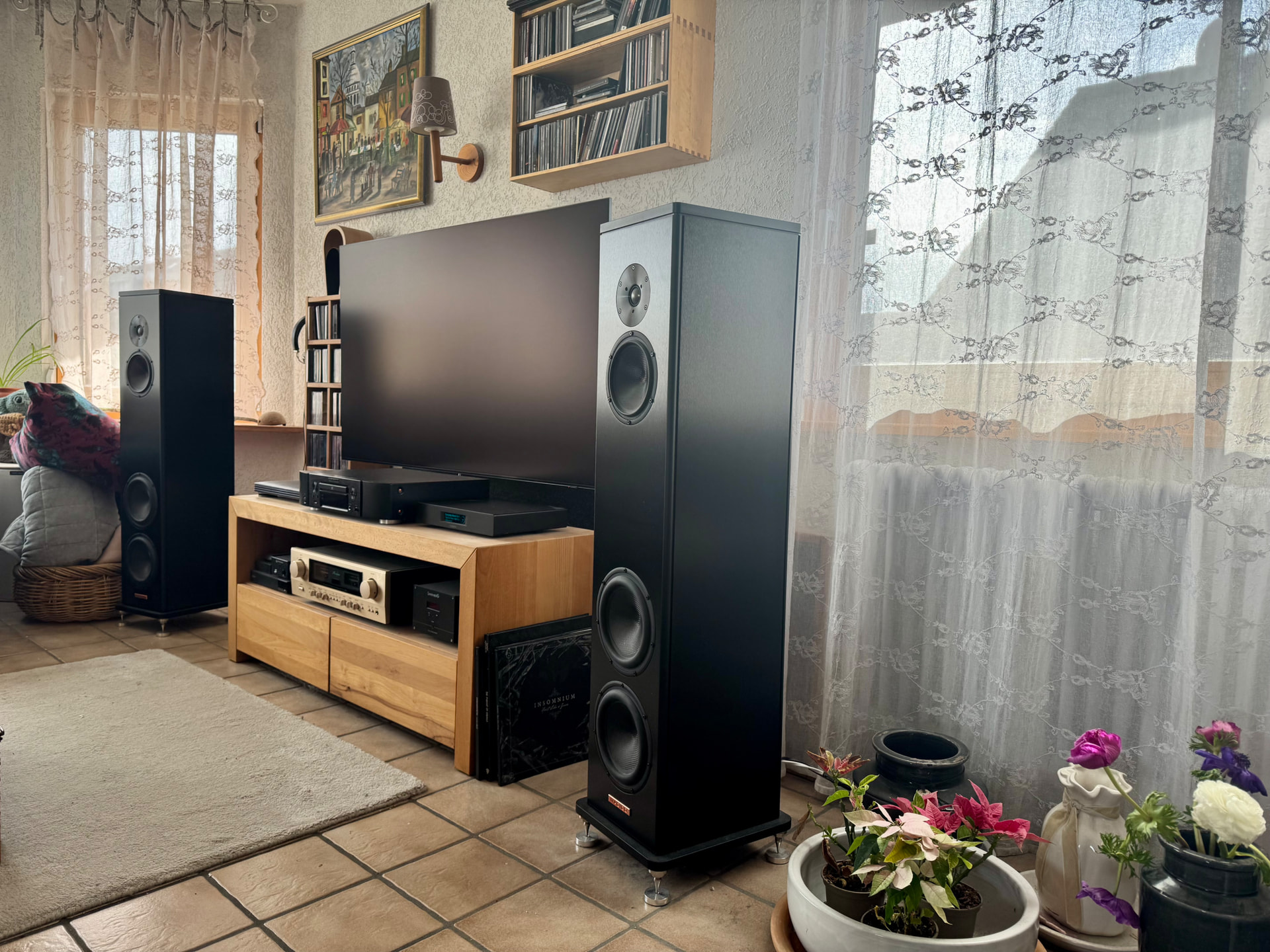
This is my system with a Focus Fidelity convolution filter in Roon working on a Mac Mini M2, streaming to the Lumin U2 Mini over Coax into the Linnenberg DAC and analog to an Accuphase E280 connected to Magico‘s A3. There is some room treatment with Hofa Absorber and t.Akustik diffuser.
When the volume is on a normal level, i often prefer to listen without the filter.
5 Likes
Yes, of course, go ahead!
There’s no need to go into too much detail; the plots speak for themselves.
The most interesting ones would be:
- the frequency response (30 Hz–15 kHz) at the listening position
- and the waterfall plot over the same frequency range, at the listening position
I really should take the time to do some measurements myself.
But I’m constantly short of time… and when I’m in the listening room, it’s to relax with music. The computer stays in the office 
And besides, it’s ice-climbing season! 
I have to give my Christmas present a try! 
1 Like
I would add:
For frequency response would be nice if you could post up a couple examples, say one with the industry standard 1/3 smoothing & then an unfiltered or minimally filtered 1/48 (or 24). This gives those who aren’t familiar with the program an idea of what some smoothing can do. And scale the db’s to something reasonable 
Also the RT60 chart would be ideal
3 Likes
Interesting target curve you have there. Why the bass hump rather than a gradual slope up from top end to bottom, which would be more natural sounding.
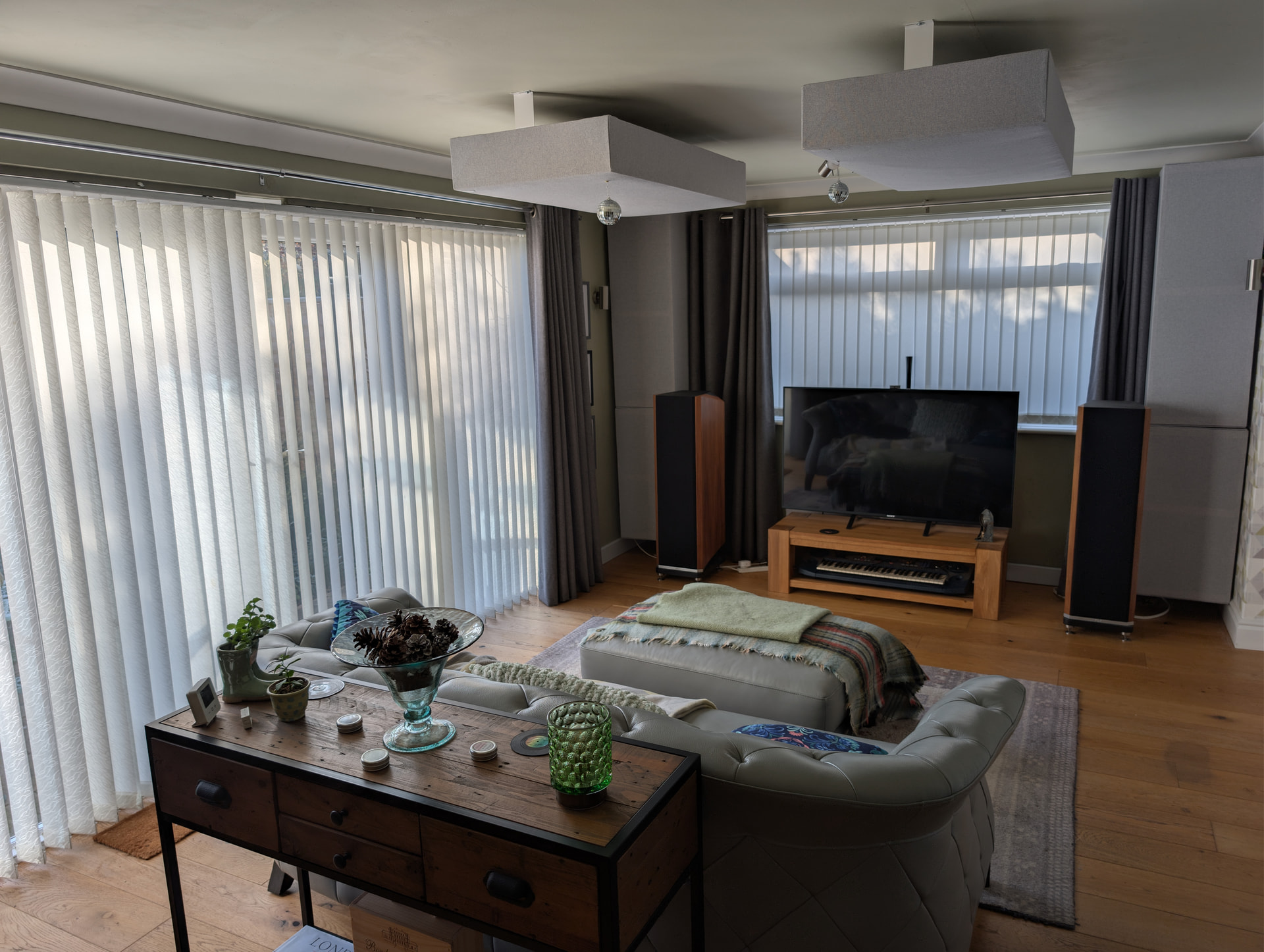
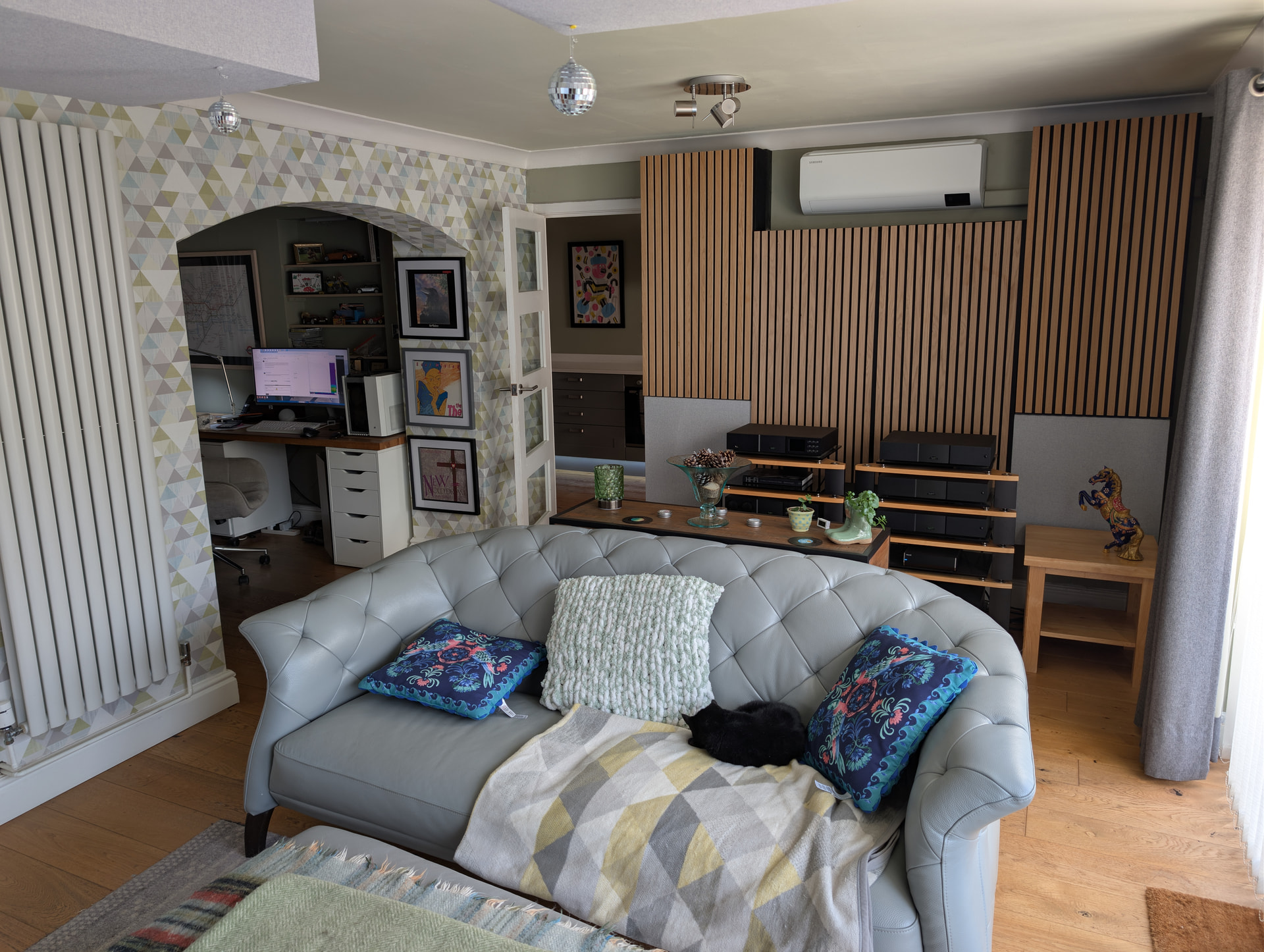
I thought I would put up some of my REW graphs for others to see and comment. My room is an l shaped room with a lot of glass and I’ve added treatment over the course of the last 2 years culminating in the photos below. I did take an initial reading before treatment (although in retrospect I should have set it louder). It at least shows how the treatment has altered the measurements, mainly improving the low end resolution. I also took measurements with the curtains closed and this noticably smoothes the results especially around 200hz - I suspect this is the glass windows vibrating. Note particularly the clarity overlay in the lower frequencies - this is where the really big differences were made. As you can see from the photos bass trapping was the main thrust of the improvements, bought on by switching from Isobariks to the 707’s and realising the bass needed taming. The bass traps on the rear wall are actually 10” (250mm) deep rather than the standard 6”. This audibly made a large difference.

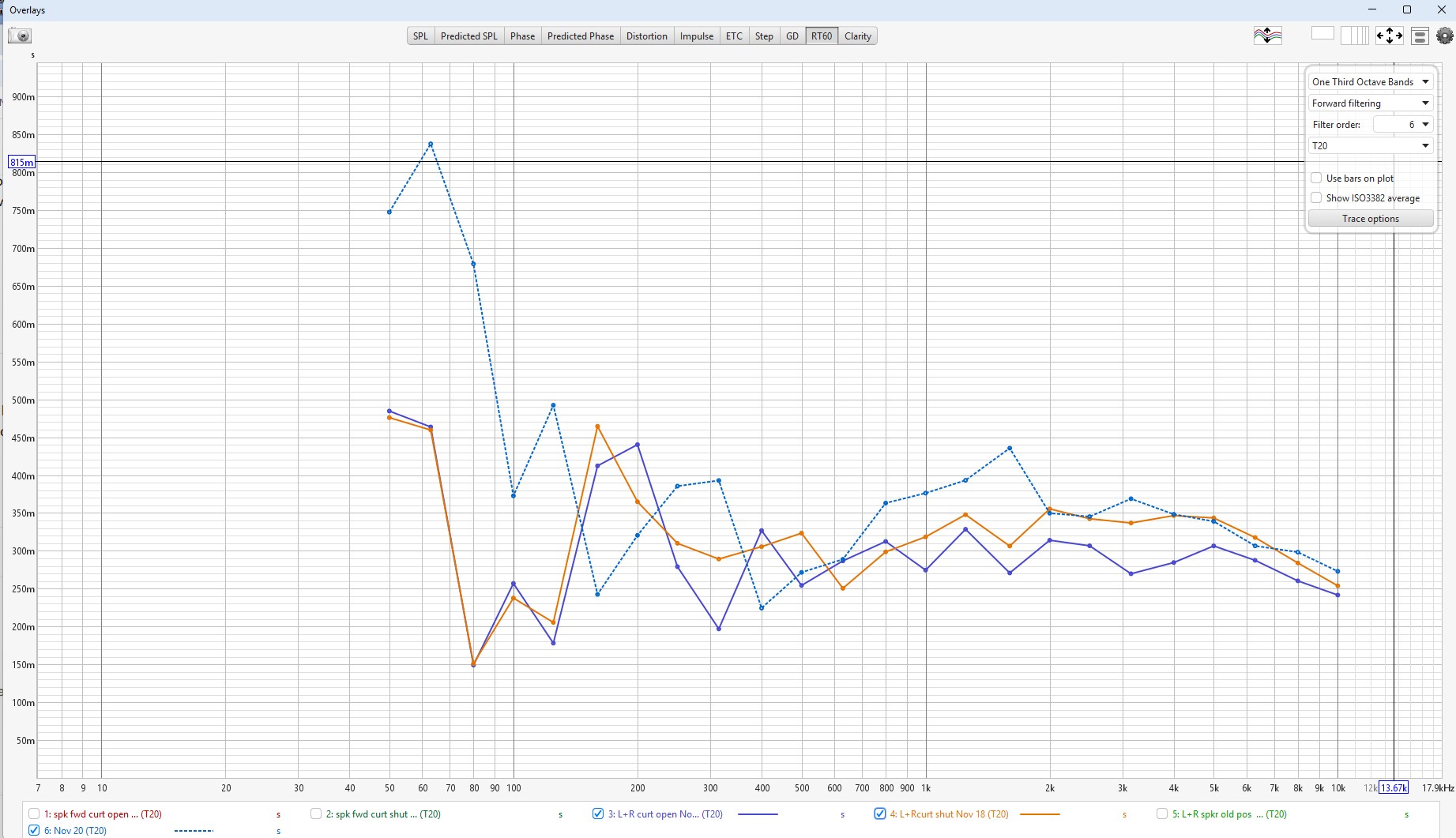
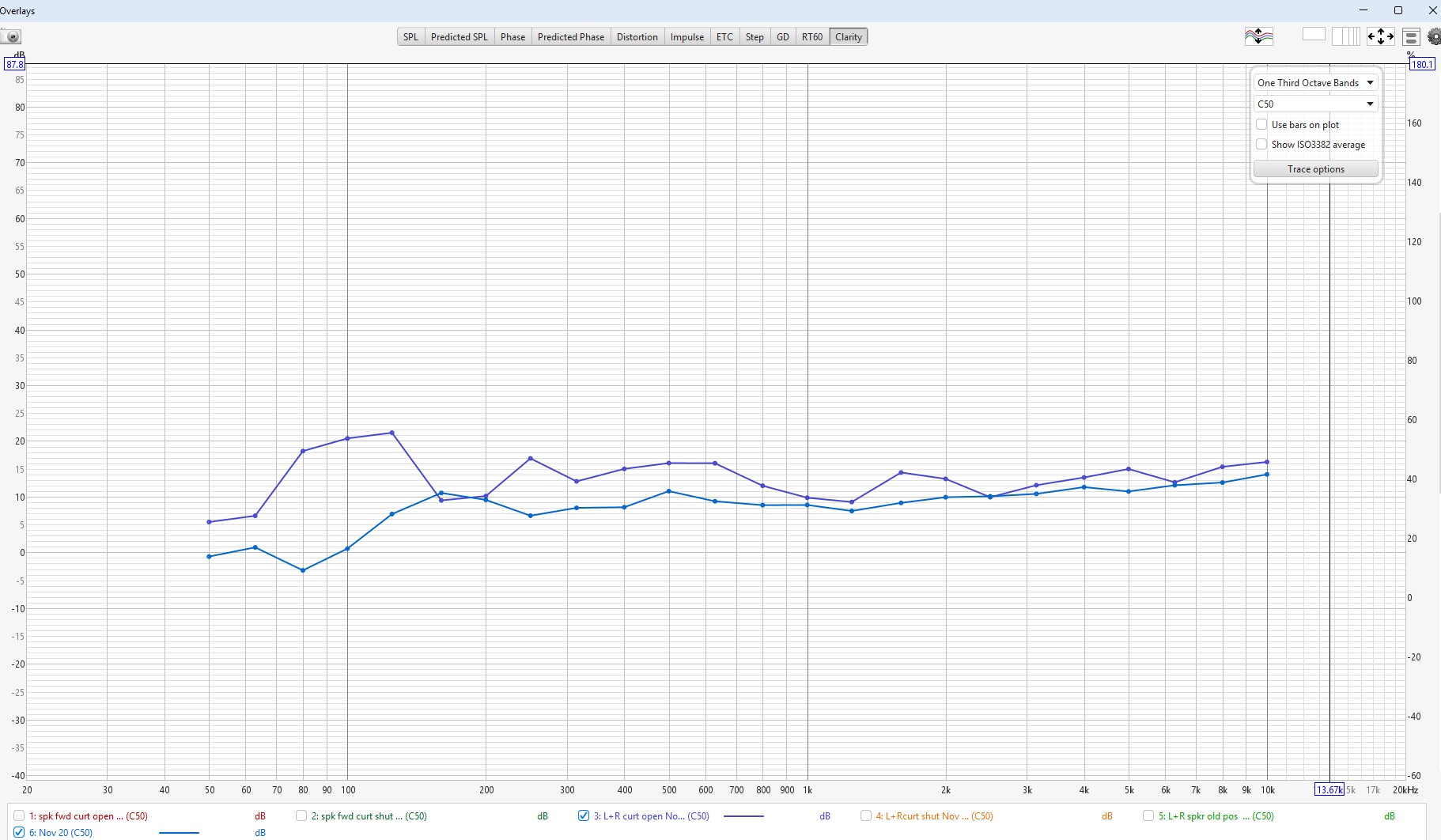
6 Likes
Hi daren,
Very many thanks for your interest and observations.
Quick Edit for Readers: This room has become studio grade - you do not need to do this to get benefits from applying room treatments in one’s own home, with that said, read on…
The ~55Hz suck out is the bane of my life.
I have varied the listening and loudspeaker positions a few times since original setup by Hifi retailer in 2020. Even to the extent of paying for a professional audio/studio engineer (using SMAART and REW) software to get to the best it can be (mid 2024). The posted graph is the current ‘best’.
BTW, I do have another idea:- it involves fitting more room treatment!
I cannot confirm if any specific ‘view mode’ smoothing is applied in the DIRACLive assessment tool. I think not given the fine grain detail presented across the spectrum. You may have noticed to the right of the DIRACLive produced graph some selection options. To see the full variations in SPL for all measurements one simply has to select the ‘Spread’ option.
Regarding your observation of the Magico M2 loudspeakers - you are correct - they do roll off early. Here is the relevant ‘anechoic’ measurement graph from the Stereophile magazine review.

Image Credit: Stereophile Magazine (Jan 2020)
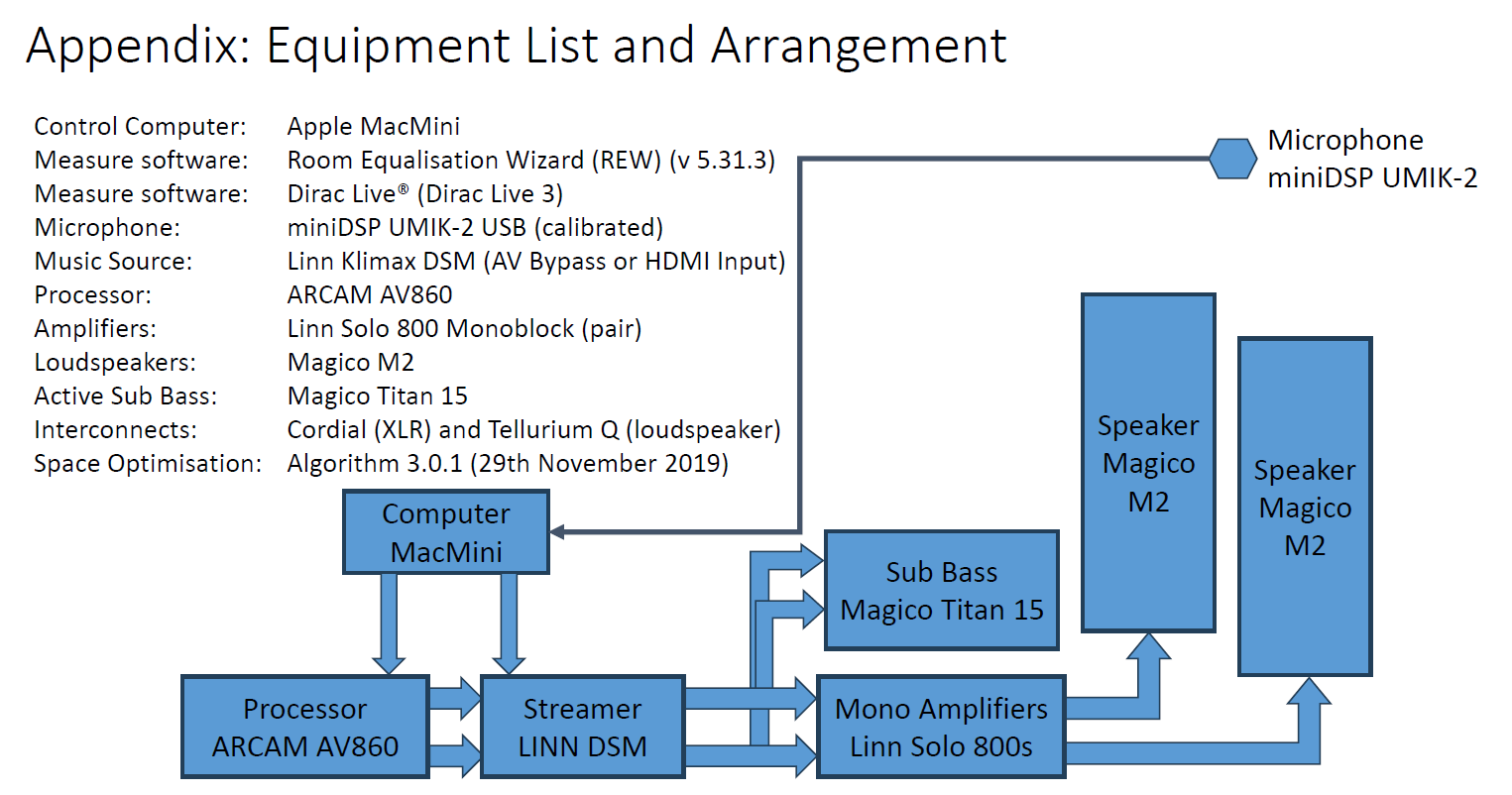
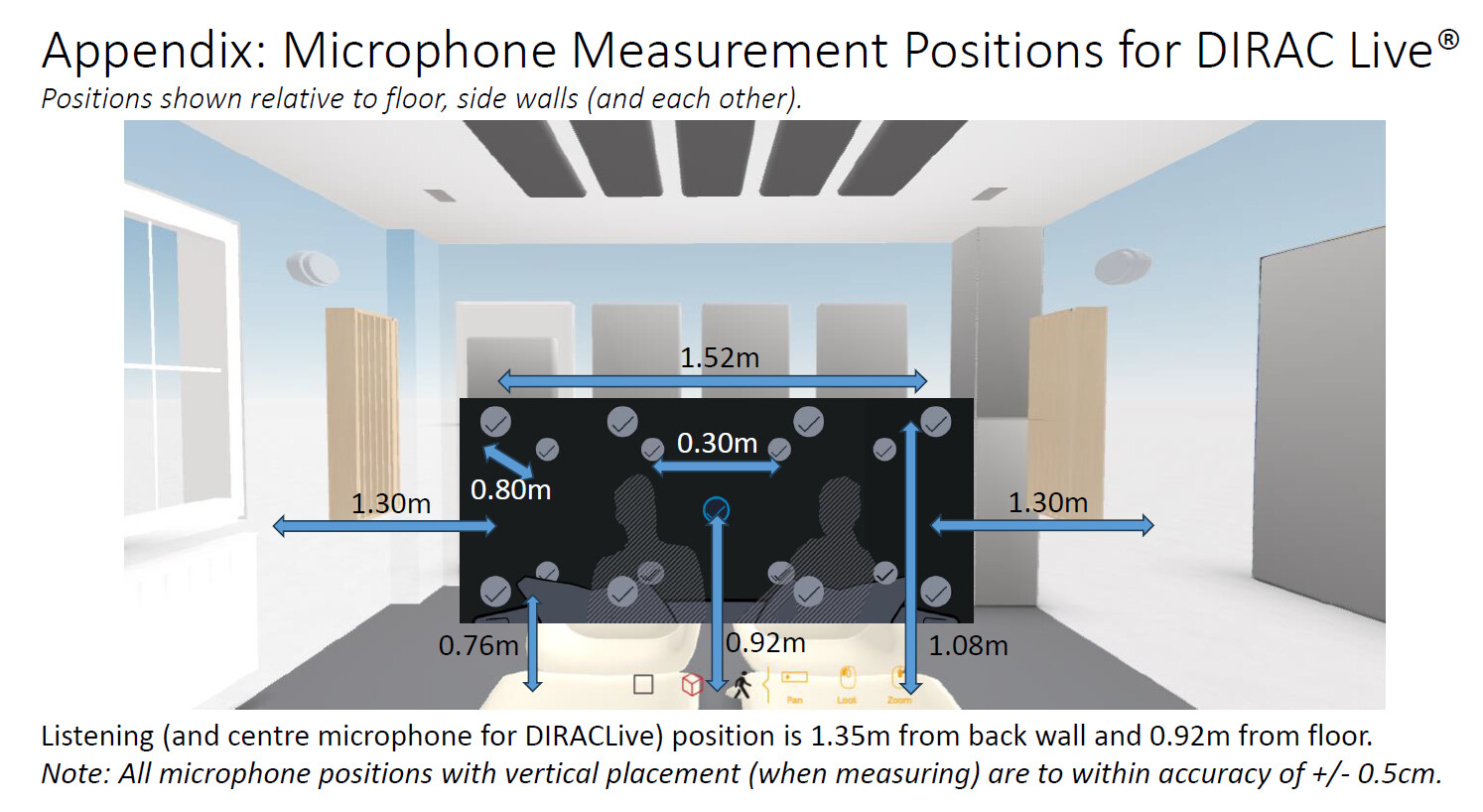
Here is information describing my media room.
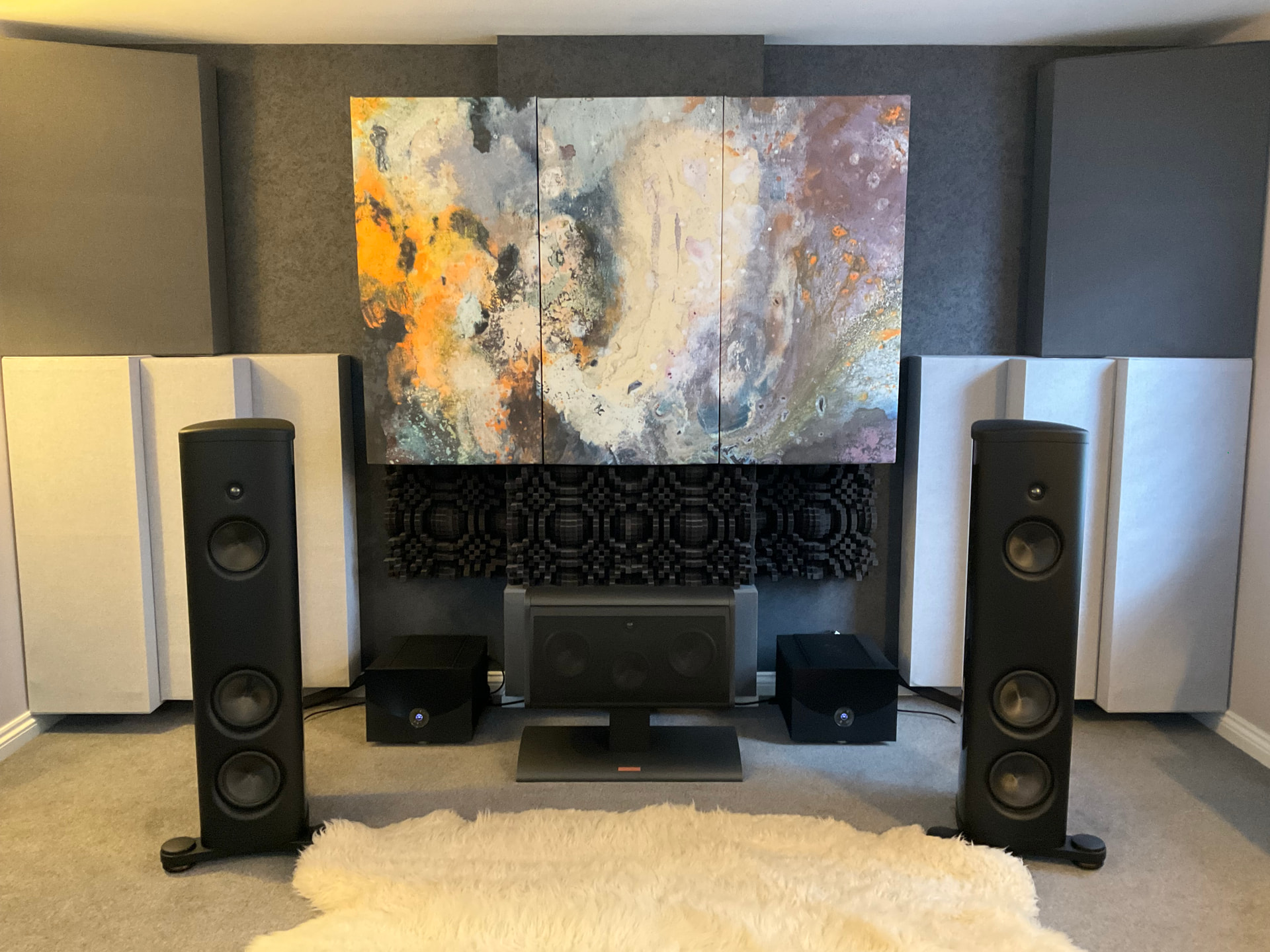
Original Image: Author provided, no reuse.
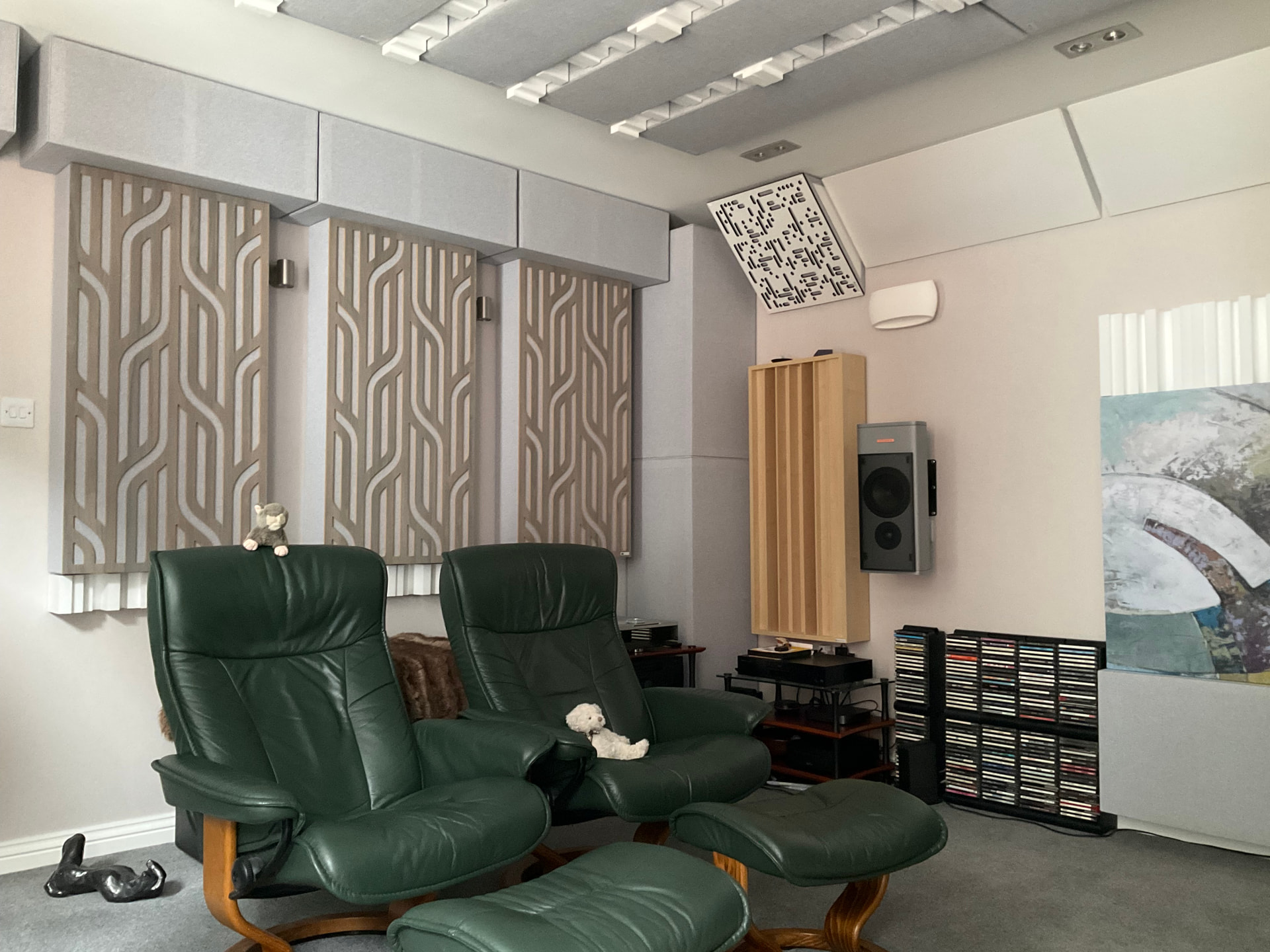
Original Image: Author provided, no reuse.
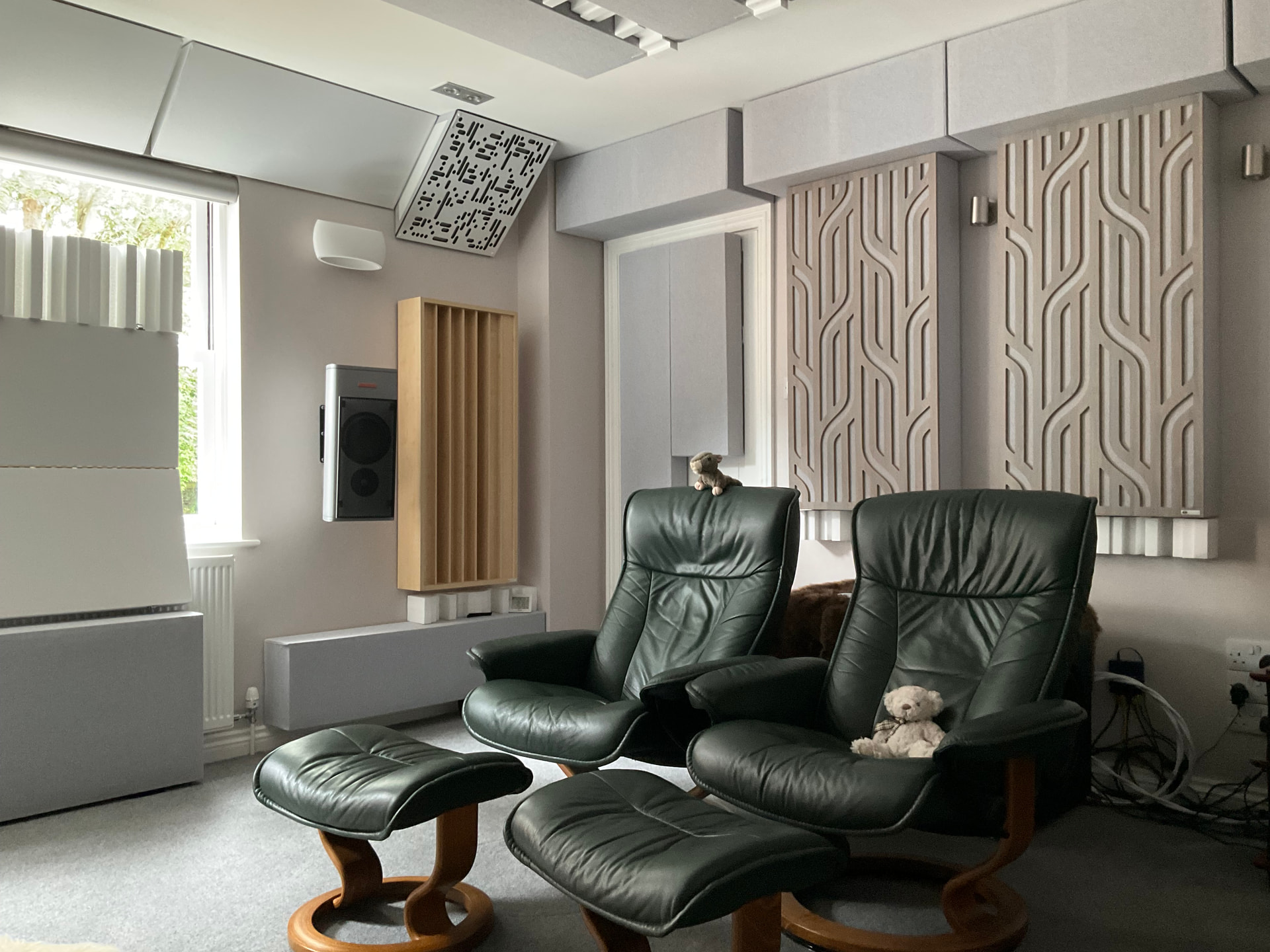
Original Image: Author provided, no reuse.
Room Dimentions differ slightly from that indicated here:-

Original Image: Author provided, no reuse.
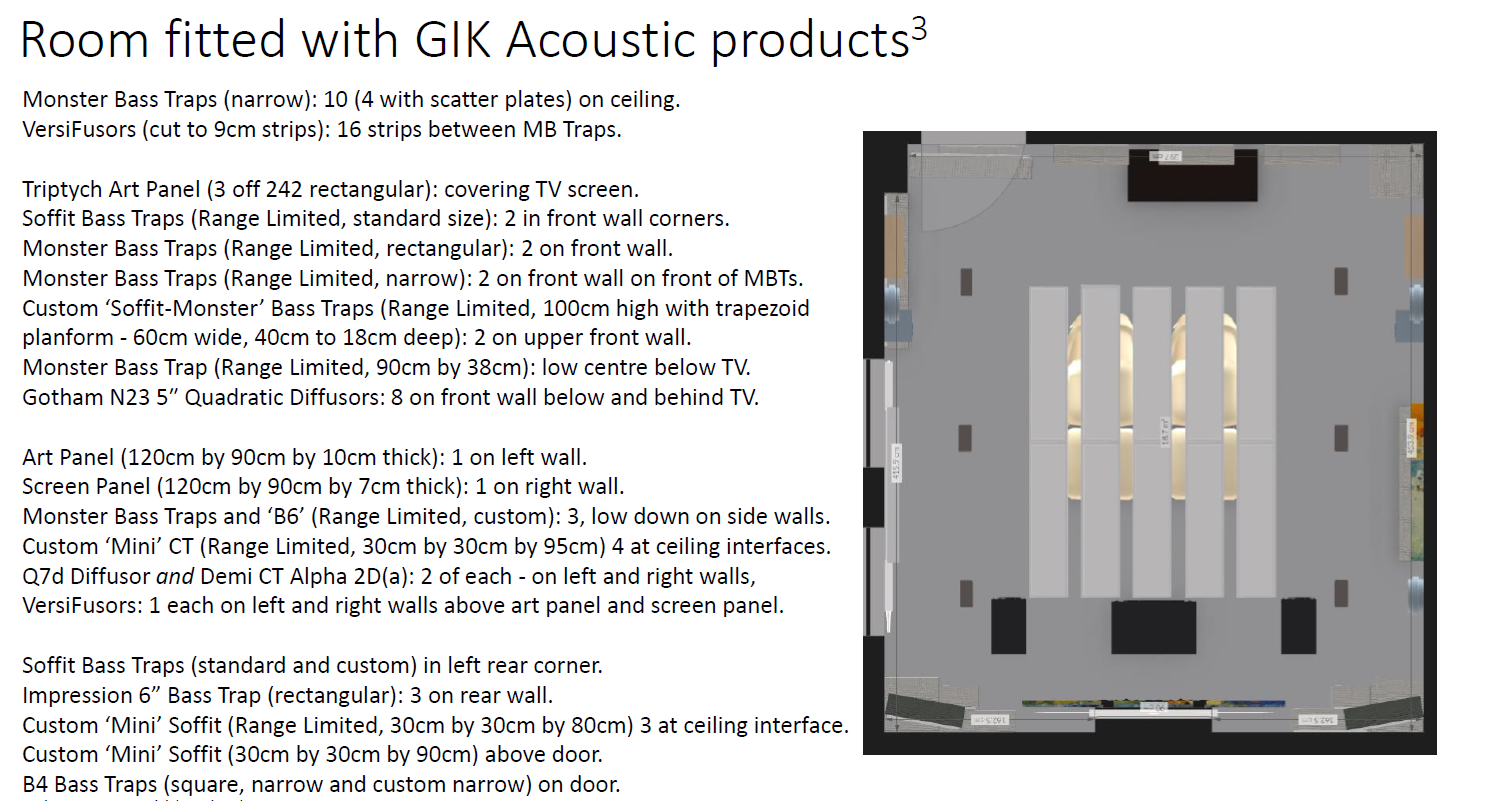
Original Image: Author provided, no reuse.
REW charts to come…
5 Likes
Hi Edmund,
A very nice layout, especially the front wall.
And a lovely colour palette too!
I see you’re using quite a few Monster Bass Traps Range Limited.
I also used this type of GIK bass trap for the second iteration of my room.
It helped, to some extent, to balance the absorption.
I no longer use this kind of “membrane” solution.
I have so much thickness now (up to 52 cm) that I’m also covering the lower end of the spectrum.
But that thickness came at a price: I lost 6.2 m² of floor space! That’s a lot.
You have a nice ceiling too!
Could you perhaps post 1-2 more photos?
On my side, I went with Vicoustic Cinema Round Premium panels. They’re only 7.5 cm thick.
And on top of that, they’re foam…
OK, it’s “premium foam” from Vicoustic, but 7.5 cm is still far too thin.
I really should have rebuilt that ceiling, ideally with 15 cm of Caruso Iso-Bond. But I didn’t have the energy/time…
I thought that my four PSI AVAA C20s would do the job.
The room itself already took me 2,5 years…
Besides, there’s a chance I may sell my flats and buy a house.
So I’m not really motivated to keep optimising the room.
And to be honest, the sound is already insanely good. Pushing it any further would make very little sense.
Cheers,
Thomas
3 Likes
Hi Daren,
I agree with you on this point.
Not having a window doesn’t bother me in the slightest.
I’m quite an active person and I enjoy being outdoors.
But when I’m inside, I like to really be inside, if you see what I mean.
I have other hobbies besides music.
I go climbing regularly, 2-3 times a week all year round. And depending on the season I also do ice climbing (at the moment) as well as winter and summer alpinsim.
My listening room is something of a sanctuary.
It’s a cocoon of calm and tranquillity.
Unlike @Simon-in-Suffolk , the absence of a window doesn’t bother me at all. Quite the opposite, in fact.
When I listen to music, I sit there looking straight ahead into nothing, letting myself be carried away by the music.
I stay there for one or two concertos, a big symphony, a piano recital… sometimes a playlist.
It’s deeply calming…
Cheers,
Thomas
8 Likes
That’s a great looking space Edmund, gives me some inspiration. I’d say that front wall is as much a feature wall vs just being “acoustic treatments”. Looks like you had the art panels done by GIK, did you provide the artwork or was this something they had on file?
This comment made me chuckle, as I have a similar issue ~45hz in my room, while also have a pretty good peak ~95hz & then another suck out in the ~150hz range. I would say with your room size, your response is looking pretty good. My room dimensions are slightly larger (3.8 x 5.8) but ceiling slightly lower (~2.2) & I have a bulkhead running across the room, which I’m pretty sure isn’t helping things.
This is with my current speakers, I recently had another pair of speaker in that actually played better with the room. In the same position the suck outs weren’t as bad & the peak was dialed back as well.
I’ve played around with REW a number of times, just more so seeing how things like speaker position, listening position & sub placement impacts things. Since I’m looking to swap speakers, I’m not really dialing things in at the moment.
What I did find interesting & something that might be helpful with your 55hz issue, have you tried using a sub/pair of subs? What I found is that when placing a single subs in a number of spots in the front half of the room, it didn’t do too much for my 45hz issue but placing it towards the corner, behind the one speaker did help to pull up the 45hz range a bit & also pull up the ~150hz. I then found that placing the sub beside the listening position helped further with the 45, less so with 150 & finally along the side wall behind the listening position could basically fill the 45hz dip but at the expense of making the 150hz larger. I have a second sub, so was curious if using this position combined with the opposite front corner would allow me to fill both the 45 & 150hz dips. I didn’t get to finish my experiment, as said the speakers I’m looking at getting play a bit different in my room so haven’t bother to play further.
@Thomas know you said you might be changing listening room & not too interested in putting a lot of effort in your ceiling cloud but have you thought about just building up some framework to add an airgap behind it, to get a bit more out of what you already have?
1 Like