The prior explanation was synthesized from established loudspeaker engineering literature, electroacoustic theory, and manufacturer design documentation rather than a single source. Below is a non-exhaustive but representative source stack that underpins the claims.
Core loudspeaker engineering texts
Vance Dickason — The Loudspeaker Design Cookbook
Industry standard reference for bass-reflex alignments.
Covers Helmholtz resonance, port tuning, enclosure alignments (QB3, C4, etc.), and placement effects.
Discusses boundary reinforcement and port radiation behavior.
F. Alton Everest & Ken Pohlmann — Master Handbook of Acoustics
Room boundary gain, modal excitation, and low-frequency radiation omnidirectionality.
Explains how wall proximity alters LF response independent of enclosure tuning.
Leo L. Beranek & Tim Mellow — Acoustics: Sound Fields and Transducers
Rigorous treatment of sound radiation, reflections, and phase/path-length effects.
Useful for understanding rear-wall reflection timing and interference.
Floyd Toole — Sound Reproduction: The Acoustics and Psychoacoustics of Loudspeakers and Rooms
Empirical research on in-room loudspeaker behavior.
Placement sensitivity, boundary interactions, and listener perception.
AES (Audio Engineering Society) papers
Representative areas (multiple authors):
Port/vent radiation and distortion studies.
Boundary interference response (SBIR) at low frequencies.
Low-frequency room modal excitation vs source placement.
Commonly cited contributors include:
D. B. Keele
Richard Small
Neville Thiele
Earl Geddes
Siegfried Linkwitz
(Thiele/Small work forms the mathematical basis of bass-reflex design.)
Manufacturer technical papers / application notes
Many loudspeaker firms publish white papers validating placement and port orientation effects:
yes - but those are general sources across a range of topics covering SBIR (mostly that), and loudspeaker design etc. You need to link the relevant incorrect assertion to a source document that port position to a boundary makes a difference to bass performance if the gap to the boundary is greater than the diameter of the port (for non large PA sized speakers) … I suspect one can’t other than pointing to one or two hifi enthusiast sites.
There appears to be conflation with SBIR and loudspeaker port positioning and design by some in hifi which unfortunately appears to be confusing some people.. as evidenced in this forum.
Its perhaps important for people to understand so confirmatory bias doesn’t set it with those who are not familiar with the technology and people potentially under achieve the right speaker for their room based on false pretences.
Anyway if you look at specific resources on the web and do your own reading you will hopefully understand - some of that written is very well and accurately and dont conflate with SBIR (boundary effect) with port positioning.
Sure choose what speaker sounds best in your room, but please dont get hung up on the direction of the port - as that is irrelevant for bass response, but often for smaller speakers front facing ports are avoided so as to minimise the effects of port noise and higher frequency leakage affecting the audio fidelity performance for the listener. Separately remember some speakers - typically smaller speakers will be tuned with SBIR in mind = ie room placement reinforcement. Again nothing to do with port position even if there is a port - its the same for infinite baffles - though the frequency fall off for infinite baffles is half the rate of parted designs.. so SBIR reinforcement will sound a little different between infinite baffle and ported designs… but that is a separate subject that you will have appreciated if you have read some of those references you quoted.
Try putting the following string into Google or your favourite web search engine
“paper describing the relevance of positioning of a loudspeaker port on bass response”
You should find real world analysis from loudspeaker designers and specialists.
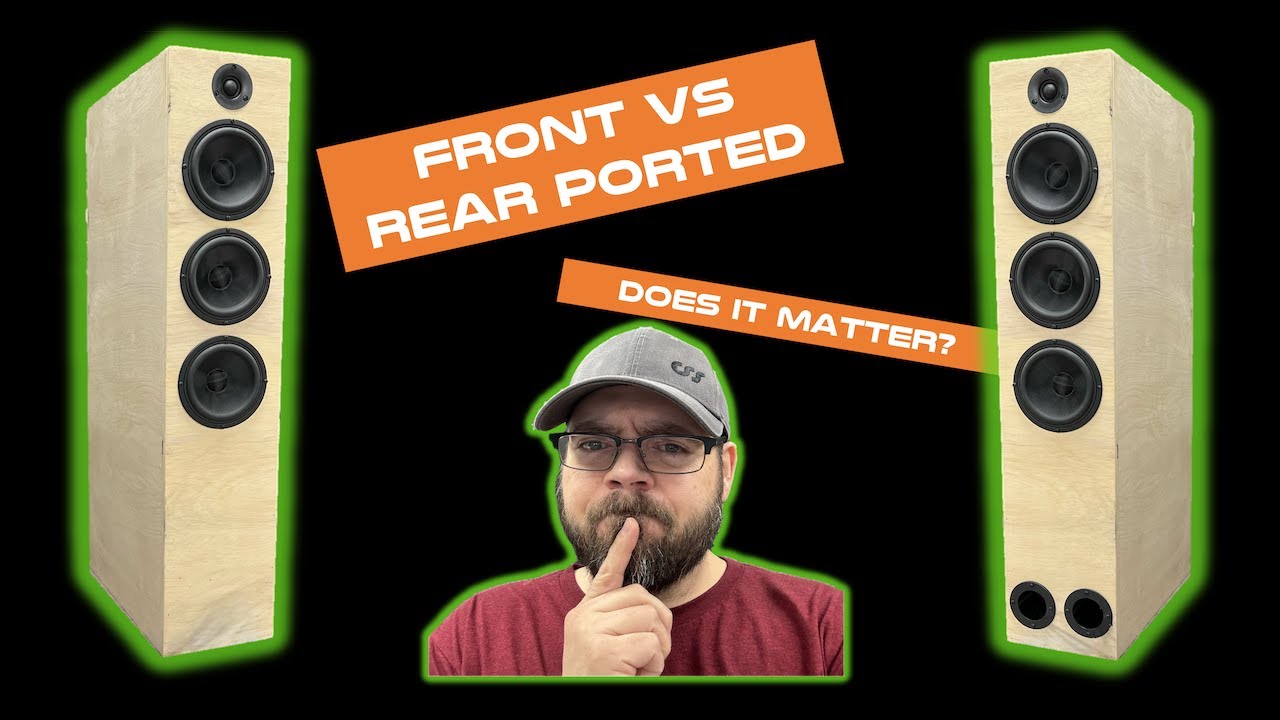
This is a non commercial video challenging the misconception/myth - with measurements from test speakers with front and rear facing ports
So how does the wall factor into this? I’ve always understood that a front facing port (vs a rear one) would remove any negative interaction from the front wall in the case of placing speakers too close. Myth?
no that is the boundary effect (SBIR). That applies to all speakers whether ported or not. Some speakers, often smaller speakers, are designed to be reinforced in the bass response with SBIR effect. Bass frequencies emanate all around the speakers - not in the direction of drivers, ports etc
Yeah,… well no. Talking about frequencies below 200Hz.
Every experience I had in real life rooms (not anechoic) with a bookshelf speaker that had the port on the back they needed more space from the back wall.
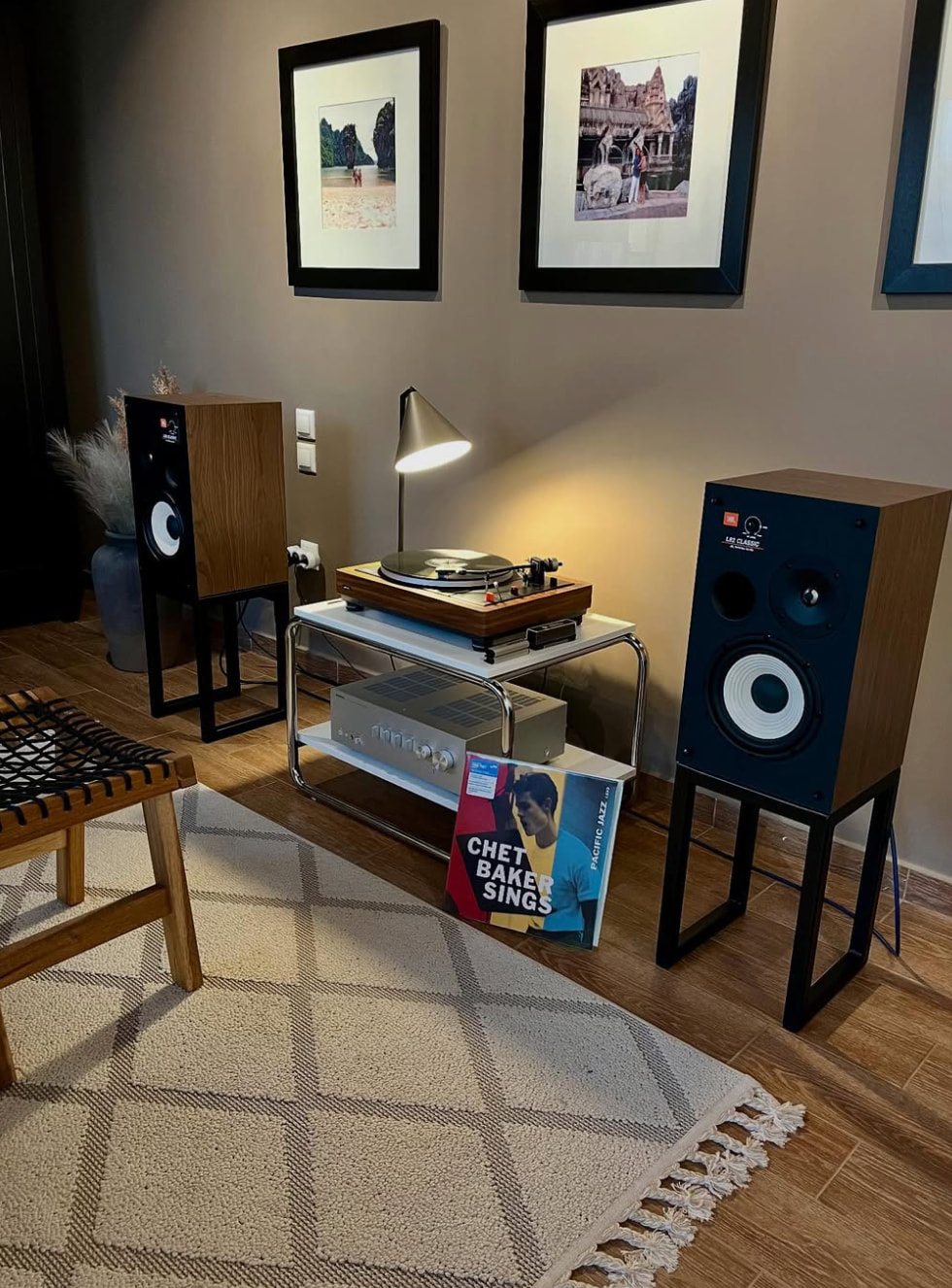
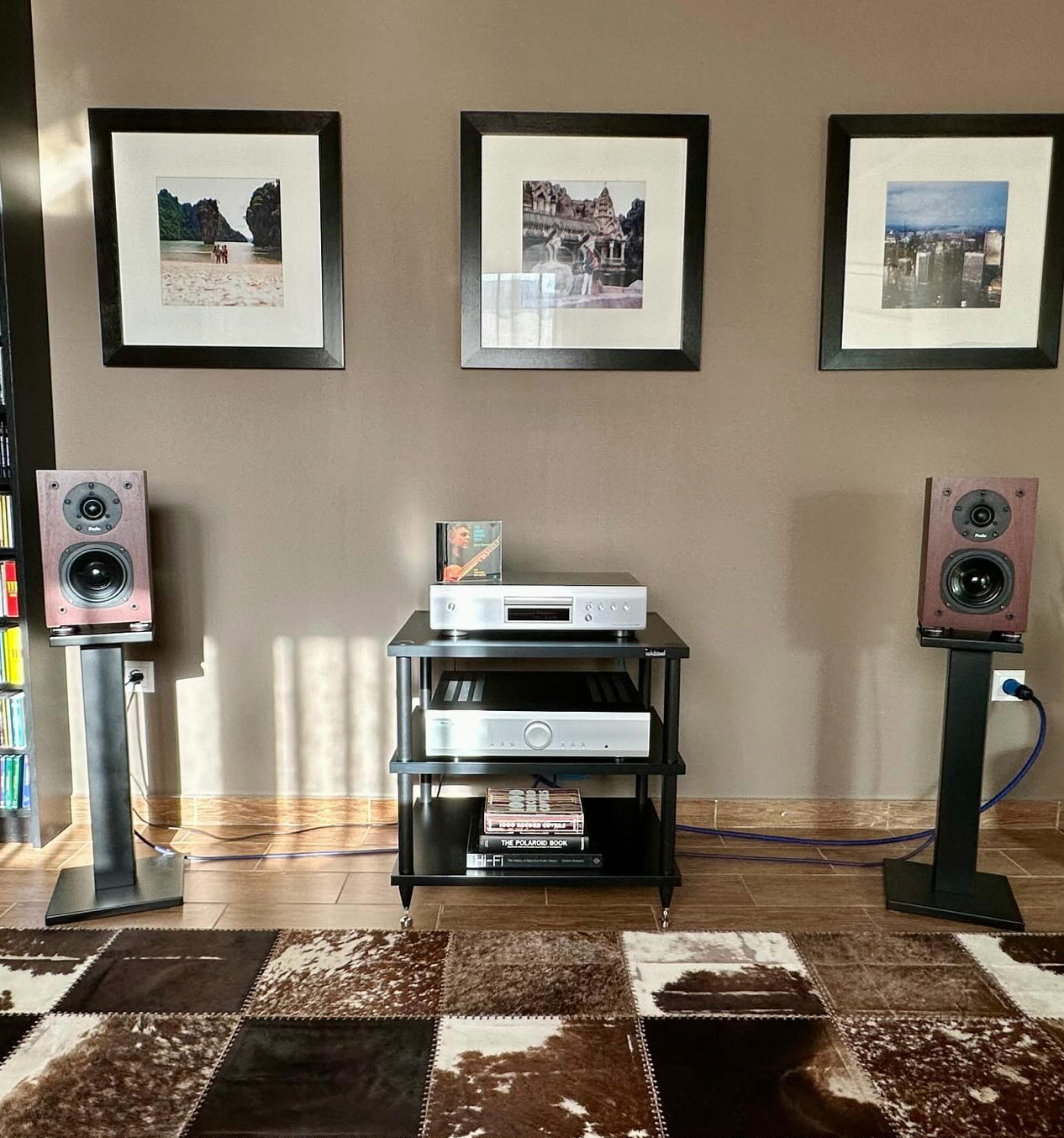
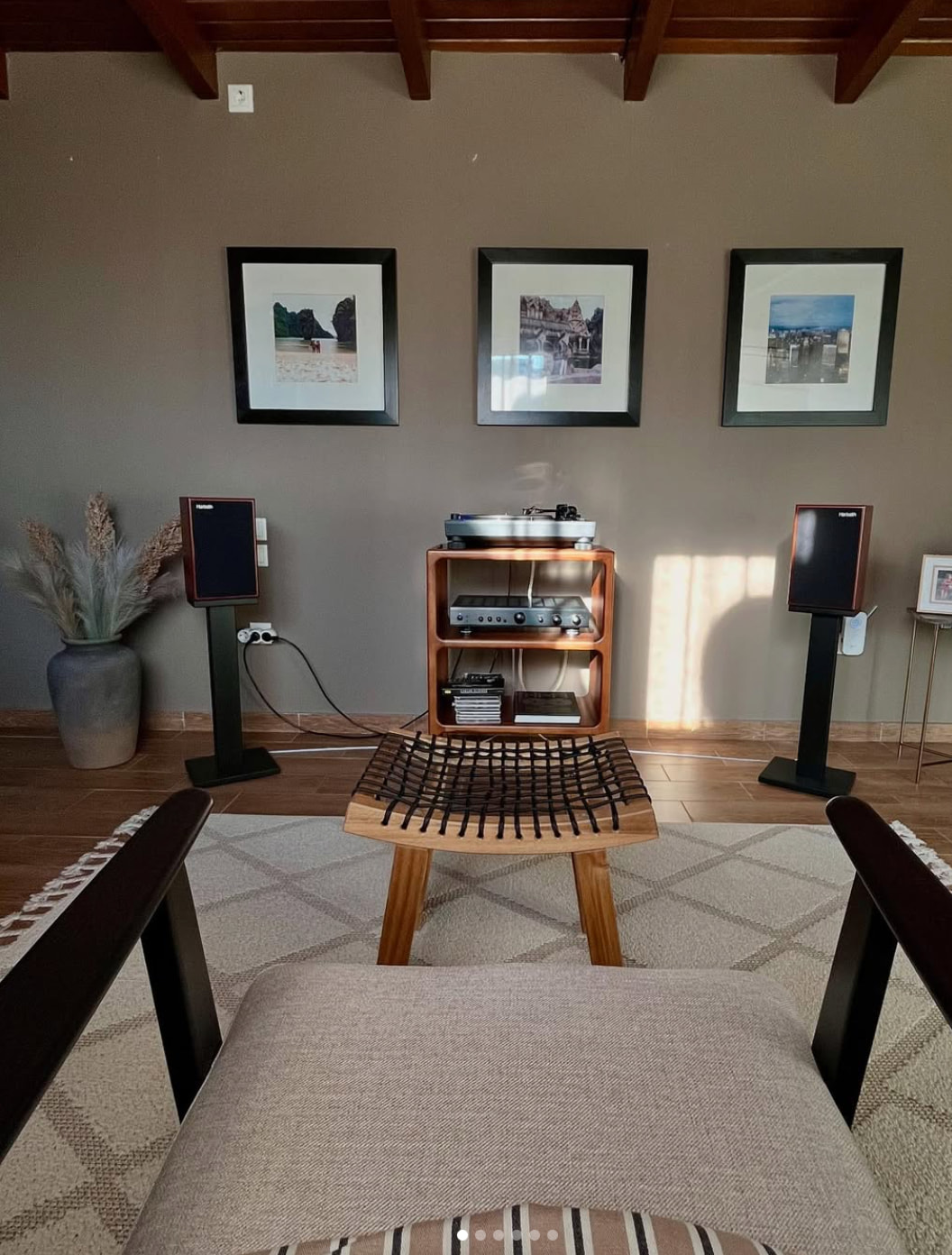
And I have some real examples. The past decade, in my dedicated listening room I owned more than 8 pairs of speakers (rear ported, front ported and infinite baffle).
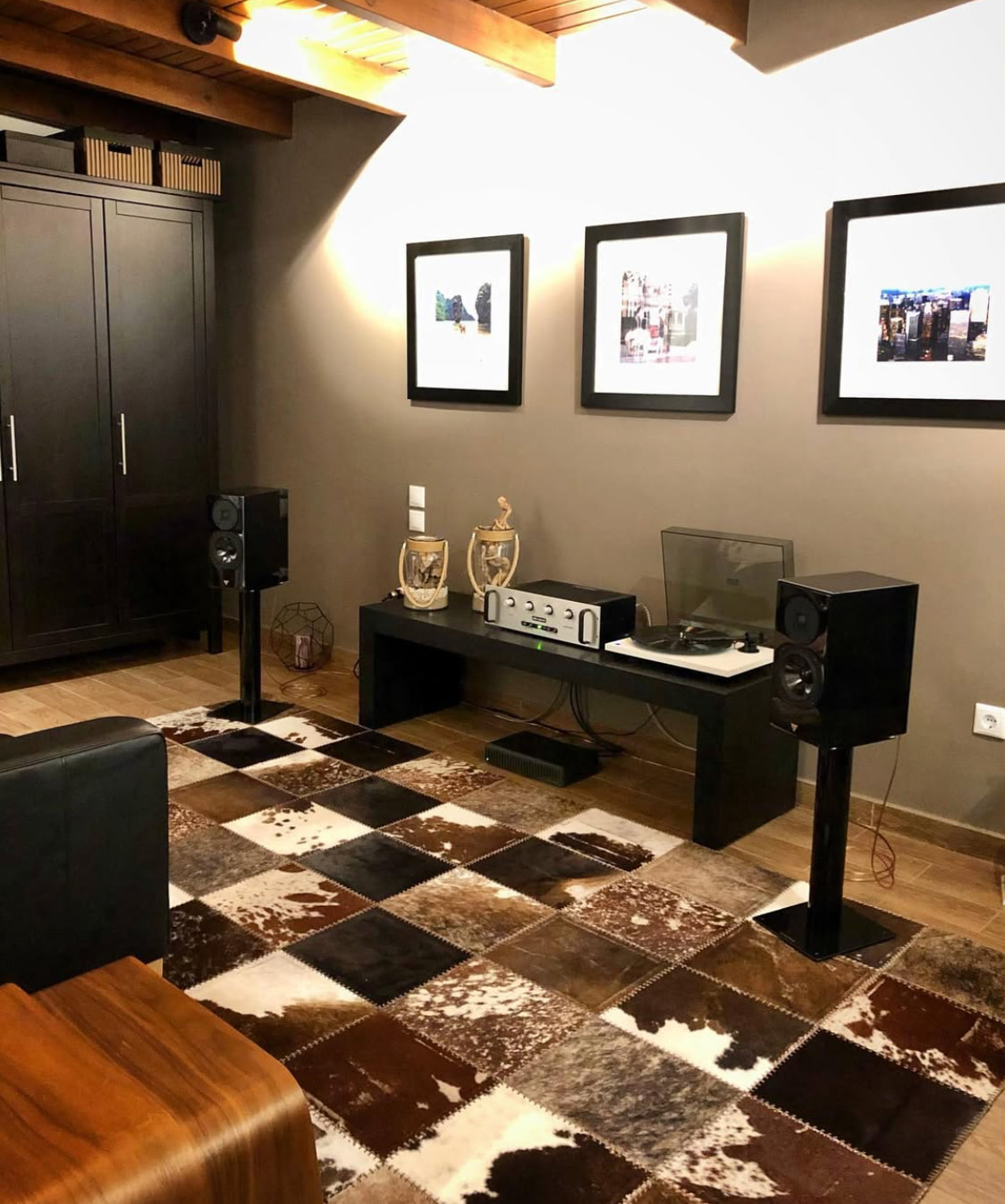
Example no1, in the picture below you see a Vienna Acoustics Haydn Jubilee which had the port on the back. Its distance from the rear wall was 60cm any closer than that and there was bass overhang.
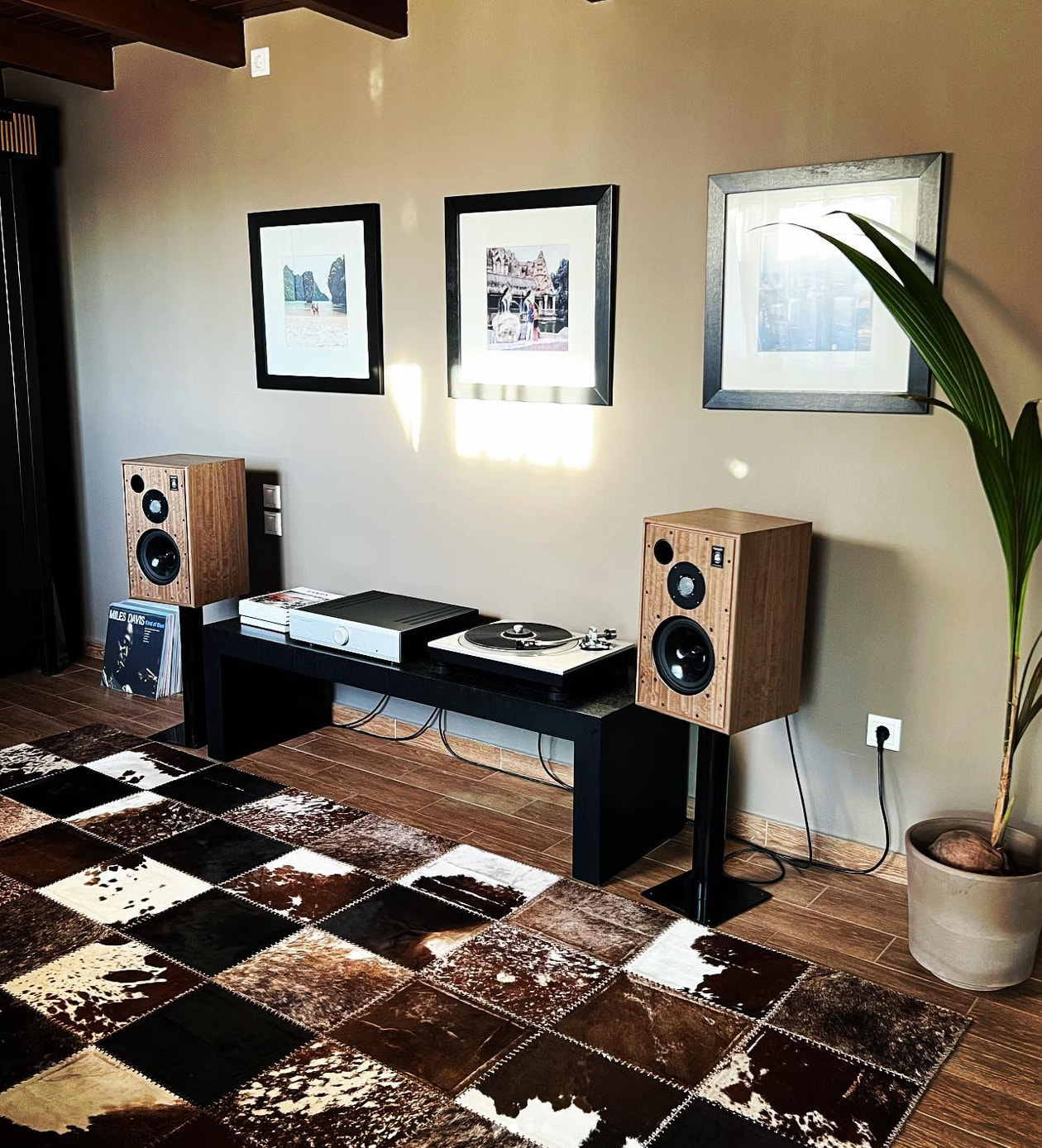
Example no2, in the picture below you see a Harbeth 30.2 which is considerably bigger than the Vienna and it has the port on the front, I was able to position that speaker 30cm from the wall with absolutely no bass issues whatsoever.
Example no3, in the picture below you see a JBL L82 which is a very big front ported standmount speaker, again no issues positioned 30cm from the wall.
Example no4, in the following picture you see a small Audiovector QR1SE with a front slot port, mind you the size of this speaker is comparable to the Vienna, again 30cm from the wall and no issues.
Example no5, in the picture below you see the venerable ProAc Tablette 10 which is of course infinite baffle design with no ports, it was positioned at 25cm with no bass issues.
So yeah my experience with rear ported speakers is that they need more space behind them than those that have the port in front so that the lower frequencies are reproduced more faithfully.
That’s it from me, I am not going to come back to the specific matter because it is getting off topic, this thread is about the magnificent NN50 after all.
It’s the end of the world whether we like it or not. No stopping it now. Just like when the world got Britney Spears.
Would it feel better if I wrote it all myself and posted it? I mean, after all a huge amount of the posts here are based on internet search and AI and different known and unknown sources but just summerized by a human. I think this is mostly a generation issue. Old men don’t like changes. I made that assumption myself based on human experience.
Its inconvenient to have to scroll through these endless posts which are just text grabs from an AI tool. Most people here post about their own experience and post their own photo’s. Thats what is interesting to me.
You can take the position that you are in your right to post these AI blurbs here, but it’s hardly appreciated by anyone and you’re one of the few I’m afraid.