As my vintage SS Pioneer is currently in rehab (no, no, no) I have a bit of a hole to fill, and am thinking about filling it with a small tube amp - maybe integrated. As I’m running a pair of Klipsch Heresy III, this seems like a good / natural idea.
And when I started looking around, I found this to be like starting from scratch again.
If you’re not planning on going crazy with a McIntosh 275 or the like, where does one start with this? Best I can see, something like Cayin or the Willsenton R8 or a bottom of the range PrimaLuna seem to be the front runners. But when you get into tube types, etc., your head wants to explode.
Wondering if there are any closet tube amp owners here that have experience with this esoteric corner of audio and have some thoughts, advice, shared experiences to share?
As I’ve learned to my cost time wise, don’t buy a valve amp if your dealer doesn’t have a maintenance/repair person nearby. Mine will be back from Poland soon . Nevertheless, no regrets, and I’m looking forward to it coming home.
Anyways, starting point. What budget and do you want your tube amp to sound like a tube amp, sound like solid state or the best of both worlds? I’d suggest your Klipsch would love a 300B but not all are born alike and we live in a world where solid state can be tubey in parts and valves can be like solid state. All that before you even get into hybrid options.
Looks also come into play. Lots of things out there which sound decent but look fugly. Mine is brutalist but is as well made as it looks.
Of the three you mention you’d need to find a Willsenton or valve amp repairer in the UK else you’d be shipping back to China. The other two have national networks of a sort. All three have a degree of versatility in terms of sound. Things like switching from triode to pentode mode etc. The Cayin arguably starts from sounding the most valve like whilst the Prima Luna is probably the least.
I have some other suggestions but it really depends on budget.
I never made any secret of owning and using valves. Yes, it’s not in use at the minute, I would happily go back, made a change for other reasons, don’t regret it.
So as an alternative, EAR Yoshino. @frenchrooster will probably attest to the brand. According to their website they have a German presence. I used the 859SE from the date it was released. It went back for service three times, the selector switch wore, the volume pot wore and a resistor failed. I had the output valves changed the last time, they were in spec, but the output had dropped a little. The others are original. The last service was ghe most expensive, about £150…
Don’t worry about the rated power output, more than loud enough in our lounge diner about 24 x 12 feet. There is an 869 currently on offer at a UK dealer.
There are a lot of us on the forum with tube amps. And they are a lot of fun. I swore off them for years but a tube integrated became the bit of hifi I am most fond of in my life.
There are a few things to consider before taking the leap though.
Rolling Your Own Tubes: This means experimenting with replacing the stock tubes with other compatible ones. It’s easier said than done. The first problem is tube reliability. Many NOS tubes will be defective or even totally non functional. And you need matching pairs so it can be quite expensive to get a perfectly functional pair. If you go down this route, a tube testing machine is recommended but they are expensive.
Replacing Tubes: Although you can easy remove and replace a tube in any tube amp, not all are intended for the user to do so. Tubes behave differently so the amp needs to be biased correctly by adjusting little pots inside. Some amps are auto biasing so you can “roll your own”, while others are not. Which means those amps (Luxman and current McIntosh spring to mind) tubes should be replaced by an authorized service agent - usually going back to the manufacturer. But they replace the tubes with a matched pair and make the biasing adjustments. You can generally tell whether an amp supports rolling your own tubes or not by looking at the manual. If it has instructions on replacing the tubes, then you can. If that part of the manual is missing, it means they expect you to send the amp off for servicing.
Tube Life: It’s shorter than caps and sometimes they just blow well before their expected life span. And they are a lot more expensive than caps. And on top of that they need to be matched. So if one output tube goes and the amp uses 4 output tubes, you often have to replace all 4, not just the one that blew.
Full or hybrid: Tubes are used in the power output stage but whether they are used in the rectifier or not depends. Using solid state rectification can result in a higher power tube amp, but you lose a lot of the magic. Much of that tube warmth actually comes from using tubes in the rectifier rather than power output stage. So I would always recommend full rather than hybrid.
I’m not big of tinkering so I am perfectly happy with a non user serviceable tube amp. I use a Luxman model and my first tube blew at year 4. My dealer sent it off to the manufacturer for a new set of graded and matched tubes.
I strongly suggest checking on what the expectation is on tube replacement before you buy and that it matches what you want to do (roll your own or manufacturer service). And if manufacturer service, shortlist your brands to those with a decent service footprint in your country. Luxman, McIntosh, Quad, and Triode are probably very safe bets in most countries.
If you want to tinker yourself and want something bespoke and beautiful, Decware build tube amps to order and you can choose the wood plinth and even the colour and shape of the dials and buttons.
I started from scratch to learn about tube amps at the beginning of this year watching various YouTube videos and trying to get my head round new concepts and tube types and manufacturers. It’s a whole different world out there full of hundreds of brands and very confusing. Originally I was drawn to companies like Audio Research who are now selling “affordable” integrateds and beautiful unaffordable amps by Jadis but quickly realised that there was a much wider & bigger choice.
You Tube is a great starting point and you come across various characters who gladly share their opinions and give insights into what you need to know. In Canada there’s a fellow called Thomas Tan who started as a reviewer but now has launched his own brand. In the USA there is a slightly crazy retailer called Kevin Deal who is a tube evangelist and also a business partner with Pimaluna. British Audiophile also has very good reviews of affordable brands like Wilsenton. There is also a well regarded UK company near Leicester that sell and maintain their own brand of Chinese made amps.
My experience is that it’s fun and dipping a toe in the water is really the only way after doing as much research as possible.
You don’t have to use NOS valves. You can just use new. There are many great ones out there albeit that, just like NOS, it’s worth understanding who owns who etc. Many new valves from one manufacturer are actually from a different manufacturer at the same factory who has graded the valve as not within their tolerances but okay for their other brand to sell. Bottom line is only roll if you’re dissatisfied with some aspect of what you have or a valve blows and you’ve sourced an alternative you could try. Tube sockets can wear easily so get it as close to right first time as you can and enjoy what you have. You largely don’t need a tube tester. It’s usually not hard to find someone local to you who has one, whether owner or dealer.
Some amps auto bias (mine does) but, of those which don’t, most don’t require sending anywhere. Most allow you to adjust the bias yourself without openning anything up.
If you have a matched quad and you have their measurements then it’s not too onerous to ask for one tube which matches what you have rather than replace all four. It’s useful getting what you have measured regardless of whether they’re alleged to be matched as they’re often nothing like matched and yet have performed perfectly fine.
Wholly agree with your comment re: rectifiers. I can change the entire presentation of my amp with changing the two 300Bs but can do it even more dramatically by changing the valve rectifier.
Wonderful as Decware are, the reality is that the wait list now runs to years not weeks or months and that isn’t changing any time soon. Few come up second hand because they’re so good but you see one grab it as they’d be lovely with the Klipsch.
An alternative to consider would be an Ultralinear amp from LTA. The valves run cool, valve life is extended and in the right room and system they are extraordinary.
Thx. Budget-wise, thinking about dipping my toe in the water at around €1-2k. And think I’d like it to sound like a tube amp. But open to changing tubes down the line to see what other sound I can get out of it - so that tube type flexibility is important to me. Need to research what kinds of tubes are compatible with others. That alone is a project.
Thanks - I’ve watched a ton of videos by those two (btw, anyone not watched Kevin Deal’s review of the SN3 and the 152/155 - check them out ) but never on any tube stuff - will definitely search. Thx for the recommendation!
At that level there is no perfect answer. Cayin and Willsenton sound lovely but if repairs are needed you’ll have issues with both and they don’t really offer what you’re looking for in terms of rolling. I do like the look of the Cayin but these things are very personal.
I think they’re fugly and fuzzy but you might want to explore Icon Audio.
For the price and for rolling I doubt you’ll be able to beat the PrimaLuna. Gives you auto bias and a range of tube, mode and sound options provided you’re okay with something which looks like a cross between a toaster and a bread bin.
There seem to be a lot of Cayin dealers near me in DE, so may be ok (unless they all go back to China for repairs.) And as looks go, I’m not that bothered - as long as any roll-cage / bread bin cover comes off. Those are terrible. But would understand if I had young children.
Indeed and new can also be a bit of a crap shoot. Yields of flawless valves are a bit suboptimal and measuring and testing can get pricey. The testing machines that do this are about $2-3K.
One of the reason I like the Luxman amps is they basically treat tube replacement like Naim treat recapping. They make it clear where they buy their tubes from. But they reject something like 60% of the ones they get in and any that pass have “Luxman” etched on the tube and are then paired. I think McIntosh do something similar and only the ones that pass get coated with the green filter.
My only gripe is that they moved away from JJ citing unacceptably poor yields during grading and replaced them with PSVane which are perfectly fine and for budget tubes most people prefer them but I preferred the sound of the JJ. The PSVane are crisper at the top and more hifi, but the JJ are smoother with more presence.
Slightly off topic but people have joked for years about the “secret Naim tube amp”. Which AFAIK never existed even as a fleeting notion.
For beginners, the really helpful thing would probably be to list which tube types are compatible with others. As I’m reading, ‘the internet’ says that EL34, KT66, KT77, and KT88 are the most popular tube types, with EL34 having the more ‘traditional’ warm tube sound and KT88s as having more power and control over bass and low frequencies.
Would be good to know which can be swapped out for each other as I understand they have different bases / connector pins.
In my experience, if a tube amp supports rolling your own, the manual lists all the compatible tubes.
There are combinations too. Like if you use one type of rectifier then the power tubes must be from list A. If another type of rectifier then power tubes must be chosen from list B etc.
He’s very enjoyable but he does like a very particular sound so it’s worth being aware that it may not be what you want at all. I suspect you won’t be too far apart but I found his tastes were far too on the warm side of neutral for me and I consider myself someone who prefers to be on the warm side of neutral.
I think this is half correct and why you need to maybe audition a few or go hear some owned by people local to you. The internet convinced me I really wanted EL84s but then a very kind bloke on another site offered me the opportunity to go hear several of his (many) amps. Turns out that EL84s are far too soft for me and 2A3s and EL34s are much more my thing. Latter in particular do PRaT far better than you’d imagine and may well appeal to a Naim owner. Amusingly I then ended up with a 300B which does all the 300B things but doesn’t sound as you’d expect (in a good way).
 . Nevertheless, no regrets, and I’m looking forward to it coming home.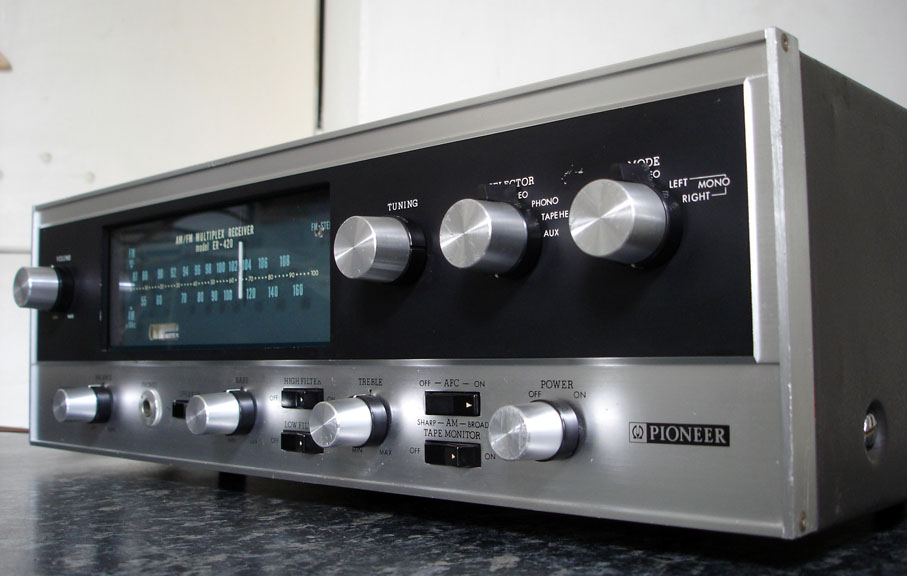
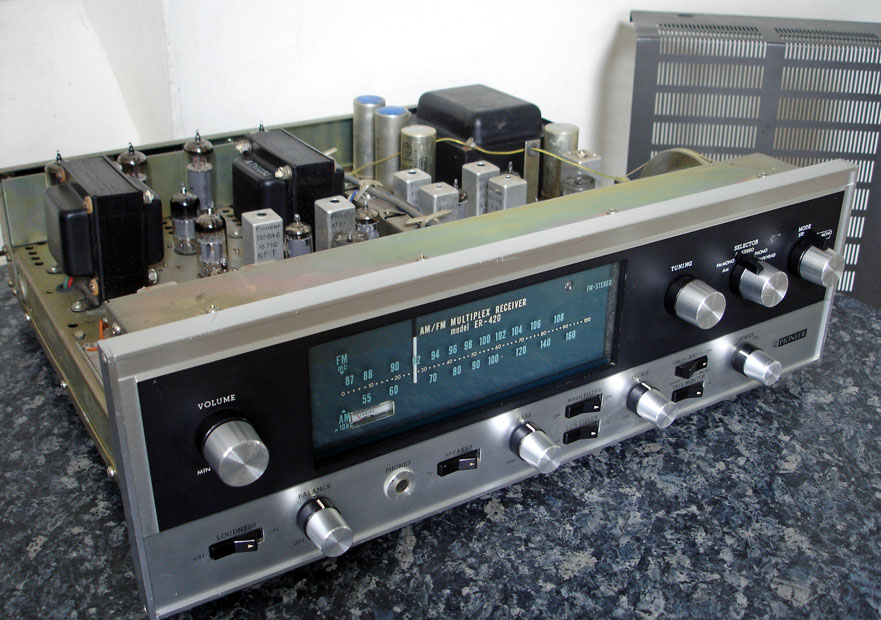
 ) but never on any tube stuff - will definitely search. Thx for the recommendation!