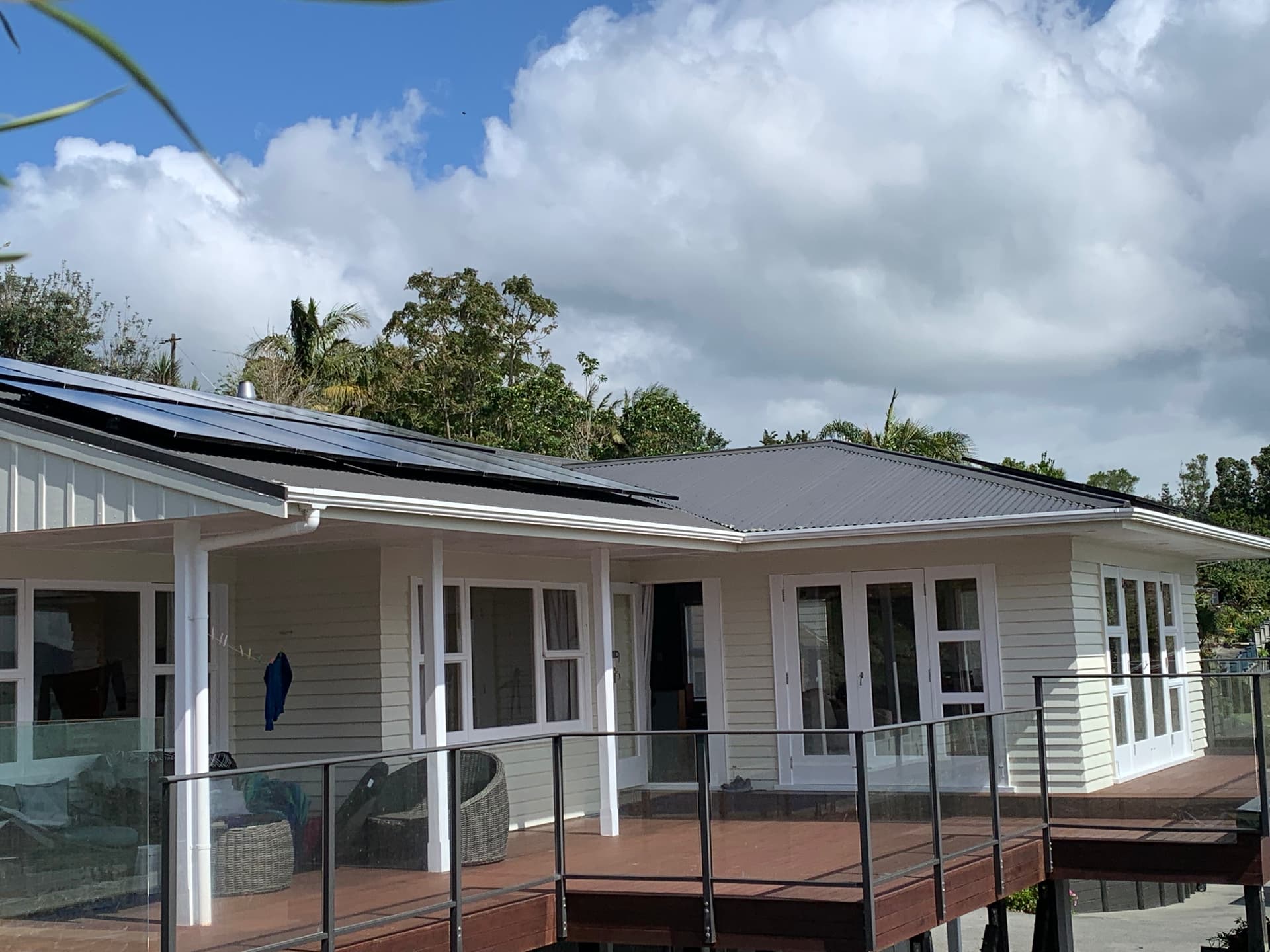
Well that was quick - arranged roof replacement and a 3k integrated solar array (see my earlier post I am replying to) at the end of August. Had to hold it back for 2 weeks due to our holiday in Italy but am now typing using solar power! I thought that there would problems with getting installers and with the supply of solar kit due to a rush to mitigate the energy crisis but not a problem!
The scaffolders came last Monday and finished Tuesday. The roofers did the roof strip, insulation and retile of the North West roof on Wednesday. They stripped, insulated and battened the South East roof on Thursday, ready for the solar install. This was done on Friday but they finished in the dark so couldn’t commission then. However they fired it up remotely yesterday morning. Roofers and solar installers coming round tomorrow to finish off and tidy up. I am delighted with how quick it was and how 3 separate building firms managed to coordinate perfectly.
It’s only a 3k 8 panel integrated array but I’ve already seen 2.8k when the sun peeped out. Lucky to have a south east facing roof and a 35 degree angle which according to the tables gives around 95% efficiency. The only missing piece is the diverter for the immersion heater which is due in November. Now to get the smart meter installed and choose someone to flog my surplus to. I’m looking very closely at Octopus but am currently on a decent fix with British Gas so the calculator will get a hammering.
Overall much quicker and less hassle than I expected, I just hope my obsession with checking the performance on the Solaredge app will abate.
Great- good outcome
My install was April 2022- still checking the SolarEdge app several times a day!!
We’ve been waiting over a year for a smart meter to be installed with Octopus, just bear that in mind if you head for then. Excuse has been no installers in our area, which is Suffolk, not the outer Hebrides!
Very pleased for you - well done. I’ve just purchased a 1KW kettle, much to the disgust of my wife, but it means I get to squeeze that little bit more solar energy out when they are only generating 1-2KWs.
Good info - thanks. British Gas are currently pestering me to have a smart meter so I may just let them get on with it as my understanding is you can still switch easily whoever supplied your meter.
Conversely… Octopus installed my meter within four weeks. The solar system on the other hand…
The battery/inverter was installed about four months ago and together with an Octopus Go tariff is saving me around sixty quid a month (have an electric car and this and the battery charge off peak at 7.5p per kWh, then get about 9 hours home background use from the battery offsetting about 5 kWh at 31.5p a day…)
The solar array is still under a tarpaulin. The ground mounts (roof not suitable due to alignment and heavy winds) have been difficult to get hold of due to supply problems in China; and not just problems with my supplier, have been unable to source them anywhere (and I tried!) Install hopefully happening next week though… Fingers crossed.
Alright don’t rub it in, I’ve an ev car too hence wanting the smart meter 
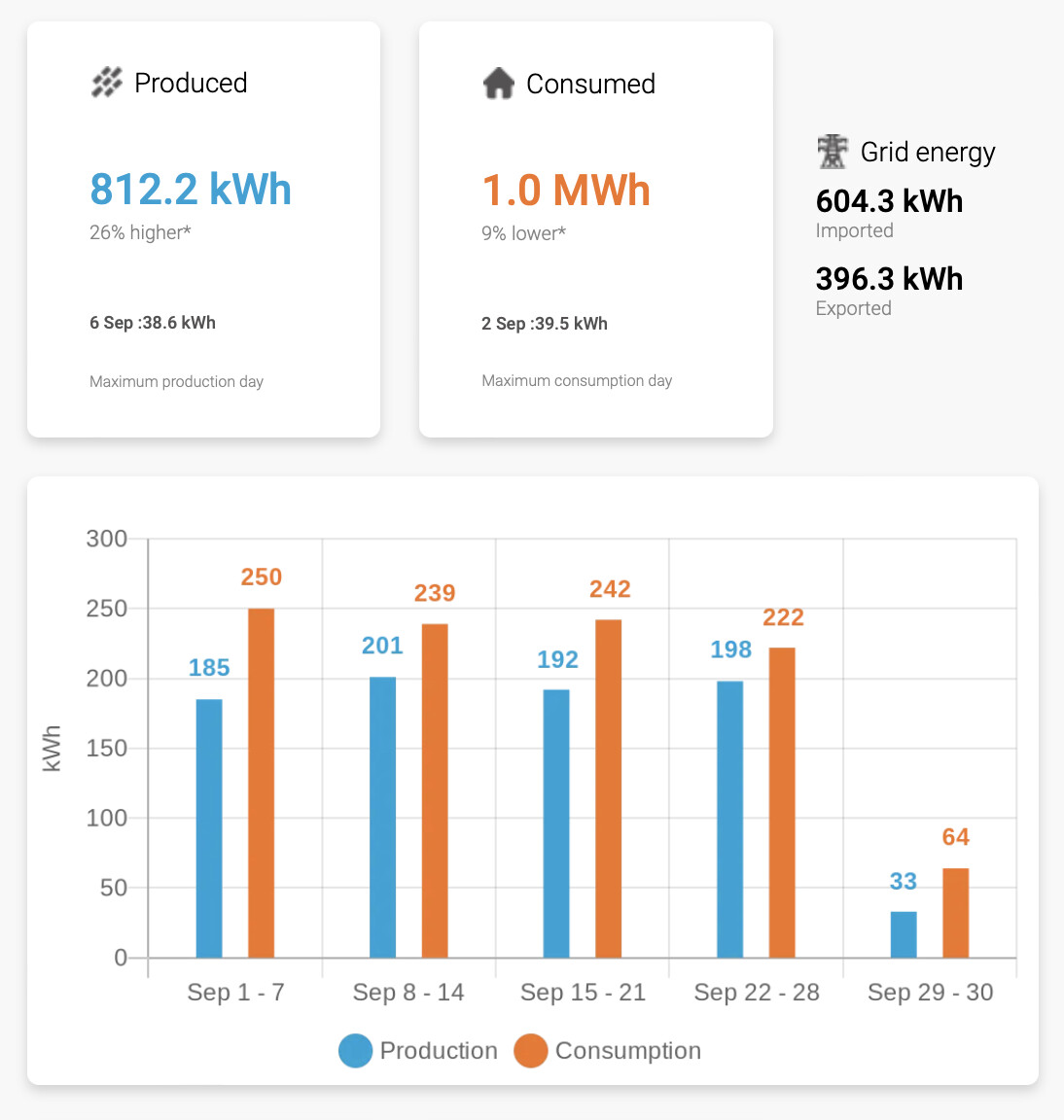
We are about 3 months into our solar now and are past the Spring equinox, though it hasn’t been a great winter/spring with a lot of wet and cloudy days. Nonetheless, for September our power bill was down to $180, from $470 the previous year.
Our September generation is close to our consumption, though we don’t have batteries, so replying on export rates at any average of 50% of the import rate:
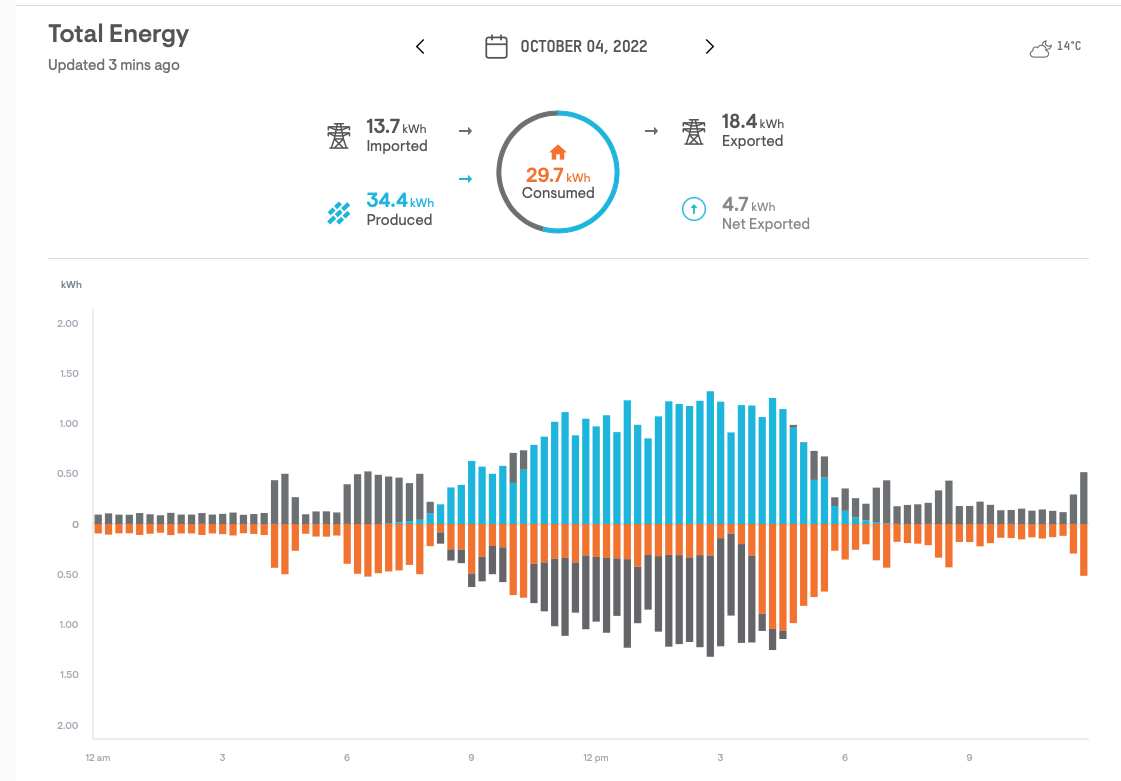
A sunning day earlier this week is looking really good, especially as we are now on daylight savings and have generation in the early evening peak. We are still having cold nights and using heat pumps in the morning:
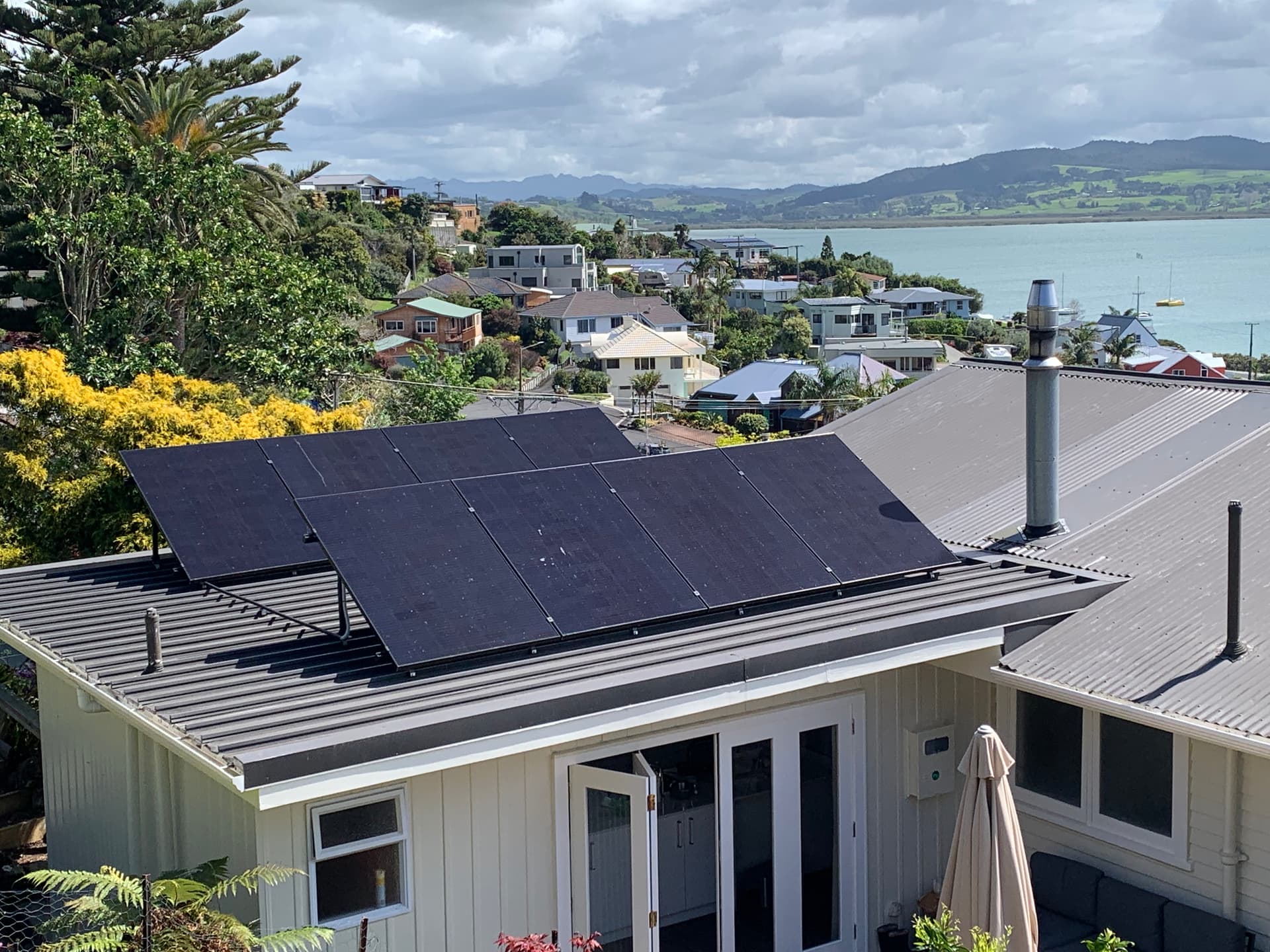
We have 23 panels in total, 8 over the kitchen facing NE:
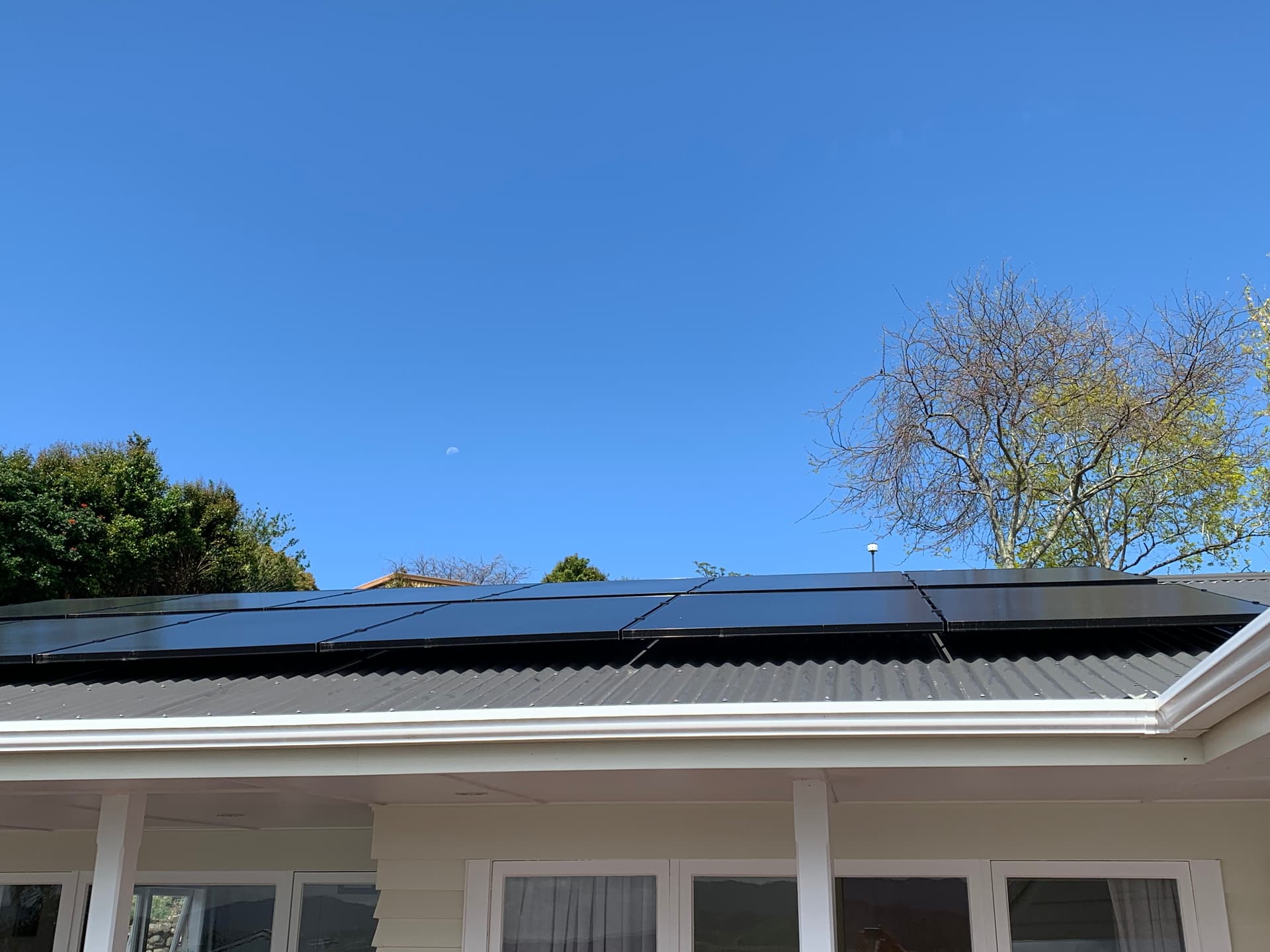
And 15 on the NE facing roof (12 in the foreground and 3 on the second gable):
I had a catch up with our goal installer about batteries and concluded it’s too early for an economic solution. They are trailing the new Enphase batteries in January, so will await feedback on that. They can pull our consumption and generation figures from the array to size a battery. In winter or maximum export was 10 kWh, with an import of about 20 kWh. Currently we are importing around 15 kWh and exporting more than that on a good day. I’m thinking a 15 kWh battery would be nice, but the price needs to come day and the reality improve first.
That must be very satisfying Mike to reduce the bill to $180.
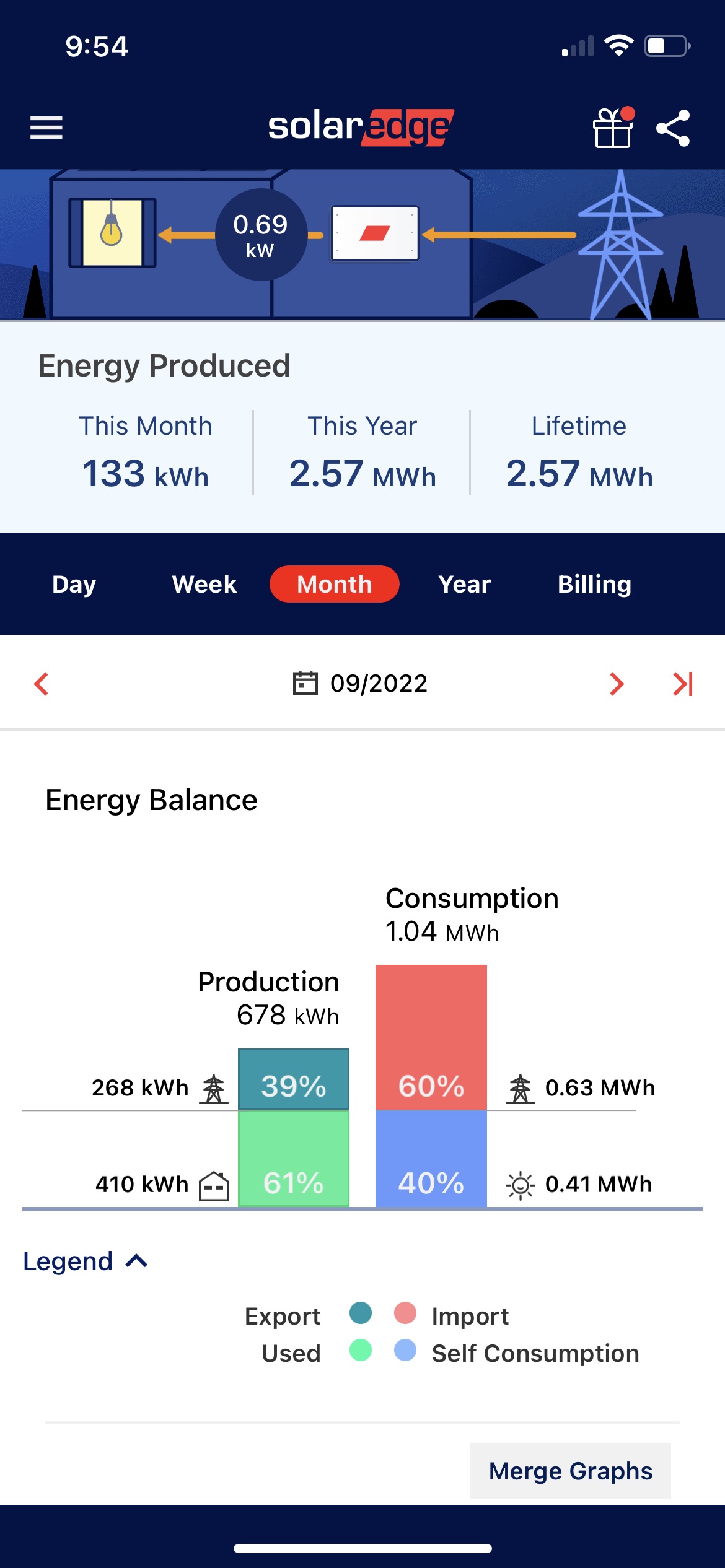
We seem to have similar consumption to yourselves- we were 1.04MWH for September, but we do produce less. Although we are pleased that we used 61% of what we generated and this is a higher percentage than the install er estimated. Our bill for September was $134 as opposed to $240 last year - sorry I know rates are lower here.
Last Sunday was our first day of producing more solar than we used , but it didn’t last as torrential rain since then.
Unfortunately I still think that a battery for us would only be beneficial October to February- which is no where near enough for the economics to stack up
I see the national grid are to go ahead with national demand flexibility service trials starting next month……very little info at the moment. The utilities will be given a days warning to provide a consumption cut the next day, those customers/businesses with smart meters will be contacted by their supplier and will be incentivised to reduce energy consumption at peak hours. It appears the reduction in overnight electricity prices is down to the supplier, all very vague at the moment, but one to watch. They are talking about at least 12 flexibility service days between November and March to make it worth consumers signing up.
I’ve seen that, unfortunately it doesn’t really work for people who have solar panels, as our current usage in Peak times is low (due to summer months), but next month it will go higher when its darker, so it’s near impossible to have a reduction.
I suppose it’s not aimed at us
Not aimed at many, i read there is only about 4 million smart meters fitted, and not all of those customers will sign up. I guess its an experiment and if financially encouraging people will want to join and get a smart meter to do so.
I think Octopus have raised some concerns that the payment proposed (can’t remember the details) wasn’t sufficient to drive behaviour.
Whatever the ‘deal’ it’ll make no difference to me, I’ve managed to shift about 65-70% of my consumption to 00:30-04:30 and don’t really use anything at all between 12:00 and 19:00 due to the battery (charged overnight, soon charged via solar I hope).
In other news I’ve now got 15 panels erected on ground mounts and hopefully these get connected to the inverter/battery tomorrow… So I’ll finally start generating some ‘free’ electricity.
My cousin’s wife lives at One Tree Point. I’ve always loved the view you have from your house.
Phil
The installation happened. The electricians turned up at 6pm and worked until 11:30pm to get the panels connected to the inverter.
About two hours of that time were spent changing the inverter configuration, updating its software and coaxing the battery back to life (for some reason (configuration issue) it discharged below 10% and the inverter needed to be persuaded to charge it, or at least that’s my conclusion having watched the team working).
Saturday morning I was like a child at Christmas constantly looking at the app on my phone and marvelling at the generation stepping up.
Overall the system generated about 29kWh on Saturday and 16kWh on Sunday. It peaked out at almost 6kW which is the peak stated capacity of the system, so I’m happy.
It charged the battery which fed the house for peak use to avoid drawing from the grid and also fed the house during hours the system wasn’t generating (until it was exhausted).
I only used about 4-5kWh from the grid on Saturday and Sunday which is about a quarter of my consumption. On both days I exported more than this due to the system producing more than I could use once battery charged.
So despite being irritated for about five months by staring at an open trench in my paddock and a stack of panels under a tarpaulin, I’m finally happy that it’s installed and working.
Today I’ll wait until peak sun and try to charge the car…
I’ve been using the ‘system’ for five days now…
I’m fairly convinced that the battery was worthwhile. My back of an envelope calculations were primarily based on charging the battery from the sun and then using it in place of ‘bought’ electricity; I’d assumed this consumption would be once the sun went down. The secondary saving was charging the battery off-peak (Octopus Go, 7.5pp kWh) and using this on-peak (replacing 31.4p units) should the sun not fully charge the battery on shorter/duller days.
What I’d missed was when I’m using something that has got ‘bursty’ power consumption (like my washing machine/dish washer/oven) the sun doesn’t necessarily provide all the power I need at the time that the bursty machine decides to heat water (or the oven).
All it takes is for a cloud to drift across the front of the sun and the ‘juicy’ 3-4kW yield suddenly drops to around 1kW. During this transient reduction in power from the panels, the battery steps in and provides whatever DC power the inverter needs to satisfy the demand, had the battery not been fitted I would have been drawing power from ‘the grid’ at this time.
This also applied with charging my car or switching on the immersion heater, both draw around 3.6kW, when the sun was bright the solar panels could satisfy the demand but when clouds drifted casting shadows over the panels the battery stepped in and supplied the shortfall as above.
So I’m fairly convinced the battery was worth fitting.
I’m still struggling with whether I could have used more battery storage capacity. Every day I’ve exported power when the panels provide more than my house can consume with the battery fully charged, every evening (or small hours of the morning) the battery has been exhausted and I’ve purchased electricity until the sun starts shining again, I think the larger battery would have avoided this.
I also suspect that as the days shorten and the sun gets weaker, the opportunity to charge the battery will be reduced (and I may even revert to charging it between 12:30 and 4:30 from the mains, this still offers a saving of maybe 25p or so a kWh)
I think the first thing I spend more money on will be a solar diverter to channel excess electricity generated to heat water since that would have had plenty of use this week (even today) and maybe with this the savings potential for the second battery is limited.
Still lots to think about… !
Remind me again about your battery make and capacity.
Phil
It’s a Solax ‘triple power’ 5.8kWh.
Same make as the ‘hybrid’ inverter (which also switches/sources the power to/from the battery) the inverter’s a Solax X1-Hybrid-G4 (5.0kW version).
I’ve found over the years that solar output in winter is about 20% of summer. I considered a battery but the cost versus payback time was too long.
The one thing the I got was a ISolar boost that heats the water up from solar. Usually in good bright weather the water is hot by lunchtime, then I charge my car in the afternoon.
I,m in the UK
Battery is useful if you have economy7/dual rate meter. Especially in the winter.
My plan , once f i n a l l y installed is to minimise the use of standard rate electricity ever again.