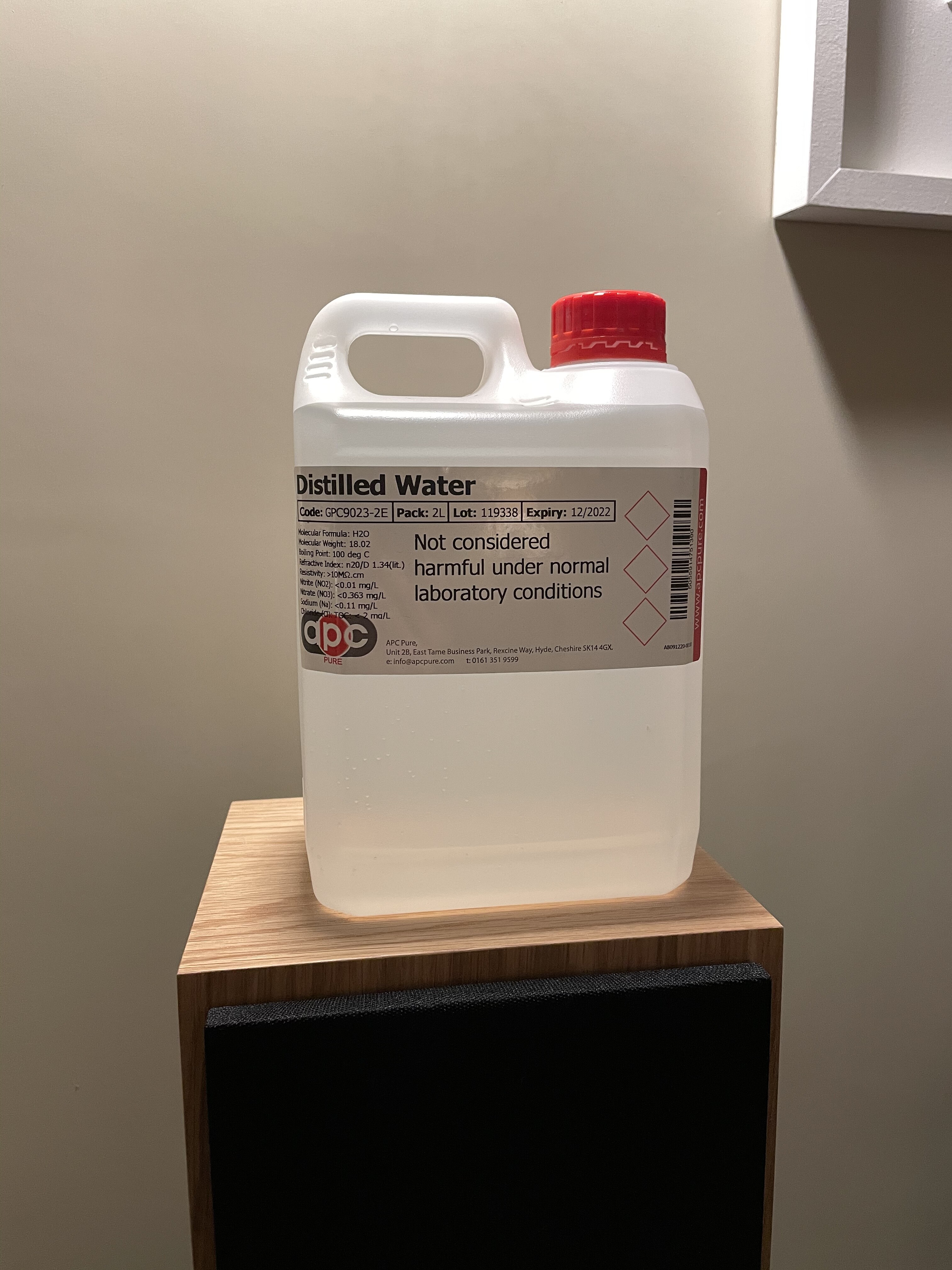
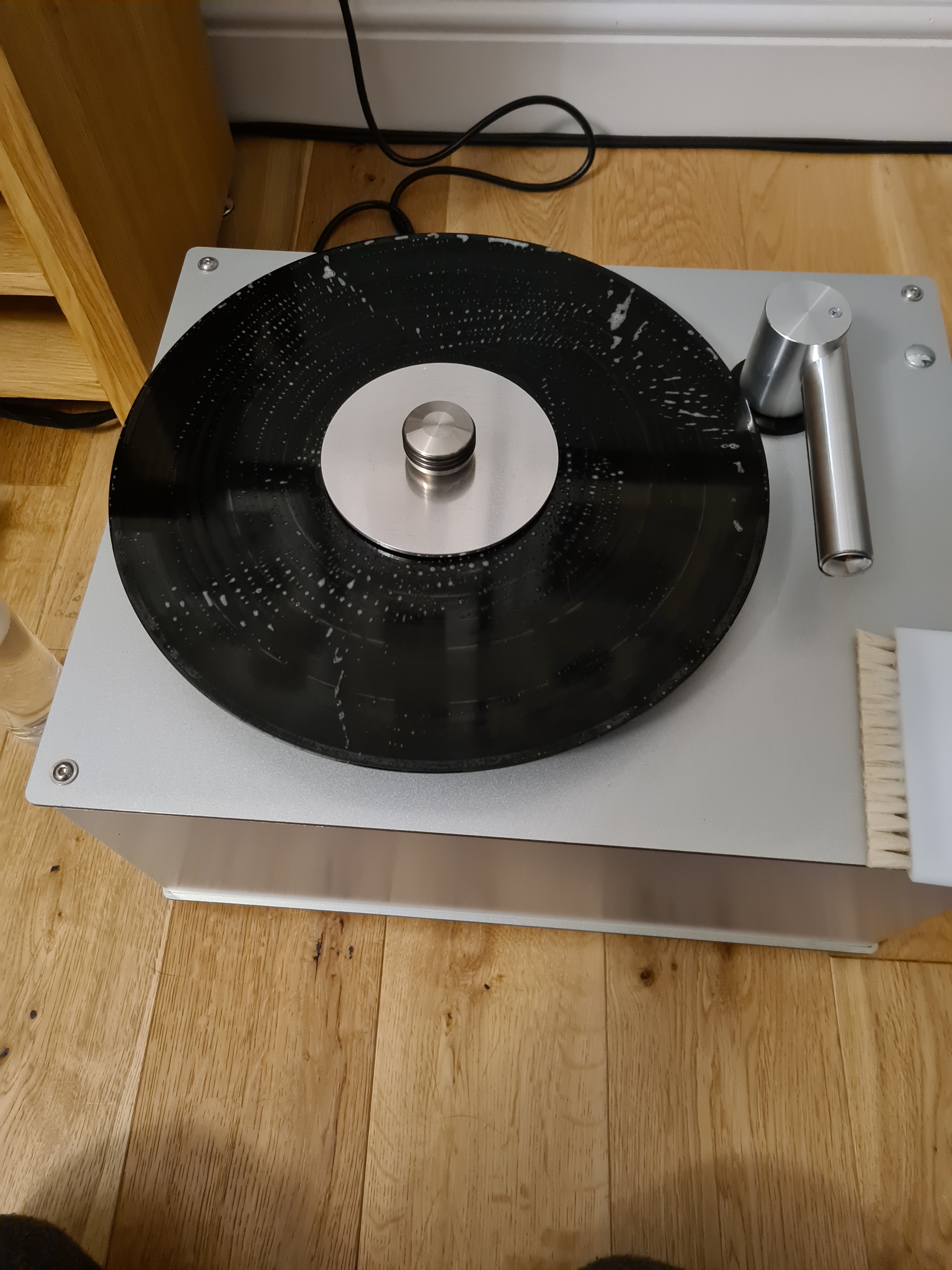
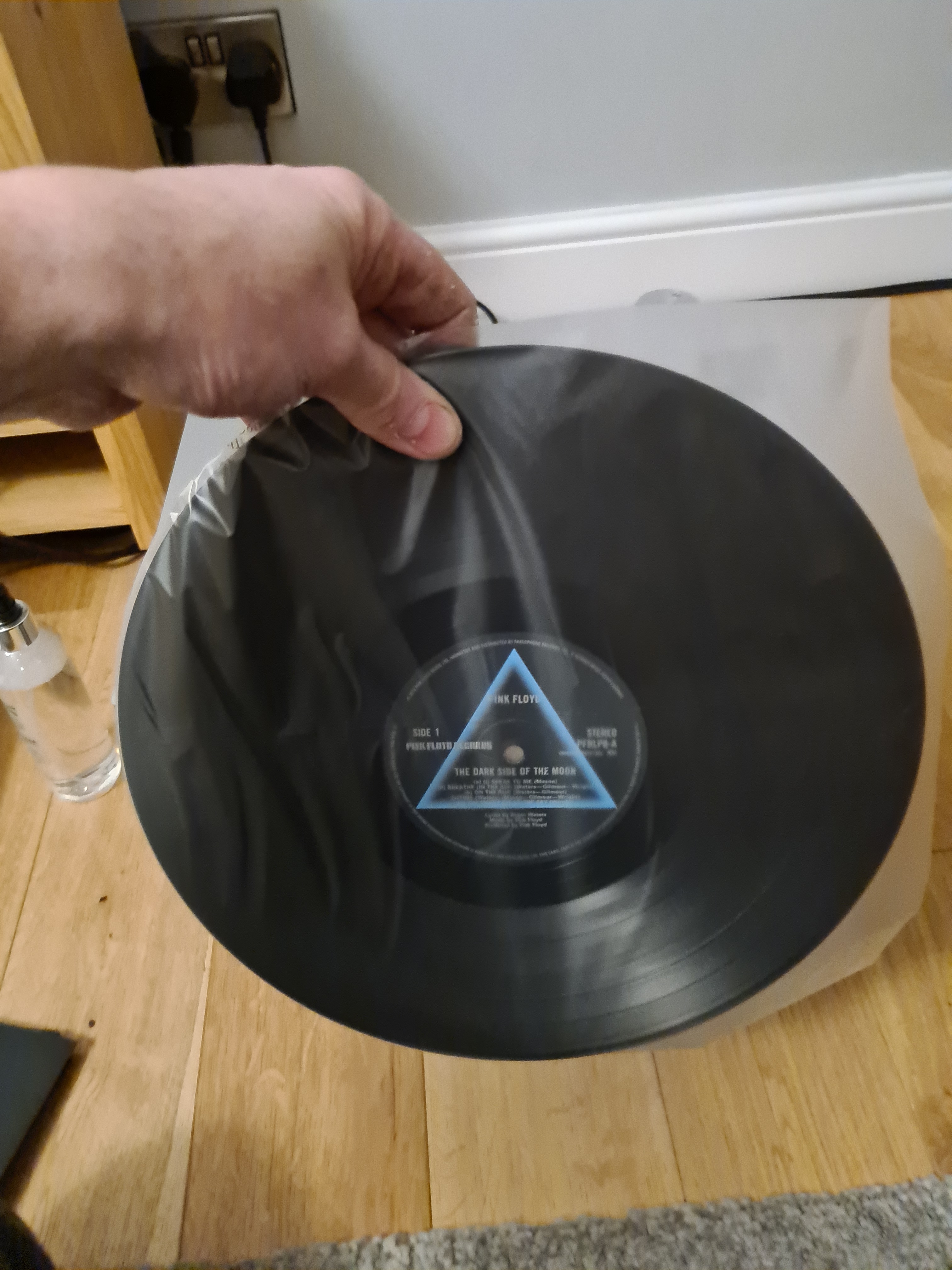
I have a cheap spindisk thingy as well as the project.
The best way to clean a dirty disc is to use both.
The spindusk does a good job of loosening the dirt and grot. Then use the project as you would normally do. Making it wet again, then dry.
After 100 discs in the spindisk, the liquid is horrid. As are the pad things.
I only use both for really dirty discs. And need to be in the mood to take over the kitchen table.
I wonder if one could do a batch in something like a spindisk, change the fluid and repeating that cycle until you get a batch where the fluid is nearly clear at the end. After all, I don’t really have room for much else.
Those spindisks are good. And for me made a lot of difference.
Keep the brushes clean and the fluid clean and they do a great job for low money.
Drying them is in a rack, so not ideal. Hence why the project does the final bit.
But I reckon the spindisk thing does most of the work
My first record washer was before I knew about Knosti, two perspex discs with with a bolt and washers large enough to keep the label dry. A babies toothbrush and a solution of Teepol. Rinsing was a tap with a Paterson filter attached (the home film developing company). Drying was on the dish rack.
Then I got a Knosti, labour intensive, but time limited by the number of slots in the drying rack. It wasn’t too difficult to use a couple of large jugs, funnel and filter paper every five records. By having two jugs of solution it was easy to go on working whilst one batch of solution was filtering. It was all made easy because I had the home darkroom equipment with big funnels and jugs.
One mod for the Knosti was to drill out the spindle, replace it with a threaded rod and put a cap nut on one end. A basic electric screwdriver that worked at about 10 rpm, a nut driver, then made lighter work of rotation. A bit of superglue to stop the cap nut undoing and I could rotation in both directions.
I think it was Russ Andrew’s who recommended two units, one to wash, one to rinse.
The most important accessory for my Moth cleaning machine is proper ear-defender earplugs. I don’t know how it compares to the other machines mentioned here but the Moth is excruciatingly noisy when the vacuum is running and without ear protection while using it the vinyl maybe as quiet as a whisper after a clean but all I’ll be able to hear is the ringing in my ears!
Difference here is that deionised water has been through an ion exchange column to remove the charged particles of dissolved solids. So if you have table salt (NaCl) in water it dissolves to Na+ and Cl- which is then attracted to and trapped by the also charged ion exchange resins.
So, unless the water is filtered, it will not ensure a particulate free result as uncharged solids may pass through the column.
With distilled water the solids will definitely be removed.
There is a better chance that distilled water will be the cleaner of the two so makes a case distilled water will giving consistently better results.
There is also highly-purified so-called “laboratory water”. Amazon sends 5 liter or 20 liter canisters and the laboratory water costs a few euros more than normal distilled water, so that’s what I use
Just from an academic point of view I wonder if this will give a better result than distilled water. My gut feel says no. Distilled water should be particulate free enough that anything “more pure” will get contaminated from ambient dust particles when applying to the record surface.
I agree, it just doesn’t matter enough for me to saddle myself with the lingering concern. I’m spending a sizeable amount of time on this, and the spending for the Nagaoka inner sleeves and protective outer sleeves is also not insignificant. Being car-less, I have to order the canisters for shipping anyways, so I just click the insanely pure water.
Hey I agree with that approach! I am all for a perceived improved situation. If the mind is at ease the music will be experienced as better. I’d probably also have done it in your situation.
Have you ever put a TDS meter in distilled water? It can be quite high depending on the source. Personally I think good RODI water is better, I have dual DI resin canisters on mine with a dual probe TDS meter which allows me to monitor the output to keep it at zero TDS. Then again, not all RODI water is equal either, it could well be that what is sold may well be just plain reverse osmosis water? At the end of the day, how much contamination can it give once it’s been vacuumed off, I think I would be hard pressed to tell the difference between the best water and plain tap water
@Kryptos I got an email with a reply from you but I can’t see it here. Yes you’re more than likely right that distilled is more likely to be better in the real world. I only have the zero TDS water because I use it in my fish tank or did before I shut it down.
As one who suffers with colitis I know all about the problem of solids in one’s column. I know have this, as recommended to me by Richard Dane - so passed by the management as one might say.
 There is also highly-purified so-called “laboratory water”. Amazon sends 5 liter or 20 liter canisters and the laboratory water costs a few euros more than normal distilled water, so that’s what I use